Pisco: the drink and the town, explained
Lima: Historic Center Walking Tour with Pisco Sour Tasting
What is pisco and where does it come from?
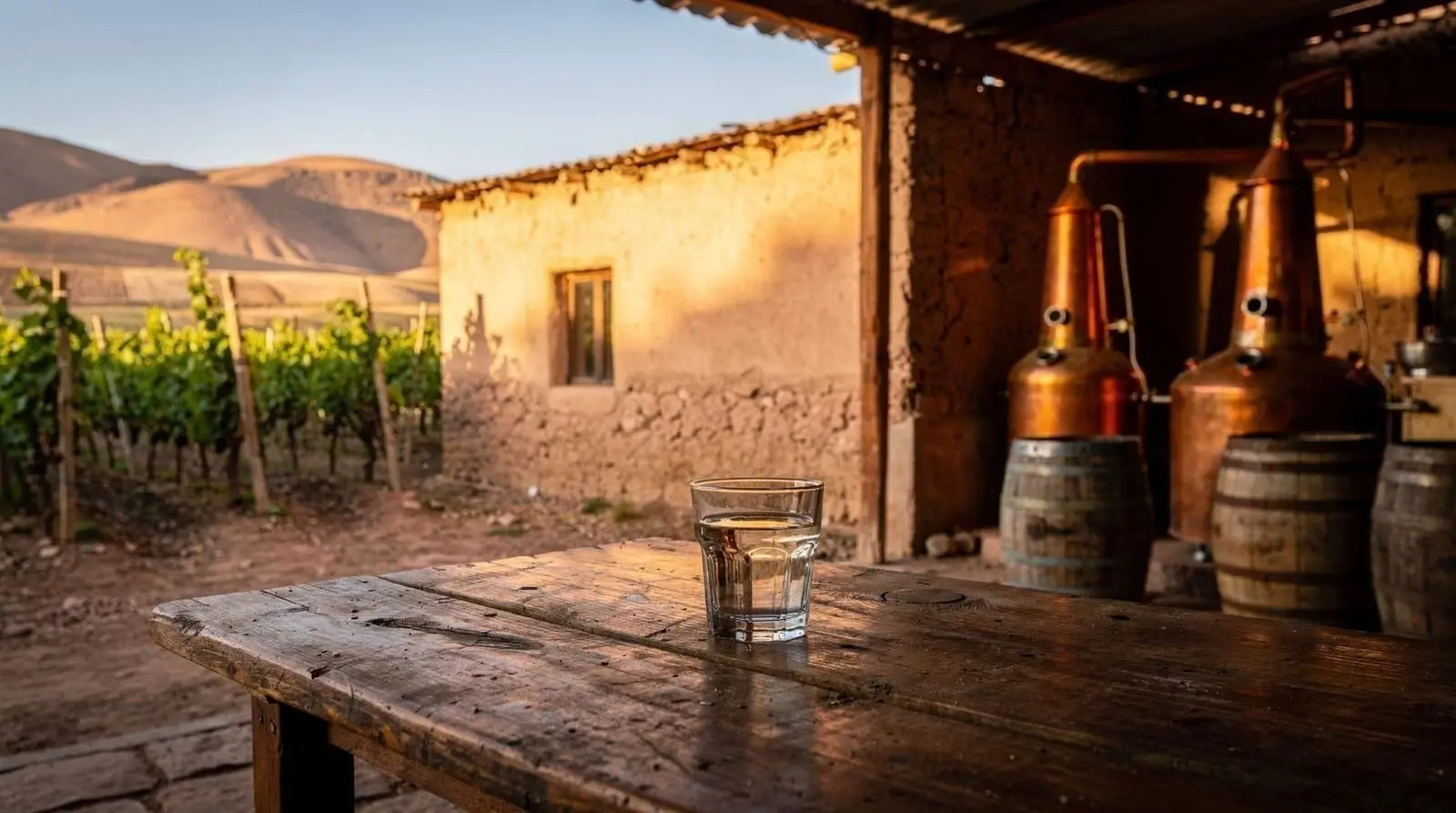
Pisco is a Peruvian grape brandy: wine distilled once and never diluted, kept at 40–48% ABV. It takes its name from the port town of Pisco on the south coast, though most production happens in the Ica valley nearby.
Pisco is two things, and travellers constantly confuse them: a clear grape brandy that is Peru’s national spirit, and a dusty port town on the south coast that gave the drink its name. Only one of them is worth going out of your way for, and it is not the town. This guide explains what pisco the drink actually is — how it is made, the grape styles, the long argument with Chile over who owns the name — and what to make of Pisco the place, so you know where to spend your time and your soles.
| What | Peruvian grape brandy, 40-48% ABV, single-distilled, never diluted |
| Where to taste | Ica valley bodegas (Tacama, Vista Alegre, El Catador) and La Caravedo near Pisco town |
| The town itself | Skip as a destination; useful mainly for its Nazca-flight airport |
| Best base | Paracas or Ica, not Pisco town |
| Cost | Bodega tastings often free–S/20; bottles from around S/25-80 |
Pisco the drink: what it is
Pisco is a grape brandy. You start with wine — fermented grape juice — and distill it once into a clear, sometimes faintly golden spirit. The defining Peruvian rule is what you are not allowed to do afterward: you cannot add water to bring down the strength, you cannot age it in wood to change the flavour, and you cannot distill it to a neutral high proof and then dilute. What comes off the still at its natural strength is what goes in the bottle, which is why Peruvian pisco lands at 40–48% ABV and keeps the unmistakable aroma of the grape it came from.
That “no dilution” principle is the single most important thing to understand about pisco, because it is both what makes the spirit distinctive and the crux of the dispute with Chile (more on that below).
Pisco can legally be made only from eight permitted grape varieties grown in designated coastal regions — chiefly Ica, but also Lima, Arequipa, Moquegua and Tacna. The Ica and Pisco valleys are the historic heartland.
The grapes and the styles
Two terms tell you most of what you need to know when reading a label or a tasting menu:
The grapes split into non-aromatic and aromatic. Quebranta is the dominant non-aromatic grape — earthy, structured, the backbone of a classic pisco sour. The aromatic trio — Italia, Moscatel and Torontel (plus Albilla and a few others) — give floral, fruity, perfumed piscos best enjoyed neat. Two further permitted grapes, Negra Criolla and Mollar, round out the eight.
The styles describe how the spirit was made:
- Puro — distilled from a single grape variety. A puro Quebranta and a puro Italia taste worlds apart.
- Acholado — a blend of grapes, often the everyday workhorse for cocktails.
- Mosto verde — the premium style, distilled while the wine still has unfermented sugar. It uses more grapes per bottle, comes out noticeably smoother and rounder, and costs more.
If you taste only two things, compare a Quebranta puro with an Italia mosto verde. That contrast — earthy and firm versus floral and silky — is pisco in a nutshell.
| Style | Made from | Character | Best for |
|---|---|---|---|
| Puro | One grape variety | Distinct, true to the grape | Sipping neat, comparing grapes |
| Acholado | A blend of grapes | Balanced, everyday | Cocktails, pisco sours |
| Mosto verde | Distilled early, sugar still present | Smoother, rounder, pricier | Sipping neat, gifting |
How to drink it
A good puro or mosto verde is meant to be sipped neat at room temperature, nosed like a brandy. Shooting it wastes both the spirit and your evening; at 40-plus percent it deserves respect.
The famous cocktail, the pisco sour, is the national drink: pisco (usually Quebranta or an acholado), fresh lime juice, simple syrup, egg white and a few drops of Angostura bitters, shaken hard over ice. It is sharp, frothy and excellent, and it is the most accessible way in for newcomers. The other classic is the chilcano — pisco, ginger ale, lime and bitters — a long, refreshing highball that is easier drinking on a hot day. You can learn the pisco sour from the source on a tasting in Lima:
Lima: Historic Center Walking Tour with Pisco Sour TastingThe Peru-Chile dispute, briefly
Both Peru and Chile make a grape spirit called pisco and both insist they are the true article. The argument matters less for your enjoyment than the producers’ pride suggests, but here is the short version.
Peru’s case rests on the name: the port of Pisco and the Pisco valley are documented centres of the spirit’s colonial-era production, and Peruvian pisco follows strict rules — single distillation to proof, no dilution, no wood ageing, eight grapes, designated regions. Chile’s pisco is made differently: it can be distilled to a higher strength and then diluted with water, aged in wood, and uses its own grape and regional rules, and Chile registered “pisco” denominations of its own.
The result is two genuinely different products sharing a name, an unresolved international naming fight, and bartenders on both sides who will tell you the other country’s version is inferior. For a traveller in Peru, the practical takeaway is simple: Peruvian pisco is undiluted and grape-forward, and you are in the place that takes it most seriously.
Pisco the town: the honest take
Now the place. The town of Pisco is a small fishing port on the south coast, north of Paracas. Confusingly, despite lending its name to the spirit, the town itself is not where you go to drink it — most of the bodegas are inland in the Ica valley.
In August 2007 a magnitude-8.0 earthquake devastated Pisco, killing hundreds, flattening much of the centre including the main church (where many died), and the town has been slowly rebuilding ever since. It is functional rather than charming, and there is little to detain a traveller.
What Pisco is genuinely useful for is its airport: Nazca Lines flights depart from Pisco airport, and for some travellers the run to and from the Lines is shorter, cheaper or less turbulent from here than from Nazca itself — see the Nazca Lines flight safety guide and is the Nazca flight worth it before booking either departure point.
Beyond that, Pisco is a pass-through — most people stop in neighbouring Paracas instead, which has the waterfront, the Ballestas boats and the national reserve; the Paracas complete guide covers basing yourself there properly. Where Pisco fits in the wider coastal route is covered in the Lima to Paracas and Nazca itinerary.
Some travellers stretch the coastal run further south to Huacachina, the desert oasis near Ica famous for sandboarding and dune-buggy rides — a natural add-on once you are already in the Ica valley for pisco tasting. The Huacachina guide has the detail.
Where to actually taste pisco
The bodegas are in the Ica and Pisco valleys, not the town. The polished small-batch option near Pisco is La Caravedo, home of the premium Portón brand, worth a detour for serious pisco people. The main visitor estates are around Ica: Tacama (the oldest winery in the Americas), Vista Alegre (scale and history), and El Catador (artisanal, clay-pot pisco). A combined bodega tour is the easy way to taste several styles in a half-day:
From Ica or Huacachina: Wine and Pisco Vineyards TourThe full breakdown of which bodegas to visit, what they cost and how to taste without ruining your afternoon is in the Ica vineyards and pisco guide.
Buying pisco to take home
If you want a bottle to carry out:
- Choose a mosto verde or a single-grape puro for sipping; an acholado for making cocktails at home.
- Buy at the bodega for the best prices — winery rates undercut Lima retail and the airport.
- Look for the grape and style on the label (puro/acholado/mosto verde, and the grape name) rather than just the brand.
- Check your liquid allowance before flying, and pack bottles in checked baggage, well wrapped.
Pisco and Peruvian food culture
Pisco is not just a drink to sample on a bodega tour — it is woven into how Peruvians eat and celebrate. A pisco sour opens many a ceviche lunch, a chilcano appears at almost any casual bar menu on the coast, and a good bottle of mosto verde is a standard hostess gift. National Pisco Sour Day, the first Sunday of February, sees bars across Lima and the coast running specials and competitions, and it is a good excuse to compare several houses’ takes on the cocktail in one afternoon if your trip happens to land on it. Understanding this cultural weight helps explain why Peruvians take the Chile dispute personally: pisco is identity as much as it is a spirit category.
The honest verdict
Frequently asked questions about Pisco: the drink and the town, explained
What is the difference between Peruvian and Chilean pisco?
Is the town of Pisco worth visiting?
What are the main pisco grape styles?
How should I drink pisco?
Where can I taste pisco near the town of Pisco?
Can I combine pisco tasting with Paracas or Nazca?
Is pisco stronger than wine?
Top experiences
Bookable activities with verified prices and instant confirmation on GetYourGuide.

