A morning at San Pedro market
I went to San Pedro market the first time looking for souvenirs and left with indigestion and a much better understanding of how Cusco actually eats. I went back four more times that trip, always in the morning, always hungry. This is the market most visitors walk through in fifteen minutes; here’s the version you get if you slow down and order things.
| Where | A few blocks downhill from Plaza de Armas, Cusco |
| Cost | Around S/ 5-10 (USD 1.50-3) per stall, cash only |
| Time needed | 1.5-2 hours to do it properly |
| Best time | 8-9am, before the tour groups arrive |
| Getting there | Walkable from most Cusco centre accommodation |
Start at the juice counters
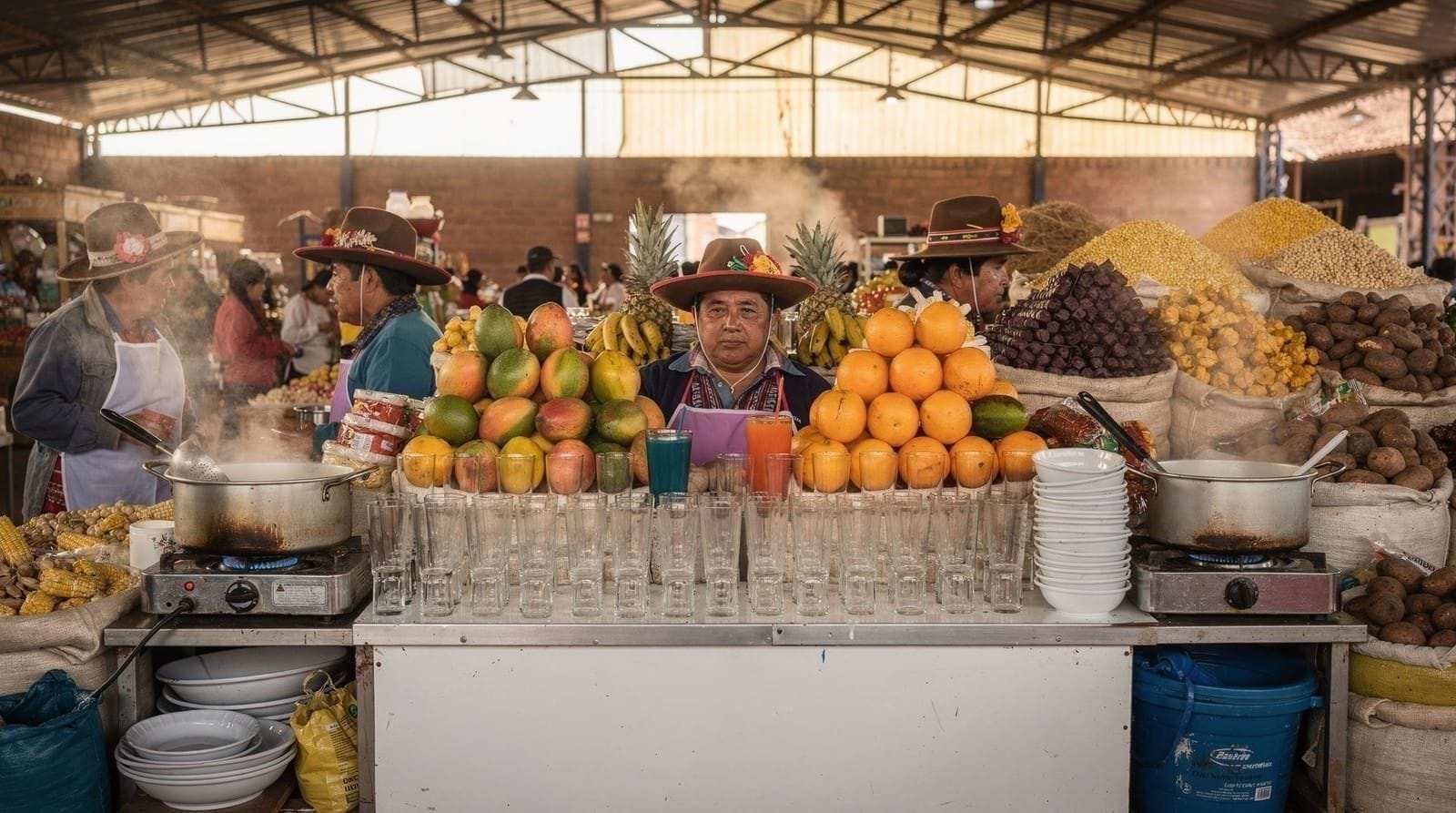
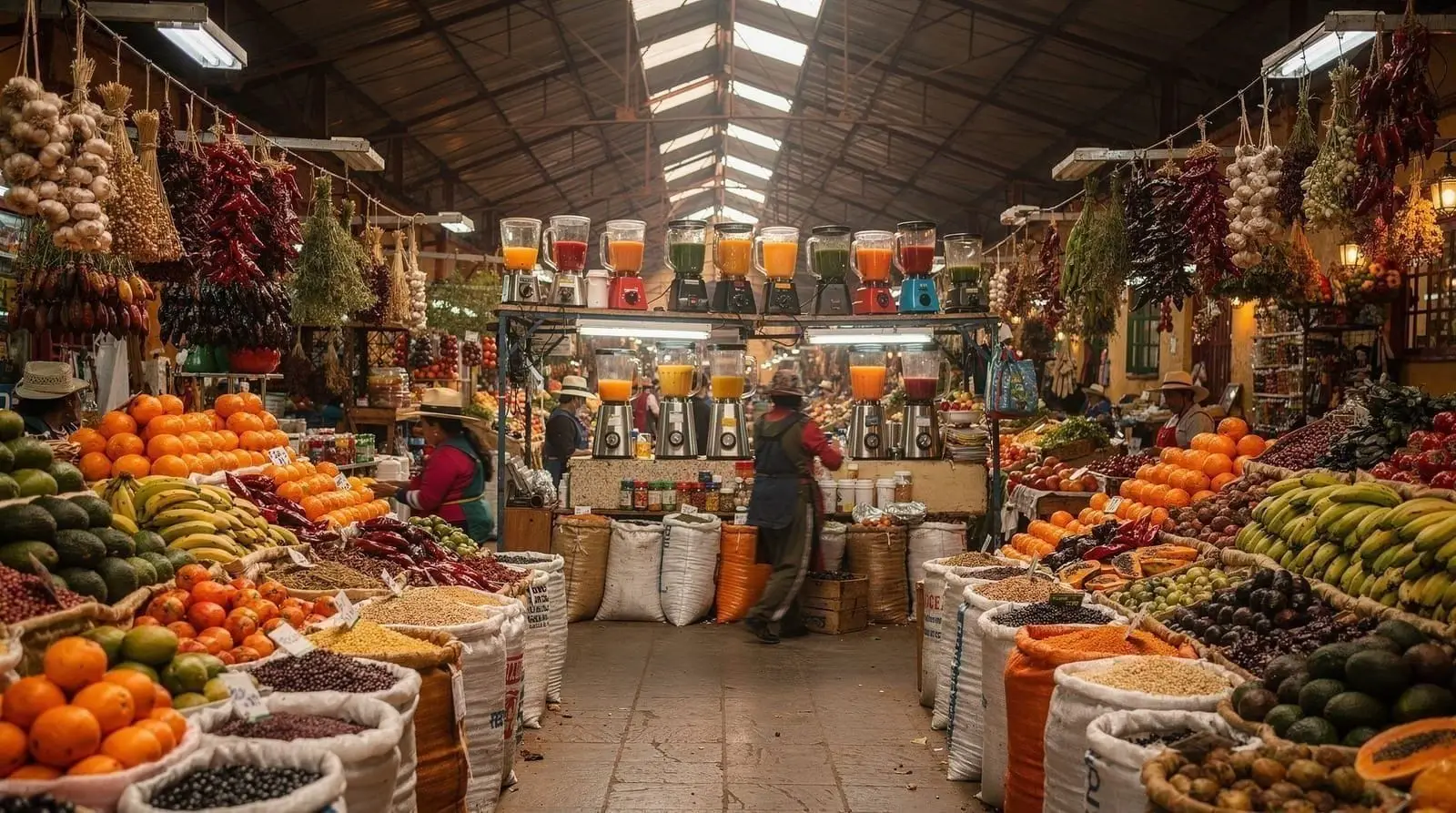
Just inside the main entrance, a long row of women run juice stalls stacked with pyramids of fruit, and this is where I’d send anyone first. You point, they blend, and for S/ 5-8 (USD 1.50-2) you get an enormous glass of fresh juice, often topped up with whatever’s left in the blender as a “yapa” - a little extra.
I worked through papaya, then a “special” that involved maca, beetroot, and things I couldn’t identify, and on my last morning a frothy mix the vendor swore would help with the altitude. Whether it did or not, it tasted of strawberries and I felt great. Pick the stall with the most locals and the longest queue; the regulars know.
Breakfast where the porters eat
Behind the juice row, in the cooked-food section, there’s a cluster of stalls doing hot breakfasts for the people who work in the market - porters, vendors, delivery guys. This is where I had the best cheap meals of the whole trip. A bowl of caldo de gallina (hen soup, served with a whole piece of chicken and noodles) for S/ 8, eaten elbow to elbow with a man on his break, beat every restaurant breakfast I paid triple for elsewhere.
There’s also frog soup - caldo de rana - which is genuinely on the menu and genuinely consumed for its supposed restorative powers. I tried it. It tastes mild, a bit like a delicate chicken broth, and I can’t honestly say I felt restored, but I’m glad I didn’t chicken out. The San Pedro market food guide lists which stalls to look for.
The aisles, section by section
San Pedro is organised the way good markets are, by category, and wandering it is half the pleasure.
The cheese and dairy aisle is a revelation - rounds of fresh Andean cheese stacked like the wheels they are, and stallholders who’ll cut you a slice to try without any pressure to buy. I bought a wedge for under S/ 10 and ate it with bread for two days.
The bread section sells chuta, the big round Andean loaves, alongside sweet rolls and the dense local breads. The grains and seeds area is a wall of quinoa varieties, dried corn, beans, and the freeze-dried potato (chuño) that looks like gravel and confused me until someone explained it.
Then there’s the chocolate and coca section, where you can buy raw cacao, coca leaves by the bag for a couple of soles, and chocolate that’s actually made in Cusco. Some of it is excellent; some of it is tourist tat in pretty wrapping. Taste before you trust the packaging.
The witch-doctor corner
Tucked toward one side is the section that catches every visitor off guard: the curandero stalls, selling herbs, dried llama foetuses (for offerings to Pachamama, the earth mother), incense, candles in specific colours for specific intentions, and powders for ailments and luck. It’s not theatre for tourists - locals shop here for genuine traditional remedies and ritual offerings.
I bought a small despacho bundle and had a vendor patiently explain, in slow Spanish, what each element was for. Whether you believe in any of it, it’s a window into a living Andean worldview that sits comfortably alongside the Catholic cathedral two blocks away. The Quechua culture guide gives more context on the beliefs behind it.
What to buy and what to skip
Buy: fruit, juice, cheese, chocolate, coffee beans, coca tea, a hot breakfast, and spices. These are what the market does best and where your soles go furthest.
Skip, or at least haggle hard on: the textiles and “alpaca” goods near the tourist-facing edges. Much of it is acrylic or machine-made and overpriced for the location. For real weaving, I’d go to Chinchero or a cooperative rather than the market souvenir stalls - I’ve written about that in the Andean textiles guide.
Here’s the honest breakdown, section by section:
| Section | Buy here? | Note |
|---|---|---|
| Juice counters | Yes | S/ 5-8, always fresh |
| Cooked food | Yes | Best cheap breakfast in Cusco |
| Cheese & dairy | Yes | Free tastes, no pressure |
| Bread & grains | Yes | Chuta bread, quinoa varieties |
| Chocolate & coca | Mostly | Taste before you trust the wrapper |
| Curandero stalls | Browse, don’t force it | Respect over spectacle |
| Textiles near entrances | Skip or haggle hard | Often acrylic, not the real thing |
Why the market feels different from a supermarket
Part of what makes San Pedro worth the slow visit is that it still runs on relationships rather than fixed pricing. The vendor who tops up your juice glass, the cheese seller who cuts you a taste without expecting a sale, the same woman selling you soup on your third visit who remembers your order - none of that exists in a Cusco supermarket, and it’s the actual reason to eat here instead of somewhere more convenient. It also means prices flex slightly depending on how you engage: friendly, unhurried, a little Spanish, and you’ll do better than someone who marches through pointing at things.
The cooking class detour
After three mornings of eating other people’s cooking, I signed up for a class that starts with a guided market shop in San Pedro and then teaches you to cook what you’ve bought. Walking the aisles with someone who could name everything and haggle properly turned the market from a spectacle into something I half understood:
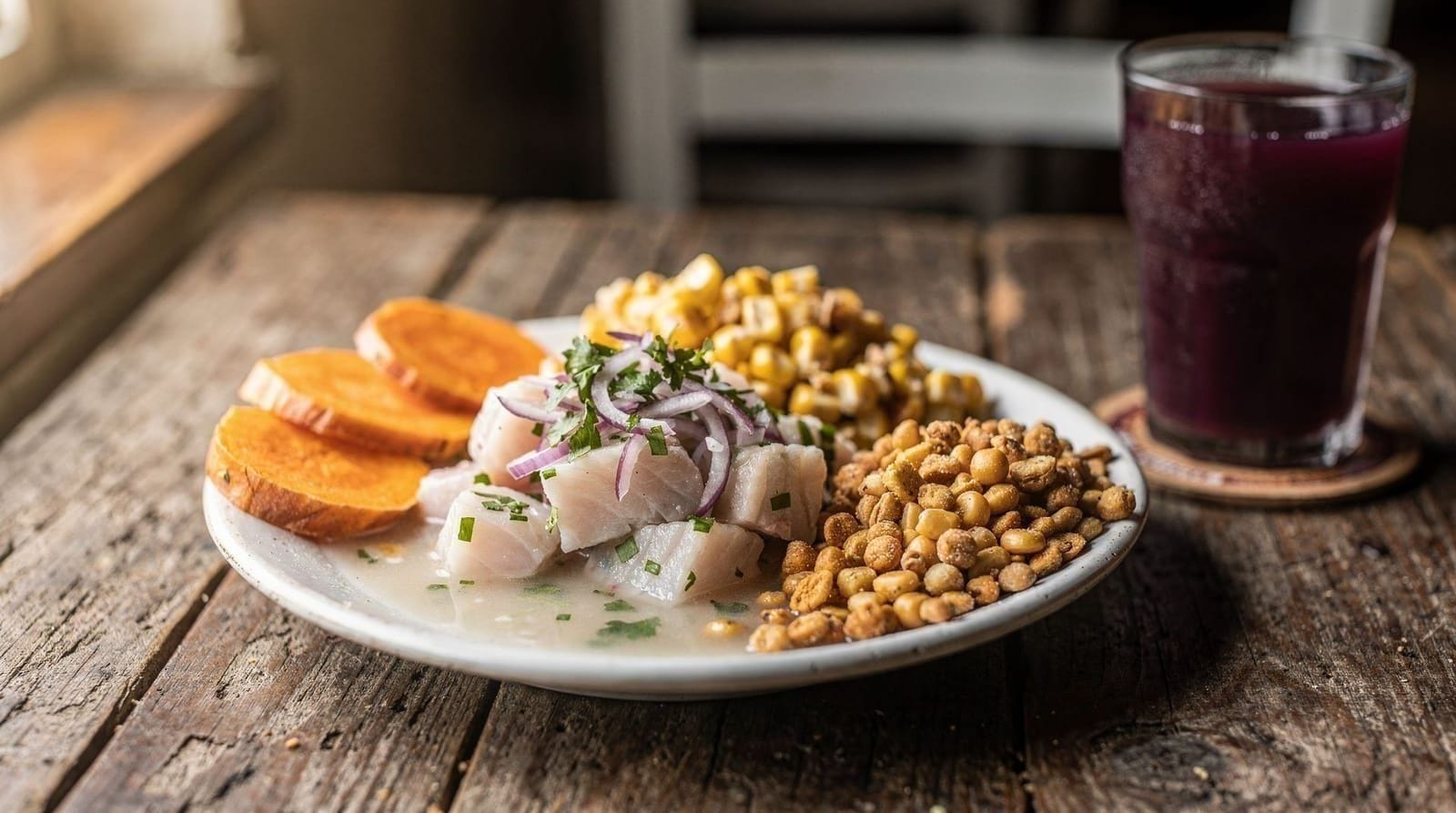
San Pedro market and Peruvian cooking classWe made ceviche and lomo saltado from market ingredients, drank a pisco sour we’d mixed ourselves, and I finally learned the difference between the chillies I’d been pointing at randomly for a week.
Practical bits
The market is open daily, busiest and best in the morning - I’d be there by 8 or 9am. It’s right by the San Pedro train station, a few blocks downhill from the Plaza de Armas. Bring small cash; nobody takes cards. Watch your bag in the crowded sections, as you would in any busy market, but I never felt remotely unsafe. Sit down and eat something hot at least once - that’s the whole point.
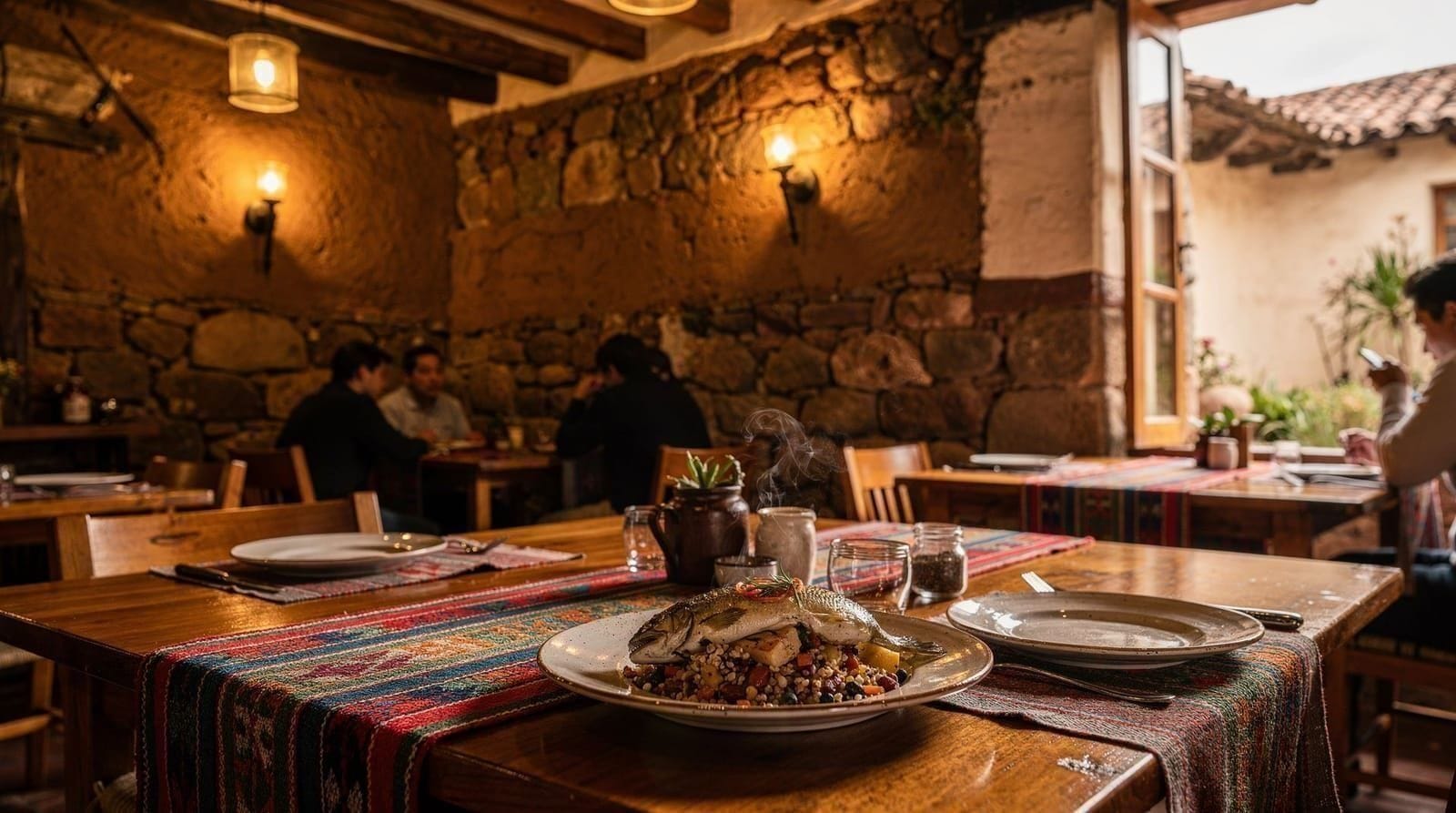
The best restaurants in Cusco guide covers where to eat in the evening, and the Peruvian food guide explains the dishes. But if you want to understand how Cusco eats day to day, you start at San Pedro, with a juice in one hand and a bowl of soup in front of you, before the tour groups arrive.