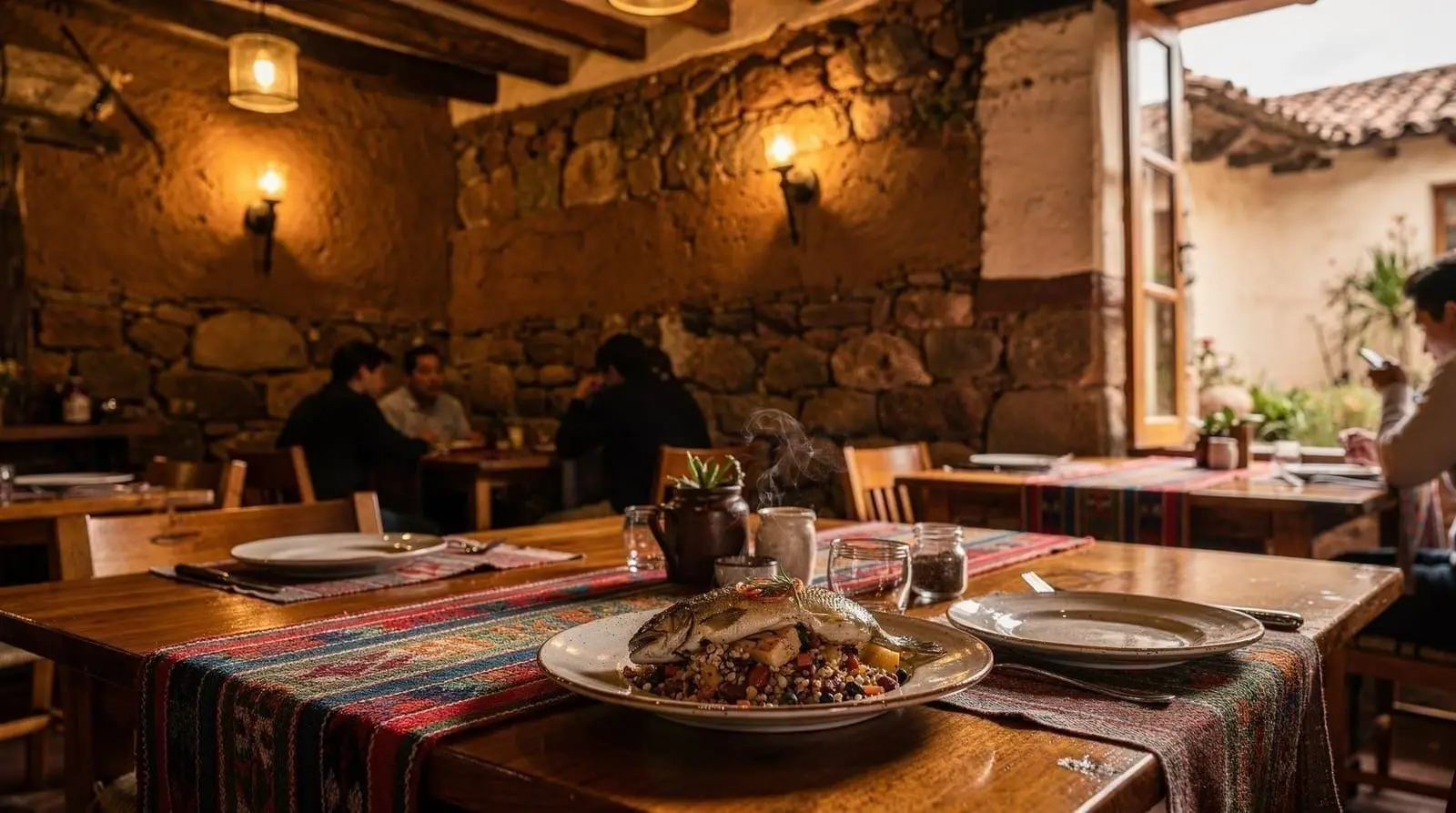
Best restaurants in Cusco
Cusco: San Pedro Market and Peruvian Cooking Class
Where should I eat in Cusco?
For cheap and authentic, the San Pedro market food stalls (S/6–12). For mid-range standouts, Cicciolina, Pacha Papa, and Morena. For a splurge, Chicha por Gastón Acurio or MAP Café. Avoid the balcony restaurants on the Plaza de Armas, which charge double for the view.
Eat past the Plaza de Armas
Cusco feeds two completely different crowds at two completely different prices, and where you stand on that line decides whether you eat brilliantly or pay tourist tax for mediocrity. The restaurants ringing the Plaza de Armas, with their balcony tables and laminated photo menus, exist to capture footfall. Walk one block off the square and the same dishes cost half as much, made with more care. Go to the market and a better lunch costs a quarter as much again.
This guide names real places by their actual names, with real price ranges in soles (and a rough dollar conversion), and it is candid about which famous spots are coasting on reputation. It runs from S/6 market soups to ambitious novoandina tasting menus, because the joy of eating in Cusco is precisely that range. For the wider context of what these dishes are — quinoa, native potatoes, ceviche, lomo saltado — pair this with our Peruvian food guide.
| Where | Historic centre, San Blas, San Pedro market |
| Cost | S/6 market soup to S/280 tasting menu |
| Best value | San Pedro market and the almuerzo menú |
| Booking | Needed for Chicha, MAP Café, Cicciolina dinner |
| Avoid | Plaza de Armas balcony restaurants |
Cheap and authentic: San Pedro market and the menú
The single best-value meal in Cusco is inside San Pedro market, a ten-minute walk southwest of the Plaza de Armas. The cooked-food section is rows of family stalls serving caldo de gallina (a restorative chicken broth) for around S/8, hearty plates of the day for S/10–15, and the famous fruit-juice counters — order a “frutado,” a blended multi-fruit jug, for S/6–10. Go at lunchtime when turnover is highest, pick a busy stall, and eat what is freshly cooked. It is the most honest meal in the city, eaten elbow-to-elbow with Cusqueños.
Just off the market and the plaza, look for the almuerzo menú: a fixed lunch of soup, a main, and a drink for S/10–18. Every neighbourhood has them, and they are how locals eat midday. You will not find them on the square — that is precisely the point.
The best way to understand the market before you eat your way through it is a guided market-to-table session. The San Pedro market and Peruvian cooking class walks you through the unfamiliar Andean produce — dozens of potato varieties, aji peppers, fruits you have never seen — before you cook a three-course meal. Done early in your stay, it makes every subsequent menu legible.
Regional classics: cuy and alpaca
Two dishes define highland Cusco eating, and both deserve a clear-eyed introduction.
Cuy (roast guinea pig) is the ceremonial dish of the Andes, eaten at festivals for centuries. Pacha Papa, on Plaza San Blas, roasts it properly in a clay oven and serves it in a pleasant courtyard; budget S/45–70 for a whole one and order it a day ahead or at least early in the meal, as it takes time. Be honest with yourself: cuy is gamey, bony, and served whole, head and all. Many travellers try it once for the experience and prefer the alternative.
Alpaca is that alternative — a lean, mild red meat that appears as a steak or in stews on most mid-range menus for S/30–45. It is genuinely good, far more approachable than cuy, and worth seeking out over imported beef.
Mid-range standouts
These are the everyday-excellent restaurants that travellers consistently return to, all a short walk from the centre.
Cicciolina (Calle Triunfo 393, upstairs) has anchored Cusco’s mid-range scene for years — a beamed colonial room serving tapas, fresh pasta, and a strong wine list. The downstairs bakery does excellent breakfasts. Mains run S/40–70; book ahead for dinner.
Morena Peruvian Kitchen (Calle Plateros 348B) is a bright, modern spot a block from the plaza doing well-executed Peruvian classics — ceviche, lomo saltado, quinoa bowls — at fair prices (S/35–55 for a main). Reliable and consistent.
Pacha Papa in San Blas doubles as the cuy specialist and a solid all-rounder for Andean dishes in a courtyard setting, with mains around S/35–60.
Green Point (Calle Carmen Bajo 235, San Blas) is the standout vegan and vegetarian kitchen, with a famously good-value lunch menú around S/18 that fills up daily. A welcome option in a meat-heavy city.
The splurge: novoandina at its best
Cusco is a heartland of novoandina cuisine, and two restaurants showcase it best.
Chicha por Gastón Acurio (Plaza Regocijo, second floor) brings Peru’s most famous chef’s interpretation of regional Cusqueño cooking to a handsome space just off the main square. Expect refined versions of highland dishes, strong cocktails, and a bill of S/60–110 a head. It is the most reliable upper-mid splurge in town.
MAP Café sits in the glass-box courtyard of the Museo de Arte Precolombino in San Blas — one of the most atmospheric dining rooms in Peru. The contemporary Andean tasting menu is a special-occasion experience at roughly S/180–280 a head. Book well ahead.
For a more design-forward novoandina experience, Limo (on the Plaza de Armas itself, the rare plaza exception worth visiting) does excellent Nikkei-Peruvian and ceviche with a square view, at S/50–90 a main.
Cafés, bakeries, and breakfast
For coffee and a quiet morning, Café Valeriana and the Cicciolina bakery do proper espresso and pastries. The Meeting Place in San Blas is a small not-for-profit café with good breakfasts that funds community projects. For chocolate, the ChocoMuseo on Calle Garcilaso is a legitimate, transparent operation for hot chocolate and workshops — unlike the street touts pushing “free” chocolate sessions (see the traps below).
Pisco sours and where to drink
A pisco sour is non-negotiable in Cusco, but skip the first night — alcohol at 3,400 m on an unacclimatised body is the classic mistake (more in our altitude sickness guide). Once you have adjusted, the rooftop bars off the plaza and the cocktail lists at Cicciolina, Chicha, and Limo all do excellent versions for S/22–35. The Plateros and Procuradores bar strip is the late-night zone — lively, occasionally rowdy, and the place to keep an eye on your belongings.
The tourist traps to skip
A few patterns reliably catch first-timers in Cusco:
- Balcony restaurants on the Plaza de Armas: you pay a hefty premium for the view, and the food is rarely worth it. Walk one block off the square (Limo is a deliberate exception).
- The “free” chocolate or pisco workshop: touts hand out flyers near the plaza for free tastings that turn into hard-sell shopping stops. The ChocoMuseo is the honest version.
- Photo-menu touts pulling you in: any restaurant that needs someone on the street physically steering you inside is not relying on its food.
- Paying in US dollars: tour operators and some restaurants accept dollars at a poor rate (around 3.55 when the bank rate is nearer 3.70). Pay in soles.
Neighbourhood by neighbourhood
Where you eat in Cusco is partly a question of which area you are in, and each has its own character.
Around the Plaza de Armas is the most touristed and, on the square itself, the worst value — with the deliberate exceptions of Limo and a couple of upstairs spots. The streets feeding off the plaza (Plateros, Procuradores, Triunfo) hold the bulk of the mid-range options, from Cicciolina to Morena, and the late-night bar strip. It is convenient but priced for visitors; walk a block further out for better deals.
San Blas, the artisan quarter climbing the hill northeast of the plaza, is the most rewarding eating neighbourhood for atmosphere. Pacha Papa, Green Point, MAP Café, and a clutch of small cafés sit among the cobbled lanes and viewpoints. The catch is the gradient — you climb to get here, which on an unacclimatised first day is a real consideration. Save San Blas dinners for later in your stay.
Around San Pedro market and the streets toward it is where the cheapest, most local eating lives — the market stalls themselves, plus picanterías and menú spots serving Cusqueños rather than tourists. It is the area to head for when you want to eat the way the city eats.
Eating with the altitude in mind
Cusco’s 3,400 m altitude should shape your first day or two of eating as much as your sightseeing. The standard advice — covered in full in our altitude sickness guide — applies directly at the table.
Eat lightly on arrival day. Heavy, rich meals divert oxygen-hungry blood to digestion and can worsen the headachy, queasy feeling many people get on their first night. The San Pedro market soups and a simple menú are ideal early food: warming, easy to digest, and cheap. Skip the celebratory pisco sour on night one — alcohol hits harder at altitude and is the classic first-night mistake. Hydrate hard between meals; dehydration mimics and amplifies altitude symptoms. And lean into coca tea (mate de coca), offered free in most hotel lobbies and at many cafés — it is legal, culturally normal, and helps mildly with the adjustment. Save the cuy feast and the big tasting menu for day three, when your body has caught up.
Dietary needs and practicalities
Cusco handles vegetarians and vegans better than its meat-and-potatoes reputation suggests. Green Point in San Blas is the dedicated standout, and most mid-range restaurants now flag plant-based options; the Andean staples of quinoa, native potatoes, and beans are naturally vegetarian. Gluten-free is less consistently understood, so be specific when ordering.
A few more practicalities. Tipping is not obligatory but appreciated — around 10 percent at sit-down restaurants, rounding up at casual spots; check whether a servicio charge is already on the bill. Tap water is not safe to drink, so stick to bottled or properly purified water and skip ice at the very cheapest stalls. Restaurant hours skew later for dinner than in some countries — many kitchens serve until 10 or 11 pm. And the set lunch menú is strictly a midday affair, so plan your cheapest, most local meal for lunchtime rather than the evening.
Cook it yourself
A cooking class is one of the better-value cultural half-days in Cusco, and it pays off across the rest of your trip. Beyond the market-tour version above, the Cusco Peruvian cooking class and market tour and the shorter 3-hour Peruvian cooking class both teach you to make a pisco sour and a classic dish or two — useful skills, and a more memorable souvenir than anything in the San Blas shops. For the dishes themselves, our Peruvian food guide is the companion read, and the Cusco destination page covers the wider city.
A sample day of eating in Cusco
To pull it together, here is how a day of good, fair-value eating might run for an acclimatised traveller.
Breakfast: coffee and a pastry at the Cicciolina bakery or Café Valeriana, or a fresh-juice-and-eggs start at a café in San Blas once you have caught your breath on the climb up.
Lunch: the cheapest and most local meal of the day — head to San Pedro market for a caldo and a frutado juice for under S/20 total, or find an almuerzo menú a block off the plaza for S/12–18. This is when to eat like a Cusqueño.
Afternoon: a hot chocolate at the ChocoMuseo, or a coffee in San Blas with a view over the rooftops.
Dinner: the day’s splurge — alpaca and a pisco sour at Morena or Pacha Papa, novoandina at Chicha, or, for a special night, the tasting menu at MAP Café (booked ahead). Dinner is where the bigger spend makes sense, since lunch covered you cheaply.
This rhythm — cheap, local lunch and a considered dinner — is how to eat well in Cusco without overpaying, and it leaves room to try the regional dishes properly across a few days rather than all at once.
Beyond the centre
Most visitors eat entirely within the historic core, but two wider points are worth knowing. First, the picanterías — traditional Andean taverns on the city’s edges — serve the most authentic regional cooking (chicharrón, adobo, big shared plates) at local prices, and are worth a taxi ride for travellers who want the real thing over the tourist-facing versions downtown.
Second, if you are basing part of your trip in the Sacred Valley, towns like Urubamba and Ollantaytambo have their own strong food scene, including some of the region’s most ambitious farm-to-table restaurants set among the fields that supply them — a different and excellent side of Andean eating from the Cusco institutions above.
Restaurants and your wider Cusco stay
Where and how well you eat connects to the rest of your planning. If you are working out how many days in Cusco you need, factor in that San Blas dinners are best saved for once you have acclimatised, per the eating-with-altitude section above. Travellers on a tight budget should read Cusco on a budget, which extends the market and menú strategy here to accommodation and transport. And if you are torn between basing in Cusco or the valley, the Cusco vs Arequipa and Sacred Valley vs Cusco base guides both touch on how the food scene differs between bases.
Luxury dining beyond the standard splurge
For travellers with a genuinely open budget, Cusco’s top tier extends beyond Chicha and MAP Café. A handful of boutique hotel restaurants in restored colonial mansions offer set-menu Andean tasting experiences comparable to MAP Café’s ambition, often with fewer diners and more personal service, typically priced from S/200 upward per head with wine pairings extra.
These are worth seeking out for a genuinely special final night in Cusco, though they generally require booking well ahead through your hotel concierge rather than walking in. The trade-off against MAP Café and Chicha is mainly reputation and setting — the cooking quality across this top tier is consistently high, so choosing between them comes down to atmosphere and availability rather than one being clearly superior.
Coffee culture and the third-wave scene
Cusco has quietly developed a serious specialty-coffee scene over the past several years, driven by the fact that some of Peru’s best coffee is grown in the nearby jungle-edge provinces of Cusco region itself. Beyond Cicciolina’s bakery and Café Valeriana, a handful of small roasteries around San Blas and the centre serve properly sourced, well-pulled espresso rather than the instant coffee still common in cheaper cafés elsewhere in the Andes. If good coffee matters to your mornings, ask your hotel for the nearest specialty roaster rather than settling for the first café you pass — the difference in Cusco is more pronounced than in most Peruvian cities.
Eating well on a short stopover
Not every visitor has time for the full range described above. If you are only in Cusco for a day or two before heading to Machu Picchu or the Sacred Valley, prioritise one proper sit-down meal — ideally a mid-range spot like Morena or Pacha Papa — over trying to squeeze in the whole list. A market lunch at San Pedro and a single considered dinner cover the essentials of Cusco eating without eating into sightseeing time.
Save the bigger splurges (Chicha, MAP Café) for a return visit or a longer stay, since both genuinely reward lingering rather than a rushed pre-train dinner. If your stopover falls on the day you arrive from altitude-lower Lima, keep that first meal light per the eating-with-altitude notes above, rather than diving straight into a heavy alpaca dinner or a celebratory pisco sour.
Frequently asked questions about restaurants in Cusco
Frequently asked questions about Best restaurants in Cusco
What is the cheapest way to eat well in Cusco?
Should I eat cuy (guinea pig) in Cusco?
What is novoandina cuisine?
Is it safe to eat at San Pedro market?
Do Cusco restaurants take cards?
Do I need to book restaurants in Cusco?
Top experiences
Bookable activities with verified prices and instant confirmation on GetYourGuide.
