On the Moche trail in Trujillo: pyramids, ceviche, and an empty coast
North of the gringo trail, and almost alone
Most people fly Lima to Cusco and never look north, which is exactly why I went north. I had read that Trujillo and the surrounding coast held some of the most important pre-Inca sites in the Americas and saw a fraction of the crowds, and after four days there I can confirm both halves of that sentence. I stood inside a thousand-year-old painted temple with maybe six other people in it. The same morning in the Sacred Valley you’d be shoulder to shoulder.
This is a diary of the Moche trail — the pyramids, the mud city, the surf town — and the strange pleasure of having major ruins largely to yourself.
| Where | Trujillo, north coast of Peru |
| Cost | Around S/30-50 per site, tours from around S/80-150 |
| Time needed | 3-4 days for the main sites |
| Getting there | Flight or long bus from Lima |
| Best time | Year-round; desert coast, rarely rains |
Trujillo itself: faded grandeur and good coffee
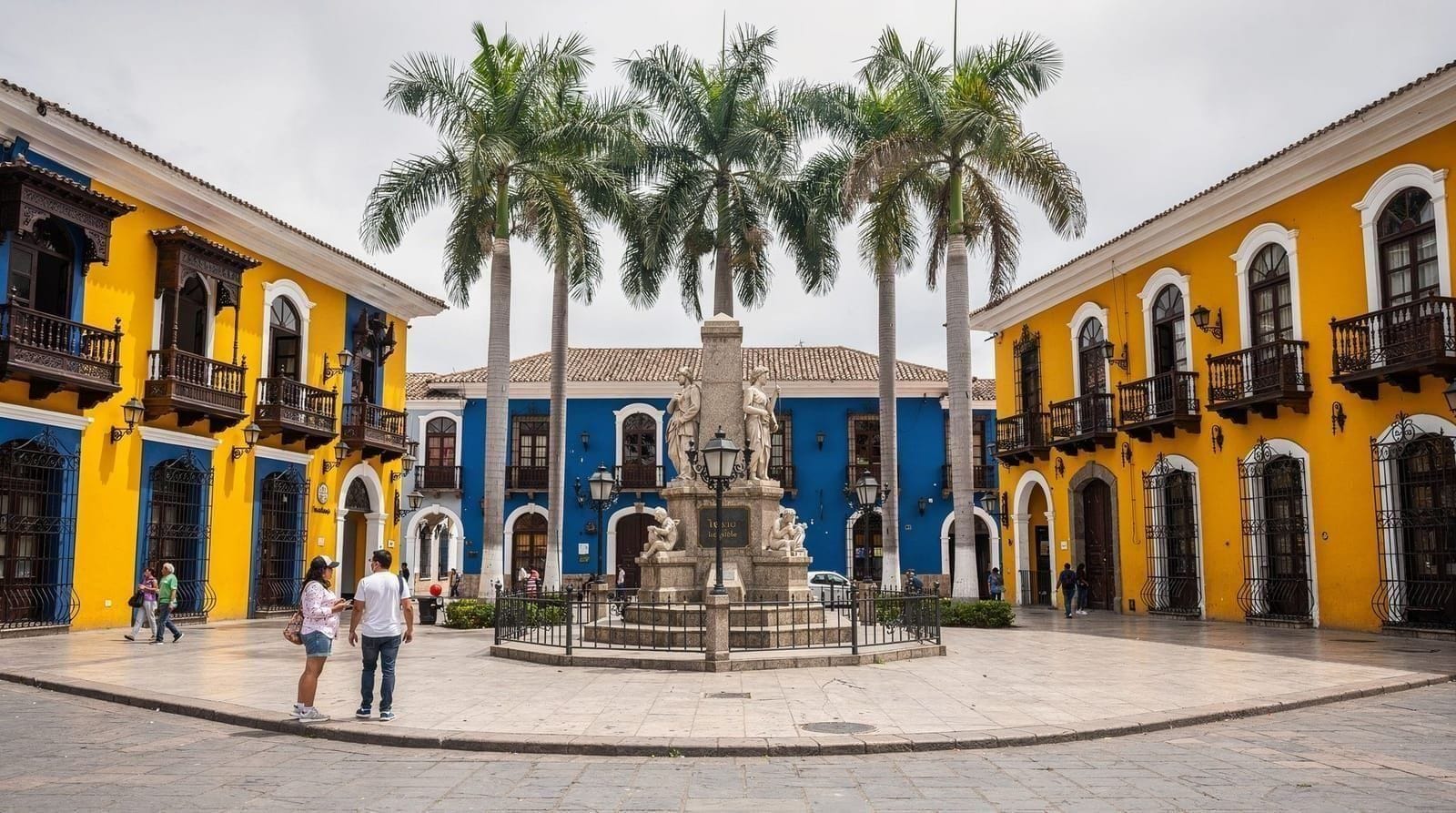
Trujillo’s colonial centre is a grid of pastel mansions, wrought-iron window grilles, and a wide Plaza de Armas that fills with marinera dancers and old men arguing about football. It is handsome and a little worn and not really a “sight” so much as a base. I stayed three nights, ate breakfast in the same café on the plaza each morning (a proper coffee and a sandwich for around S/15), and used the city as a launch pad for the ruins ringing it.
If you want the practical base-building — where to stay, how the city is laid out, getting to each site — the Trujillo complete guide does that job. What follows is what actually moved me.
Huacas de Moche: colour I did not expect
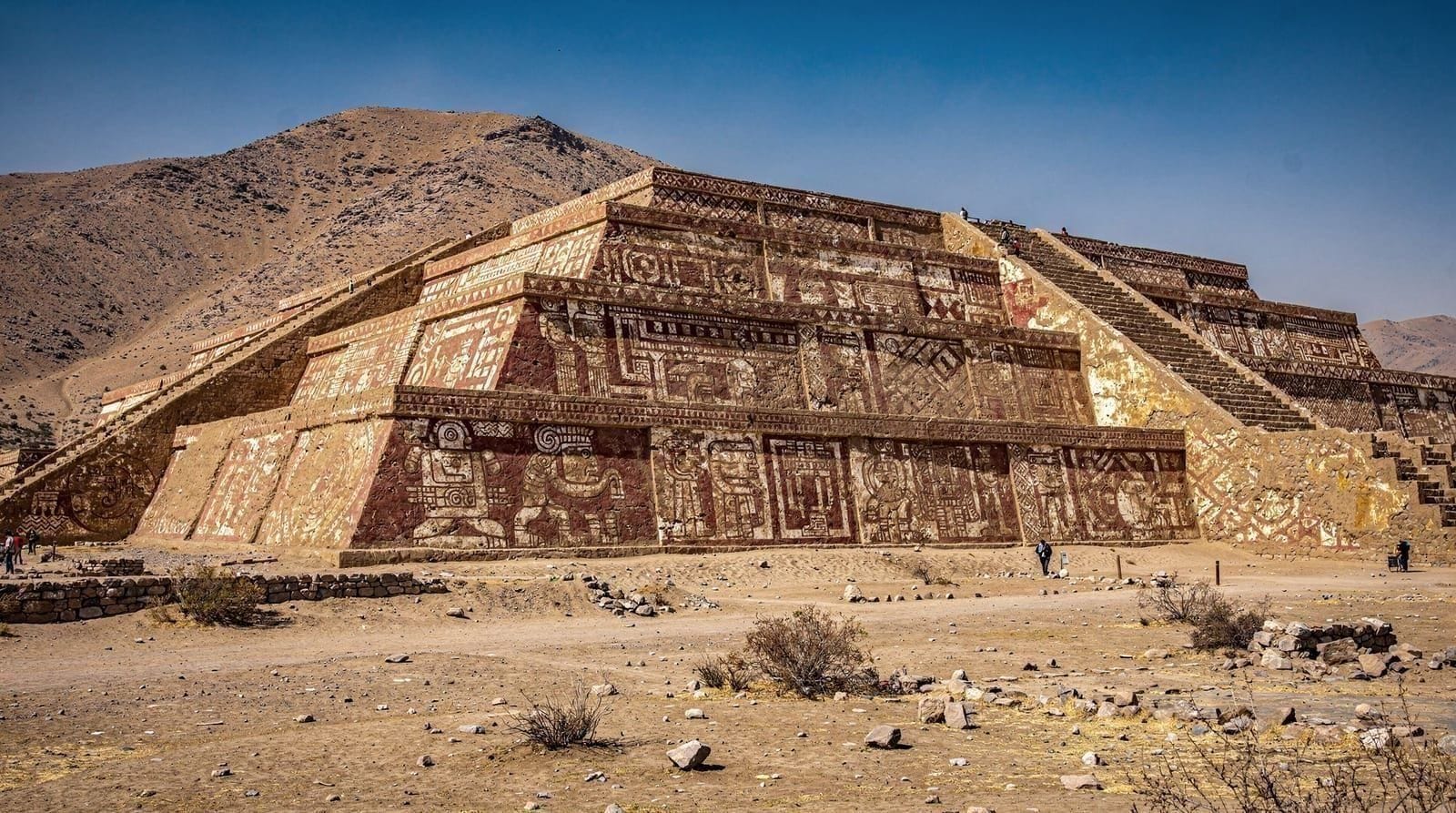
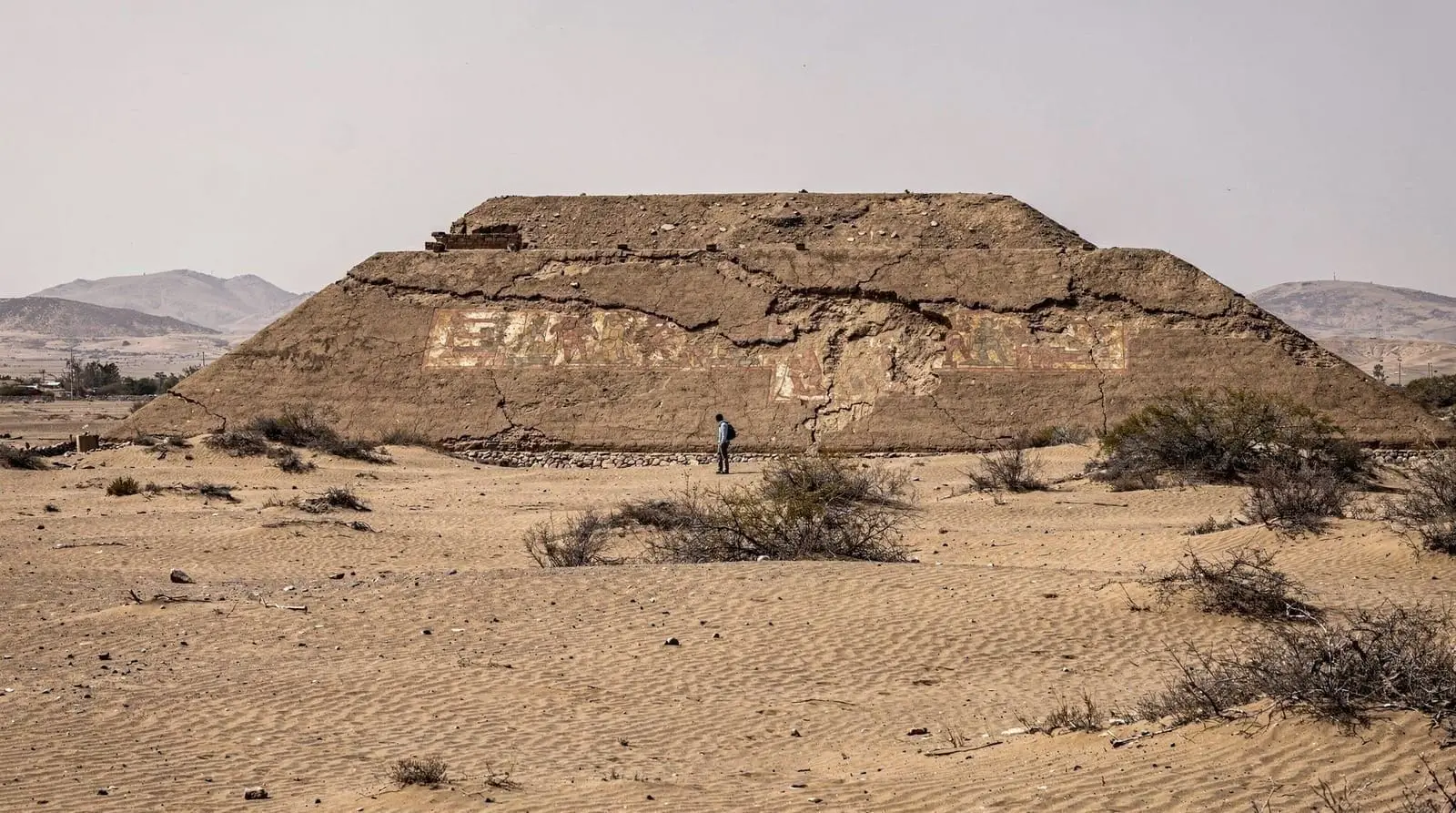
The thing that no photo prepared me for at the Huacas de Moche — the Temples of the Sun and Moon — is the colour. I had pictured eroded brown mounds. What I found, on the lower terraces of the Huaca de la Luna, were friezes still vivid in red, white, black and ochre: the snarling face of Ai Apaec, the Moche deity, repeated in registers down the temple wall, painted around 1,500 years ago and protected by the dry desert and by later Moche burying the old temple to build the next one on top.
You go in with a guide, level by level, and the guide pointed out the layers — each generation entombing the last, so the pyramid is a stack of temples like tree rings. The combination ticket and the on-site museum (a short drive away) cost me around S/30 total. There were a handful of other visitors. The Moche themselves — their human sacrifice, their astonishing ceramics, their lack of writing — are a genuinely gripping story, told in full in the Moche and Chimú civilizations piece I read that night.
Chan Chan: the largest mud city in the Americas
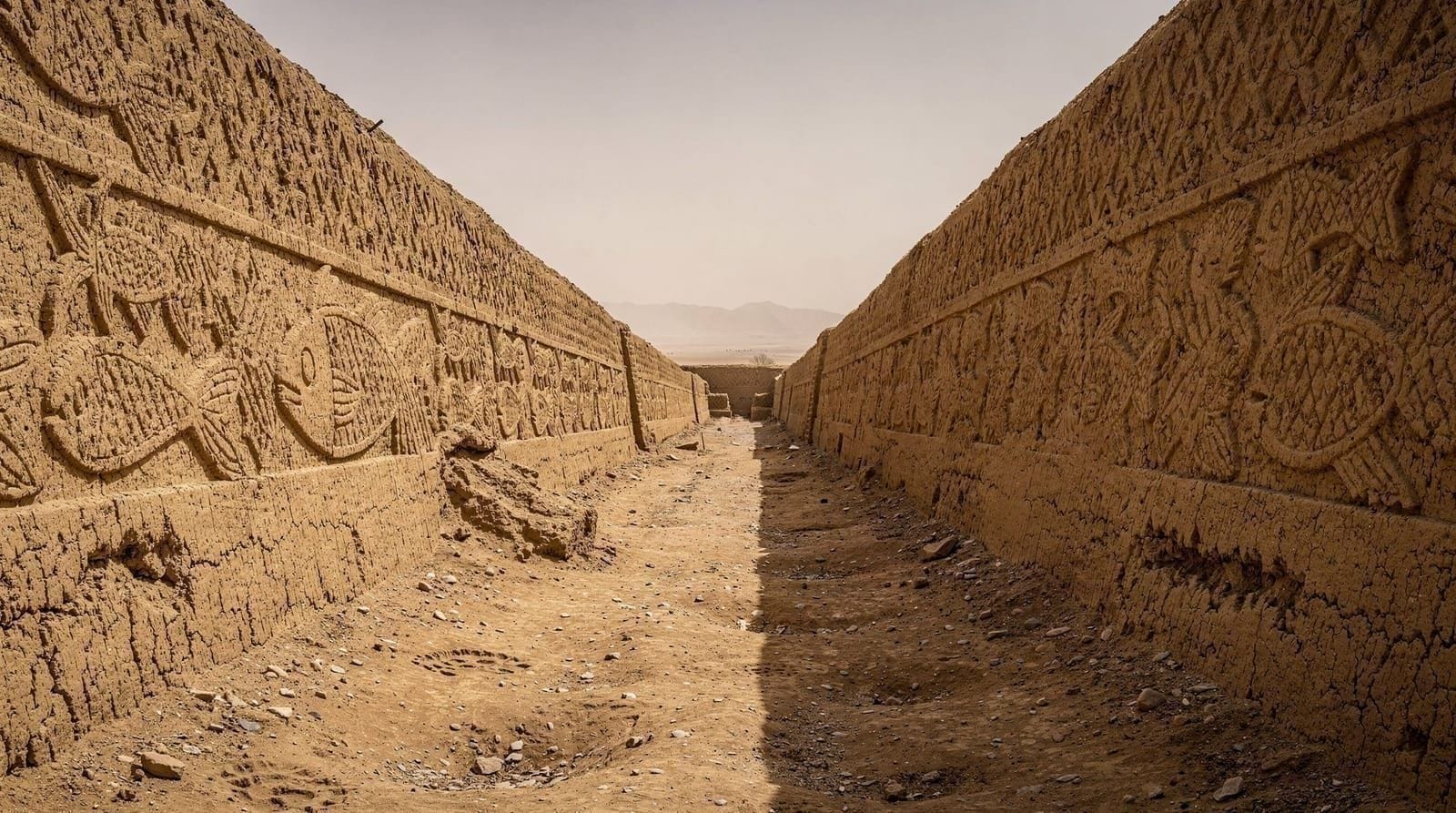
The next morning I went to Chan Chan, and it is enormous in a way that’s hard to convey — the capital of the Chimú, who came after the Moche, the biggest adobe city ever built, square kilometres of mud walls baking in the sun. You visit one restored palace compound, the Tschudi (now Nik An), which gives you the scale: high walls carved with repeating fish, pelicans, and fishing-net patterns, vast ceremonial plazas, and a strange deep well that supplied the elite.
The honest note: Chan Chan is fragile. It is mud, and the occasional El Niño rains threaten to dissolve a thousand years of city, so parts are tarped and roofed and you see less than once existed. It is still extraordinary, and standing in a Chimú plaza understanding it was a living city when Europe was in the Middle Ages reframes the whole continent’s history. The deeper background is in the Chan Chan guide.
Reaching all three sites by public transport is doable but fiddly — combis and a lot of waiting — so I took a guided day that strung the temples, Chan Chan, and the beach together, which on the north coast is genuinely the easier call.
Trujillo: Huacas de Moche, Chan Chan and Huanchaco day tourHuanchaco: surf, fish, and reed boats
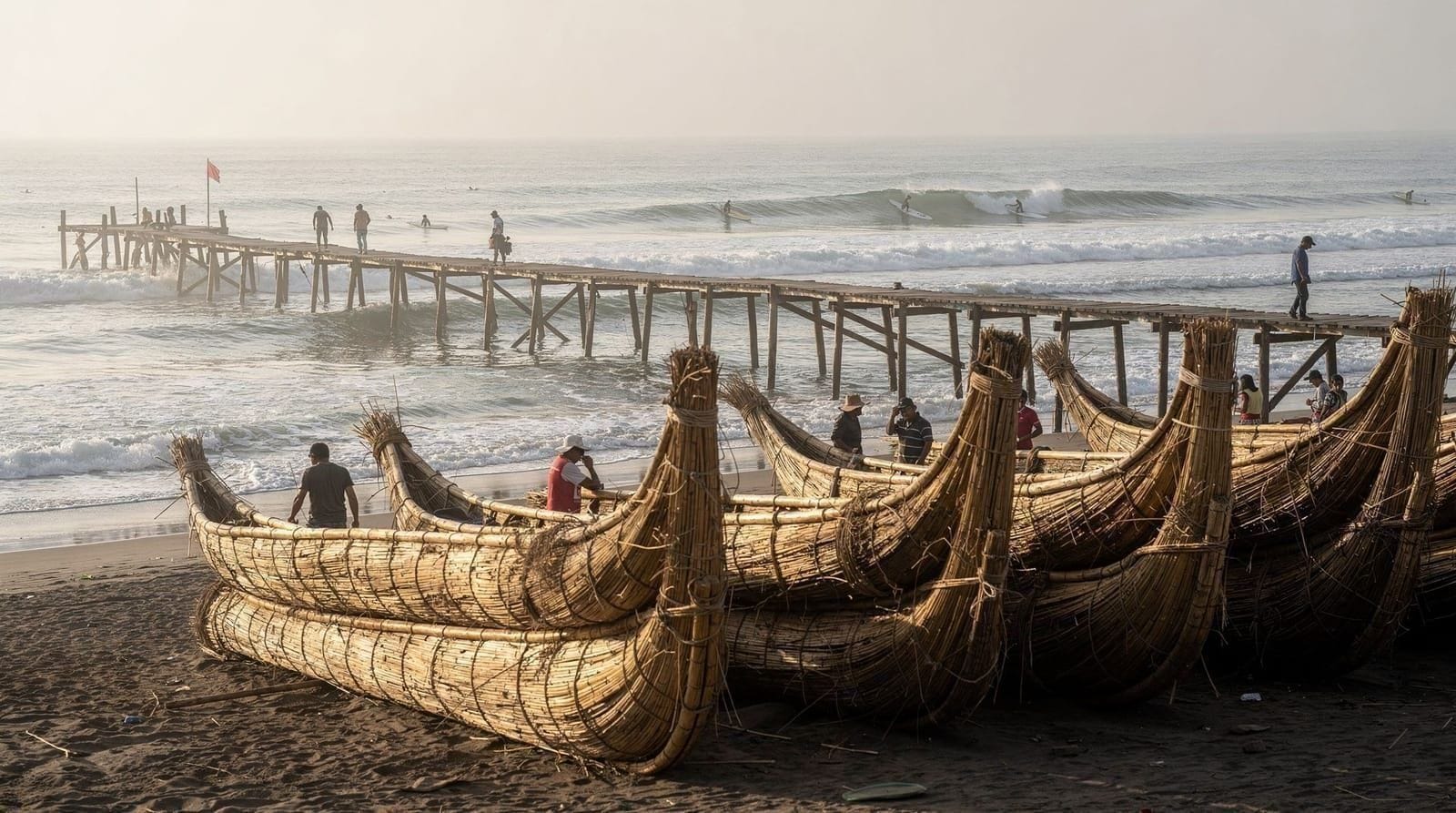
The trail ends, gloriously, at the beach. Huanchaco is a low-key surf town fifteen minutes from Trujillo where fishermen still ride the caballitos de totora — narrow boats woven from reeds, the same design the Moche and Chimú used, which you can see propped upright along the seafront like a row of pointed canoes.
I ate the best ceviche of my entire Peru trip here, at a simple place facing the water, for S/35 — fish that had almost certainly been in the sea that morning, sharp with lime, cold, perfect. I watched a fisherman paddle a reed boat out through the surf using a split bamboo as a paddle, exactly as it had been done for a millennium. Then I sat on the pier as the sun went down over the Pacific with a beer and felt very far from the Inca Trail crowds, in the best way.
The cost and the calculus
The whole northern detour was cheap by Peru standards — entry fees in the low tens of soles, food a fraction of Lima prices, and a guided full day that covered the lot for a reasonable sum. What it cost was time and a flight or a long bus from Lima, and that’s the real trade. The case for whether to bother — and how the north stacks up against the famous south — is argued well in north vs south Peru.
My take after walking the Moche trail: if you have two weeks or more in Peru, the north earns three or four days. If you have one week, the south wins and the north waits for next time. I had the time, I spent it here, and standing nearly alone inside a painted temple older than most of Europe’s cathedrals was the quiet highlight of the whole country.
A few honest practicalities
The coast here is desert-grey and the ocean is cold — this is not a swimming beach holiday, it’s surf and history. The sites are exposed and shadeless, so go early with a hat and water. Guides at the temples and Chan Chan add a lot because the iconography means nothing un-narrated. And eat the ceviche in Huanchaco, not Trujillo — closer to the boats, fresher on the plate.
A few other things I wish someone had told me before I arrived. Trujillo’s centre is compact enough to walk, but the ruins ring the city at a distance that makes a taxi or tour genuinely worth it rather than a point of pride to avoid — I wasted an hour on my first morning trying to combi my way to Huacas de Moche before giving in and taking a cab. ATMs in the centre are plentiful, but bring more cash than you think for the sites themselves, since ticket booths rarely take cards. And the marinera, the region’s signature dance, turns up unannounced in the Plaza de Armas some evenings — if you stumble on a rehearsal or a small performance, stop and watch; it’s one of the more purely enjoyable free things I did on the whole trip.
The day trip I almost skipped: El Brujo and the Lady of Cao
On my last morning I nearly slept in, and I’m glad I didn’t, because I drove an hour up the coast to the El Brujo complex and met the Lady of Cao. She is a Moche noblewoman mummified around 1,700 years ago, found in 2006, tattooed with serpents and spiders, buried with war clubs and gold — and her discovery rewrote the assumption that Moche rulers were all men. There’s a small, excellent modern museum on site built to display her, and the surrounding huaca is another painted Moche temple rising straight out of farmland by the sea.
It was the quietest site of the whole trip — I shared it with a school group and almost no one else. The drive out through sugarcane fields and dusty coastal villages is part of the experience, and it underlines how much of this region’s history is still sitting just off the road, half-excavated. Getting there independently is awkward, so a guided run is the practical option, and several operators bundle El Brujo with the coast.
El Brujo archaeological complex and Lady of Cao tourThe Moche trail’s four main sites, compared
If you’re deciding which sites to prioritise with limited time, here’s the honest breakdown:
| Site | What you see | Crowds | Time needed |
|---|---|---|---|
| Huacas de Moche | Vivid painted friezes, layered temple | Light | Half day |
| Chan Chan | Vast mud city, carved walls | Light-moderate | Half day |
| Huanchaco | Reed boats, surf, best ceviche | Light | Half day, or an evening |
| El Brujo | Lady of Cao mummy, museum | Very light | Half day, further afield |
None of them is skippable if you’ve made the trip north at all — each shows a different facet of the same Moche-Chimú world, and together they take three to four unhurried days.
How I’d plan the north differently
If I did the north again I’d give it four full days, not three, and I’d reorder things. Day one: Trujillo’s centre and Chan Chan. Day two: Huacas de Moche and the museum, ending with sunset and ceviche in Huanchaco. Day three: El Brujo and the Lady of Cao. Day four: a slow morning surfing or watching the reed boats before the journey on. I crammed El Brujo into a half-day and it deserved more.
I’d also consider pushing further north to Chiclayo and the Lord of Sipán tombs, which several travellers told me rival anything I saw — the north coast is a string of these sites and you could spend a week and not run out. For sequencing the whole region into a coherent route, the northern Peru route guide maps it far better than my improvised version.
The honest verdict
I came north for ruins and left thinking the whole region — temples, mud city, reed boats, empty beach — was one of the most underrated stretches of Peru I found. Go before everyone else figures it out.