Three days on the Amazon out of Iquitos: a river diary
Iquitos is the largest city in the world you cannot drive to. Let that sit for a second. There is no road in or out; you arrive by plane or by river, and the moment you land you understand that this is a different Peru entirely. No Andes, no coca tea, no altitude. Just heat, the smell of the river, the buzz of fifty thousand mototaxis, and the world’s biggest jungle pressing in on all sides. I came for three days on the Amazon and left with mud on my boots and a list of things I had not expected.
| Getting there | Flight only — no road in or out of Iquitos |
| Cost | Around USD 300 for a 3-day/2-night mid-range lodge tour |
| Time needed | 3 days minimum, plus a day in the city first |
| Season | Year-round, but high water (Dec–May) vs low water (Jun–Nov) changes what you see |
| Bring | Repellent, dry bag, long light clothing, boots (often lodge-provided) |
The city before the river
I gave myself a full day in Iquitos before heading downriver, which I would recommend to anyone, because the city is strange and worth it. It is a faded rubber-boom town, all crumbling tiled mansions and a wrought-iron building attributed to the Eiffel workshop on the Plaza de Armas. The heat is total and humid in a way the coast never prepares you for; I changed shirts twice before lunch.
The thing you cannot skip is Belén, the floating market and neighbourhood where the lower town literally rises and falls with the river. I went in the morning and walked through stalls selling everything the jungle produces: river fish I could not name, mounds of camu camu and aguaje fruit, medicinal barks and tinctures, suri grubs wriggling in bowls that vendors fry on request. I tried one. It tasted, honestly, like buttery bacon, and I am glad I did it once and have no need to do it twice. Belén is intense, occasionally confronting, and the most alive market I have ever walked through. Watch your belongings and go with respect; people live here.
For the full lay of the city before you head downriver — where to eat, what else to see, how to spend that first day well — the Iquitos complete guide covers it properly.
Into the lodge
The next morning I joined a three-day, two-night guided jungle tour that I had booked ahead, partly for peace of mind and partly because organising your own boat, guide, and lodging downriver is more hassle than I wanted in that heat. It ran me a little over USD 300 for everything: transport, the lodge, all meals, a guide, and the daily excursions. That is mid-range; you can find cheaper and far more expensive, and the Iquitos jungle lodges guide breaks down what you actually get at each price tier — the difference between a basic lodge and a premium one is mostly comfort and remoteness, not wildlife guarantees.
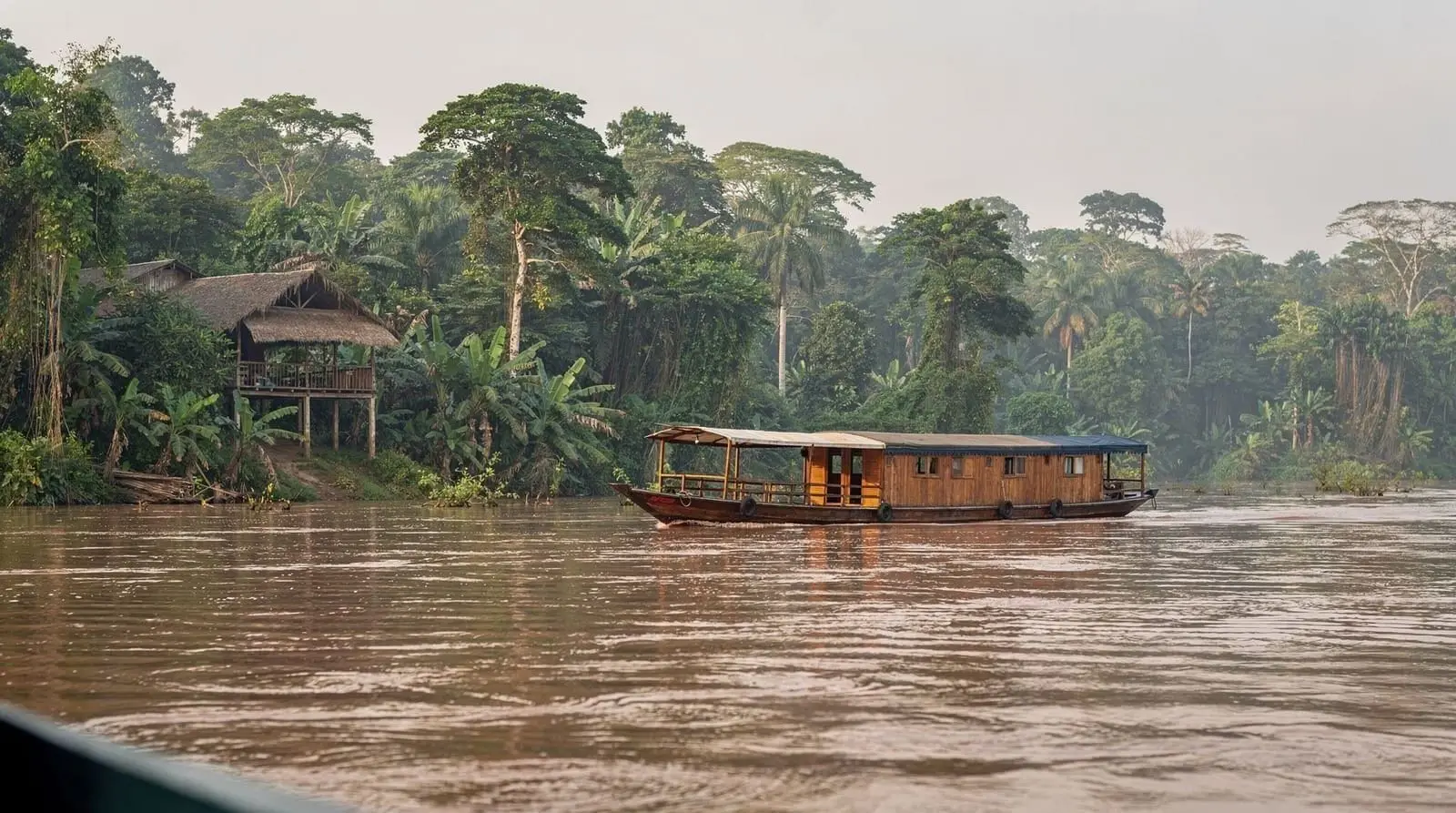
The journey out is part of the experience. A van to the port, then a long motorboat ride down the brown, churning width of the river, the banks sliding past with stilt houses and kids waving and the occasional pink shape rolling at the surface. The lodge, when we reached it, was a cluster of thatched wooden bungalows on stilts connected by raised walkways, with mosquito nets over the beds, cold-water showers, and electricity for a few hours a night from a generator. I had braced for rougher. It was rustic but comfortable, and the sound of the jungle at night is something a recording cannot capture.
The wildlife, managed expectations
Let me be honest about the Amazon, because the brochures are not. You do not step off the boat into a David Attenborough sequence. The forest is dense, the animals are shy, and a lot of the wildlife is small, distant, or active at hours you would rather be asleep. Manage your expectations and you will be delighted; arrive expecting jaguars on the riverbank and you will be disappointed.
That said, over three days the river gave up a remarkable amount. We saw pink river dolphins surfacing repeatedly during a dawn boat trip, their backs rolling up grey-pink and gone before the camera could focus. We spotted three-toed sloths, a great many birds including macaws and toucans, monkeys crashing through the canopy, and at night, on a slow paddle through a flooded forest, the red eyeshine of caiman caught in the guide’s torch. My guide could find and name things I would never have noticed, which is the entire value of going with one rather than alone.
The piranha fishing was the comedy highlight. We cut up bait, dropped lines off the canoe, and mostly fed the piranhas for free while they stripped our hooks. I caught two; one was returned, one became part of dinner. They have alarming teeth and very little meat. Worth doing for the story.
The things nobody warns you about
The mosquitoes are real and relentless near the water at dusk. I had bought repellent in Iquitos and used it liberally and still got bitten. Long sleeves, long trousers tucked into socks, and accepting a certain level of itchiness is the only way through. Wear what looks ridiculous. Nobody is judging you out here.
The heat and humidity never let up. Your clothes do not dry. Your camera lens fogs every time you step from the boat into the cooler forest. A dry bag for electronics is not optional. I also underestimated how physical some of the jungle walks would be: mud to the shins, slippery roots, and a rubber-boot terrain that the lodge thankfully provided boots for. The what to pack for the Amazon guide is the list I wish I’d checked before, not after, packing.
And the food, which I had worried about, was a genuine pleasure. Grilled river fish wrapped and cooked in bijao leaves, plantains in every form, fresh jungle fruit at every meal, and rice and beans that tasted better than they had any right to after a morning of hiking. I ate well and did not get sick, which on the Amazon is its own small victory.
A night I will not forget
The best moment was unplanned. On the second night the guide took us out in a canoe with the engine off, paddling silently into a side channel, and asked us to turn off our torches. The dark was complete. Then he pointed up. The sky over the Amazon, far from any city light, is so thick with stars it looks like a mistake. The river was perfectly still and the stars were reflected in it, so that we seemed to be floating through the middle of the galaxy. Insects sang. A caiman splashed somewhere. Nobody spoke for a long time. That five minutes was worth the whole trip.
Would I recommend it?
Yes, with a clear head about what it is. The Amazon out of Iquitos is hot, humid, buggy, and physically demanding, and the wildlife requires patience rather than guarantees. It is also the deepest immersion in genuine wilderness I have had anywhere, the kind of place that recalibrates your sense of scale. Three days felt right: enough to settle into the rhythm of dawn boat trips and night walks, not so long that the discomfort wore me down.
Pacaya-Samiria 3-day Amazon reserve tour from IquitosIquitos vs Puerto Maldonado, the two Amazon gateways
| Iquitos | Puerto Maldonado | |
|---|---|---|
| Getting there | Flight only, no road | Flight or combine with Cusco overland |
| River | The main Amazon itself, bigger scale | Tambopata and Madre de Dios rivers |
| Combine with | Standalone trip | Easy add-on to a Cusco/Machu Picchu trip |
| Jungle feel | Deeper, more remote lodges further out | Closer reserves, still genuinely wild |
If you are choosing between Amazon gateways, Iquitos gives you the bigger river and the deeper jungle feel at the cost of a flight, while Puerto Maldonado in the south is easier to combine with Cusco. I chose Iquitos for the scale and do not regret it. The Iquitos vs Puerto Maldonado guide walks through the trade-offs in more depth if you’re weighing the two against your itinerary. Bring repellent you trust, a dry bag, light long clothing, and the patience to let the forest reveal itself slowly. It will, and when it does, you will understand why people who come to the Amazon never quite describe it the same way twice.