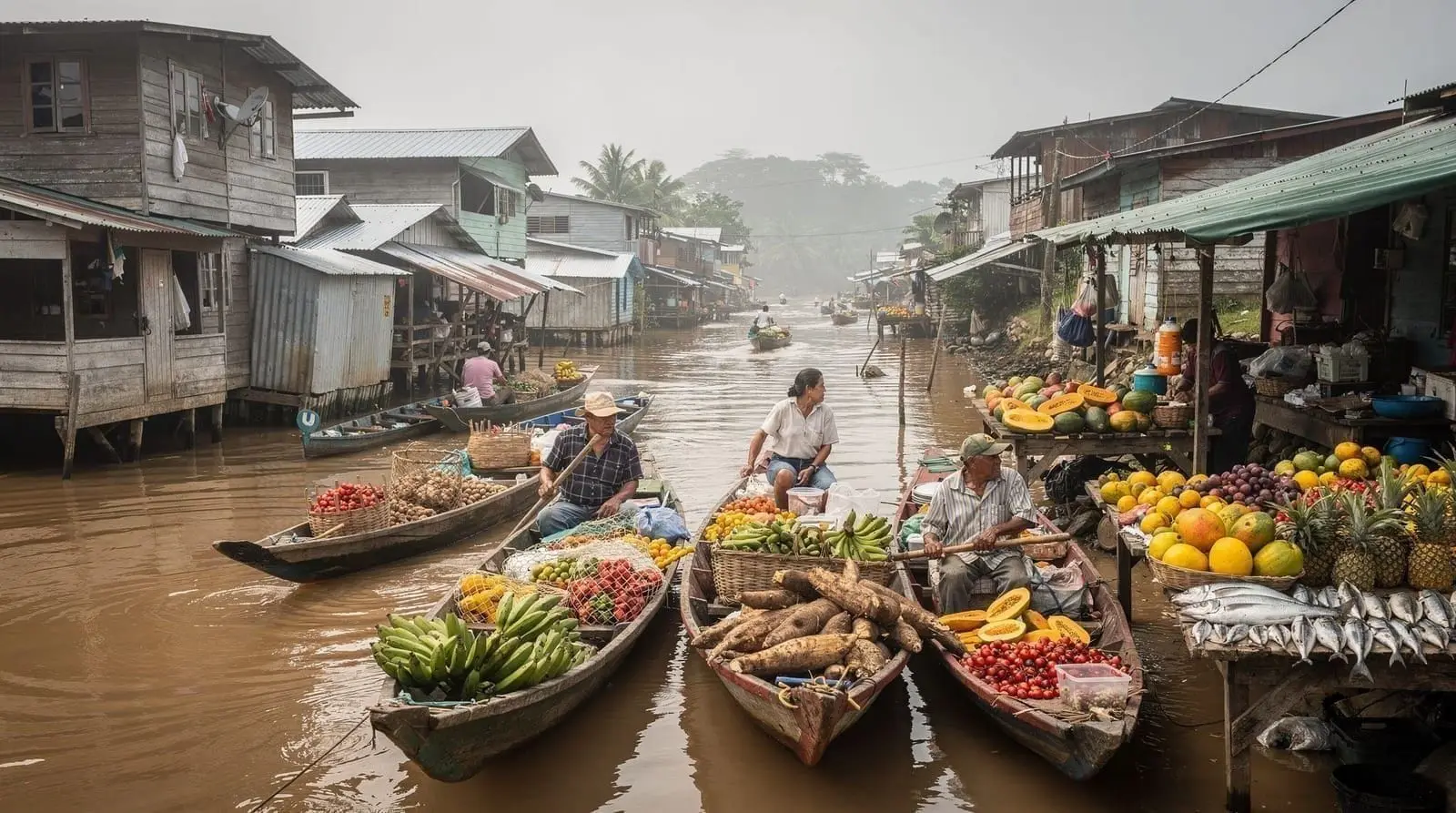
Belén market, Iquitos
Iquitos: City Tour and the Belén Market
What is Belén market in Iquitos and is it worth visiting?
Belén is Iquitos's vast riverside market and floating neighbourhood, where homes built on rafts rise and fall with the Amazon — hence its nickname, the Venice of the Amazon. It's a raw, fascinating window into Amazonian daily life, selling jungle fish, fruits, and remedies. It's worth visiting, ideally in the morning with a local guide, with sensible precautions.
A neighbourhood that floats
Belén is the most extraordinary corner of Iquitos and, for many visitors, the single most memorable thing they see in the Peruvian Amazon. It is two things at once: a sprawling open-air market that is the commercial engine of the city, and a residential neighbourhood — Lower Belén — built on the river itself, where homes float on rafts or perch on tall wooden stilts and rise and fall with the Amazon’s seasonal flood. That flooded quarter is why Belén is nicknamed the Venice of the Amazon, though the comparison flatters the romance and understates the reality: this is the poorest neighbourhood in Iquitos, and what makes it remarkable is also what makes it raw.
For a traveller, Belén is unmissable precisely because it is not packaged for you. The market sells what the people of Loreto actually eat, use, and believe in — paiche and other Amazon river fish, mountains of regional fruit, live grubs and game meat, and an entire alley devoted to jungle plant medicine. It is loud, pungent, crowded, and entirely genuine. This guide explains what you will find, how to visit it safely and respectfully, and where the ethical lines lie — because Belén rewards curiosity but punishes carelessness.
The market sits in the southeast of Iquitos, near the Itaya River. If you are planning broader time in the city, the Iquitos complete guide covers the wider picture.
| Where | Southeast Iquitos, near the Itaya River |
| Cost | Free to walk; tours around $20–35; snacks/juice a few soles |
| Time needed | 1.5–2 hours, longer with a floating-houses canoe add-on |
| Best time | Morning, before 10am, dry-ish season for easier walking |
| Guide needed | Strongly recommended, essential for the floating quarter |
The market: what you will actually find
Belén’s market spreads over many blocks, and it is organised loosely by product. Walking through it is a sensory immersion in Amazonian life.
The fish section is where the day begins, as boats unload the night’s catch onto the riverbank. You will see paiche (arapaima, one of the world’s largest freshwater fish), the dreaded but tasty piranha, doncella, and other river species, sold whole, filleted, or dried and salted. Early morning is when it is freshest and most active.
The fruit and produce stalls display Amazonian species rarely seen elsewhere — camu-camu (extraordinarily high in vitamin C), aguaje (the palm fruit beloved across Loreto), cocona, copoazú, and the staple plantain in every form. Trying a fresh aguaje or a glass of camu-camu juice from a busy stall is one of the simple pleasures here.
The food and cooked-goods area offers regional specialities: juane (rice and chicken steamed in bijao leaves), tacacho with cecina, grilled river fish, and street snacks. If you eat from a stall, choose a busy one with high turnover and food cooked hot in front of you.
Pasaje Paquito is the famous and contentious alley of traditional medicine — dozens of stalls selling bark, roots, tonics, and bottled preparations claiming to cure everything from arthritis to heartbreak, alongside ingredients associated with ayahuasca. More on the cautions below.
The hardware of river life — canoe parts, fishing gear, household goods — fills the rest, the everyday commerce of a city with no road to anywhere.
Lower Belén: the floating quarter
Below the market, toward the river, lies Lower Belén — the floating and stilted neighbourhood that gives the area its fame. Here, wooden houses sit on rafts that lift with the flood or stand on stilts several metres high. The experience changes completely with the season. At high water (December to May), the streets become waterways and residents move by canoe; the place looks most like its Venice nickname. At low water (June to November), the houses settle onto exposed riverbank and mud, and you can walk through parts of it on foot. The best time to visit the Peruvian Amazon guide explains the flood cycle in full.
It is important to hold the right frame here: Lower Belén is a living community of people getting on with hard lives, not an attraction laid on for visitors. There is no sanitation infrastructure and real poverty. Visiting by canoe with a local guide is genuinely interesting and brings a little income to residents, but it should be done quietly and respectfully, not as a poverty safari. Ask before photographing anyone, and follow your guide’s lead on where it is and is not appropriate to go.
Iquitos Belén market and floating houses tourHow to visit: morning, and with a guide
Two pieces of practical advice make the difference between a great Belén visit and an uncomfortable one.
Go in the morning, ideally before 10am. The market is busiest, freshest, and at its most photogenic early, when the catch comes in and the produce is piled high. By afternoon it winds down, the equatorial heat becomes punishing, and the emptier streets feel less comfortable. An early start is by far the best approach.
Go with a local guide. Belén is a maze, the products are unfamiliar, the floating-neighbourhood logistics need a canoe and local knowledge, and the area benefits from the extra safety and context a guide provides. A good guide turns a bewildering market into a legible one — explaining the fish, the fruits, and the medicine stalls — and helps you engage respectfully with residents. Many Iquitos city tours bundle Belén in, which is the easiest way to see it properly.
Iquitos city tour and the Belén marketA combined city-and-Belén tour also gives you the wider Iquitos context — the rubber-boom mansions of the Malecón, the iron Casa de Fierro on the Plaza de Armas, and the city’s distinctive history — alongside the market.
Iquitos full-day city tour with lunch includedBelén food: the flavours of Loreto
If you are even slightly adventurous with food, Belén is one of the best places in Peru to taste genuine Amazonian cooking, far removed from the highland staples most visitors know. The Loreto kitchen is built around the river and the forest, and the market is its larder.
Look for juane, the regional signature — rice seasoned with turmeric-like local spices, chicken or fish, and an olive and egg, all wrapped in a bijao leaf and steamed into a fragrant parcel; it travels well and is a fixture of the Amazonian festival of San Juan. Tacacho con cecina pairs mashed and fried green plantain with cured, smoked pork, hearty and rich. Grilled river fish — paiche, doncella, or the bony but flavourful piranha — turns up at cooked-food stalls, often with plantain and rice. For drinks, the market is the place to try camu-camu juice, aguaje in its many forms (fresh, frozen, or as the popular aguaje ice cream sold from carts), and cocona refreshers.
A word of caution that applies to any market eating: choose the busiest stalls with the fastest turnover, eat food cooked hot in front of you, and stick to bottled or purified drinks rather than tap water or ice of unknown origin. Belén is not the place to be cavalier about food hygiene — but eaten sensibly, it is a genuine highlight, and far more authentic than the tourist restaurants on the Malecón. The Amazon packing guide covers the basic stomach-trouble kit worth carrying.
Safety: clear-eyed, not alarmist
Belén is the poorest part of Iquitos, and it requires more caution than the tidy centre around the Plaza de Armas — but it is not a no-go zone, and tens of thousands of visitors pass through it safely each year. The realistic risk is petty theft: pickpocketing and bag-snatching in the crowds. The precautions are simple. Carry minimal cash and no valuables — leave the good camera, jewellery, and most of your money at the hotel, and bring just a phone and small notes in a front pocket or money belt. Stay in the busy main areas, especially if without a guide, and avoid wandering the deep, quiet alleys of Lower Belén alone. Visit in daylight, preferably morning. Going as part of a guided tour or with a local meaningfully reduces the risk.
This is consumer-protection advice, not scaremongering: treat Belén like a busy market in any low-income area and you will almost certainly be fine. The Peru travel safety guide has broader guidance for the country.
Ethics: what to buy, what to refuse, how to behave
Belén raises ethical questions a thoughtful traveller should not ignore.
Do not buy wildlife or endangered-species products. Stalls sometimes sell live turtles, caiman, wild game meat, and parts of protected species, often illegally. Buying any of it fuels the trade and may be illegal to possess or export. Walk past, however curious you are.
Be very cautious with the medicine stalls. Pasaje Paquito is fascinating, but buying traditional remedies as a casual tourist is genuinely risky — efficacy is unverified, some plants are toxic in the wrong dose, and labelling is informal. As for ayahuasca: the brew should only ever be taken with an experienced, reputable facilitator in a proper retreat setting, never bought off a market stall and self-administered. People have been seriously harmed doing exactly that.
Treat residents as neighbours, not exhibits. Ask before photographing people, accept “no,” and remember Lower Belén is someone’s home. Spend a little money at legitimate food and produce stalls — it goes directly into a community that needs it.
Handled this way, a visit to Belén is one of the most rewarding cultural experiences in the Peruvian Amazon and a worthy bookend to time spent in the jungle itself — whether that’s a Pacaya-Samiria cruise or a lodge stay. For what to wear and carry in the Iquitos heat, see the Amazon packing guide, and for fitting Iquitos into a wider route, the itineraries page shows how Iquitos slots after Cusco.
Pairing Belén with the rest of Iquitos
Belén is usually the first or second stop on an Iquitos morning, easily combined with the rubber-boom Malecón mansions and the iron Casa de Fierro on the Plaza de Armas. If your Amazon time is short, a full-day city tour with lunch folds Belén into a wider introduction before you head upriver to a lodge or a Pacaya-Samiria excursion. Comparing Iquitos with the southern jungle gateway, the Iquitos vs Puerto Maldonado guide is useful if you have not yet decided which Amazon region to fly into.
What locals actually buy here
Beyond the tourist-visible fish and fruit stalls, Belén is where Iquitos households do their weekly shopping: rice, cooking oil, dried goods, cheap clothing, and household plastics sold from tarps spread on the ground. Watching this everyday commerce alongside the more exotic jungle produce is part of what makes Belén feel real rather than staged — nothing here is arranged for a camera. It is also worth noting that prices are in soles and bargaining is mild at most; a guide can tell you when a quoted price is already fair.
When to visit within the year
Belén itself is a market and can be visited any month, but the character of Lower Belén shifts with the Amazon’s flood cycle. During high water (roughly December to May), the floating quarter looks its most dramatic, with canoes threading between houses lifted well above the ground. During low water (June to October), much of the neighbourhood sits on exposed mud and stilts, and walking is possible in parts where a canoe would otherwise be needed.
Neither season is objectively better — they are simply different versions of the same place — but if the floating-Venice image is what draws you, aim for the high-water months. The best time to visit the Peruvian Amazon guide covers how this affects the wider jungle trip beyond just the market.
What to bring for a Belén visit
A short daypack list makes the difference between a comfortable visit and an uncomfortable one. Bring closed, sturdy shoes rather than sandals, since the ground can be wet, muddy, or uneven depending on the season and the section of the market. A hat and sunscreen matter even under cloud, as the equatorial sun burns fast. Carry small-denomination soles in a front pocket or money belt, hand sanitiser for after handling produce or touching surfaces, and a reusable water bottle, since the heat and humidity add up quickly over an hour or two of walking. Leave the good camera and any jewellery at the hotel, per the safety notes above, and bring a phone or a basic point-and-shoot instead.
Frequently asked questions about Belén market, Iquitos
Is Belén market safe for tourists?
What is the floating part of Belén?
Should I visit Belén in the morning or afternoon?
Can I buy ayahuasca or jungle medicines at Belén?
Do I need a guide for Belén market?
Is it ethical to visit Belén?
Top experiences
Bookable activities with verified prices and instant confirmation on GetYourGuide.
