Pacaya-Samiria National Reserve guide
From Iquitos: 3-Day Pacaya-Samiria National Reserve Tour
What is Pacaya-Samiria and how do you visit it?
Pacaya-Samiria is Peru's largest protected area, a 2.08-million-hectare flooded forest reserve in the Loreto region. It is reached only by boat from Iquitos or the river town of Nauta, on multi-day cruises or lodge-based tours run by licensed operators. Plan three to seven days and expect to pay from roughly USD 130 per person per day.
A reserve the size of a small country
Pacaya-Samiria covers 2,080,000 hectares of flooded forest between the Marañón and Ucayali rivers in Peru’s Loreto region — an area roughly the size of El Salvador, and the largest protected area in the country. It is also one of the least-visited major reserves in the Peruvian Amazon, which is precisely the point. While the southern Amazon around Puerto Maldonado sees a steady stream of three-day jungle packages, Pacaya-Samiria remains genuinely remote: you reach its interior only by hours of boat travel, there are no roads, and the wildlife has not been habituated by decades of day-tripper traffic.
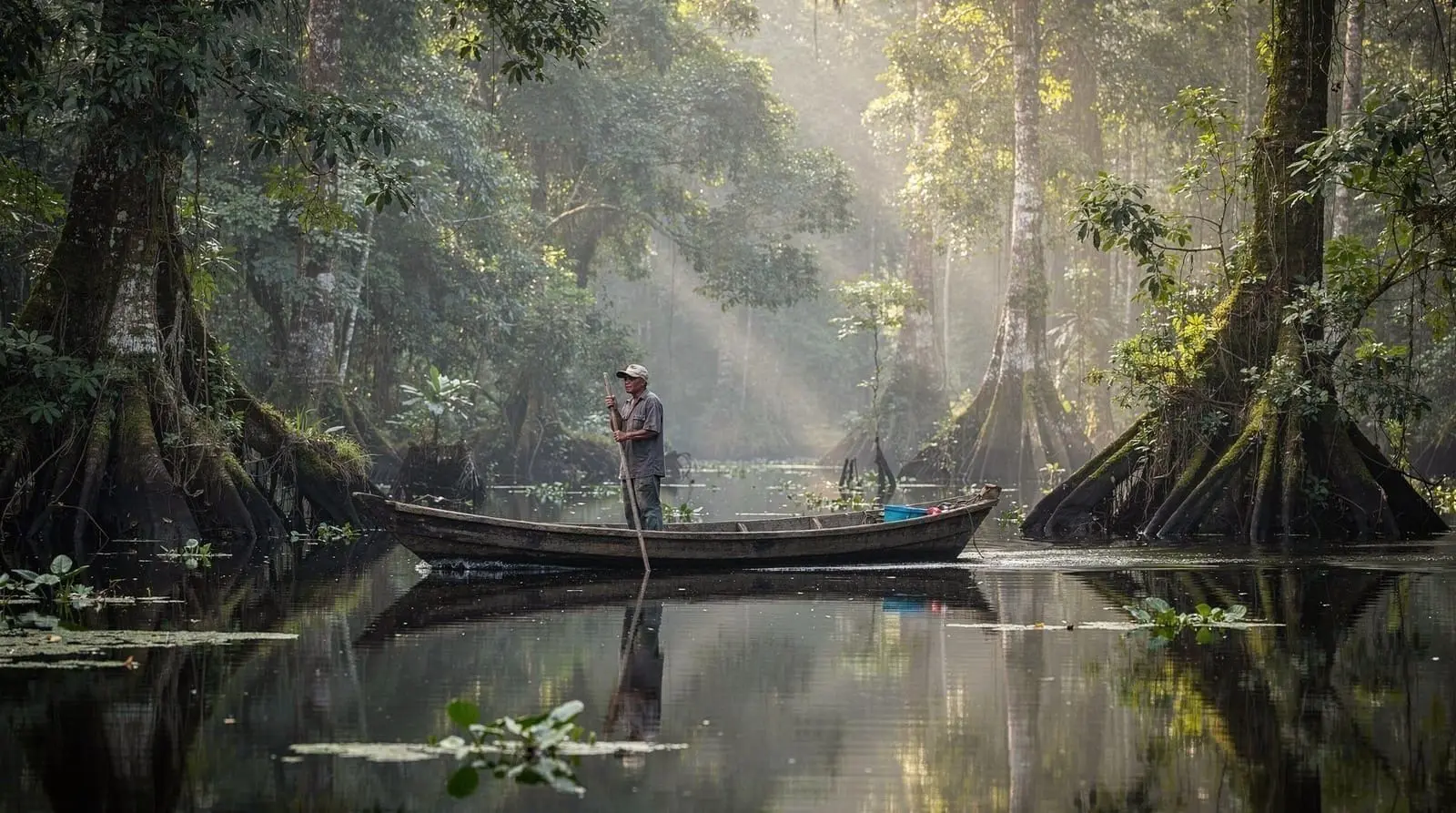
The reserve protects a várzea ecosystem — seasonally flooded forest, distinct from the terra firme (non-flooding) rainforest of Manu and Tambopata. That single ecological fact shapes everything about a visit here. The animals you come to see are largely aquatic or arboreal: Amazonian manatees, pink and grey river dolphins, giant river otters, black caiman, and an extraordinary density of birds best observed gliding silently through flooded forest in a paddle canoe. If your mental image of the Amazon is hacking through jungle on foot, Pacaya-Samiria will recalibrate it. Most of your wildlife viewing happens from the water.
This guide covers what the reserve actually is, how to get there, what it costs in soles and dollars, how the flood cycle dictates your experience, and how to choose between the cruise operators and lodges competing for your booking. The honest summary up front: it is one of the best wildlife experiences in Peru, it is not cheap, and the cheapest tours barely enter the reserve at all.
| Where | Loreto region, reached only by boat via Iquitos or Nauta |
| Cost | From around USD 130 per person per day, all-inclusive |
| Time needed | 3 days minimum, 4–7 days for the deep interior |
| Getting there | Fly to Iquitos, then boat via Nauta or direct by river |
| Best time | Low water (June–October) for concentrated wildlife |
Where Pacaya-Samiria is and how to reach it
The reserve sits southwest of Iquitos, in the triangle of land formed where the Marañón and Ucayali rivers meet to become the Amazon proper. Almost every visit begins in Iquitos, the isolated Amazon capital reachable only by air or river. From Lima it is a two-hour flight; the Iquitos destination guide covers arrival logistics in detail.
From Iquitos there are two routes into the reserve:
Via Nauta. Most lodge-based and shorter tours drive about 100 km south on the only paved road out of Iquitos to Nauta, a small river town at the edge of the reserve’s buffer zone (around 1.5 to 2 hours by road). From Nauta, boats run up the Marañón and into the reserve’s northern entry points. This is the faster way to reach the buffer zone and the entry-level wildlife.
Direct by river from Iquitos. Multi-day cruises and expedition boats often travel the full distance by water, which takes longer but lets you watch the river life unfold and reach deeper sectors such as Yanayacu-Pucate and, on longer trips, the remote Pacaya river itself.
The single most important thing to understand is that distance into the reserve correlates directly with wildlife quality. The entrance and buffer zones see local fishing pressure; the deep interior, days from the nearest village, is where giant otters fish in front of you and uakari monkeys move through the canopy. A three-day tour spends a lot of its time simply travelling.
When to go: the flood cycle
The Amazon here does not have a dry season in the way a desert does — it has a flood cycle, and the water level swings several metres between seasons. This matters more than rainfall.
Low water (roughly June to October). Rivers recede, lagoons shrink, and white-sand river beaches emerge. Wildlife concentrates around the remaining water, making animals easier to find — fish trapped in shrinking pools draw caiman, dolphins, and fishing birds. Trails become walkable. This is the period most operators recommend for a first visit focused on seeing animals.
High water (roughly December to May). The reserve floods and canoes can paddle directly into the forest canopy, among the crowns of trees that stand in metres of water. The atmosphere is extraordinary and the birding excellent, but animals disperse across the vast flooded area and are harder to pin down. Mosquito pressure is higher.
Neither season is wrong. For a deeper breakdown of the trade-offs, including transitional months, see the best time to visit the Peruvian Amazon guide. The short version: choose low water if your priority is wildlife sightings, high water if you are a photographer or birder drawn to the flooded-forest spectacle.
What it costs
Pacaya-Samiria is not a budget destination, and you should be suspicious of anything advertised as one. Costs break down into three parts.
The reserve entrance fee is set by SERNANP, Peru’s protected-areas authority, at roughly S/60 per person per day for foreign visitors (about USD 16) as of 2026, with multi-day permits cheaper per day. This is usually bundled into your tour price; confirm it is included rather than a surprise add-on.
The tour itself is where the real money goes. As a rough 2026 guide:
- Lodge-based or basic boat tours (3 days): from around USD 130 to 220 per person per day, all-inclusive of meals, guide, permits, and transport from Iquitos or Nauta.
- Comfortable expedition cruises (4 to 7 days): USD 250 to 500+ per person per day, with en-suite cabins, naturalist guides, and deeper reserve access.
- High-end luxury cruise vessels: USD 600 to 1,200+ per person per day. These are floating boutique hotels and access the same wildlife as a good mid-range boat — you are paying for comfort, not better animals.
Flights to Iquitos add roughly USD 60 to 200 each way from Lima depending on how far ahead you book; the Peru domestic flights guide covers how to find the cheaper fares.
A few day tours from Iquitos sell themselves as “Pacaya-Samiria,” but realistically only reach the very edge of the buffer zone. They can be a worthwhile taste if you genuinely lack time, but do not expect the manatee-and-otter experience the reserve is famous for.
Full-day Pacaya-Samiria National Reserve tour from IquitosFor a meaningful visit, three days is the floor. Booking the standard three-day reserve tour gives you one full day inside, bracketed by travel — enough to see dolphins, caiman, and abundant birdlife, though not the deep interior.
3-day Pacaya-Samiria National Reserve tour from IquitosThe wildlife you actually come for
Pacaya-Samiria’s species list runs to more than 500 birds, 130 mammals, and 250-plus fish, but a handful of animals define the experience.
Amazonian manatee. This shy, fully aquatic mammal is the reserve’s flagship species and notoriously difficult to see in the wild — they surface briefly and feed on submerged vegetation. Sightings are never guaranteed, and any operator promising them is overselling. A rescue-and-release centre near Iquitos (the CREA / Manatee Rescue Center) is where most visitors actually see one up close, and a stop there is worth building into your trip.
Pink and grey river dolphins. Both species are common in the reserve’s channels and lakes. The pink dolphin (boto) is the larger and stranger of the two, and reliable sightings are one of the genuine highlights. Resist any operator offering to let you swim with or feed them — it stresses the animals and is discouraged by responsible guides.
Giant river otters. Endangered and territorial, these two-metre predators hunt in family groups in the reserve’s oxbow lakes. Seeing a pack fishing is a real Amazon highlight, and Pacaya-Samiria is one of the better places in Peru for it — but, again, mostly in the deeper sectors.
Monkeys and caiman. Several monkey species inhabit the várzea, including the strange red uakari. Black and spectacled caiman are seen on night excursions, their eyes reflecting torchlight across the water.
Birds. This is world-class birding country — herons, kingfishers, macaws, the prehistoric-looking hoatzin, and countless others, best appreciated from a quiet paddle canoe at dawn.
A word on ethics: the better operators emphasise no feeding, no touching, and no baiting of wildlife, and they carry out all rubbish. Catch-and-release piranha fishing is common and generally fine; demands to handle dolphins or caiman for photos are not. Choose accordingly.
Cruise versus lodge
There are two basic ways to experience the reserve, and the choice matters more here than almost anywhere else in the Peruvian Amazon.
Cruises move through the river system, sleeping aboard and accessing a different lake or channel each day. Because the best wildlife is deep inside, and because a boat can keep travelling while you sleep, cruises reach the rewarding interior sectors that a fixed lodge cannot. For Pacaya-Samiria specifically, a multi-day cruise is usually the superior choice. The trade-off is cost and time on the water.
Lodges sit at fixed points, generally in or near the buffer zone, and run daily excursions from there. They are cheaper and give a more grounded, immersive sense of one patch of forest, but they cannot reach the deep core. They suit travellers on tighter budgets or those combining the reserve with a more general jungle stay.
The full comparison, including specific vessels and the difference between expedition boats and luxury cruisers, is covered in the Amazon river cruises guide. If you are weighing the northern Amazon against the more accessible south, the Iquitos versus Puerto Maldonado guide lays out the decision clearly.
4-day Amazon-Ucayali cruise from IquitosHealth, safety, and what to bring
The Loreto lowlands carry real health considerations that no honest guide should soft-pedal. Yellow fever vaccination is recommended for all Amazon travel in Peru and should be given at least 10 days before arrival — carry the international certificate, as some onward Amazon borders ask for it. Malaria is present in Loreto, so discuss prophylaxis with a travel doctor before you go. Dengue is also present and has no vaccine for most travellers, so insect-bite prevention matters regardless.
That means high-strength repellent (30%-plus DEET, or picaridin), long sleeves and trousers for dawn and dusk, and ideally permethrin-treated clothing. The reserve is hot, humid, and remote, with no medical care in the interior — a basic personal first-aid kit and any prescription medication you need are non-negotiable. For the full kit list, see the Amazon packing guide.
Otherwise the safety picture is straightforward: you are with a licensed guide and park rangers, the operators are experienced, and the main hazards are insects, sun, and the river itself. Follow your guide’s instructions around water and caiman, and you will be fine. For broader trip security across Peru, the Peru travel safety guide is a useful companion.
How Pacaya-Samiria fits a Peru itinerary
The reserve is a commitment — it is in the far northeast, accessible only through Iquitos, and not on the way to anything else. Most travellers fold it into a Lima–Cusco–Machu Picchu trip as a dedicated four-to-six-day Amazon extension, flying Lima–Iquitos–Lima. It does not combine naturally with the southern Amazon around Puerto Maldonado; pick one Amazon region rather than trying to do both. The two-week and three-week Peru itinerary guides show how to slot a northern Amazon leg into a wider route, and the itineraries hub has full suggested circuits.
If you have the time and the budget, Pacaya-Samiria rewards it. It is the wildest, quietest, and arguably the richest of Peru’s accessible Amazon experiences — provided you go deep enough to actually reach the reserve it is named for.
Choosing an operator: what actually separates good from bad
Because independent entry is banned, your entire experience rests on the operator you choose, and the range in Iquitos runs from excellent to genuinely reckless. A handful of questions separate the two before you hand over a deposit.
Ask how far the itinerary actually goes. Some boats marketed as “Pacaya-Samiria” cruises spend most of their time in the Nauta buffer zone or on the Amazon and Marañón rivers outside the reserve boundary, only dipping briefly into it. Ask for the specific rivers and lakes on the route — Yanayacu-Pucate and the Pacaya river itself are the deep-interior names to look for.
Check the guide-to-guest ratio and naturalist credentials. A dedicated bilingual naturalist guide, rather than a general boat crew, is the difference between spotting a distant shape in the canopy and correctly identifying it, understanding its behaviour, and knowing where to look next. Reputable operators publish their guides’ names and backgrounds.
Confirm what “all-inclusive” includes. Meals, potable water, the SERNANP entrance permit, park ranger fees, rubber boots for muddy trails, and life jackets on the boat should all be bundled. If any of these are quoted as extras, budget accordingly and treat it as a sign of a leaner operation.
Look for a no-feeding, no-touching policy stated up front. Operators who advertise guaranteed close encounters, swimming with dolphins, or handling wildlife for photos are cutting welfare corners to sell a better brochure photo. The better lodges and cruises are explicit about keeping distance.
If time is short, a same-day option exists, though it barely scratches the reserve’s edge:
Full-day Pacaya-Samiria National Reserve tour from IquitosFor anyone who can spare the extra nights, the difference in what you see between the buffer zone and the true interior is night and day — go with the multi-day option in the Amazon river cruises guide if the budget allows it.
Before or after: pairing with Iquitos itself
Almost every Pacaya-Samiria trip begins and ends in Iquitos, and it is worth budgeting a spare day or two there rather than treating it purely as an airport. The floating and stilted neighbourhood of Belén and its sprawling market is one of the most vivid, unfiltered urban experiences in the Peruvian Amazon, well worth a guided morning before or after your reserve trip.
If your schedule allows a broader jungle comparison, the Iquitos complete guide and the Iquitos jungle lodges guide cover the wider range of lodge options beyond Pacaya-Samiria itself, and the Peru Amazon complete guide puts the whole northern Amazon region in context against Tambopata in the south.
Frequently asked questions about Pacaya-Samiria National Reserve
How many days do you need for Pacaya-Samiria?
Is Pacaya-Samiria better than Manu or Tambopata?
Do I need a yellow fever vaccine for Pacaya-Samiria?
What does the Pacaya-Samiria entrance fee cost?
When is the best time to visit Pacaya-Samiria?
Can you visit Pacaya-Samiria independently?
Top experiences
Bookable activities with verified prices and instant confirmation on GetYourGuide.
