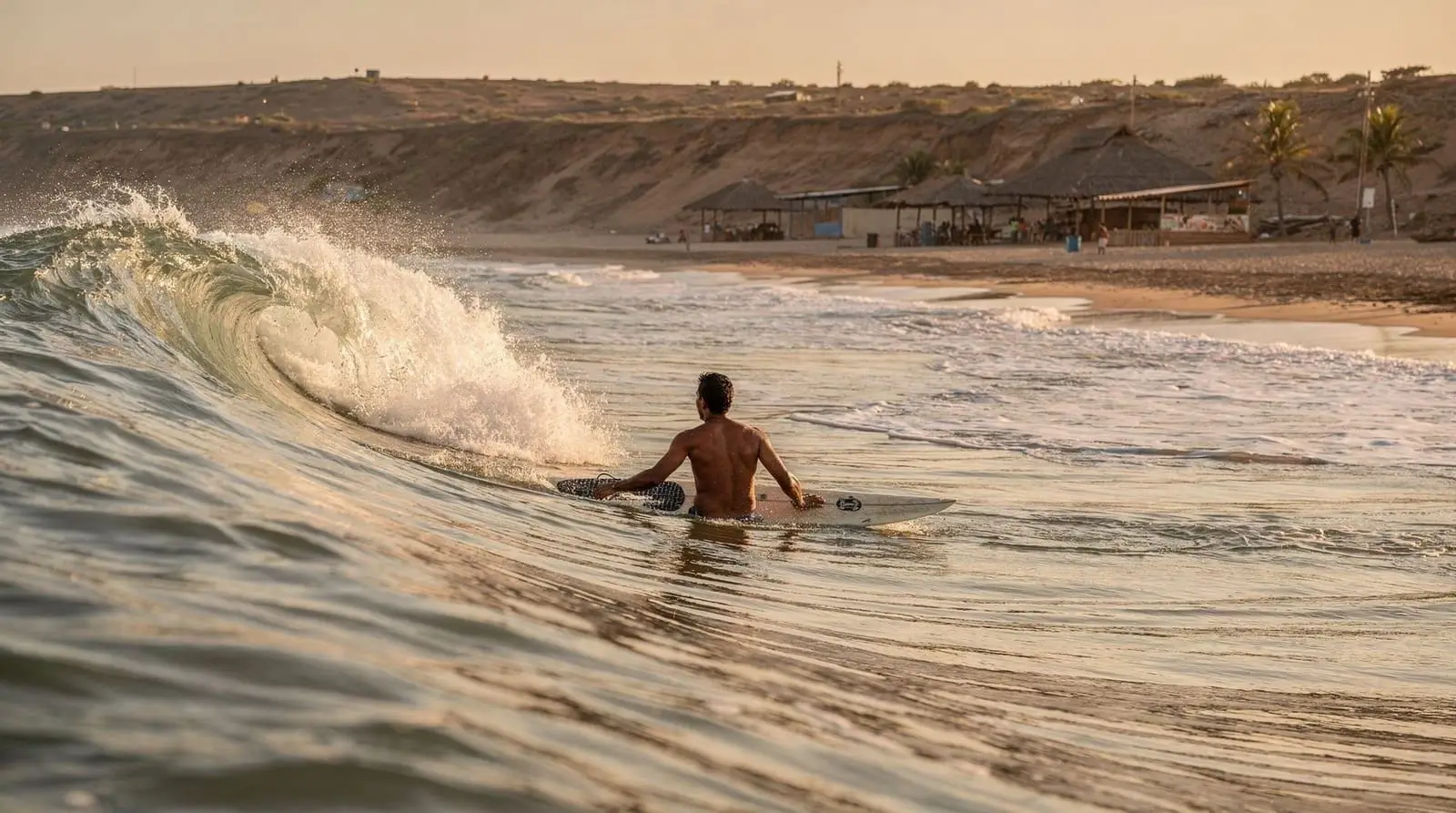
Máncora surfing guide
Máncora: Swimming with Turtles in Their Natural Habitat
Is Máncora good for surfing?
Máncora is an excellent beginner-to-intermediate surf base. The town break is a forgiving right-hander in warm 22–28°C water, with consistent waves and cheap lessons (S/80–120). Experienced surfers usually use it as a base for harder breaks nearby: Lobitos, Cabo Blanco and Órganos.
A warm-water surf base, not a single perfect wave
Máncora’s reputation as a surf town rests less on one outstanding break and more on the package: warm water, near-constant swell, cheap boards and lessons, and a string of better, harder waves within a short drive. For complete beginners it is among the easiest places in South America to stand up for the first time. For intermediates and experts it is a comfortable base from which to chase the genuinely excellent points of the far north — Lobitos and Cabo Blanco chief among them. What it is not is a performance wave for advanced surfers staying in town; you will outgrow the Máncora break within a day or two and want to travel for the good stuff.
This guide covers the town break, the named spots up and down the coast, the seasons and swells, real prices for boards and lessons, and the honest pitfalls — including the rip currents and the rocks that the glossy hostel posters leave out.
| Best for | Complete beginners to intermediates (town break) |
| Water temp | 22-28°C — wetsuit optional year-round |
| Lesson cost | around S/80-120 (USD 21-32) for 90 minutes |
| Best swell window | April-October, peak power June-August |
| Nearby serious breaks | Lobitos (advanced), Cabo Blanco (experts only) |
The Máncora town break
The main beach is a wide crescent of pale sand with a consistent shore break that reforms into a right-hander best ridden at low-to-mid tide on a small-to-medium south swell. It is mellow, forgiving and predictable — exactly what a learner wants. Waves are usually in the waist-to-head-high range, occasionally bigger on a strong swell. The bottom is sand, which removes the fear of rocks that hangs over the harder points further north.
Mornings give the cleanest conditions before the onshore wind picks up around midday; by early afternoon the wave turns soft and the beach becomes general swimming territory. The northern end, near the pier, tends to hold shape a little better. The town break gets crowded in high season (December–March) when learner numbers peak, so an early start pays off twice over: cleaner waves and fewer people.
The breaks worth travelling for
The far-north coast is the best surf in Peru, and Máncora is the natural hub. From south to north:
Lobitos (about 1.5 hours south). A long, fast left point break that peels for hundreds of metres on the right swell — one of the best waves in South America. Best April–October. It is intermediate-to-advanced and the line-up is committed; the village is small and bare-bones.
Cabo Blanco (about 1 hour south, near El Alto). A heavy, hollow left that tubes over a shallow reef. This is an experts-only wave that breaks properly only a handful of times a year on big swells. Hemingway fished here; the surf is for people who know what they are doing.
El Hueco and Órganos (10–15 minutes south). Reef and point breaks suited to confident intermediates, less crowded than the Máncora town beach. Good stepping stones between the beginner break and the serious points.
Punta Sal (about 20 minutes north). A gentler, longer ride in a sheltered cove — fine for improvers wanting something mellower than the reefs to the south.
Shared taxis and colectivos run the main coast road, so reaching Órganos or Punta Sal is cheap (S/5–15). Lobitos and Cabo Blanco are better reached by hiring a driver or a surf-shop transfer, since public transport links are awkward and you will want to time your arrival to the tide.
How the breaks rank by ability
To save you guesswork, here is the honest ability map for the far-north spots:
- Total beginner: the Máncora town break, sand bottom, gentle reform. Nowhere safer to learn.
- Improver: Punta Sal’s longer, mellower rides; the inside at Órganos on a small day.
- Confident intermediate: Órganos and El Hueco reef and point breaks; Lobitos on a small-to-medium swell.
- Advanced: Lobitos on a proper south swell — long, fast, demanding.
- Expert only: Cabo Blanco’s heavy reef tube, which breaks well only a handful of days a year.
Do not skip steps. The jump from the Máncora sand break to a reef point like Cabo Blanco is enormous, and the reefs punish overconfidence. Spend a few sessions at Órganos before committing to the harder lefts.
A typical surf day in Máncora
Mornings are the heart of it. Surfers are up before the wind, paddling out at the town break or piling into a colectivo south to Órganos for the dawn glass. By mid-morning the onshore breeze fills in, the town wave goes soft, and the rhythm shifts to breakfast on the strip — Green Eggs Café and the juice stalls are the usual stops — and a flat-water activity in the heat of the day.
Many surfers use the midday lull for the El Ñuro turtle swim, 15 minutes south, or simply a long lunch and a hammock. The afternoon can offer a second, smaller session if the wind drops, and the evening belongs to the beach bars and the sunset off the northern headland. It is an unhurried, repeatable routine, which is much of the appeal — Máncora is a place you settle into rather than tick off.
Seasons and swell
Máncora has rideable surf all year, but the character shifts:
- April to October brings the bigger, more consistent south swells, with the most power roughly June to August. This is the season for Lobitos, Cabo Blanco and the harder points. Water dips to 22–24°C and the sky is often overcast — a rash vest or 2 mm spring suit is comfortable.
- December to March brings smaller, friendlier waves and the warmest, sunniest weather (water 26–28°C). This is the ideal window for complete beginners and for combining surf with general beach time, though the town break gets crowded.
If your priority is learning, come in the southern-hemisphere summer (December–March). If you can already surf and want the famous lefts, come in the southern winter (May–September) and accept greyer skies. Cross-reference the wider seasonal picture in the best time to visit Peru guide if you are combining the coast with the highlands.
Lessons, board rental and what it costs
Surf shops line the main strip and prices are broadly standardised:
- Board rental: S/30–50 (USD 8–14) per hour; S/80–120 (USD 21–32) per day. Soft-top learner boards and hard boards both available; weekly rates negotiable in low season.
- Beginner lessons: S/80–120 (USD 21–32) for a 90-minute session including board, leash and instructor. Group lessons are cheaper per head; private lessons cost more.
- Multi-day packages: several schools sell 3- to 5-day learn-to-surf courses that work out cheaper per session and usually include video feedback.
Choose a shop with current-looking gear and an instructor who checks the conditions before sending you out, not one that simply rents you a board and points at the water. In high season the cheapest operators overload group lessons; paying a little more for a smaller group is worth it.
The honest hazards
The hostel posters show glassy peeling waves and leave out the parts that matter for safety:
- Rip currents. The Máncora beach has rips, especially near the ends of the crescent and after a bigger swell. Surf and swim where other people are, never at the empty extremes, and if caught in a rip paddle parallel to shore rather than against it.
- Shore-break dump. At certain tides the shore break closes out hard onto the sand — fine on a board, less fun for a swimmer or a beginner being washed in. Mind the tide.
- Reefs at the harder breaks. Cabo Blanco and the reef points break over shallow rock. Booties, local knowledge and an honest assessment of your level are not optional there.
- Theft on the beach. Do not leave phones, wallets or bags unattended on the sand while you paddle out. Use a hostel locker or a waterproof pouch.
None of this should put off a competent or well-taught beginner — it is simply the reality the marketing omits.
What to pack for a Máncora surf trip
Because the water is warm and the town is geared to surfers, you can travel light:
- Rash vest (long-sleeve): the single most useful item. It replaces a wetsuit for warmth in most months and protects against sun and board rash. The equatorial sun is fierce even on cloudy days.
- Reef-safe, high-SPF sunscreen and zinc: you will be in strong sun for hours. Standard sunscreens wash off and harm marine life; zinc on the face lasts longer in the water.
- Booties: essential for the reef breaks at Cabo Blanco and useful at Órganos; not needed at the sand-bottomed town beach.
- 2 mm spring suit (optional): worth it only for long sessions in the June–September cool spell.
- Ear plugs and a leash spare: small things that save a session.
For boards, see the rental section above — most short-trip surfers rent rather than fly a board across Peru. If you are coming for a dedicated multi-week trip to the points, bring your own shortboard and a step-up, since rental hard boards are aimed at intermediates.
Surf schools and safety standards
Máncora’s surf schools range from polished operations with qualified instructors and water-rescue training down to a teenager renting boards off the sand. The difference matters most for absolute beginners and for anyone surfing the reefs. Signs of a school worth your money: instructors who assess the day’s conditions and your level before sending you out, a sensible student-to-instructor ratio (no more than four or five per instructor for beginners), current-looking soft-tops with intact leashes, and a willingness to cancel or relocate a lesson when the town break is too big or dumpy.
The cheapest group lessons in high season cram too many learners around one instructor; paying a little more for a small group or a semi-private is the best value-for-safety upgrade you can make. Ask other travellers at your hostel which school they used — word of mouth is reliable here.
Where to stay as a surfer
Where you base yourself shapes the whole trip. Surfers tend to split between two zones. The central strip and northern end, near the best of the town break and the bulk of the surf shops, puts you steps from a dawn paddle-out and the social scene — but it is also the noisiest, busiest part of town in high season. The quieter fringes north towards Las Pocitas and Vichayito, or south towards Órganos, trade that immediacy for calm, cleaner beaches and better-value rooms, at the cost of a short colectivo ride to the waves each morning.
For a dedicated surf trip chasing the southern points, some surfers base themselves further south near Órganos or even Lobitos itself, accepting bare-bones accommodation in exchange for being on the doorstep of the better lefts. Most first-time visitors do best in or near central Máncora, where boards, lessons, food and the town break are all within walking distance, and save the outlying spots for a return trip once they know the coast. The Máncora complete guide covers specific hotels and price bands.
Combining surf with the rest of Máncora
A surf trip here pairs naturally with the town’s other draws. The whale watching season (July–October) overlaps neatly with the bigger-swell window, so a winter surf trip can include a morning whale tour. The turtle snorkelling at El Ñuro, covered in the turtle swimming guide, is a flat-water rest-day activity 15 minutes south. For everything else — accommodation, food, getting there — see the Máncora complete guide and the Máncora destination page.
If you are arriving overland, the northern Peru route guide maps the coast from Trujillo and Chiclayo up to the surf, and the Peru bus travel guide covers the long-haul logistics.
Rest days that are not wasted days
Surf trips need rest days, and Máncora has better options than a hostel hammock alone. The El Ñuro turtle swim is the classic flat-water rest-day pairing — a short taxi ride, no paddling required, and a genuinely different way to spend a morning in the water.
Swim with wild sea turtles at El ÑuroIf the sea itself needs a break, the inland poza de barro mud baths make a lazy half-day away from the beach entirely, and a sunset boat trip in the evening is a low-effort way to see the coastline from the water without paddling for it. Neither activity requires any surf fitness, which makes them a genuinely restful complement to a week of dawn paddle-outs rather than more time on your feet. For travellers who want a full itinerary around the surf rather than piecing it together day by day, the Máncora complete guide has the fuller day-by-day options.
Extending the trip north
A dedicated surf trip to Máncora is also a good excuse to see the country’s only tropical mangrove forest. About an hour north, Tumbes’ mangroves offer a completely different half-day — flat water, birdlife and boat channels rather than waves — covered in the Tumbes mangroves guide.
Surfers flying in specifically for the swell window should also check the wider Peru travel safety guide for beach-theft basics, and those weighing a longer loop that includes both the north coast and the highlands will find north vs south Peru useful for deciding how much time each region deserves. If the surf trip is one leg of a broader first visit to the country, the Peru two-week itinerary shows how a north-coast stop can slot into a classic Cusco-and-coast route.