Is Lima worth visiting? An honest verdict
Lima: Ultimate Peruvian Food Tour
Is Lima worth visiting?
Yes, for at least two days. Lima has one of the world's best food scenes, a UNESCO colonial centre, an excellent pre-Columbian museum, and walkable coastal neighbourhoods. It is not a postcard city, and the winter fog dampens views, but the food and history justify the stop.
The short answer, and the reputation problem
Yes — Lima is worth visiting, and almost certainly for longer than you were planning. But it is worth being honest about why so many travellers ask the question in the first place. For years, Lima was treated as a grey obstacle on the way to Cusco and Machu Picchu: an oversized, traffic-choked coastal capital where you killed a night before the “real” Peru began. That reputation hardened into received wisdom, and it is now roughly a decade out of date.
What changed is mostly food. Lima’s restaurant scene has moved from regional curiosity to global heavyweight, with several establishments routinely placing in the world’s top fifty. Around that core, the city’s coastal neighbourhoods have become genuinely pleasant to spend time in, its pre-Columbian and colonial history is more accessible than ever, and its position as a sea-level rest stop before the Andes turns out to be a practical asset rather than a nuisance. The case for Lima is strong — but it is a city you have to engage with on its own terms, not one that sells itself with a single skyline shot. This guide gives the honest accounting: what makes it worth it, what genuinely disappoints, and how to decide how many days to give it.
| Verdict | Yes — at least two days |
| Best for | Food, pre-Columbian history, coastal walks |
| Main downside | Garua fog, roughly May–October |
| Safe base areas | Miraflores, Barranco, San Isidro |
| Best months for clear skies | November–April |
The case for Lima
The food is not hype
This is the headline, and it earns it. Lima is one of the best eating cities on the planet, and the appeal runs from the top to the bottom of the price range. At the high end, tasting-menu restaurants such as Central, Maido, and Kjolle deliver world-class meals (and need booking weeks ahead, at S/350-600 per person). But the everyday food is the real revelation: a S/40 plate of ceviche at a neighbourhood cevicheria, a S/18 chicharron sandwich at La Lucha, a S/15 menu-del-dia lunch at a market stall. Peruvian cuisine fuses Andean, Spanish, African, Chinese (chifa), and Japanese (Nikkei) traditions, and Lima is where all of it concentrates.
The most efficient way to crack the scene on a first visit is a guided food walk. The ultimate Peruvian food tour moves through Miraflores markets, traditional huariques, and juice bars over about three hours, orienting your palate before you start eating independently — and the gourmet food tour by night covers the harder-to-find ceviche bars and cocktail spots across Miraflores and Barranco. Even if food is not your primary reason to travel, Lima will likely change how you think about a meal.
Real history, well presented
Lima is layered. The Larco Museum holds one of the world’s finest pre-Columbian collections in a beautiful Pueblo Libre mansion (entry S/35, open until 10 pm). The UNESCO-listed colonial centre has the Plaza Mayor, the Government Palace, and the genuinely arresting bone-filled catacombs beneath the Convento de San Francisco. In the middle of Miraflores, the Huaca Pucllana adobe pyramid from around 400 CE sits among apartment blocks, lit by torchlight in the evenings.
And 31 km south, Pachacamac preserves one of the great oracle cities of the Pacific coast. For pre-Columbian context before you head to the Andes, this is the best place in the country to start. A combined city tour of Larco, Huaca Pucllana, and the colonial centre ties the three anchors together in a single day.
Walkable, characterful neighbourhoods
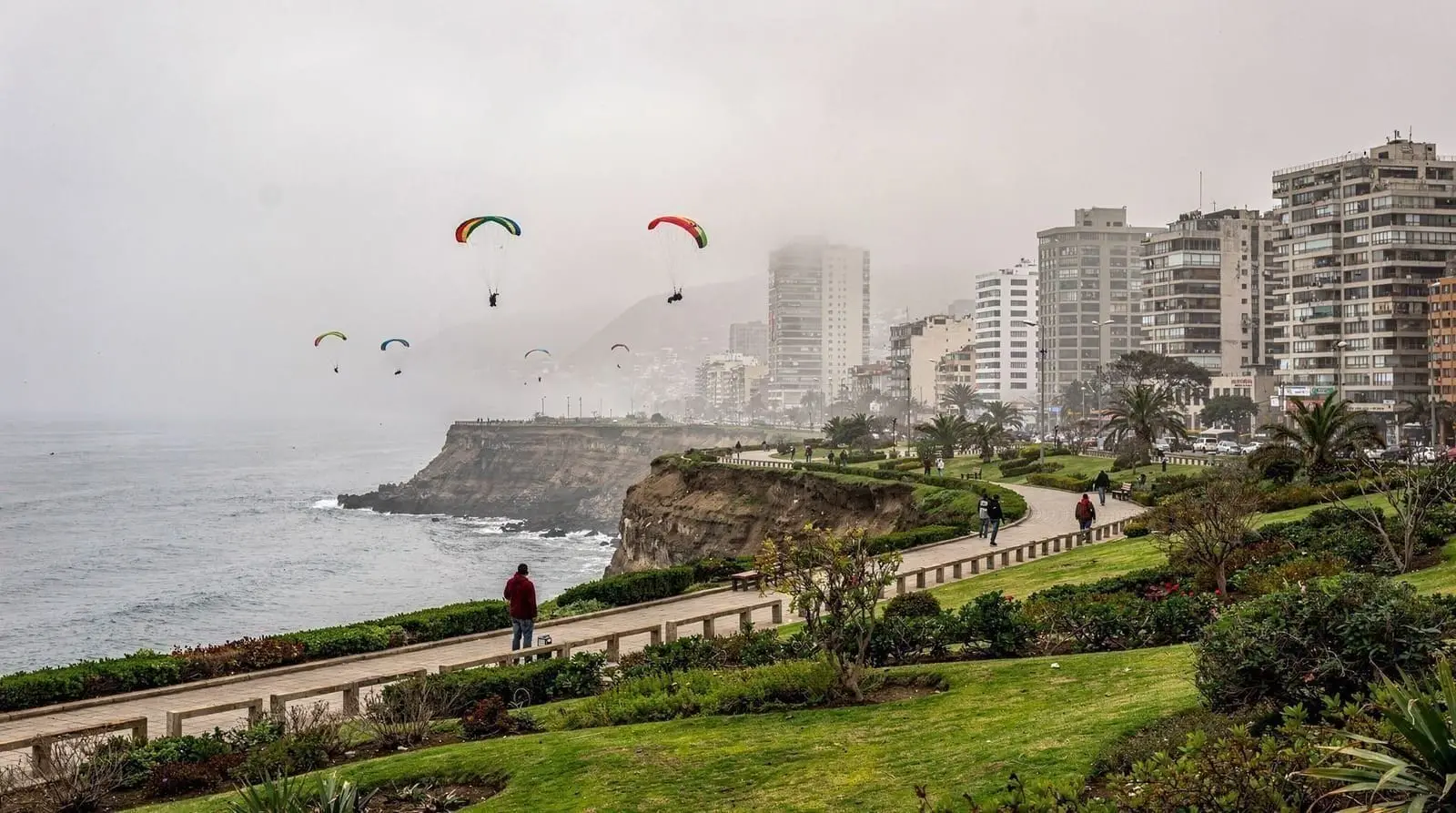
Lima is a city of 11 million across 43 districts, but visitors really only need three, and they are good ones. Miraflores is the clean, safe, cliff-top base with the Malecon coastal promenade running two kilometres above the Pacific. Barranco is the bohemian quarter of painted republican mansions, street murals, galleries, and the city’s best bars, fifteen minutes south. San Isidro is the leafy, quieter business district. The clifftop walk, the Parque del Amor, and Barranco’s Bridge of Sighs give you real urban texture, and on clear days the coastal setting is genuinely beautiful.
A useful place to rest before altitude
The unglamorous but important point: Lima sits at sea level. If you are flying in long-haul and continuing to Cusco at 3,400 m, a night or two in Lima is your last chance to rest, hydrate, and shake off jet lag before facing altitude. Travellers who connect straight through to Cusco on arrival day reliably feel worse. Building Lima into the front of your trip is good planning, not lost time — see /guides/how-many-days-in-peru/ for how it fits the wider schedule.
The honest downsides
The garua fog
From roughly May to October, Lima sits under the garua, a persistent flat grey-white coastal fog. It rarely rains hard, but the sky stays muted, temperatures hover around 14-16 °C, and the cliffside views and sunsets that sell the city in photos simply do not appear. If you visit in winter expecting Instagram-blue Pacific vistas, you will be disappointed. The food, museums, catacombs, and Barranco’s character are entirely unaffected, and winter brings lower prices and thinner crowds — but manage your expectations on scenery. For clear skies, come November to April.
It is big, and the traffic is real
Greater Lima sprawls, and the traffic is among the worst features of any visit. Crossing town from Miraflores to the historic centre can take 25 minutes or an hour depending on the time of day. There is no single walkable core that links all the sights; you will rely on app-based taxis, and you should plan around the 7-9 am and 5-8 pm peaks. This is a city that rewards staying put in one good neighbourhood and making deliberate excursions, not aimless wandering between districts.
No single iconic sight
Lima has no Machu Picchu, no Eiffel Tower, no one image that makes the case for you. Its rewards are cumulative — a great lunch, a striking museum, an atmospheric evening in Barranco — rather than a single headline monument. Travellers who measure a city by its one must-see photo op often come away underwhelmed, while those who come to eat, walk, and absorb leave converted. Knowing which kind of traveller you are is the key to the decision.
Safety requires normal urban caution
Lima is not dangerous for sensible visitors, but it is a large Latin American capital and petty crime exists. Miraflores and Barranco are safe to walk by day and evening; the historic centre needs the caution you would give any busy downtown. The honest rules: use app-based taxis (Cabify, Uber, InDriver) rather than street-hailing, keep your phone out of sight on the pavement, do not flash valuables, and avoid late-night street walking. Follow those and the millions-per-year visitor figure includes you without incident. Avoid the common tourist trap of unlicensed airport taxis — see /guides/lima-airport-to-city-guide/.
Common misconceptions that put people off
A few persistent myths drive the “should I even bother” question, and they are worth dismantling directly.
“Lima is just a dangerous mega-city.” It is large, and it has petty crime like any capital, but the visitor districts of Miraflores, Barranco, and San Isidro are calm and walkable, and standard precautions cover the rest. The blanket reputation for danger is overblown.
“There’s nothing to see.” This usually means “there’s no single famous monument,” which is true — but it confuses a checklist with an experience. Between the Larco Museum, the catacombs, Huaca Pucllana, Pachacámac, and the coastal neighbourhoods, there is more than enough for two or three engaged days.
“It’s always grey and depressing.” Half-true, and only seasonally. The garúa fog runs May to October; from November to April the skies are clear and the coast is genuinely beautiful. Even in the foggy months the city’s substance is undimmed.
“I should save my time for Cusco.” Cusco is wonderful, but treating Lima as time stolen from it is a false trade — and skipping the sea-level rest before altitude can leave you feeling worse for your first Cusco days, not better.
So how many days is Lima worth?
- Zero / same-day connection: Only defensible on an extremely short, Cusco-only trip — and even then, an overnight is wiser for altitude. You will miss the city entirely.
- One day: Better than nothing, but rushed. You can do the colonial centre and one good lunch, or Miraflores and the Larco Museum, but not both well.
- Two days (the sweet spot for most): Covers the colonial centre, the Larco Museum, Huaca Pucllana, Barranco, the Malecon, and two proper lunches at a steady pace. This is the honest minimum for a real impression — the full plan is in /guides/lima-in-2-days/.
- Three days: Adds Pachacamac or a south-coast day trip without rushing the city itself. The most relaxed option for first-timers.
- Four-plus days: Worth it specifically for food lovers, who could happily spend a week working through the restaurants, markets, and a cooking class.
If you want to spend a third day beyond the city, the /guides/lima-day-trips/ guide ranks the realistic options, and the /itineraries/ hub shows how Lima slots into a longer national route.
The drink and food scene beyond ceviche and the tasting menus
Ceviche and the headline restaurants get most of the attention, but Lima’s everyday food scene rewards ordering more broadly. Start with a classic pisco sour — Peru’s national cocktail, made from pisco grape brandy, lime, egg white and bitters — at almost any bar or restaurant; the pisco sour guide covers its history and where to find a well-made one.
Beyond ceviche, look for causa (a cold, layered potato terrine with chicken or seafood), lomo saltado (stir-fried beef with soy and Chinese influence), anticuchos (grilled beef-heart skewers, a street-food staple), and tiradito, a Nikkei dish that shows the Japanese-Peruvian fusion at its best. The best ceviche in Lima guide and the wider Lima food scene guide map out where to find all of this without needing a reservation weeks in advance.
Lima for families and older travellers
Lima suits families better than its reputation suggests, provided you pick the right base. Miraflores is flat, walkable, and built around a clifftop park system with playgrounds, a boardwalk, and casual family-friendly restaurants, making it comfortable for kids and for older travellers who prefer not to navigate steep or uneven streets.
Barranco, by contrast, has charming but hillier, cobbled streets that are less stroller- and wheelchair-friendly, so it works better as a half-day visit than a base for families or travellers with mobility concerns. The Larco Museum’s gardens and the Parque del Amor are easy wins for a family day, and the Lima day trips guide flags which excursions suit different energy levels and ages.
Who should give Lima more time, and who less
Give it more time if: you love food (this is non-negotiable — Lima is a world food capital); you are interested in pre-Columbian or colonial history; you enjoy walkable, café-and-bar neighbourhoods; or you are arriving long-haul and want a sea-level buffer before the Andes.
Give it less time if: your trip is genuinely tight and entirely focused on Machu Picchu and the Sacred Valley; you have no interest in food, museums, or cities and simply want mountains and ruins; or you are visiting in deep winter and your main hope was coastal scenery. Even then, do not skip it entirely — one night for rest and one great meal is the floor.
The verdict
Lima is worth visiting, and the travellers who regret their stop are almost always the ones who gave it half a day with the wrong expectations. Come for the food first, the history second, and the coastal neighbourhoods third; stay at least two days; use Miraflores as a base and app taxis to move; and accept that in winter the views will be grey while the eating stays superb. Do that and Lima stops being a transit chore and becomes one of the more memorable stops of a Peru trip — a city that quietly outperforms its reputation. The full destination overview is at /destinations/lima/, and the practical two-day structure at /guides/lima-in-2-days/.
Frequently asked questions about Is Lima worth visiting? An honest verdict
Is Lima worth visiting or should I skip it?
Is Lima just a transit city?
How many days is Lima worth?
What is the downside of visiting Lima?
Is Lima safe for tourists?
Is Lima worth it for non-foodies?
Is Lima good for families or older travellers?
What should I try beyond ceviche in Lima?
Top experiences
Bookable activities with verified prices and instant confirmation on GetYourGuide.

