An afternoon weaving with the women of Chinchero
I almost skipped Chinchero. It’s a small town on the high plain between Cusco and the Sacred Valley, easy to file under “weaving demonstration for tourists” and drive past. I’m glad I didn’t, because the afternoon I spent at a women’s weaving cooperative there turned out to be the most quietly memorable few hours of my time in Peru - and the only souvenir I bought that I actually treasure.
| Where | Chinchero, Sacred Valley high plain |
| Altitude | Around 3,760m, higher than Cusco |
| Cost | Cooperative visits often free; pieces from around S/40-150+ |
| Time needed | 1-2 hours for a proper visit |
| Getting there | Colectivo from Cusco, or as part of a Sacred Valley tour |
Chinchero itself
The town sits at around 3,760 metres - higher than Cusco, so don’t come here before you’ve acclimatised, a point I labour in the Cusco acclimatisation plan because it matters. It has a beautiful colonial church built directly on Inca foundations, terraces dropping away from the plaza, and, on market days, one of the more genuine markets in the region.
But what Chinchero is really known for is weaving. The Chinchero destination guide covers the town; this is about the weaving, because that’s what I came away changed by.
The cooperative
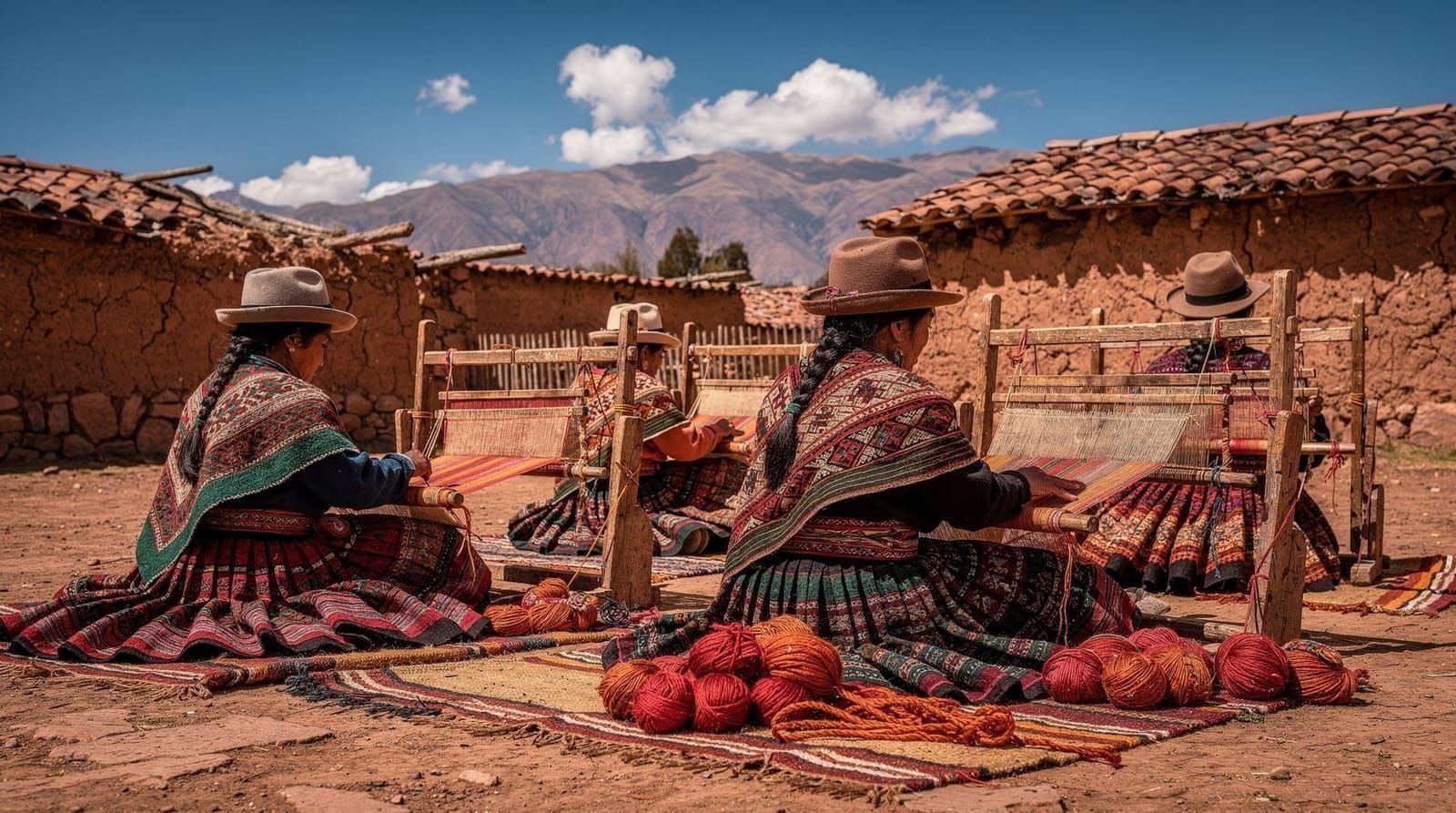
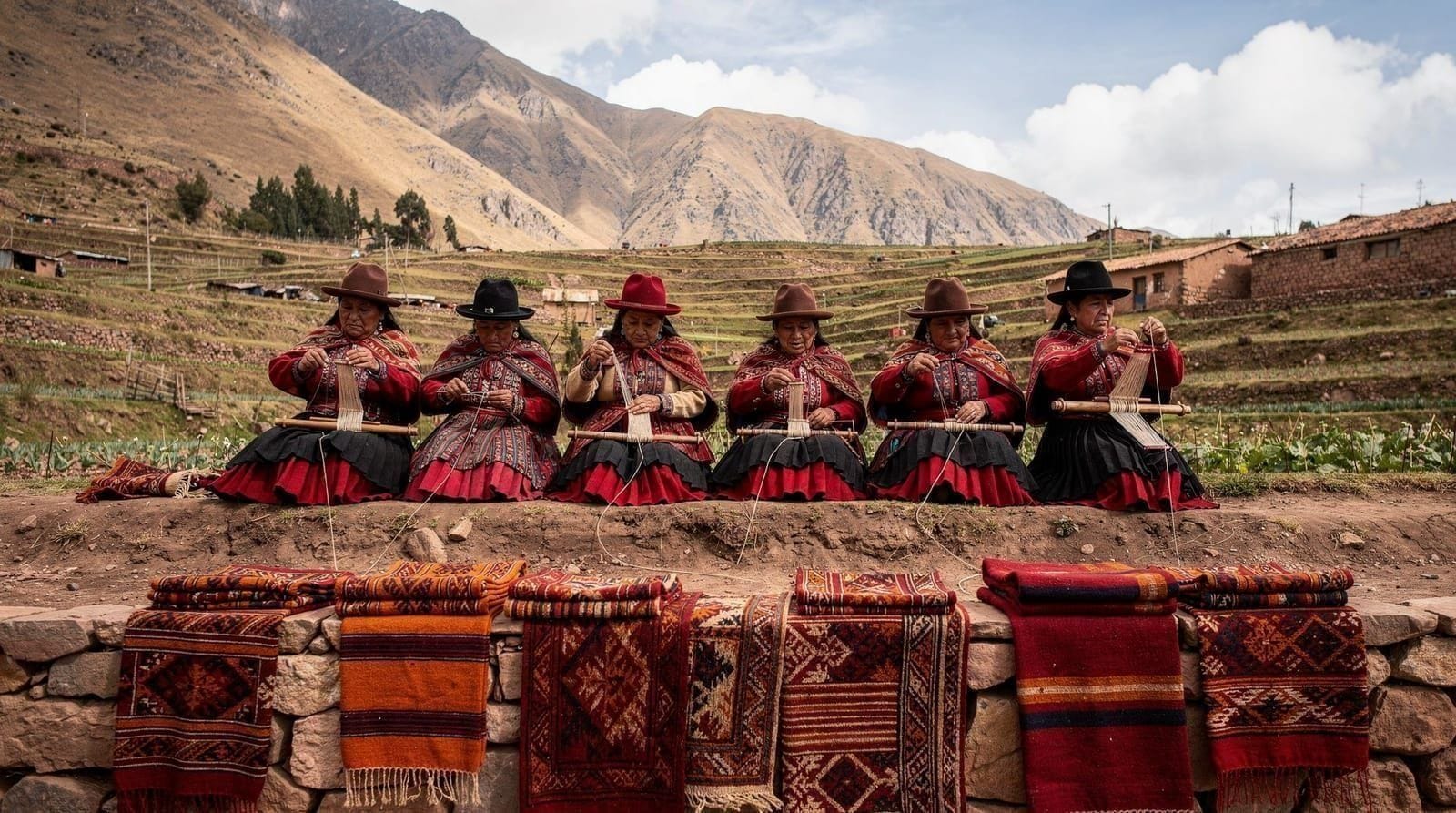
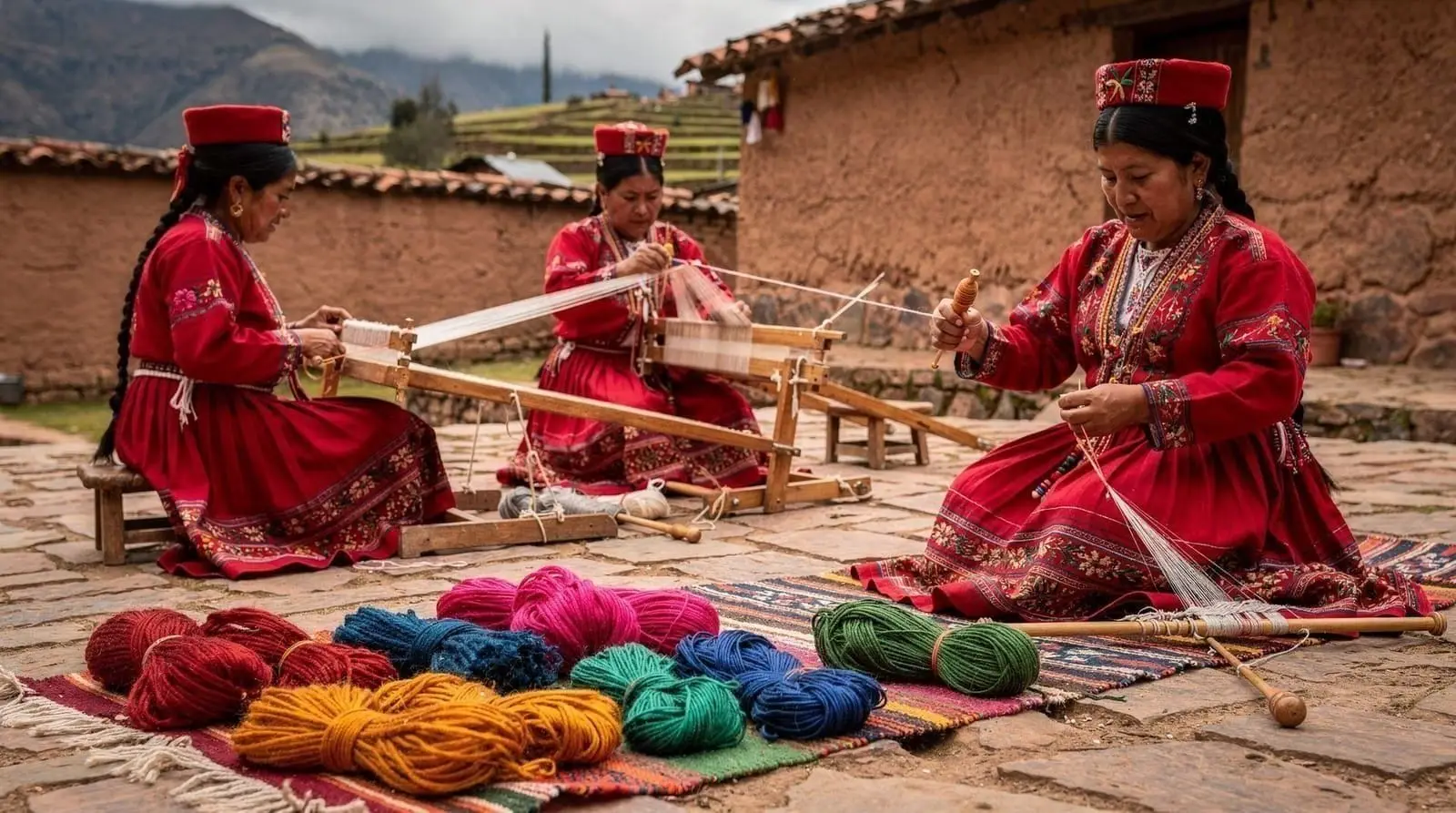
I went to one of the women’s cooperatives that have formed here to keep traditional Andean weaving alive and put income directly into women’s hands rather than middlemen. There are several, and they’re easy to visit; some tours stop at them. Mine was a small one, a courtyard with a handful of women in traditional dress, llamas wandering in the back, and a fire going.
What I expected was a quick demo and a hard sell. What I got was a patient, genuine teaching session, run by women who clearly took pride in showing an outsider how it’s really done.
It starts with dirt and plants
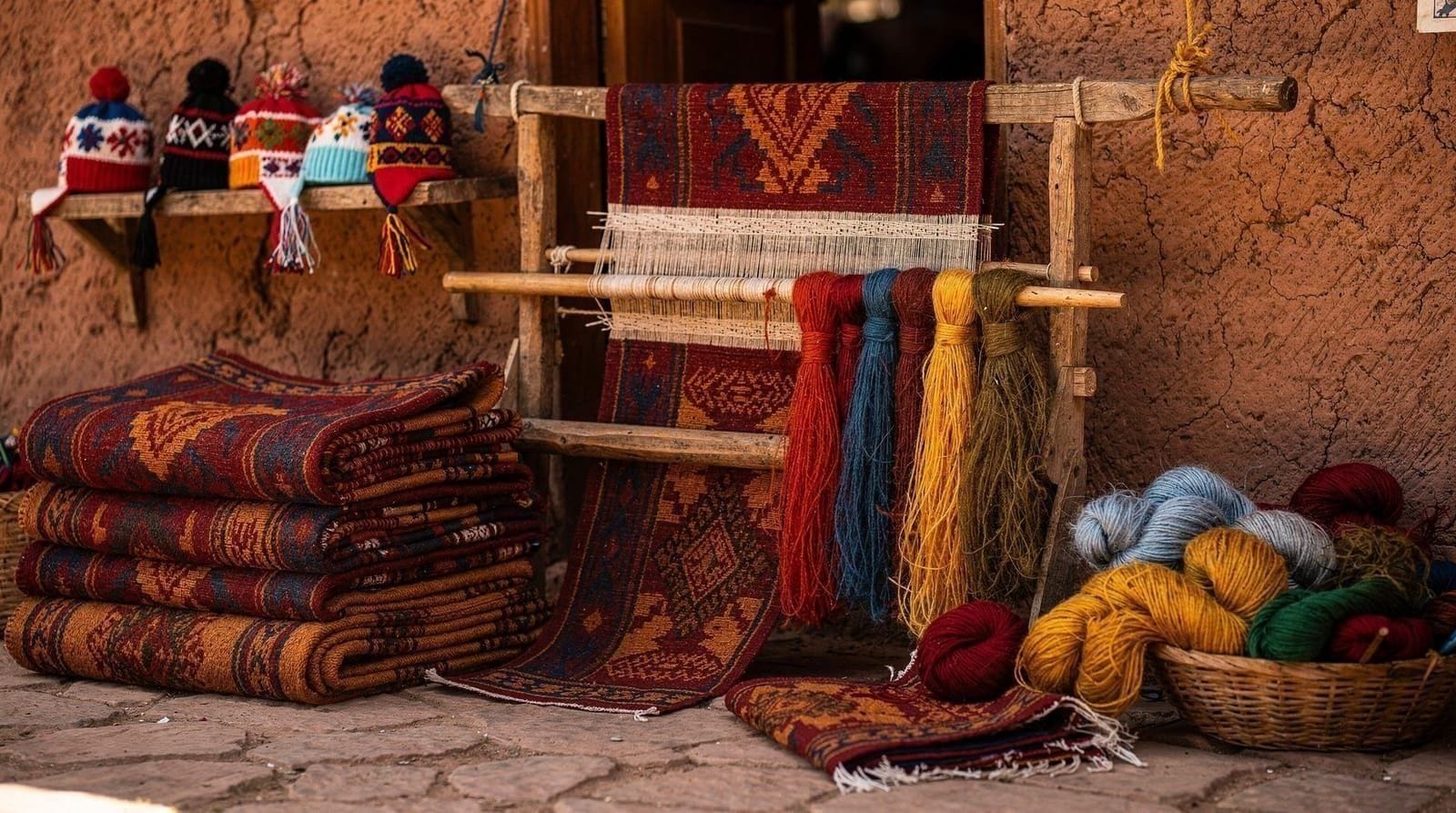
The first thing they showed me was that the colours don’t come from a bottle. A woman named Benedicta - I asked, and she told me, and I wrote it down - laid out bowls of raw materials: the bright cochineal insect that lives on cactus and produces a deep red when crushed (she squashed one on her palm to prove it, and the colour was startling), a moss for green, a flower for yellow, a mineral for grey.
Then she showed how adding a squeeze of lime or a pinch of mineral salt shifts the same dye from red to orange to purple in the pot. It’s chemistry, worked out and passed down over centuries without a single beaker. The Andean textiles guide goes into the dye sources in more detail, but watching one woman conjure a rainbow out of bugs and plants and rocks in twenty minutes is something a page can’t reproduce.
Spinning, and how bad I was at it
Before you weave you spin, and before that you wash. They showed me how raw alpaca and sheep wool is cleaned using a root that lathers like soap in cold water - no detergent, just a plant that foams. Then came the drop spindle, the puska, which the women twirl one-handed without even looking while they chat.
I was given one to try. I was, to be blunt, useless. My yarn came out lumpy, snapped twice, and the woman teaching me laughed - not unkindly - at the mess I made of something her seven-year-old daughter does without thinking. It gave me an instant, physical respect for the skill involved. Every garment in that courtyard represents hundreds of hours of work I now understood I couldn’t do.
The backstrap loom
The weaving itself is done on a backstrap loom - one end tied to a post, the other strapped around the weaver’s waist, so her whole body becomes part of the tension. The patterns aren’t drawn or followed from a chart; they’re held in memory, complex geometric designs and symbols that carry meaning - mountains, rivers, the Inca cross, fertility, water.
I sat with a weaver for an hour while she worked, asking what each symbol meant, and the patience with which she answered, lifting individual threads to show me the structure, made it clear this wasn’t a performance. This was her craft, and she wanted me to actually understand it. The Chinchero weaving guide and the Quechua culture guide both unpack the symbolism if you want to go deeper before you visit.
Buying, honestly
Of course there’s a shop at the end, and yes, you’re meant to buy. But after watching the work, the prices made complete sense. A small woven table runner that would have cost S/ 30 of acrylic guilt in the Pisac tourist stalls cost me S/ 120 (about USD 32) here for the real, hand-spun, naturally dyed thing - and I paid it gladly, knowing roughly how many hours had gone into it and where the money went.
This is the heart of what I’d tell anyone shopping for textiles in the Sacred Valley: the cheap “alpaca” in the markets is mostly machine-made and often acrylic, and the real thing costs more for excellent reasons. A cooperative is where you find the genuine article and where your money supports the people keeping the tradition alive.
Here’s roughly how to tell them apart at a glance:
| Cooperative piece | Market souvenir stall | |
|---|---|---|
| Material | Real alpaca or sheep wool | Often acrylic, marketed as “alpaca” |
| Dyes | Natural (cochineal, plants, minerals) | Usually synthetic |
| Price | Higher, reflects real labour | Cheap, but you’re paying for looks |
| Where money goes | Directly to the weaver | Often to a middleman |
Why this mattered more than the ruins that week
I’d spent the days before Chinchero at Machu Picchu and in the Sacred Valley’s ruins, which is the part everyone comes to Peru expecting. What caught me off guard was that a living craft, still practised daily by women who learned it from their mothers, moved me more than stone that had stood for centuries. The ruins are frozen; this cooperative was not - it was a tradition actively continuing, adapting to tourism without being hollowed out by it, and I hadn’t expected that distinction to matter so much to me until I sat in that courtyard.
How to visit
Chinchero is on the route between Cusco and the Sacred Valley, and several day tours include a cooperative stop alongside Pisac, Maras and Moray - which is how I worked it into a fuller day:
Pisac, Ollantaytambo and Chinchero Sacred Valley tourIf you’d rather go independently, colectivos run from Cusco to Chinchero cheaply and frequently; the getting around the Sacred Valley guide has the details. Either way, build in unhurried time. The cooperatives reward people who sit down, ask questions, and let themselves be taught.
I came to Peru for the ruins and the mountains. I didn’t expect a courtyard full of women, a drop spindle I couldn’t master, and a table runner I now refuse to use because it’s too good to risk a stain. Of everything I brought home, that afternoon is the part I describe first when people ask.