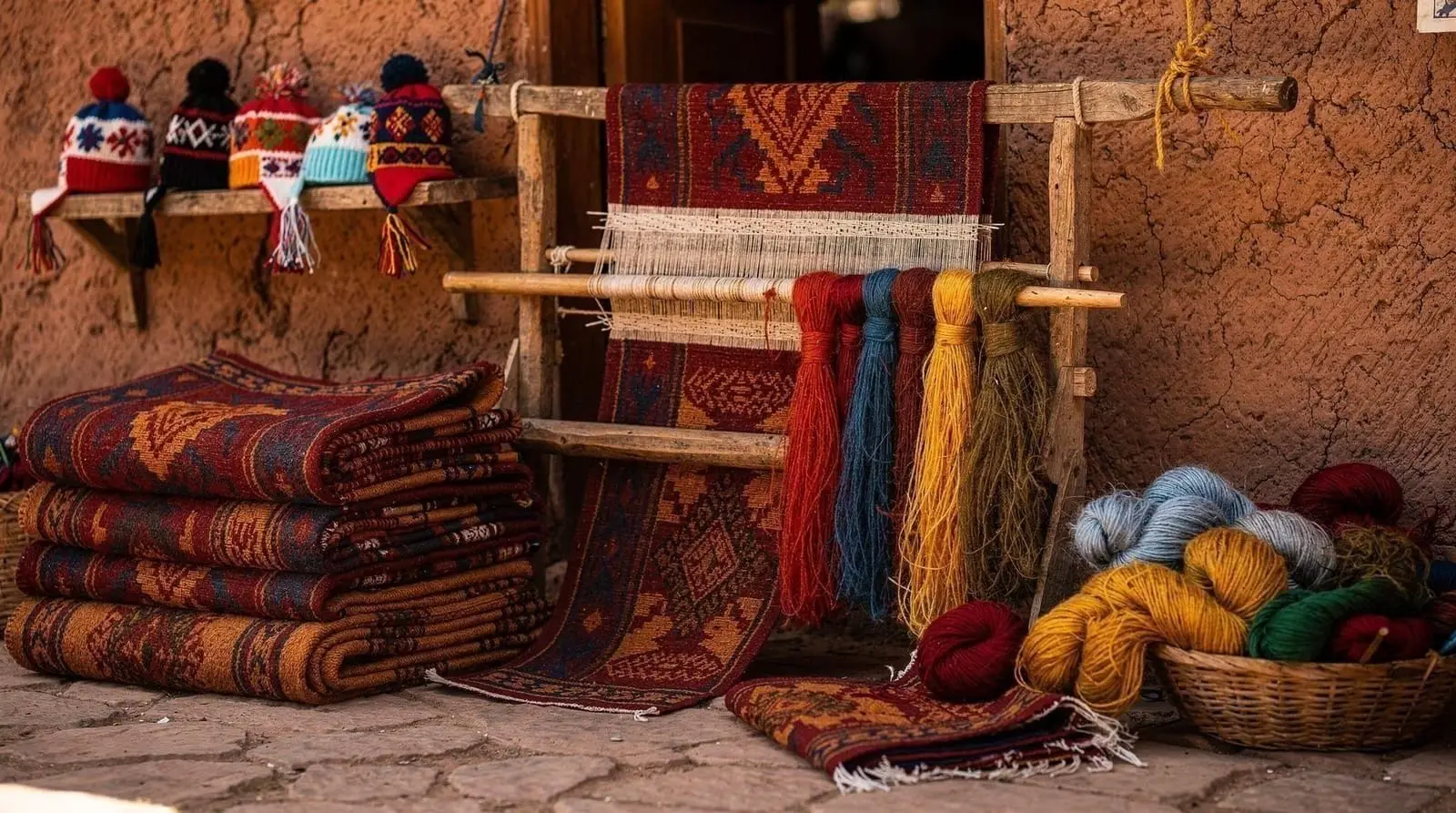
Andean textiles: how to buy the real thing
Cusco: Pisac, Ollantaytambo & Chinchero Sacred Valley Tour
How do I tell a real Andean textile from a fake?
Real handwoven alpaca is warm but not slippery, has slightly irregular weave and tied-off ends, and does not squeak or feel plasticky. Acrylic fakes are unnaturally even, very soft and shiny, often suspiciously cheap, and sometimes labelled baby alpaca despite a S/20 price. Buy from weaving cooperatives in Chinchero or recognised centres in Cusco, not from plaza touts.
Why the textiles matter more than the souvenirs suggest
Walk through the markets around Cusco and the Sacred Valley and you will be surrounded by colour: stacks of “alpaca” scarves, blankets, ponchos, and wall hangings in geometric reds, golds, and indigos. Most of it, sold cheaply off plaza tables, is mass-produced acrylic. But behind the souvenir wall sits one of the most sophisticated living textile traditions on earth — a craft that predates the Inca, encodes community identity in its patterns, and represents days of skilled hand labour per piece.
Understanding the difference is partly about not overpaying for plastic, and partly about ethics: where you buy determines whether your money reaches the weavers keeping the tradition alive or a middleman importing acrylic by the bale. This guide explains how Andean weaving actually works, how to spot the real thing, what fair prices look like in soles, and where around Cusco the weaving is honest. It treats textiles the way an honest planner should — as a purchase worth getting right, with plenty of traps for the unwary.
| Where | Chinchero cooperatives, CTTC (Cusco), Pisac market |
| Fair price | S/40–150 small pieces; S/80–250 scarves; several hundred for ponchos/blankets |
| Red flag price | A “baby alpaca” scarf under S/25 is acrylic |
| Time needed | A cooperative visit is 30–60 minutes; Pisac market browsing an hour-plus |
| Best way to see it | A Sacred Valley tour stopping at Chinchero, or a direct cooperative visit |
A craft older than the Inca
Andean weaving stretches back thousands of years, refined by cultures long before the Inca and carried forward by Quechua-speaking communities today. The defining materials are alpaca and sheep wool, handspun on a drop spindle, coloured with natural dyes, and woven on backstrap or treadle looms.
The patterns — pallay — are not decoration alone. Motifs of rivers, mountains, lakes, condors, and crops carry meaning, and combinations of them can identify the weaver’s community. A trained eye can place a textile by its iconography the way you might place an accent. When you buy a genuine piece from a weaving community, you are buying a regional language rendered in wool.
The natural dyes are part of the value and the show. Cochineal, a tiny insect that lives on prickly-pear cactus, yields a brilliant red that shifts toward orange or purple depending on what it is mixed with. Indigo gives blues, and a range of Andean plants, minerals, and lichens produce yellows, greens, and browns. Watching a cooperative crush cochineal in a bowl and adjust the colour with a squeeze of lime is the clearest demonstration of why a hand-dyed, handwoven piece costs what it does.
How to tell real from fake
The market is full of acrylic sold as alpaca, so train your hands and eyes before you buy.
The feel test.
- Real alpaca is warm, has a slight natural weight, and feels soft but not slippery. It does not squeak.
- Acrylic is unnaturally soft, very shiny, often slick or “squeaky” when you rub it, and does not hold warmth the same way.
- Baby alpaca (the fine first-shearing fibre) is genuinely luxurious — silky and light — but it is also the label most often faked.
The weave and finish.
- Handwoven pieces have slight irregularities, visible hand-tied ends, and patterns that are part of the structure, not printed on.
- Machine-made acrylic is perfectly uniform, with patterns that can look printed or have a sewn-on, glued, or overly crisp edge.
The burn test (if a vendor allows it). A few fibres of real wool or alpaca smell like burnt hair and turn to brittle ash; acrylic melts into a hard plastic bead and smells chemical. Vendors at genuine cooperatives will happily demonstrate this; plaza touts will refuse.
The price tell. This is the simplest. A “baby alpaca” scarf at S/15–25 is acrylic or a heavy blend — the real fibre cannot reach you that cheaply. Suspicious cheapness is the loudest signal of all.
What fair prices look like
Genuine handwoven textiles carry the cost of the labour behind them — spinning, dyeing, and days at the loom. Rough fair ranges, in soles:
- Small handwoven items (coin purses, headbands, table runners): S/40–150.
- Quality scarves and shawls in real alpaca: S/80–250 depending on fibre and size.
- Belts and narrow woven bands: S/30–120.
- Full handwoven blankets, ponchos, and wall hangings: several hundred soles and up — these can be weeks of work.
Compare that to the acrylic versions at S/15–40 and the gap tells you exactly what you are buying. Paying the higher price at a real cooperative is not being overcharged; it is paying a craftsperson properly.
On haggling: light bargaining is normal and expected at tourist market stalls like the souvenir tables in Pisac. It is not appropriate at community weaving cooperatives, where prices are usually fixed and already fair to the weavers. Haggling hard at a co-op is poor form — reserve it for the mass-produced stalls.
Where to buy honestly around Cusco
Chinchero. The high Sacred Valley town of Chinchero is the heart of living weaving. Several community cooperatives there demonstrate the full chain — shearing, washing wool with a natural soap root, spinning, natural dyeing, and loom weaving — and sell directly. Buying here puts the most money in weavers’ hands and lets you see exactly what you are getting.
Centro de Textiles Tradicionales del Cusco (CTTC). On Avenida El Sol in Cusco, this non-profit centre supports weavers across the region, runs a small museum of techniques, and sells authenticated pieces at fixed, fair prices. It is the single most reliable place in the city for the genuine article, and a good education even if you only browse.
Pisac market. Pisac has Peru’s most famous craft market. It is a mix — genuine pieces from local weavers alongside imported acrylic — so apply the feel and price tests rigorously. The handicraft section away from the bulk souvenir tables is where the better goods sit.
Where to be cautious: the souvenir shops ringing the Plaza de Armas in Cusco and the touts working the squares. The quality varies wildly, the acrylic-as-alpaca rate is high, and prices are set for tourists.
Seeing the weaving on a tour
The most efficient way to combine the textiles with the rest of the Sacred Valley is a tour that actually stops in Chinchero rather than only hitting ruins. Many Sacred Valley circuits include a Chinchero weaving demonstration alongside Pisac and Ollantaytambo. The Sacred Valley tour covering Pisac, Ollantaytambo and Chinchero includes the Chinchero stop where the weaving cooperatives are, and the Pisac, Ollantaytambo and Chinchero Sacred Valley day with lunch is a similar circuit if you want the full valley plus a meal.
That said, the most ethical approach is often to visit a Chinchero cooperative directly, or buy at the CTTC in Cusco, so that more of the purchase price reaches the weavers rather than a tour commission. A tour is excellent for seeing and understanding the craft; consider buying your main pieces at the source. Browse /itineraries/ for valley routings and the planning tools at /tools/.
What to actually buy, by traveller
Different pieces suit different travellers, and matching the buy to your use avoids both over- and under-spending.
- The everyday souvenir. If you just want a colourful, useful keepsake, a small handwoven coin purse, headband, or table runner from a cooperative (S/40–150) is genuine, affordable, and packs flat.
- The wearable. A real alpaca scarf or shawl (S/80–250) is the most-used purchase most people make — warm, light, and something you will actually wear at home. This is where the alpaca-versus-acrylic distinction matters most, because you feel it.
- The statement piece. A handwoven wall hanging, full poncho, or blanket (several hundred soles and up) is a serious purchase representing weeks of work. Buy these only from a cooperative or the CTTC where provenance is clear, and budget accordingly.
- The gift run. If you need many small gifts, the honest move is to be upfront that you are buying inexpensive acrylic items knowingly, and pay accordingly at a market stall — rather than paying alpaca prices for acrylic.
Match the piece to how you will use it, apply the feel and price tests, and you rarely go wrong.
Reading the patterns
Part of the pleasure of buying a genuine textile is understanding what you are looking at. Andean pallay designs are a visual language. Recurring motifs include the inti (sun), stepped diamonds representing mountains or the Andean cosmos, zigzags for rivers and lightning, and stylised condors, llamas, and crops. Different communities favour different palettes and motif combinations, so a knowledgeable seller at a cooperative can often tell you which village a piece comes from and what its symbols mean.
Asking is part of the experience — and a seller who can answer in detail is a good sign you are buying the real thing rather than imported stock. The deeper context of these traditions sits within the broader culture of the Sacred Valley and the Quechua communities that still live and weave there.
Caring for what you buy
Real alpaca rewards a little care. Hand-wash in cool water with a gentle soap, never wring it, dry flat away from direct sun, and store with cedar or lavender against moths. Naturally dyed pieces can bleed slightly on the first wash, so wash separately at first. Treated well, a genuine handwoven textile lasts decades and only softens — which is the whole argument for paying for the real thing over an acrylic scarf that pills and dies in a season.
Packing and customs notes
Handwoven textiles pack surprisingly well: roll rather than fold to avoid crease lines in the wool, and slip a small silica packet or dryer sheet in with them against the Sacred Valley’s occasional damp. If you buy a large piece like a full blanket or poncho, ask the cooperative or the CTTC for a simple woven or cloth wrap — it protects the piece in transit and doubles as a nice presentation if it is a gift. There is no special export permit needed for handwoven alpaca or wool textiles bought from a legitimate seller, but keep any receipt from the CTTC or a cooperative in case customs on your return asks about the material or value; the artisanal nature and modest prices rarely raise questions.
Frequently asked questions about Andean textiles: how to buy the real thing
Where can I buy authentic Andean textiles near Cusco?
How much should a real alpaca textile cost?
What is the difference between alpaca, baby alpaca, and acrylic?
Is it rude to haggle for textiles in Peru?
What are the traditional Andean weaving techniques?
Can I visit a weaving community on a tour from Cusco?
Top experiences
Bookable activities with verified prices and instant confirmation on GetYourGuide.
