Is the Nazca flight worth it?
From Nazca: 30-Minute Flight over Nazca Lines
Is the Nazca Lines flight worth it?
For most travellers, yes — it is the only way to see the figures properly and there is nothing else like it. But it is expensive, often nausea-inducing, weather-prone, and the detour is long. If you are short on time, prone to motion sickness, or on a tight budget, it is a defensible skip.
“Is the Nazca flight worth it?” is one of the most-asked questions on the Peru south coast, and it deserves a real answer rather than a reflexive “of course.” The flight is genuinely unique — there is nowhere else on earth you can do this, and the figures only make sense from the air. But it is also expensive for 30 minutes, frequently makes people sick, gets delayed and cancelled, and sits at the end of a long, dusty bus detour that swallows a day or more. Whether it is worth it depends entirely on who you are and what your trip can spare.
This is the honest cost-benefit. For the logistics and operator detail behind it, see the Nazca Lines complete guide and the flight safety guide.
| Flight cost | $80–120 + ~S/30 airport tax |
| All-in cost from Lima | $150–250 + a full day |
| Flying time | ~30 minutes |
| Motion sickness risk | High — steep repeated banking turns |
| Ground-only alternative | Roadside tower + Maria Reiche Planetarium |
The case for: why it is worth it
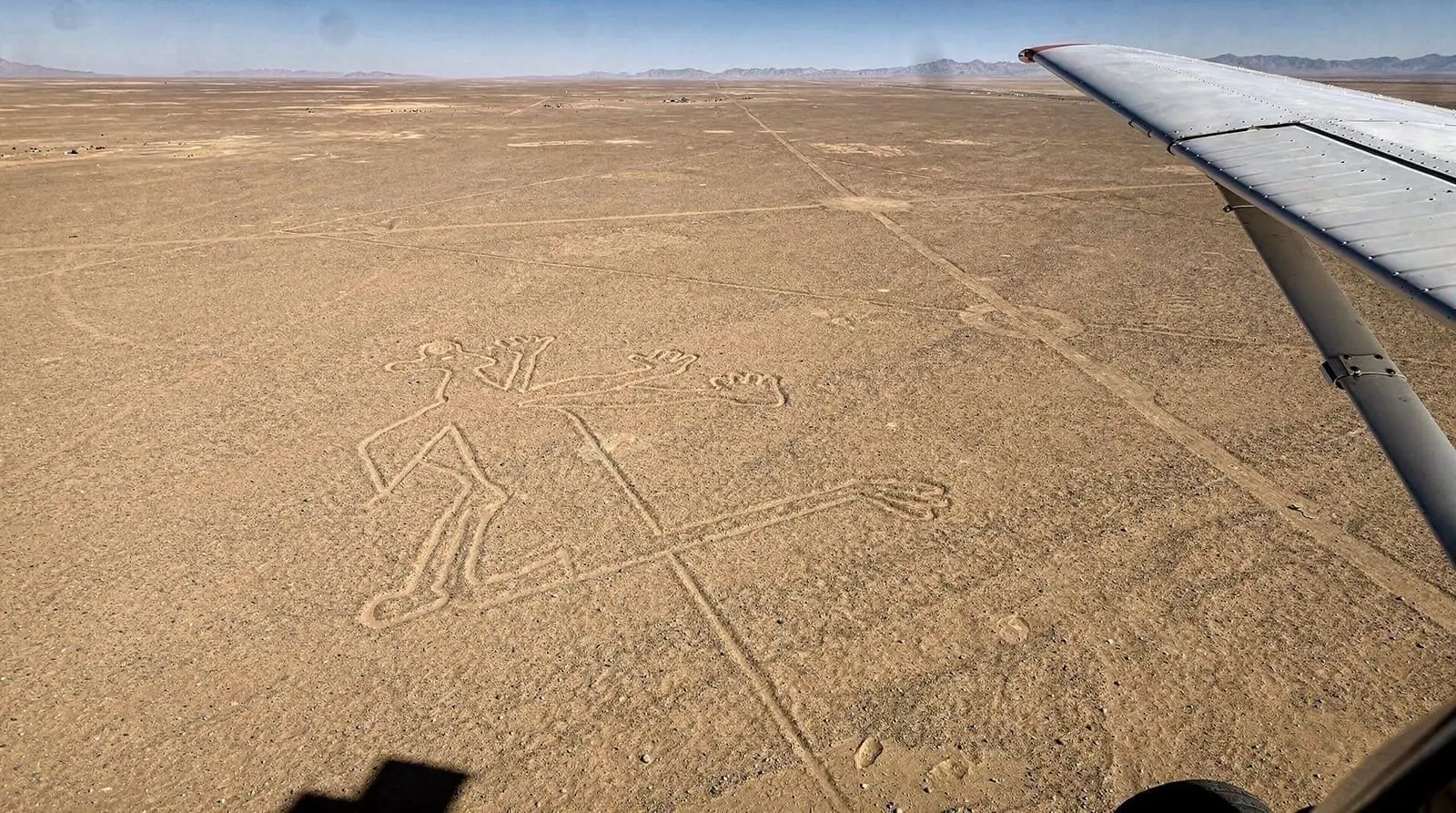
It is the only way to see the lines properly. The geoglyphs were designed to be read from above, and from a banking Cessna at a few hundred metres the monkey, the spider, the hummingbird and the condor snap into focus in a way no photograph prepares you for. The ground alternatives — the roadside tower, a hill viewpoint — show three or four figures at a flat, partial angle. If you want to actually see the Nazca Lines, the flight is not optional.
There is nothing else like it. Two-thousand-year-old drawings the size of football fields, perfectly preserved by the driest desert on the planet, executed by a culture with no aircraft to view their own work — the strangeness of it lands hard from the air. For travellers drawn to ancient mysteries and archaeology, it is a genuine highlight, not a tick-box.
It is reasonably affordable for what it is. A 30-minute light-aircraft flight for $80 to $120 USD from Nazca is, by the standards of sightseeing aviation worldwide, fair. Compared with the cost of getting to Peru at all, the flight itself is not the budget-breaker.
From Nazca: 30-Minute Flight over Nazca LinesThe case against: why you might skip it
The total cost is bigger than the ticket. The $80 to $120 (plus ~S/30 airport tax) is just the flight. Add the bus detour to Nazca (7 to 8 hours from Lima, 3 to 3.5 from Ica), usually an overnight in a town that exists mainly to service the flight, and meals, and you are realistically committing the better part of a day and well over $100 for half an hour in the air.
Air-sickness is real and common. This is the most underplayed downside. The pilot banks the plane hard left, then hard right, over each figure so both sides can see, and the result is a relentless sequence of steep low-altitude turns. A large share of passengers feel queasy and a meaningful number are actively sick. If you are prone to motion sickness, you may spend the flight staring at a paper bag rather than the figures — a genuinely bad outcome for an expensive 30 minutes.
Delays and cancellations. Light aircraft wait for minimum passenger loads and acceptable wind, so an hour or two of delay is normal and outright cancellation happens in bad weather. If your schedule has no slack, the flight can derail an onward connection or simply not happen.
The safety history. The 2000s accident record (covered in full in the flight safety guide) is far better now after reforms, but it is real, and for some travellers the small-aircraft risk over remote desert is a dealbreaker. That is a legitimate reason to skip, not an irrational one.
Who should fly
- Travellers with time and curiosity about ancient cultures — the people who came to Peru partly for things like this. For you it is clearly worth it.
- Anyone already on the south-coast circuit doing Paracas, the Ballestas and Huacachina — you are most of the way there, so the marginal cost of adding the flight is lower.
- Those who can flex their schedule to take the earliest flight on a calm morning and absorb a possible weather delay.
If you fall here, fly from wherever you already are — Nazca is cheapest and shortest, Ica suits a Huacachina base, and Pisco/Paracas avoids backtracking.
From Ica: Flight over the Nazca LinesWho should skip it
- The severely motion-sick. If small boats and turbulent flights reliably floor you, the banking turns will too, and you will not enjoy it however much it cost.
- The time-pressed. If you have ten days in Peru and want Cusco, Machu Picchu and the Sacred Valley, the Nazca detour competes directly with better-value highland time. See how many days in Peru for the trade-off.
- The strict-budget traveller for whom the all-in cost (flight plus detour plus overnight) is a real chunk of the trip budget better spent elsewhere.
- Anyone the safety history genuinely unsettles — there is no shame in declining; the ground viewpoints exist for exactly this case.
The true all-in cost, counted honestly
The ticket price hides the real commitment. Here is what flying from Nazca town actually adds up to for a solo traveller doing it from Lima:
- Flight ticket: $80 to $120 USD
- Airport tax: about S/30 (roughly $8)
- Round-trip bus Lima–Nazca or the Ica–Nazca legs: S/120 to S/240 depending on class
- One night in Nazca: S/35 to S/300 by standard
- Meals and a taxi or two: S/60 to S/100
- Time: the better part of a day, sometimes a day and a half with delays
All in, a Lima-based traveller is realistically spending $150 to $250 and a full day for a 30-minute flight. If you are already on the south-coast circuit passing through, the marginal cost is far lower — essentially just the ticket and tax, because the bus, the bed and the meals are happening anyway. That difference is the single biggest factor in whether the flight is “worth it”: for the circuit traveller it is an easy yes; for someone making a dedicated detour from Lima or Cusco it is a much harder sum.
How it stacks up against the other south-coast highlights
If the question is really “what should I spend my limited south-coast time and money on,” it helps to compare the three signature experiences directly:
- Ballestas Islands boat: ~S/70 plus tax, weather-reliable most of the year, genuine wildlife, no long detour. The best value of the three.
- Huacachina dune buggy: ~S/60 to S/100, reliable, fun, and weather-proof. High enjoyment per sol.
- Nazca flight: $80 to $120 plus a long detour, weather-prone and sometimes nauseating — but utterly unique and impossible to replicate.
The honest read: if you have only one south-coast day, the Ballestas and Huacachina deliver more reliable enjoyment for less money and hassle. The Nazca flight earns its place when you have the time, the budget and a real pull toward archaeology — because nothing else on this list, anywhere, shows you what it shows you.
Three common scenarios
- “I have two weeks for Peru and love ancient sites.” Fly. You have the time, you are likely doing the south coast anyway, and the lines are exactly your kind of highlight.
- “I have ten days and want Cusco and Machu Picchu.” Probably skip. The Nazca detour competes directly with higher-value highland days; see how many days in Peru.
- “I get seasick on a calm ferry.” Be very cautious. The banking turns floor a lot of steady stomachs; even with medication you may spend an expensive 30 minutes feeling wretched.
The honest middle path
If you are torn, two compromises help. First, see the lines from the roadside viewing tower and the Maria Reiche Planetarium in Nazca — you will not get the full aerial reveal, but you will understand what they are and see a few figures for a few soles, then decide on the spot whether to fly. Second, if you are based in Paracas or Huacachina, you can fly from there without the deep detour to Nazca town, getting the experience at the price of a longer, dearer flight but a much shorter trip overall.
What you are actually paying for
It is worth being clear-eyed about what the money buys, because the gap between expectation and reality is where regret lives. You are paying for roughly 30 minutes of flying time over the figures from Nazca (longer in total, but much of the extra is transit, from Ica or Pisco), in a small banking aircraft, with one or two passes per figure. You are not paying for a smooth scenic cruise, a guaranteed clear shot of every drawing, or a comfortable ride — and travellers who expect those come away disappointed.
What you genuinely get is the only experience on earth of seeing two-thousand-year-old desert drawings the size of football fields snap into focus from the air, exactly as their makers intended them to be read and never could themselves. Framed that way — a unique, irreplaceable thing rather than a comfortable sightseeing flight — the value question gets clearer. If that specific experience pulls at you, the cost and discomfort are the price of admission to something you cannot get any other way. If it does not, no amount of “but it is famous” should push you into a nauseating, expensive detour your trip cannot spare.
Managing the two big downsides
If you decide to fly, the two things most likely to spoil it — air-sickness and a wasted detour — are largely within your control.
Air-sickness. Take a standard motion-sickness tablet 30 to 60 minutes before, eat a light meal rather than nothing (an empty stomach is worse), book the earliest flight before the desert heats and the air turns bumpy, sit near the wing where the banking is least pronounced, and look out at the horizon between figures instead of staring down the whole time. None of this guarantees comfort, but it shifts the odds substantially from “miserable” toward “fine.”
The wasted detour. Never schedule the flight on a day you must catch an onward bus immediately after — delays of an hour or two are normal and outright cancellation happens in wind. Build a buffer half-day, decide whether you are flying from Nazca, Ica or Pisco based on where you already are, and use the roadside tower and planetarium as a low-cost fallback that still lets you understand the lines if the flight is scrubbed. Done this way, even a cancelled flight is not a wasted trip.
Flying with children, elderly relatives or anxious flyers
Most operators set a minimum age for the Nazca flight, commonly somewhere between two and six years old, and some decline very young children outright because of the steep banking turns. Elderly travellers in good general health typically manage the flight fine, but anyone with an inner-ear condition, a heart or respiratory issue, or severe motion sickness history should check with a doctor before booking — a short flight is not worth a genuine health risk. If a family member is anxious about small aircraft generally, be honest with them about the repeated banking turns rather than downplaying it; going in informed reduces the odds of a bad experience for everyone in the group.
Getting a decent photo without ruining the moment
Photography from the plane is trickier than it looks, and it is worth deciding in advance how much you will prioritise it. Keep your phone or camera strap around your wrist or neck, hold the lens a few centimetres from — not pressed against — the window glass to avoid reflections and scratches, and use a fast shutter speed or your camera’s sports mode to counter the plane’s motion. Because the pilot banks hard over each figure, some shots will inevitably be off-angle; a short video clip often captures the sensation of the flight better than a single perfect still. Above all, do not spend the whole 30 minutes staring through a viewfinder — look up between figures, both for the view and to help settle your stomach.
The verdict
For most travellers who came to Peru for its archaeology and have a day to spare, the Nazca flight is worth it — it is unique, it is the only real way to see the lines, and the figures are genuinely astonishing from the air. For the time-pressed, the motion-sick, the tight-budgeted, and the safety-cautious, it is a defensible skip, and you should not let fear of missing out push you into an expensive, nauseating detour your trip cannot afford.
Plan the practicalities with the Nazca Lines complete guide, check operators in the flight safety guide, sequence the south coast with the Lima-to-Paracas-Nazca itinerary, and browse packaged options on the tours hub or build a route on the itineraries hub.
Frequently asked questions about Is the Nazca flight worth it?
Is the Nazca Lines flight overrated?
How much does the Nazca flight cost in total?
Is the Nazca flight worth it if I get motion sick?
Can I skip Nazca and still see the lines?
Who should not do the Nazca flight?
Is the Nazca flight suitable for children or elderly travellers?
Can I take good photos from the plane?
Top experiences
Bookable activities with verified prices and instant confirmation on GetYourGuide.
