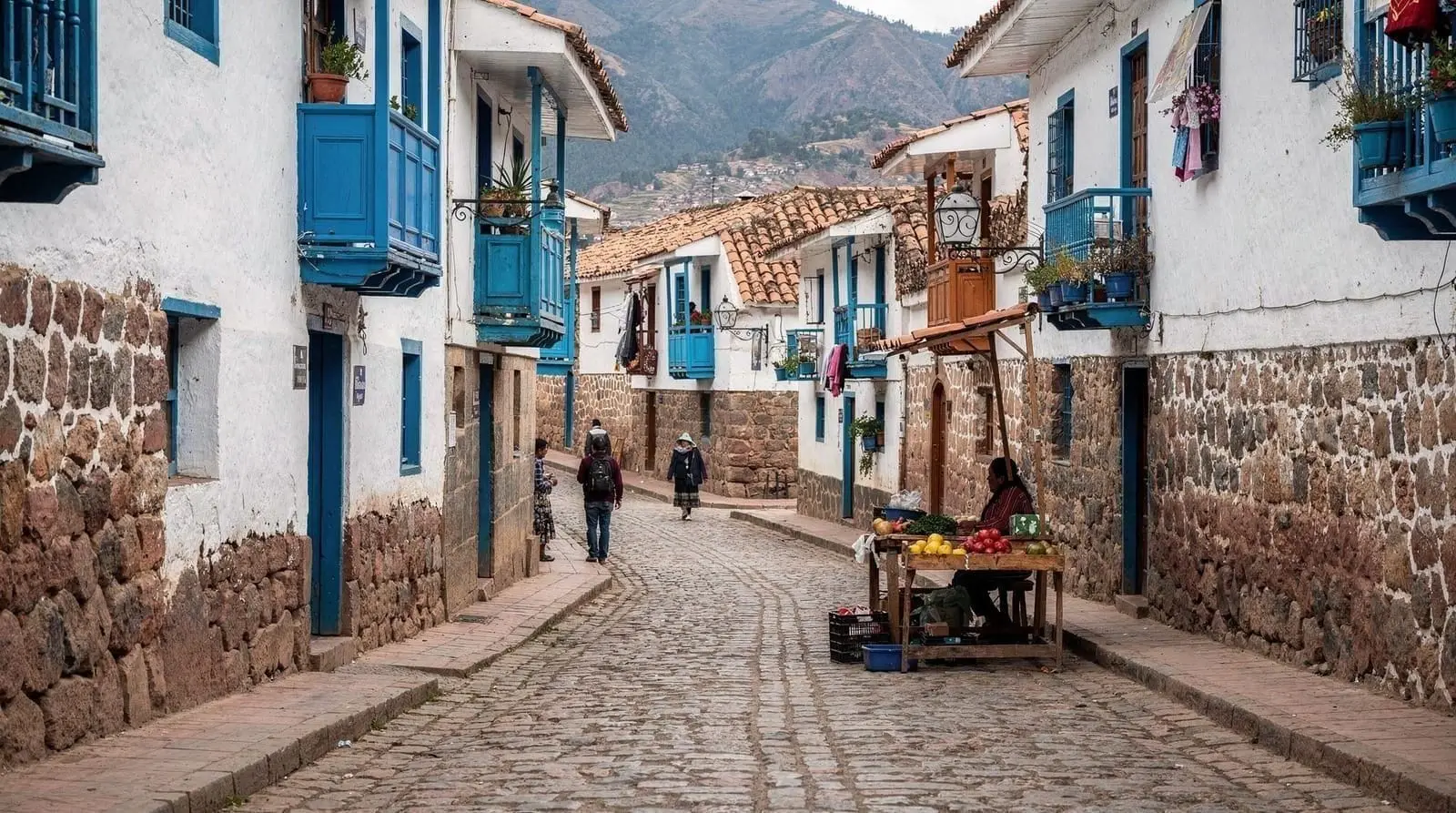
Cusco on a budget: realistic daily costs in soles
Cusco: Pisac, Maras, Moray, Ollantaytambo Small Group Tour
How much does a day in Cusco cost?
A frugal backpacker can live well in Cusco for S/110–160 a day (about $30–43) covering a hostel bed, market meals and local transport. Mid-range comfort runs S/250–450 (about $68–122). The budget-buster sits outside the city: Machu Picchu's entry, train and transfers easily add S/700–1,000+ ($190–270) as a one-off, so plan that separately.
The honest shape of a Cusco budget
Cusco is one of those destinations where “cheap” and “expensive” both apply, depending on which part of the trip you’re costing. The city itself is genuinely affordable: you can sleep, eat well and get around for less than the price of a single restaurant dinner back home. But the reason most people come — Machu Picchu — sits outside the city and behind a chain of fixed, non-negotiable costs (entry ticket, train, transfers) that can dwarf several days of city spending.
The most useful thing you can do for your budget is to separate the two. Think of your trip as “Cusco daily living” plus “the Machu Picchu excursion as a one-off line item,” because lumping them together makes Cusco look expensive when it isn’t. This guide breaks down both in soles, with the dollar equivalent at roughly S/3.70 to the dollar, so you can build a number that matches how you actually travel. For the wider Peru picture, the Peru trip cost guide zooms out across the whole country.
| Frugal daily | S/110–160 ($30–43) |
| Mid-range daily | S/250–450 ($68–122) |
| Machu Picchu (one-off) | S/700–1,000+ ($190–270) |
| Currency | Peruvian sol (S/), ~3.70 to $1 |
| Cheapest lever | Self-guide + eat menús + shoulder season |
Daily budget by travel style
| Style | Bed | Food | Transport + sights | Total/day |
|---|---|---|---|---|
| Frugal backpacker | Dorm S/35–60 | Market/menú S/20–30 | S/10–20 | S/110–160 |
| Comfortable mid-range | Private S/200–400 | Casual dinners S/40–60 | Taxis + 1 tour | S/250–450 |
| Higher-comfort | Boutique S/500+ | Restaurant dinners | Private tours | S/600+ |
Daily living costs in Cusco
Beds: where the budget swings hardest
Accommodation is the single biggest lever on your daily spend.
- Hostel dorm bed: S/35–60 (about $9–16) in a decent hostel with breakfast and hot water.
- Budget private room / basic guesthouse: S/80–150 (about $22–41) for a double.
- Comfortable mid-range hotel: S/200–400 (about $54–108) a double.
- Boutique and high-end: S/500 and well up.
A note that costs travellers comfort rather than money: many budget places have no heating, which matters in the cold dry-season nights. Check for heating or extra blankets in June and July, or pay a little more for it.
Food: cheap if you eat where locals eat
Cusco’s food spread is enormous, and you control it almost entirely.
- San Pedro market stalls: a caldo (broth) or fresh-fruit juice for S/6–10. The cheapest filling meals in the centre.
- Set-lunch menú: soup, main and a drink for S/10–18 in everyday restaurants a block off the plaza.
- Casual dinner: S/20–40 a head at a mid-range spot.
- Cuy (roast guinea pig): S/45–70 for the ceremonial dish, usually shared and ordered ahead.
- Novoandina tasting menus: S/60–150+ at the ambitious kitchens.
The reliable budget rule: avoid the balcony restaurants ringing the Plaza de Armas, which charge a premium for the view. Walk one block in any direction and prices roughly halve.
Local transport: pennies, mostly
Getting around the city is cheap. City buses (combis) cost around S/1, in-town taxis run S/8–12 for a short hop and about S/15 up to the ruins above town, and an official airport taxi to the centre is S/20–30. App taxis (InDriver, Cabify) remove the haggling for similar money. For the full how-to and how to dodge fare scams, see the Cusco taxi and money tips guide.
Sights and the boleto turístico
The boleto turístico is the key sightseeing cost. The full pass is S/130 (about $35) for 10 days and covers 16 sites — including Sacsayhuamán and several Sacred Valley ruins — most of which have no separate ticket. A partial circuit is S/70 if you’re only seeing one cluster, and students under 26 with an ISIC card get the full pass for S/70. Note that Qorikancha (about S/15) and the cathedral (about S/40) are ticketed separately. The full breakdown is in the boleto turístico explained guide.
Sample daily budgets
Putting the pieces together, here’s what a realistic day costs at three travel styles, excluding the Machu Picchu excursion:
- Frugal backpacker — S/110–160 / day ($30–43): dorm bed, market and menú meals, combis and the odd budget activity.
- Comfortable mid-range — S/250–450 / day ($68–122): private double room, a mix of casual and nicer meals, taxis, one paid tour or sight.
- Higher-comfort — S/600+ / day ($162+): boutique hotel, restaurant dinners, private tours and transfers.
These figures swing most on two things: how nice your room is and how many guided day trips you book. A traveller who self-guides the ruins and eats at the market lives very differently from one who books a private Sacred Valley tour every day.
The big one: Machu Picchu costs
This is the line item that breaks budgets, and it deserves to be planned on its own. The components, roughly:
- Official entry ticket: around S/152 (about $41) for the standard adult circuit; higher with Huayna Picchu add-on.
- Train (round trip): the major variable. PeruRail and IncaRail run from S/300 to well over S/700 (about $80–190+) round trip depending on service class and time.
- Transfers and Aguas Calientes: bus up to the site (around $24 round trip), plus a night’s lodging and meals in Aguas Calientes, where prices run high for a captive market.
All in, a standard Machu Picchu visit comfortably lands at S/700–1,000+ ($190–270) as a one-off. The cheapest legitimate way down is the budget car or minivan route — driving to Hidroeléctrica and walking the railway to Aguas Calientes instead of taking the train both ways. It cuts cost substantially but adds many hours and a long walk, so it’s a time-versus-money trade. Whatever you choose, you still need the official entry ticket, and entry slots sell out in the dry season, so book ahead.
Cutting costs without cutting the trip
There’s a difference between travelling cheaply and travelling miserably, and Cusco offers plenty of ways to save that don’t cost you the experience. The biggest levers, in order of impact:
Self-guide what you can. The historic centre, the Plaza de Armas, San Pedro market and even some of the ruins are perfectly rewarding without a paid guide. Save guided tours for trips where the logistics genuinely justify the cost — getting to Rainbow Mountain or the far reaches of the Sacred Valley, where arranging your own transport is a hassle.
Travel in the shoulder or wet season. Prices for beds, trains and tours drop noticeably outside the June–August peak. The rainy season brings the year’s lowest costs, with afternoon rain the main trade-off. The shoulder months of May and September split the difference — near-dry weather, lower prices.
Eat the menú. Committing to set-lunch menús and market food rather than à la carte tourist restaurants is the single steadiest daily saving. A traveller eating menús and market meals spends a fraction of one eating dinner at plaza restaurants every night.
Walk. Cusco’s centre is compact (if steep), so once you’re acclimatised, walking replaces most short taxi rides. Combis (S/1) cover longer hops for almost nothing.
Share. Dorm beds, shared private rooms, and group day tours all cut per-person costs. Cuy and large dishes are meant to be shared anyway.
Free and nearly-free things to do
A surprising amount of Cusco costs nothing, which helps a tight budget stretch. The Plaza de Armas and the surrounding colonial streets are free to wander, and the floodlit cathedral after dark is one of the city’s best free sights. The San Blas neighbourhood — the artisan quarter of steep cobbled lanes — is a free, atmospheric walk, with the San Blas viewpoint offering a panorama over the city for the price of the climb. The mirador (viewpoint) at Sacsayhuamán’s edge can be reached on a free walk uphill, though entering the ruins themselves needs the boleto.
Window-shopping the markets is free and educational: San Pedro market for produce and the artisan markets for textiles. Many churches are free to enter outside the ticketed religious circuit. And simply sitting in the plaza watching the city go by — with a S/6 juice from the market — is the kind of slow, free pleasure that the rush to Machu Picchu often crowds out. For travellers acclimatising on day one, these low-effort, low-cost options are exactly what the doctor orders.
Where budget travellers waste money
A few traps that quietly inflate a Cusco budget:
- Paying in US dollars. Operators accept USD at a poor rate (around 3.55 when banks are nearer 3.70). Pay in soles and you keep that margin — more in the taxi and money tips guide.
- Dynamic currency conversion at ATMs. Always choose to be charged in soles, never in your home currency, or you pay a hidden markup.
- Balcony plaza restaurants. The view tax is real; one block off the square is half the price.
- “Free” street workshops. The chocolate, pisco and cooking flyers on the plaza are sales funnels, not bargains.
- The most expensive trains “because it’s Machu Picchu.” The cheaper train classes get you there just as reliably; the premium services are comfort, not access.
- Over-booking private tours. Many ruins and the city centre are perfectly doable self-guided. Reserve guided tours for trips where logistics genuinely save you money or hassle.
Day trips: where to spend and where to skip the guide
Day trips from Cusco are where the mid-range budget can balloon or stay lean, depending on which ones you pay a guide for. The honest split:
Worth a guided tour. Rainbow Mountain and the far Sacred Valley circuit (Pisac, Maras, Moray, Ollantaytambo in one day) are genuinely hard to do independently — they involve early starts, multiple stops and transport you’d struggle to arrange yourself for less than the tour price. Here the guided day trip is the budget-smart choice, not the splurge.
Sacred Valley day tour: Pisac, Maras and MorayDoable independently. The ruins above town (Sacsayhuamán and the upper sites) can be reached on foot or by a cheap taxi, with the boleto covering entry — no tour required if you’re acclimatised. Individual Sacred Valley towns are reachable by S/5–15 colectivo (shared van) from Cusco, letting you build your own slower, cheaper version of the valley circuit.
The Machu Picchu exception. Whatever your budget, the Machu Picchu logistics chain has fixed costs you can’t guide your way around — the entry ticket, the transport, the Aguas Calientes stay. The only real saving lever is the budget car/minivan route over the premium train.
The rule of thumb: pay for guiding where the logistics are the hard part, and self-guide where the only barrier is a short walk or a cheap colectivo.
How long to budget for
Your total cost scales directly with nights, and Cusco rewards a realistic minimum of three to four nights — one for acclimatising to the 3,400 m altitude, the rest for the city and a day trip. Rushing it risks altitude sickness, which is the most expensive mistake of all if it costs you a missed train or a clinic visit. The how many days in Cusco guide weighs the time-versus-cost balance. Stretching to a week lets you fold in the Sacred Valley and Machu Picchu without paying for rushed, last-minute logistics.
A realistic 5-day budget breakdown
Putting a full trip together makes the numbers concrete. For a frugal backpacker doing five days — one acclimatising, two in the city and Sacred Valley, two around a Machu Picchu excursion — the rough shape is: daily living (dorm, market meals, combis, boleto turístico) at S/130/day × 5 = about S/650 ($176); one Sacred Valley day self-guided by colectivo, roughly S/40 ($11) in transport plus entries; and Machu Picchu via the budget car/minivan route with the standard entry ticket, around S/650–750 ($176–203) all in.
Total: roughly S/1,340–1,440 ($360–390) for five days excluding international flights and gear. A mid-range traveller doing the same five days with a private room, a guided Sacred Valley tour and the standard train to Machu Picchu lands closer to $700–900 for the same period. Neither figure includes flights into Peru or trekking gear, which are separate line items covered in the Peru trip cost guide.
Money habits that protect a tight budget
A few habits do more for a Cusco budget than any single money-saving tip. Withdraw from bank ATMs (BCP, Interbank, Scotiabank) rather than standalone machines, and always decline dynamic currency conversion — the “charge in dollars?” prompt always costs more. Carry small notes; markets, taxis and combis rarely break large bills. Pay everything in soles, since tour operators quoting in US dollars often use a rate meaningfully worse than the bank rate. The full mechanics of fares, ATMs and scams to dodge are in the Cusco taxi and money tips guide, which pairs directly with this one.