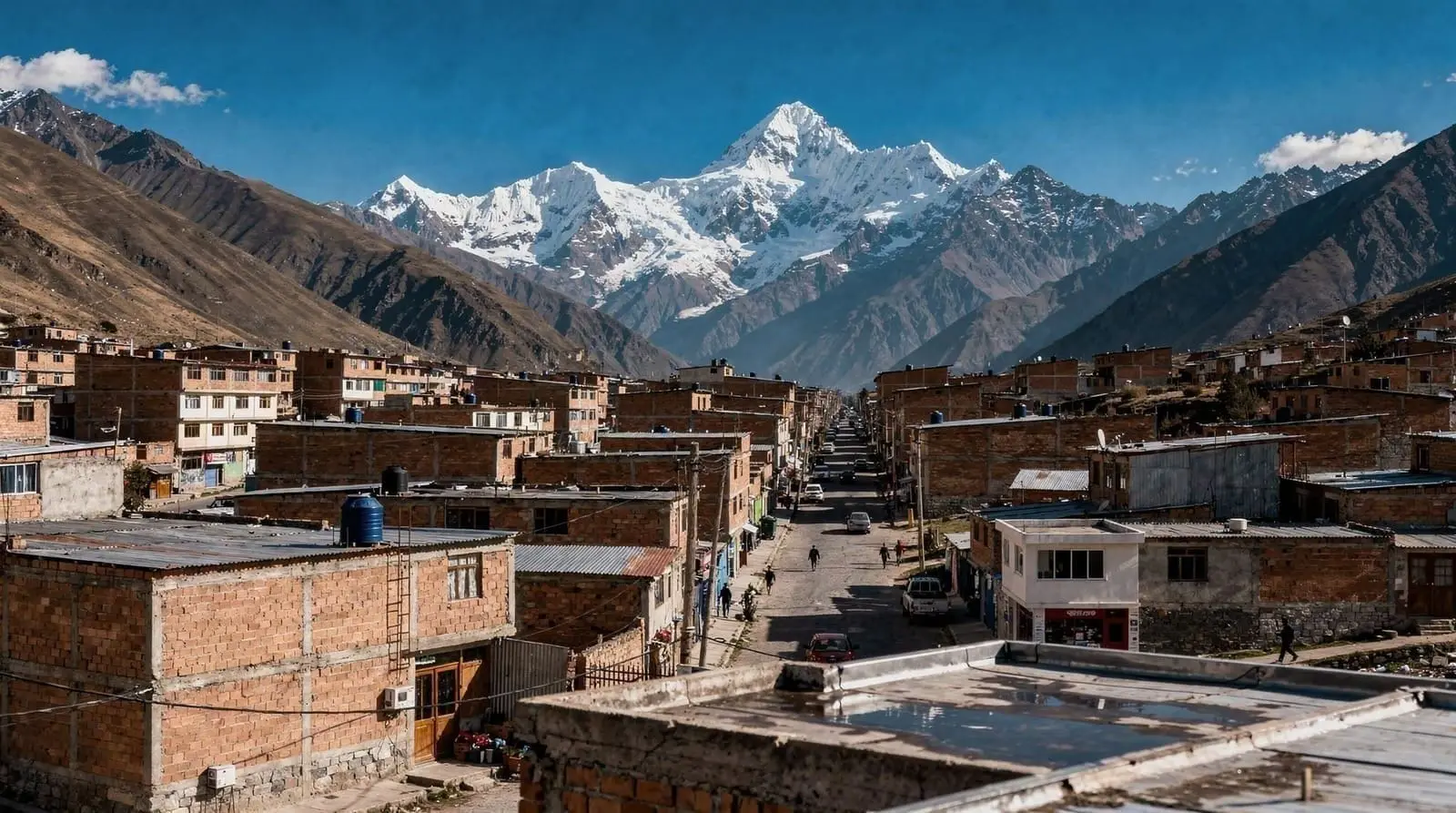
Huaraz
Huaraz sits at 3,050 m and opens the door to Laguna 69, the Santa Cruz trek, Pastoruri Glacier, and Chavín de Huántar. Here's how to plan it right.
From Huaraz: Full-Day Laguna 69 in Cordillera Blanca
Quick facts
- Country
- Peru
- Altitude
- 3,050 m (10,007 ft)
- Currency
- Peruvian sol (S/) — USD widely used
- Best for
- High-altitude trekking, glacial lakes, Andean archaeology
The Andes at their most jaw-dropping
Huaraz is not a polished destination. The city itself — rebuilt after the catastrophic 1970 earthquake that killed tens of thousands — has little architectural beauty. But that misses the point entirely. Huaraz is a launchpad, and what it launches you into is arguably the finest concentration of high-altitude mountain scenery anywhere outside the Himalayas.
| Where | Ancash region, roughly 400 km / 8–9 hrs by bus north of Lima |
| Cost | Around S/70–130 for the overnight bus from Lima |
| Time needed | 2 days minimum; 5–7 days for the full range of day trips |
| Getting there | Overnight bus from Lima (Cruz del Norte, Movil Tours); no scheduled flights |
| Best time | May to September (dry season) |
The Cordillera Blanca — the “white range” — runs north to south for roughly 180 km, and within that corridor you’ll find 27 peaks above 6,000 m, including Huascarán at 6,768 m, Peru’s highest summit. Glacial lakes of a hallucinatory blue-green colour punctuate the valleys. Ancient pre-Inca culture left stone fortresses and ceremonial centres that took centuries for the outside world to rediscover. For trekkers, climbers, or anyone who simply wants to stand at the edge of a turquoise lake and feel very small, Huaraz delivers.
That said, you need to approach it with respect. The altitude is not optional context — it is the defining fact of the experience. At 3,050 m, Huaraz itself is already well above the level at which many visitors start feeling the effects of altitude. The day hikes frequently push past 4,000 m. Laguna 69, the most-visited attraction in the region, sits at 4,600 m. Arrive, rest, and give your body time to adapt before attempting anything strenuous.
Getting to Huaraz
Huaraz lies in the Ancash region, roughly 400 km north of Lima. The standard approach is an overnight bus from Lima’s Cruz del Norte or Movil Tours terminals; the journey takes around eight to nine hours and costs roughly S/70–130 (about $19–35 USD) depending on bus class. Most travellers take the comfortable semi-cama or cama service and arrive at dawn.
There is no commercial airport in Huaraz. A small airstrip at Anta, 20 km north, sees occasional charter operations but no scheduled domestic flights at present. For almost everyone, the bus is the only practical option.
From Huaraz, tour operators and combis (minibuses) serve the main sites daily. Shared combis are cheap — typically S/10–15 each way to the Llanganuco valley trailheads — but private transport costs more and offers flexibility. Most trekking agencies in town can arrange day trips, multi-day guided treks, gear rental, and porter services.
Altitude: the only thing that actually matters on day one
Let’s be direct about this. If you step off an overnight bus from Lima, eat breakfast, and board a van to the Laguna 69 trailhead, you are making a serious mistake. Lima is at sea level. Laguna 69 is at 4,600 m. That gap, covered in under 24 hours, is a reliable recipe for altitude sickness, and altitude sickness at 4,600 m is genuinely dangerous.
The recommended approach is simple: spend the first full day in Huaraz doing almost nothing. Walk around the town, eat well, drink plenty of water (not alcohol), and go to bed early. On day two, if you feel good, you might walk up to the mirador above town — elevation around 3,400 m — to get a preview of the peaks. On day three, a gentle excursion to Llanganuco (3,800 m) is a reasonable step up. By day four or five, most healthy adults are ready for Laguna 69.
Altitude medication (acetazolamide, sold as Diamox) is widely available at Huaraz pharmacies without prescription and is worth considering if you have a history of altitude problems. Local remedies include coca tea, sold everywhere and genuinely mildly effective. But no supplement replaces time. Read the Huaraz acclimatisation guide before you book your first excursion.
Laguna 69: the signature experience
Laguna 69 is, for many visitors, the visual highlight of the entire Cordillera Blanca. The lake sits in a cirque beneath the north face of Chacraraju (6,112 m), and the water is an almost impossible shade of turquoise caused by glacial silt suspended in the snowmelt. The round-trip hike from the Cebollapampa car park is 14 km and gains around 600 m of elevation, finishing at 4,600 m. Allow five to six hours at altitude pace.
Most visitors join an organised day trip from Huaraz rather than arranging independent transport, and this is sensible — the logistics of getting to Cebollapampa by 7 am are complicated without a vehicle.
Full-day Laguna 69 tour from HuarazAccess runs through Huascarán National Park, which charges an entry fee of S/30 per day or S/150 for a multi-day pass. Keep this in mind when budgeting day trips.
If you would rather set your own pace than join a fixed-departure group, a private full-day tour of Huascarán National Park covers the same glacial scenery with a dedicated guide and vehicle.
Llanganuco Lakes: the easy entry point
If you’re not yet ready for the Laguna 69 climb, the Llanganuco Lakes offer spectacular scenery at a more accessible elevation. The two lakes — Chinancocha and Orconcocha — sit at around 3,850 m in a valley flanked by the glacier-capped Huascarán massif. You can reach them by combi or tour from Huaraz and simply walk along the lakeshore without any serious ascent.
Llanganuco Lakes full-day tour from HuarazThe Llanganuco valley is also the starting point for the Santa Cruz trek, one of the classic multi-day routes in South America. The four-day circuit crosses the Punta Unión pass at 4,750 m and passes beneath some of the Cordillera Blanca’s most impressive peaks. It requires solid acclimatisation and either a guide or significant experience with high-altitude camping. The Santa Cruz trek guide covers logistics and permits in more depth, and full trip planning sits in the Huaraz and Cordillera Blanca week itinerary.
Pastoruri Glacier: a climate lesson at 5,240 m
The Pastoruri Glacier was once one of the standard easy excursions from Huaraz, reachable by vehicle to a car park at around 5,000 m. It still draws visitors, but it has retreated dramatically — by roughly 50% since the 1980s — and the experience now doubles as a sobering lesson in climate change.
The drive to the high-altitude puna (grassland) passes through the Pumapampa valley, where you can see stands of Puya raimondii — the giant bromeliad, sometimes called the Queen of the Andes — which flowers only once every hundred years or so. The plants along this route are among the most accessible anywhere in the Andes.
Pastoruri Glacier day trip from HuarazNote that Pastoruri involves walking at above 5,000 m, which requires more acclimatisation than the Llanganuco visit. Do not attempt it on your first or second day in Huaraz.
Laguna Parón: the contested lake
Laguna Parón, at 4,185 m in the valley above Caraz (the quieter town 67 km north of Huaraz), is the largest lake in the Cordillera Blanca and one of the most visually dramatic. The deep blue water, hemmed in by a semicircle of glaciated peaks including Artesonraju — the mountain said to have inspired the Paramount Pictures logo — makes for extraordinary photography.
Getting there from Huaraz typically means joining a day trip or renting a taxi-colectivo from Caraz. The road into the valley is rough and the lake can be cold and windy, but it is significantly less crowded than Laguna 69. The Laguna Parón guide has more detail on access and timing; for the crowd-favourite day hike, see the Laguna 69 complete guide and the round-up of best day hikes in Huaraz.
Chavín de Huántar: before the Incas
The Chavín culture flourished in these highlands between roughly 900 and 200 BCE, predating the Incas by over a millennium. Their principal ceremonial centre, Chavín de Huántar, lies about 110 km south-east of Huaraz on the far side of the Cordillera Blanca. The site contains an extraordinary network of underground stone galleries — dark, narrow, and lined with carved stone heads — and a large ceremonial plaza oriented toward the mountains.
Chavín de Huántar is a UNESCO World Heritage site and is far less visited than its importance deserves. A day trip from Huaraz, passing through the Kahuish tunnel, takes around three hours each way and is best arranged through a local agency that includes the on-site museum.
Chavín de Huántar full-day tour with lunch from HuarazPractical information
Where to stay: The main budget and mid-range hotel zone concentrates around Jirón Sucre and Jirón José de la Mar in central Huaraz. Rates run from S/40–80 (about $11–22 USD) per night for guesthouses up to S/200+ for the better-equipped hotels. Caraz, 67 km north, is quieter and increasingly popular as a base for acclimatisation days.
Eating: Local restaurants around the Mercado Central serve hearty Andean food — caldo de cabeza (sheep’s head soup), truchas (trout from nearby rivers), and chicharrón — for S/10–20 per meal. The streets around the main plaza have cafés catering to the international trekking crowd.
Equipment rental: Multiple agencies around Jirón Luzuriaga rent trekking poles, sleeping bags, crampons, tents, and climbing gear. Quality varies; inspect gear carefully before paying. Rental prices for a basic sleeping bag and mat run around S/20–30 per day.
Safety: Petty theft occurs in Huaraz, particularly around the bus terminals. Altitude sickness is the most serious risk — if you or a companion develops severe headache, confusion, loss of coordination, or breathing difficulty, descend immediately and seek medical help. The local hospital in Huaraz has experience with altitude emergencies.
When to visit
The Cordillera Blanca has a classic Andean seasonal pattern. The dry season runs May through September; this is when trails are clear, views are reliable, and the risk of being turned back by cloud is lowest. June, July, and August see the highest volume of trekkers on the Laguna 69 trail — expect the car park to be crowded on weekends.
The wet season (October through April) brings afternoon rain, cloud, and occasional trail closures due to landslides. Some day trips still operate in the shoulder months (October, April), but the multi-day treks become riskier and logistics harder. If you’re planning the Santa Cruz trek, stick to May–September.
| Season | Months | What to expect |
|---|---|---|
| Peak dry | June–August | Clearest views, busiest trails, book ahead for weekends |
| Shoulder dry | May, September | Reliable weather, noticeably fewer crowds |
| Shoulder wet | April, October | Some day trips run; multi-day treks riskier |
| Peak wet | November–March | Afternoon rain, cloud, possible landslide closures |
Huaraz hosts the Semana del Andinismo, an international mountaineering festival, in late June — a good time to be in town if you’re interested in the climbing culture.
The city itself: what to do between excursions
Huaraz town has a character that grows on you once you stop comparing it to what it was before 1970. The central market on Jirón Luzuriaga is a genuine highland market — llama wool, fresh cheese, medicinal herbs, and stalls selling hiking gear of wildly variable provenance — and wandering it for an hour tells you more about daily Andean life than any museum. The Museo Regional Ancash, on the Plaza de Armas, holds one of the largest collections of pre-Columbian stone monoliths in Peru, mostly carved human figures from the Recuay culture (roughly 200 BCE to 600 CE). It’s small, quiet, and often overlooked by trekkers who only think about the mountains.
The mirador above the city — accessible by a 90-minute walk uphill from the centre — provides the context-setting view: the white wall of the Cordillera Blanca across the Callejón de Huaylas valley, with Huascarán dominating the skyline. Do this on your first acclimatisation day. The view alone justifies the climb.
Using Huaraz as a hub
Two days is the recommended minimum but barely scratches the surface. A more realistic plan for serious visitors allocates five to seven days: two for acclimatisation, one or two for Laguna 69 and Llanganuco, one for Pastoruri or Laguna Parón, and one for Chavín. Trekkers doing the Santa Cruz circuit should budget four additional days.
Huaraz also connects logically with Trujillo on Peru’s north coast (Chan Chan, Moche pyramids), making a northern Peru circuit feasible. For a broader look at how to connect Huaraz with the rest of your Peru itinerary, see the Huaraz complete guide and the things to do overview.
Frequently asked questions about Huaraz
How bad is altitude sickness in Huaraz?
Huaraz at 3,050 m causes mild symptoms — headache, fatigue, poor sleep — in a significant proportion of arrivals coming from sea level. Serious altitude sickness (high-altitude pulmonary or cerebral oedema) is uncommon at this elevation but becomes a real risk on the day hikes above 4,500 m. The standard advice is to spend at least one full rest day in Huaraz before any strenuous activity.
Can I do Laguna 69 on my first day?
No. Laguna 69 sits at 4,600 m. Arriving from Lima and hiking to 4,600 m within 24 hours dramatically increases the risk of altitude sickness. Most operators will take you regardless — the responsibility is yours to say no. Give yourself at minimum two nights in Huaraz before attempting the hike.
How hard is the Laguna 69 hike?
The hike is 14 km round trip with around 600 m of elevation gain, finishing at 4,600 m. At altitude, the effort is roughly equivalent to a harder day hike in the Alps or Rockies. The trail is well-marked and does not require technical skill, but slow pace, hydration, and sun protection matter at this elevation.
Do I need a guide for the Laguna 69 trail?
The main Laguna 69 trail from Cebollapampa is well-signed and straightforward to follow independently once you reach the trailhead. However, most visitors join a day-trip van from Huaraz that handles transport and a local guide. Independent access is possible but requires a private vehicle or very early combi connection.
Is the Santa Cruz trek suitable for beginners?
The Santa Cruz trek is achievable for reasonably fit people with adequate acclimatisation, but it is not a beginner route. The Punta Unión pass at 4,750 m is demanding, and the four-day format with camping requires some experience managing gear at altitude. Hiring a guide and arrieros (mule handlers) is strongly recommended and supports local communities.
When is Huaraz most crowded?
July and August see the heaviest traffic, particularly on the Laguna 69 trail on weekends. Even at peak season, the crowds are modest compared to Machu Picchu. Arriving mid-week and starting the hike by 7 am avoids most of the congestion.
What’s the link between Huaraz and Chavin de Huántar?
Chavín de Huántar is about 110 km from Huaraz across the Cordillera Blanca. It was the ceremonial capital of the Chavín culture (c.900–200 BCE), one of the earliest complex societies in South America. The underground stone galleries and carved heads (cabezas clavas) are among the most extraordinary archaeological remains in the country, yet the site sees a fraction of the visitors that Machu Picchu does.
Top experiences
Bookable activities with verified prices and instant confirmation on GetYourGuide.


