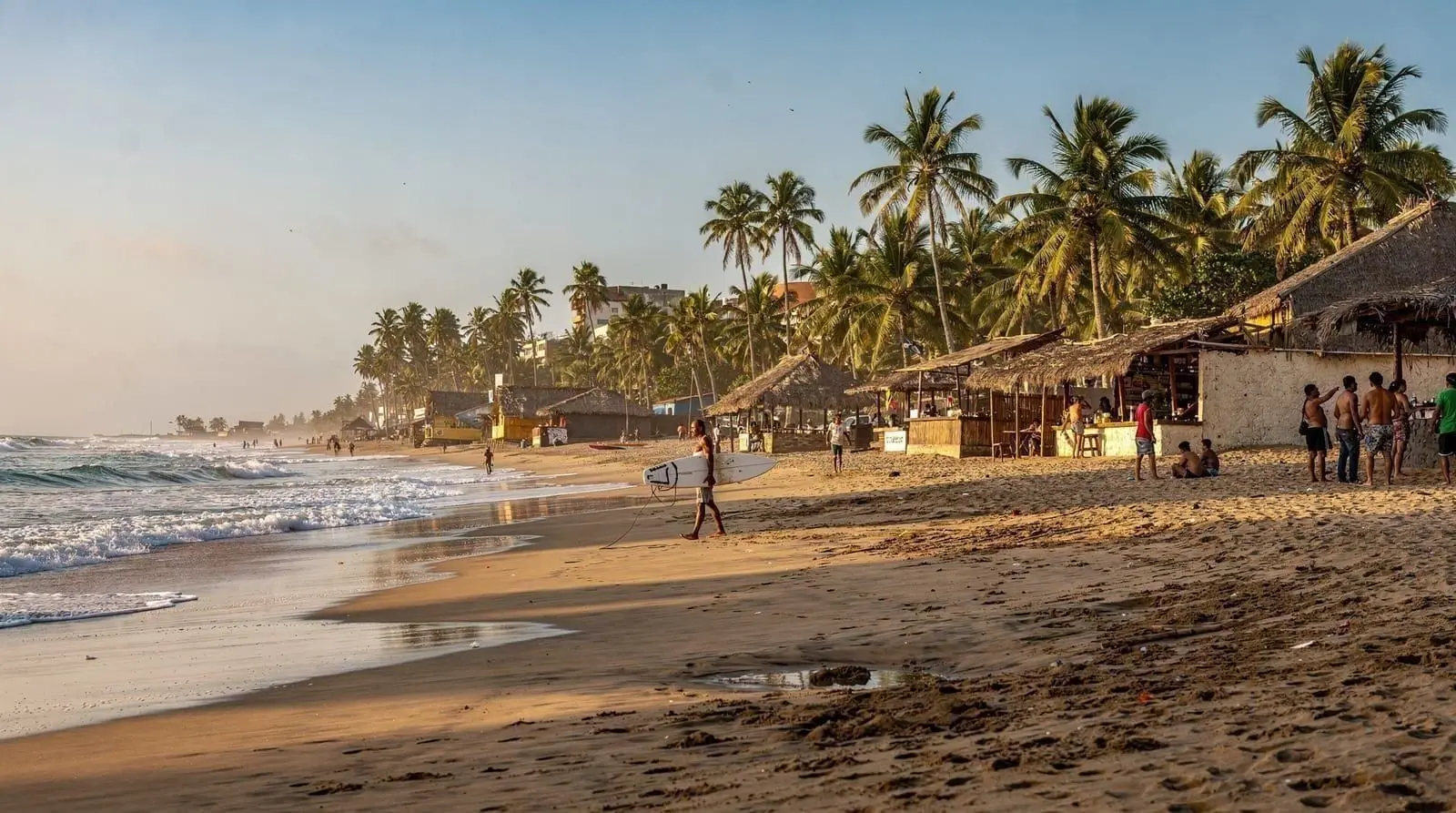
A week in Máncora: notes from Peru's warm-water coast
I booked Máncora the way most people do in Peru: as an afterthought. I had spent two weeks at altitude, my lungs were tired of working overtime, and the idea of a beach where the water is actually warm enough to swim sounded like a reward I had earned. What I had not factored in was the journey, the fact that “warm” in late September means something different to a Limeño than to me, and that a week is both too long and exactly right.
| Where | Máncora, Peru’s north coast |
| Getting there | Fly Lima–Piura (~USD 70-90) + colectivo (~S/30-40), or overnight bus (~S/165) |
| Cost | S/45-180/night depending on area; meals S/12-30 |
| Time needed | 4-7 days; 4 if restless, a full week if decompressing |
| Best time | Roughly Dec-Apr for warm swimming water; Sept-Oct for whale season |
Getting there is the price of admission
There is no romantic way to say this: the bus from Lima to Máncora is a punishment. I took Oltursa overnight, paid S/165 (about USD 44) for a semi-cama seat, and spent roughly seventeen hours watching the desert go by in the dark. The seats recline more than an aeroplane and less than a bed, the on-board film was dubbed and loud, and somewhere around Chiclayo I stopped pretending I would sleep.
If I did it again I would fly Lima–Piura for around USD 70–90 booked a couple of weeks out, then take a shared taxi (colectivo) the last three hours to Máncora for S/30–40. You lose the bragging rights and gain an entire day. I met a Dutch couple who flew and arrived rested while I arrived feeling like a wrung-out sponge. They were right and I was stubborn.
Máncora itself announces itself slowly: scrubby coast, then a strip of hostels, tuk-tuks, and a single main road with the Panamericana running straight through the middle of town. The trucks never stop. That is the first thing nobody tells you. The beach is lovely and the highway is forty metres behind it.
Where I stayed, and where I’d stay next time
I split the week. The first three nights I was at a backpacker place near the town end at S/45 a night for a dorm bed, which was fine for the price and useless for sleep, because the bars on Máncora’s main drag run until 3am and the walls were apparently decorative. The second half I moved a couple of kilometres south toward Las Pocitas and paid S/180 (USD 48) for a simple double with a fan and actual quiet, the ocean doing the only talking.
That move was the single best decision of the trip. Las Pocitas has the calm, deeper water and the small boutique places; the town end has the cheap food, the surf school energy, and the noise. If you are here to party, stay in town. If you are here to sleep and swim, get out of it. I wanted both and learned the hard way that you cannot have them in the same bed.
The food situation
Ceviche on the north coast is the real reason to come, and Máncora delivers. My go-to became a small place a block off the beach where a generous ceviche mixto ran S/25–30 (USD 7–8) and came with the corn and sweet potato that make it a meal rather than a snack. The fish is caught locally; you can taste the difference from the Lima versions that have travelled.
Tourist-strip restaurants on the beachfront charge double for the view, and the view is the same one you get for free by walking thirty metres. I ate one overpriced grilled-fish dinner at S/55 to learn this. Breakfast was usually fruit and bread from the market, lunch was a menú del día at S/12–15 somewhere unremarkable and excellent, and dinner alternated between ceviche and the surprisingly good wood-fired pizza places that backpacker towns everywhere seem to grow.
Whales, turtles, and the one tour worth booking
I am sceptical of beach-town day tours. Half of them are the same boat with a different sticker. But late September is whale season on this coast, the humpbacks are passing through on their way south, and I am glad I did not skip it.
The whale-watching boat trip ran a little under three hours. We found a mother and calf within forty minutes, killed the engine, and just floated while they surfaced maybe sixty metres off the bow. No music, no narration over a speaker, just the sound of them breathing. It cost me around S/120 (USD 32) and it is the kind of thing that makes the seventeen-hour bus retroactively forgivable. Bring a hat, bring sunscreen you have already applied, and accept that you will get wet.
The other half-day worth your time is the turtle snorkelling down at El Ñuro, a fishing village twenty minutes south where green sea turtles gather under the pier waiting for the fishermen’s scraps. You can do it cheaply on your own: a colectivo to El Ñuro, a S/10 pier entry, and a mask you rent on the spot. I went independently and shared the water with about six turtles and far too many other snorkellers, because everyone has the same idea at the same hour. Go early. The morning crowd is thinner and the light is better. The swimming with turtles guide has the fuller rundown of tides and timing if you want to skip my trial and error.
If whale season doesn’t line up with your dates, the Máncora whale watching guide covers when it actually runs and what else fills that half-day slot the rest of the year.
How Máncora fits a longer north coast trip
Máncora rarely justifies a trip on its own unless beach decompression is genuinely the whole point. It works best as one stop on a longer north coast loop, and the north coast beaches week itinerary is the route I’d have followed if I’d planned ahead instead of booking it as an afterthought — it strings Máncora together with the rest of the coast so you’re not backtracking. The Máncora complete guide is the fuller planning resource for logistics I only worked out by trial and error: which end of town to stay in, when the surf is best, and how the bus and flight options actually compare in practice.
What a week actually looks like
Here is the honest truth about a beach week in Máncora: by day four you have done the things, and the rest is just being there. I surfed badly for two mornings (the beach break is forgiving, my balance was not, and the Máncora surfing guide would have saved me some flailing), read most of a book, ate too much ceviche, and watched a great many sunsets. The sunsets are genuinely the headline act. The sun drops straight into the Pacific with nothing in the way, the sky does its whole performance, and the entire town drifts to the sand to watch it without anyone organising them to.
If you are a restless traveller, four full days is plenty and you will start inventing reasons to move on. If you are coming straight off the Inca Trail or a week of buses, the extra days are exactly the point. I was somewhere in between, and by the seventh day I was both completely rested and quietly ready for the next thing.
The honest verdict
Máncora is not a hidden paradise and anyone selling it that way is selling. It is a working beach town bisected by a highway, popular with Peruvian and foreign backpackers, with genuinely warm water, reliable surf, and the best ceviche I ate on the whole trip. The flaws are real: the noise, the bus, the touristy beachfront pricing. The pleasures are also real and they are the simple kind.
Would I go back? Yes, but I would fly, I would book Las Pocitas from the start, and I would treat it as the decompression chamber it is rather than a destination in its own right. As a coda to a hard-charging Peru itinerary, it is close to perfect. As the whole point of the trip, it would not quite hold up. Build it into a longer plan, set your expectations to “relaxed working town” rather than “postcard”, and the warm water will do the rest. The first time you swim without flinching at the cold, you will understand why people come all this way.