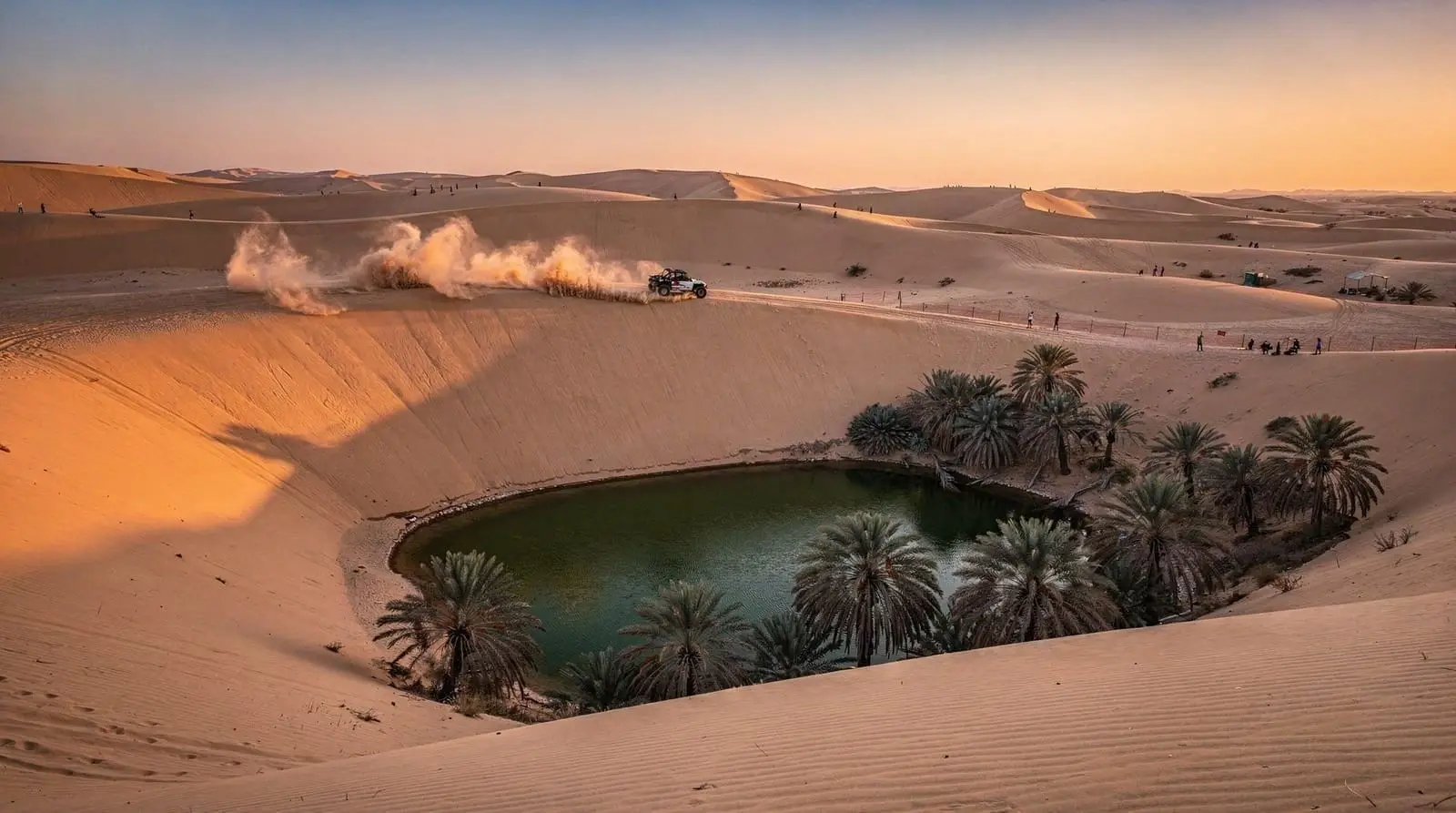
Huacachina sunset diary: dune buggies, sand in everything, no regrets
An oasis that looks fake until you’re standing in it
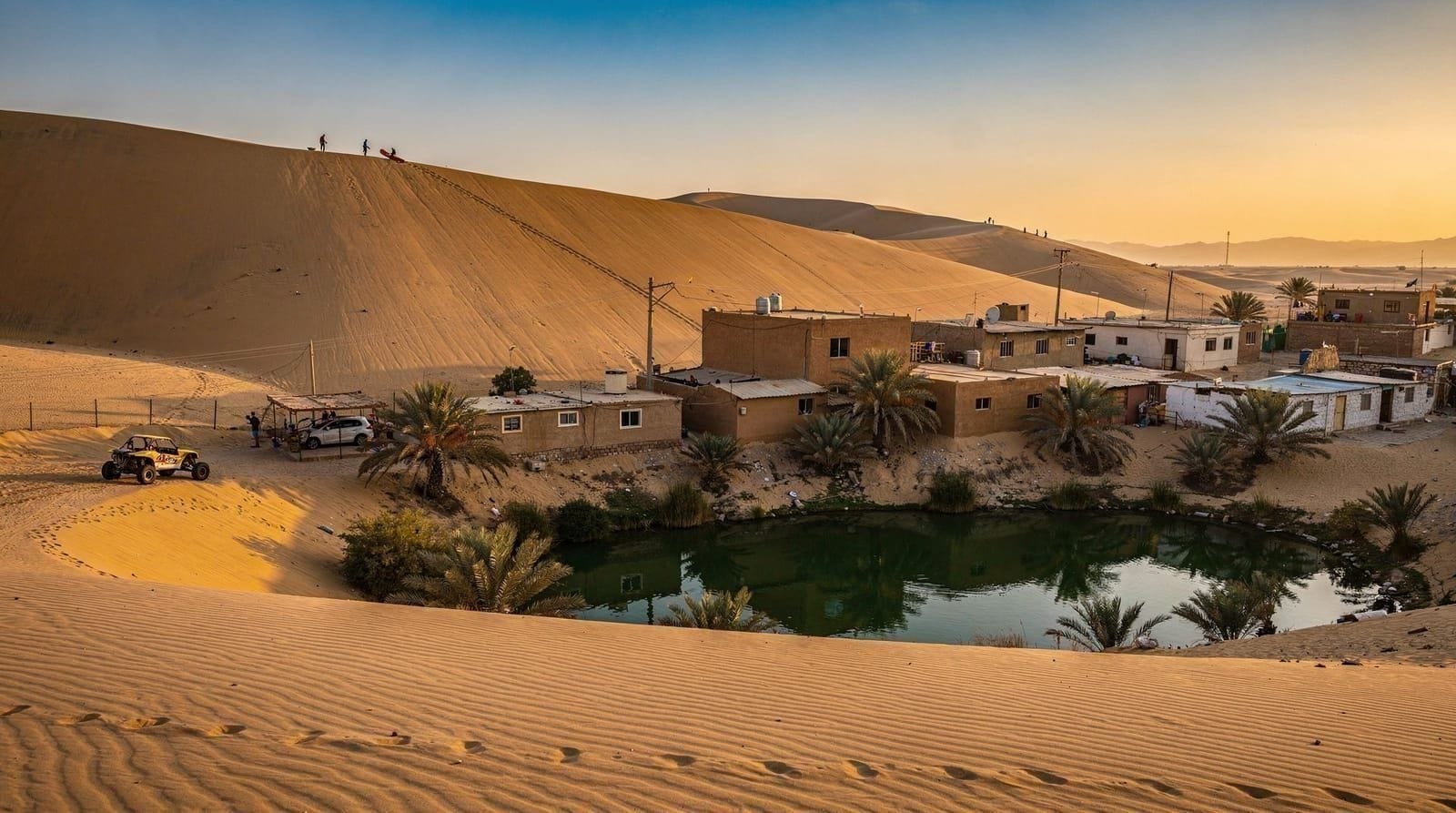
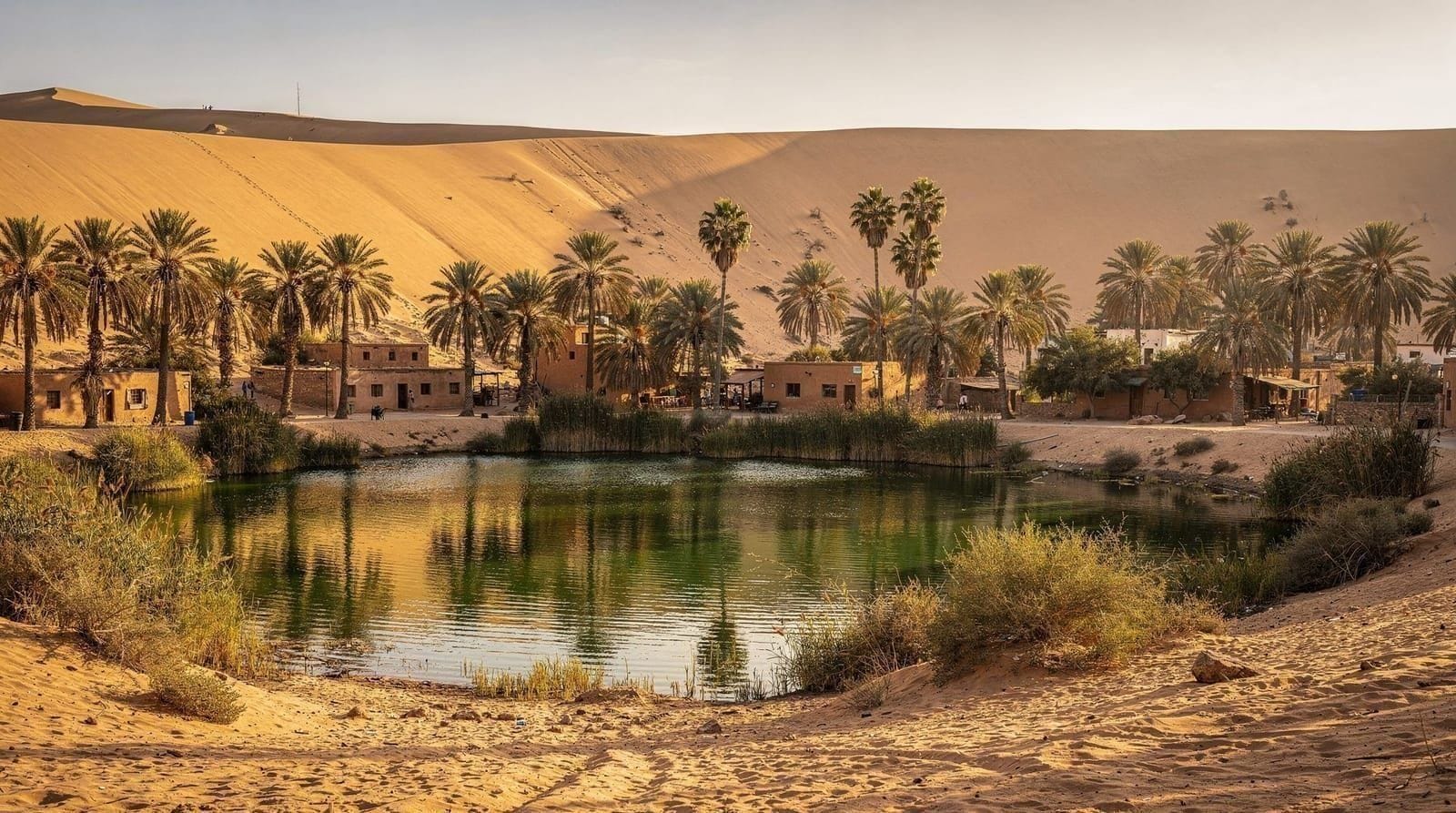
I did not believe Huacachina was real until I walked over the lip of the first dune and looked down at it — a small green lagoon ringed with palm trees and a handful of hotels, sitting in the middle of nothing but sand for miles in every direction. It looks like a film set or a mirage. It is a real place, about five minutes by taxi from the city of Ica, and it exists almost entirely to send tourists into the dunes and feed them afterwards.
This is the diary of one afternoon there: arrival at 3pm, dunes at 4, sunset at 5:45-ish, and the long shower afterwards trying to get sand out of places sand should not reach.
| Where | 5 minutes by taxi from Ica, ~4–5hrs south of Lima |
| Cost | Around S/70 (under USD 20) for the buggy-and-board combo |
| Time needed | One night is genuinely plenty |
| Best slot | Sunset departure, book slightly ahead in high season |
| Bring | Buff/scarf, sunglasses, shoes you can empty out |
Getting there and fitting it into a south-coast trip
Most people reach Huacachina as a stop on the way down the coast from Lima, either by bus (around 4–5 hours direct to Ica, then a short taxi) or as part of an organised south-coast loop that also covers Paracas and the Nazca Lines. If you’re building the route yourself rather than winging it like I did, the south coast 2-day guide strings the dunes, the wine country and the wildlife-watching into a sensible order, and the Lima to Paracas and Nazca itinerary is the fuller version if you have more days to give it.
The buggy is not a gentle ride
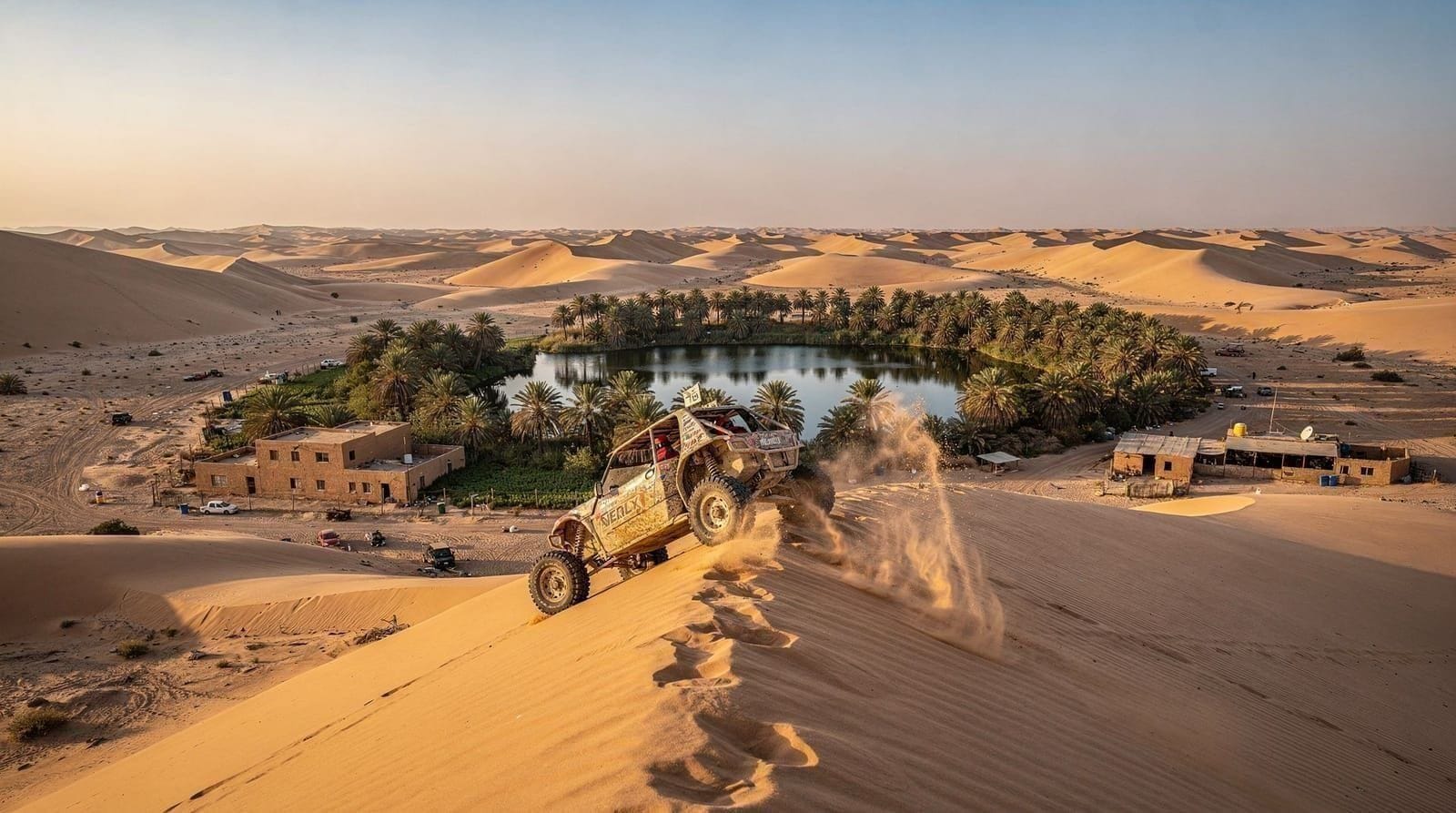
I’d pictured a dune buggy as a slow, scenic trundle. It is not. It is a roll-caged metal frame with a deranged engine and a driver who has done this run a thousand times and is bored, so he takes the steep faces fast. The moment we crested the first big dune and the front dropped away into what felt like a vertical sand wall, I made a noise I am not proud of. The woman next to me grabbed my arm. We were strangers. We were not strangers by the end.
The buggies tear up and over the dunes for fifteen, twenty minutes, stopping at the high crests for photos and to swap us onto the sandboards. It is a rollercoaster with no track and a lot of trust in the driver and the seatbelt. I loved it and also genuinely feared for my spleen at two points. If you want a clear-eyed account of what the ride involves and how to pick an operator that isn’t reckless, the Huacachina dune buggy guide is more measured than my white-knuckled version.
Sandboarding, in which I am bad at sandboarding
At the first big dune they handed us boards — old snowboards, basically, waxed with a candle the driver kept in his pocket — and the choice: stand up like snowboarding, or lie down face-first and bomb the slope. I tried standing. I fell immediately and slid most of the way down on my side, collecting sand. For the second dune I lay down headfirst like everyone with sense, and that was genuinely thrilling — fast, smooth, a faceful of dune at the bottom, and a long walk back up because there are no lifts in a desert.
A tip nobody told me: keep your mouth closed on the descent. I did not. I tasted Peru’s south coast for the rest of the evening.
The cost, honestly
I booked the standard sunset buggy-and-sandboard combo on the morning of, from a kiosk by the lagoon, for S/70 (under 20 dollars), and the price was roughly the same everywhere I asked — the operators run on the same dunes at the same times, so they don’t compete much on price. What varies is the buggy’s condition and the driver, which is the part worth caring about.
If I were doing it again I’d book the sunset slot specifically and a touch in advance during high season, because the late-afternoon departures fill up — everyone wants the golden light, correctly.
Huacachina sandboarding and dune buggy tour at sunsetThe full lay of the town — where to stay, eat, and how it all fits into a south-coast loop — is in the Huacachina guide if you want to plan around the dunes rather than just into them.
The sunset, which is the whole point
We stopped on a high dune as the light went, engine off, just the wind, and the desert turned from beige to gold to a deep rose-orange that I have not really managed to photograph in a way that does it justice. The dunes throw long blue shadows. The far ranges go purple. A dozen other buggies were parked on nearby crests, everyone quiet for once, all of us watching the same thing.
This is when I understood why you do the sunset run and not the midday one. The dunes are extraordinary at any hour but at dusk they become something else — soft, enormous, and lit from the side so every ripple in the sand shows. It lasted maybe fifteen minutes and was worth the whole afternoon.
Back at the oasis after dark
We rolled back down to Huacachina in the dark, headlights bouncing over the dunes, and I climbed out of the buggy with sand in my hair, my ears, my shoes, and somehow my back pocket. I ate a plate of lomo saltado at a table by the lagoon for S/30, drank a cold Cusqueña, and watched the palm trees reflected in the water while the day’s adrenaline wore off.
A short walk away, Ica is wine and pisco country, and a lot of people pair the dunes with a vineyard visit the next morning — the contrast between the dune adrenaline and a slow tasting works well, and there are bodega tours that make a relaxed counterpart to the buggy.
Would I send a friend?
Without hesitation, with three caveats. One: it is touristy, unapologetically — Huacachina is not a hidden gem, it’s a well-oiled machine, and that’s fine as long as you go in knowing it. Two: if you have a bad back or motion sickness, the buggy is genuinely rough, not a gentle option. Three: book the sunset, accept the sand, keep your mouth shut on the descents.
The morning after: wine country, slowed right down
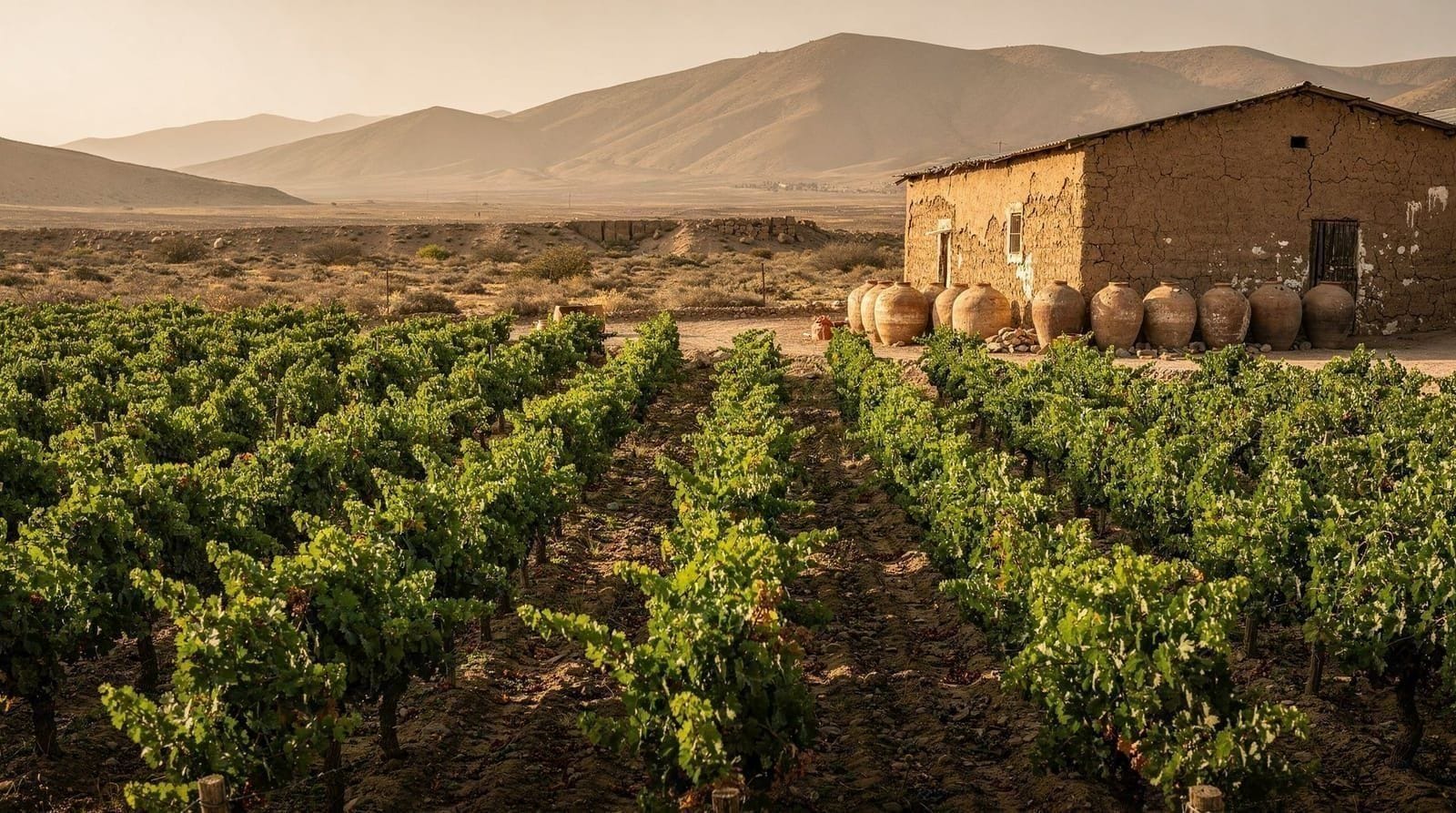
I’d planned the dunes as an evening and almost left the next morning, which would have been a mistake, because Ica is one of Peru’s two great wine and pisco regions and the bodegas are a fifteen-minute drive from the oasis. The contrast is the appeal: dune adrenaline at dusk, then a slow morning tasting pisco in a quiet courtyard surrounded by vines.
I visited a working bodega where they still make pisco the traditional way — distilled from grape must in copper pot stills, no aging in barrel, the spirit kept clear and aromatic. The tour cost around S/30 and ended, inevitably, in a tasting flight of piscos and the sweet fortified wines they make alongside. At 11am. On the morning after the dunes. I am not sure it was wise but it was very pleasant. The wider story of the region’s vineyards and how pisco is actually made is in the Ica vineyards and pisco guide.
Practicalities I’d hand a friend
Bring sunglasses you don’t mind sandblasting, a buff or scarf for your face on the buggy, and shoes you can empty out — sandals fill instantly. Leave the good camera in the bag and use a phone you don’t mind risking, because fine sand gets into everything mechanical. Money: carry the buggy fee plus a bit for board wax tips and a drink afterwards, in small notes. And shower at your hotel before you travel onward, because sand in a bus seat for five hours is its own kind of penance.
One more honest thing about the town itself: Huacachina is tiny and exists for tourists, so an overnight is plenty. Stay one night, do the sunset dunes, do the bodegas in the morning, and move on. People who plan two or three nights here usually run out of oasis by lunch on day two.
Which time slot to actually book
| Slot | Light | Crowds | Verdict |
|---|---|---|---|
| Sunset (5–6pm) | Golden, then dusk colours | Busiest, book ahead in high season | The one to book |
| Midday | Flat, harsh | Quietest | Skip unless it’s your only window |
| Early morning | Soft, cool | Light | Good second choice, less dramatic finish |
The honest verdict
It was a half-day, it cost less than a nice dinner, and it gave me a sunset I still think about and an arm-grab friendship that lasted exactly one buggy ride. No regrets. A lot of sand. Worth it.