Huacachina guide
From Ica or Huacachina: Dune Buggy at Sunset & Sandboarding
Is Huacachina worth visiting?
Yes for the dunes and the sunset buggy-and-sandboard ride, which are genuinely fun. The oasis itself is small and touristy, so treat Huacachina as a one-night stop built around the late-afternoon dune tour, not a multi-day destination.
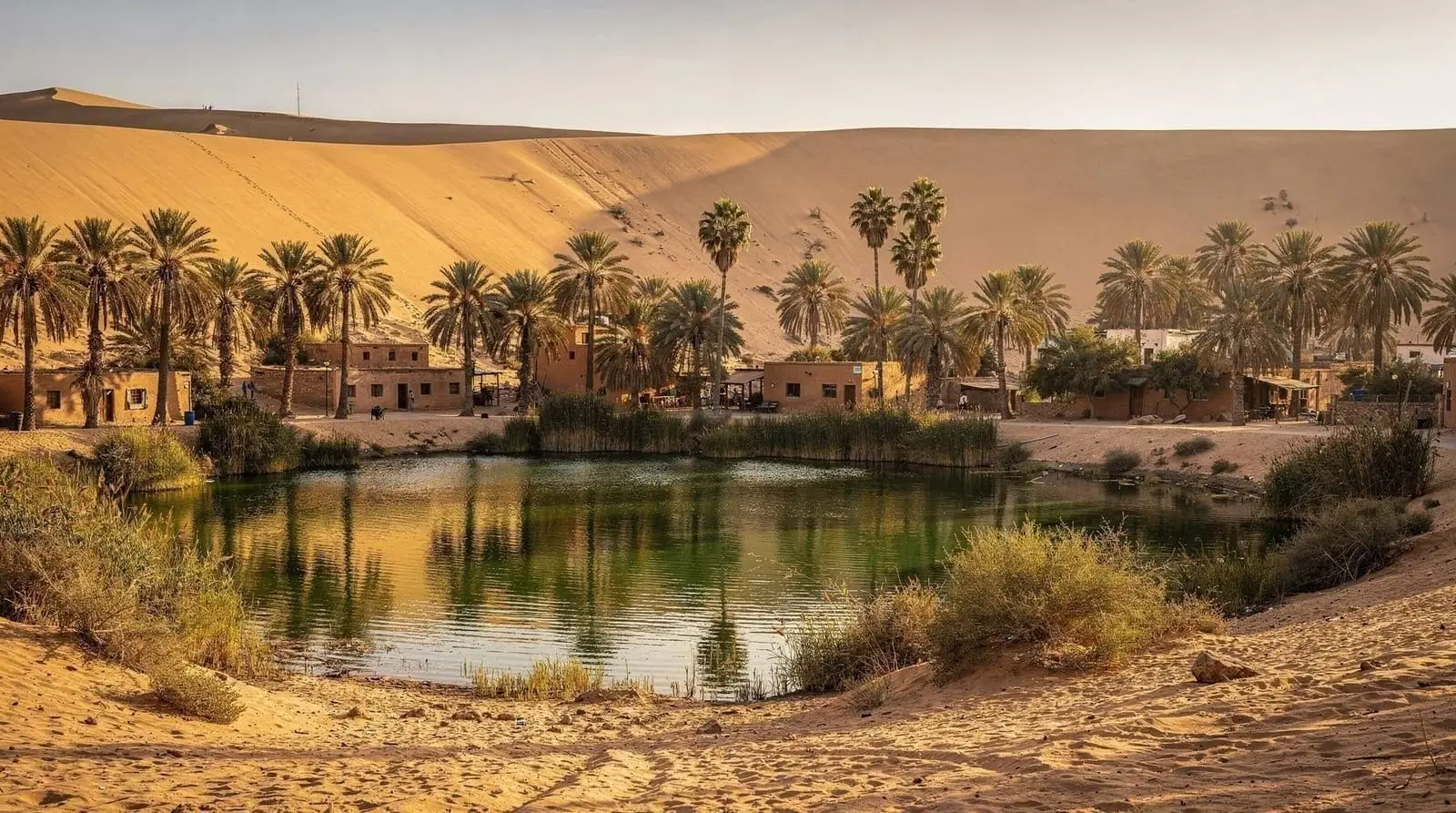
Huacachina is a real desert oasis — a small palm-fringed lagoon sitting in a bowl of enormous sand dunes, 5 km from the city of Ica on Peru’s south coast. It is one of the most photographed places in the country, it appears on the back of the S/50 banknote, and it is also, let us be honest, tiny and almost entirely given over to tourism. The case for going rests not on the postcard lagoon (which is murky and modest up close) but on the dunes around it: a sunset dune-buggy ride and sandboard down the slopes is genuinely good fun, and one of the more reliable, weather-proof highlights of the whole south coast.
This guide covers what Huacachina actually offers, what it costs, how to get there, where the tourist-trap pricing hides, and how to fit a night here into a longer trip. For the dune ride itself in detail, see the Huacachina dune buggy guide.
| Where | 5 km from Ica, Peru’s south coast |
| Stay length | One night is plenty; two if you want to relax |
| Cost | S/180–300 ($50–80) all-in for a focused one-night stop |
| Getting there | Bus to Ica from Lima (4–5h), Paracas (1h) or Nazca (3–3.5h), then a short taxi |
| Don’t | Expect to swim the lagoon, or eat every meal on the waterfront |
What Huacachina actually is
Picture a single ring of buildings — hostels, hotels, a handful of restaurants and bars, and dune-tour agencies — wrapped around a small green lagoon, with sand dunes rising steeply on every side. That is the whole place. You can walk the entire oasis in ten minutes. There is no town beyond the ring; Ica, the working city with the bus terminals and supermarkets, is a short taxi ride away.
The lagoon is fed partly by groundwater and, in recent decades, partly artificially topped up because falling water tables shrank it. It is not a place you swim — it is murky and not maintained for bathing — and that surprises some visitors who arrive expecting a swimmable pool. The water is scenery, not recreation. The recreation is the sand.
This matters for planning: Huacachina rewards a short, focused stay. One night, built around the late-afternoon dune tour, is the sweet spot for most travellers. Stay longer only if you specifically want to lounge by the dunes, climb them at sunrise, or use it as a relaxed base for Ica’s pisco and wine bodegas.
The reason to come: dunes, buggies and sandboarding
The headline activity is the sunset dune-buggy and sandboard tour. A dune buggy — a roll-caged, sand-rail vehicle seating around 8 to 12 — roars up and over the dunes like a rollercoaster, stops at progressively bigger slopes where you sandboard (usually lying down on a waxed board, sometimes standing), and finishes at a high dune to watch the sun set over the desert before bombing back to the oasis in the dark. It runs about 1.5 to 2 hours.
Cost is roughly S/60 to S/100 per person (about $16 to $27 USD) for the standard combo, plus a small Huacachina entrance/dune fee. The late-afternoon departure (around 16:00 to 17:00 depending on season) is the one to take — cooler sand, golden light, and the sunset payoff.
From Ica or Huacachina: Dune Buggy at Sunset & SandboardingA sunset-specific version, well reviewed for the timing and the sandboarding mix:
Huacachina: Sandboarding and Dune Buggy Tour at SunsetEverything you need to know about the ride — what to wear, how the sandboarding works, safety, how rough the buggies are — is in the dedicated Huacachina dune buggy guide.
What it costs to stay
Huacachina runs the full range from party hostels to comfortable hotels, all within the same small ring:
- Hostel dorm bed: S/35 to S/70. Several are pool-and-party oriented (Wild Rover, Banana’s Adventure); good if you want the social scene, less so if you want quiet.
- Mid-range double: S/120 to S/280, often with a pool — useful since you cannot swim the lagoon.
- Higher-end: a few smarter options run S/300+.
Because the oasis is captive, food and drink on the waterfront are overpriced — the classic small-tourist-spot markup. A meal facing the lagoon costs noticeably more than the same dish in Ica. The honest-planner move: eat one of your meals in Ica (5 km away, far better value and choice), buy water and snacks at an Ica supermarket before heading to the oasis, and treat the lagoon-front restaurants as a place for one drink at sunset rather than every meal.
A realistic Huacachina day plan
Because the headline activity is locked to late afternoon, the rest of the day shapes itself around it:
- Late morning / midday — Arrive from Paracas or Lima, drop bags, and either take a taxi back into Ica for a pisco-and-wine bodega tour or simply rest by a hostel pool. The dunes are too hot to enjoy at this hour.
- Around 15:00 — Confirm your sunset buggy slot, fill a water bottle, and dig out closed shoes and a face scarf.
- 16:00 to 18:00 — The sunset dune-buggy and sandboard tour, the reason you came.
- After dark — Shower the sand off, then one drink and a meal — ideally eaten one street back from the lagoon, where prices are sane.
- Next morning (optional) — Climb the big dune behind the oasis for sunrise before the heat, then move on south to Nazca or back north.
That is genuinely the whole place. One night, built around the buggy, is the sweet spot, and stretching it to three rarely rewards.
Climbing the dunes and sunrise views
You do not need a buggy to enjoy the sand. The large dune directly behind the oasis is a stiff but manageable climb — 20 to 40 minutes of calf-burning effort in soft sand — and the reward is a panoramic view over the lagoon and the endless dune field beyond. Do it for sunrise rather than sunset if you want it quiet and cool; the buggies own the dunes at sunset and the early hours are far more peaceful, with firmer, cooler sand underfoot. Bring water, wear closed shoes, and start before the sun is properly up. It is free, it is the best photo in Huacachina, and it costs nothing but effort.
Getting there and around
Huacachina has no bus terminal of its own. The route is:
- From Lima: bus to Ica, 4 to 5 hours down the Panamericana Sur (Cruz del Sur, Oltursa, Soyuz; S/30 to S/70 depending on class), then a 10-minute taxi from Ica to the oasis (S/8 to S/10).
- From Paracas: shared colectivo to Ica, about 1 hour (S/10 to S/15), then taxi out.
- From Nazca: bus to Ica, 3 to 3.5 hours, then taxi.
Once at the oasis you do not need transport — everything is walkable, and the dune tours collect you from the ring road.
A bit of background on the oasis
Huacachina has a history beyond the Instagram feed. In the early-to-mid 20th century it was a genuine spa resort, where well-off Peruvians came to bathe in the lagoon, whose mineral-rich, slightly sulphurous water was reputed to ease skin conditions and rheumatism. Grand villas and a couple of period hotels went up around the water in that era, and a handful still stand among the modern hostels. The oasis even has its own legend: a young woman, surprised while bathing by a hunter, is said to have fled and dropped her mirror, which became the lagoon, while her trailing robe formed the surrounding dunes.
The romance is tempered by a real environmental problem. Decades of groundwater extraction around Ica dropped the water table, and the lagoon began shrinking — at points nearly drying out — until authorities started topping it up artificially to preserve the oasis and the tourism it supports. That is why the water today is murky and managed rather than the clear natural pool of the old postcards. Knowing this sets honest expectations: you are visiting a maintained, semi-artificial oasis whose real draw is the spectacular dunes, not a pristine desert spring.
Beyond the dunes: Ica’s bodegas
If you stay a second night or have a free morning, the best add-on is the pisco and wine bodegas around Ica. This is the heartland of Peruvian pisco, and bodegas like Tacama (the continent’s oldest vineyard) and El Catador offer tastings and tours. It pairs naturally with Huacachina — dunes by late afternoon, vineyards by day. Full detail is in the Ica vineyards and pisco guide and the pisco drink-and-town guide.
From Ica or Huacachina: Wine and Pisco Vineyards TourTourist traps and honest cautions
Huacachina is small and captive, which breeds a few predictable squeezes:
- Lagoon-front dining markups. Restaurants facing the water charge a premium for ordinary food. Eat one street back, or in Ica.
- The swimmable-oasis myth. Photos sell a turquoise pool; up close the lagoon is murky and not maintained for bathing. Come for the sand, use a hostel pool to swim.
- Rock-bottom buggy tours. The cheapest seat is cheap for a reason — usually deferred maintenance or an overloaded vehicle. Pay the going rate and ride with a licensed operator (the dune buggy guide covers how to vet one).
- Hostel party noise. Several hostels are built around pool parties; lovely if that is your scene, miserable if you wanted sleep. Read recent reviews and ask for a quiet room.
- ATM scarcity. There is little reliable cash machine access in the oasis itself. Withdraw soles in Ica before you head out.
Accessibility and who it suits
The oasis ring is flat and easily walkable, so getting around Huacachina poses no real difficulty. The activities are another matter. The dune buggy involves climbing into a raised, roll-caged vehicle and absorbing a jolting ride, which is unsuitable for travellers with serious back, neck or spinal problems and for pregnant travellers; sandboarding adds slope-walking on soft sand.
Wheelchair users can enjoy the oasis, a lagoon-side meal and the desert scenery, but the buggy and sandboard are not adapted. Families with school-age children do well here, with the buggy’s roughness the main thing to judge against a child’s tolerance. For most able travellers, Huacachina is one of the easier, lower-altitude stops in Peru — a welcome contrast to the highlands.
Day trip from Ica vs staying overnight
Some travellers based in Ica for the bodegas wonder whether they need to stay in Huacachina at all, since the oasis is only a 10-minute taxi away. A day trip works fine if all you want is the sunset buggy tour: taxi out in the late afternoon, ride, watch the sunset, taxi back to an Ica hotel for the night — this saves the cost of an oasis bed and avoids the party-hostel noise entirely.
The case for staying overnight in Huacachina itself is the free sunrise dune climb, the chance to linger over a lagoon-side drink without watching the clock for a taxi, and simply the novelty of sleeping surrounded by sand. Budget travellers and those prioritising sleep quality often do better basing in Ica and day-tripping out; those who want the full “oasis experience” and don’t mind the compact, tourist-driven setting should stay the night.
Either way, agree your taxi arrangement before you need it — evening return taxis from the oasis to Ica are less plentiful than daytime ones, and a driver who agrees to wait or return at a set time removes the risk of standing around after dark trying to flag one down, particularly if your return coincides with the buggy tours all finishing at once and competing for the same handful of cars. Ask your hotel or hostel to arrange it rather than relying on hailing one on the street, since staff generally have a trusted driver on call.
How Huacachina fits a trip
Huacachina is a fixture of the south-coast circuit: typically after Paracas and the Ballestas Islands, before the run south to Nazca. A clean sequence is Paracas (Ballestas plus reserve), then Ica/Huacachina (bodegas by day, dune buggy at sunset, overnight), then Nazca (overflight and Chauchilla).
The south coast 2-day guide and the Lima-to-Paracas-Nazca itinerary lay out the timings; how many days in Peru helps decide how much of this loop to attempt. Browse packaged versions on the tours hub or build your own on the itineraries hub.
What it costs: a one-night budget
Huacachina is one of the cheaper headline stops in Peru. A no-frills overnight, built around the dune tour, breaks down roughly like this per person:
- Dune-buggy and sandboard tour: S/60 to S/100, plus a small dune fee
- Bed: S/35 to S/70 dorm, or S/120 to S/280 for a mid-range double with a pool
- Two meals (eaten sensibly, one street back or in Ica): S/40 to S/70
- Ica taxi round-trips: S/16 to S/20
- Water, snacks, a sunset drink: S/20 to S/40
That puts a focused one-night stay around S/180 to S/300 ($50 to $80) all in, less if you stay in a dorm and eat cheaply in Ica. The biggest avoidable cost is eating every meal on the overpriced lagoon front rather than walking a block back or into the city.
When to go
The desert is dry and sunny essentially year-round, so Huacachina has no real off-season for the dunes. Days are hot (especially November to March) and nights cool. The buggy tours run all year; the only weather disruptions are occasional strong winds. Aim for a late-afternoon tour whenever you go — midday on the dunes is punishingly hot and the light is flat.
Party hostel or quiet guesthouse: choosing where to sleep
Huacachina’s small size means your choice of bed shapes your whole stay more than in most destinations. Party hostels like Wild Rover and Banana’s Adventure centre on pool bars, loud music into the night, and a strong backpacker social scene — great if that is what you want, miserable if you are hoping for an early night before an onward bus.
Quieter guesthouses and mid-range hotels, often a block or two off the liveliest strip, offer a pool without the nightly DJ set and a far better chance of actual sleep. Read recent reviews specifically for noise before booking, and if you are travelling with children or simply want rest, ask directly whether the property runs organised parties — staff will tell you honestly, since it cuts both ways for their bookings.
Frequently asked questions about Huacachina
How do I get to Huacachina?
How long should I stay in Huacachina?
How much does the dune buggy tour cost?
Can you swim in the Huacachina lagoon?
Is Huacachina just a tourist trap?
Top experiences
Bookable activities with verified prices and instant confirmation on GetYourGuide.
