Eating cuy in Cusco: I finally tried the guinea pig
| Where | Quintas away from the Plaza de Armas, Cusco |
| Cost | Around S/55 (~USD 15) for a whole cuy |
| Time needed | A full sit-down meal, not a quick bite |
| Best ordered | At a quinta full of local families, not a Plaza tourist menu |
| Not for | Anyone wanting a big, filling plate — portions are small |
I’d put it off for two trips, and I was done making excuses
Cuy — roast guinea pig — is the dish everyone warns you about and almost nobody from outside the Andes actually orders. I’d been to Cusco twice and ducked it both times with the usual flimsy reasons: I’d eaten something big at lunch, the place looked touristy, I’d do it tomorrow. On the third trip I decided to stop pretending and just eat the thing, partly out of genuine curiosity and partly because a Cusqueño friend had started gently teasing me about it.
This is what happened, what it tasted like, and whether the squeamishness was justified. Spoiler: mostly it wasn’t, but not entirely.
A bit of context, because cuy isn’t a stunt food
It’s easy to file cuy under “weird thing tourists dare each other to eat,” and that does it a disservice. Guinea pigs have been farmed and eaten in the Andes for thousands of years. They were a practical protein source long before the Spanish arrived — easy to raise indoors, no grazing land needed, quick to breed. There’s a famous colonial painting in Cusco’s cathedral of the Last Supper with a cuy on the platter, which tells you how deep the dish runs in local culture. This isn’t a gimmick; it’s genuinely traditional food, eaten at celebrations and family gatherings. The cuy and Andean food guide goes into the history properly.
Knowing that changed how I approached it. I wasn’t doing a dare. I was eating a dish that means something here.
Choosing where (this matters more than I expected)
Here’s the practical bit. Cuy is not a casual menu item you grab anywhere — done badly it’s greasy, bony and genuinely unpleasant, and done in a tourist trap it’s overpriced and rushed. The good versions take time because the animal is roasted or fried whole and it’s not a fast process.
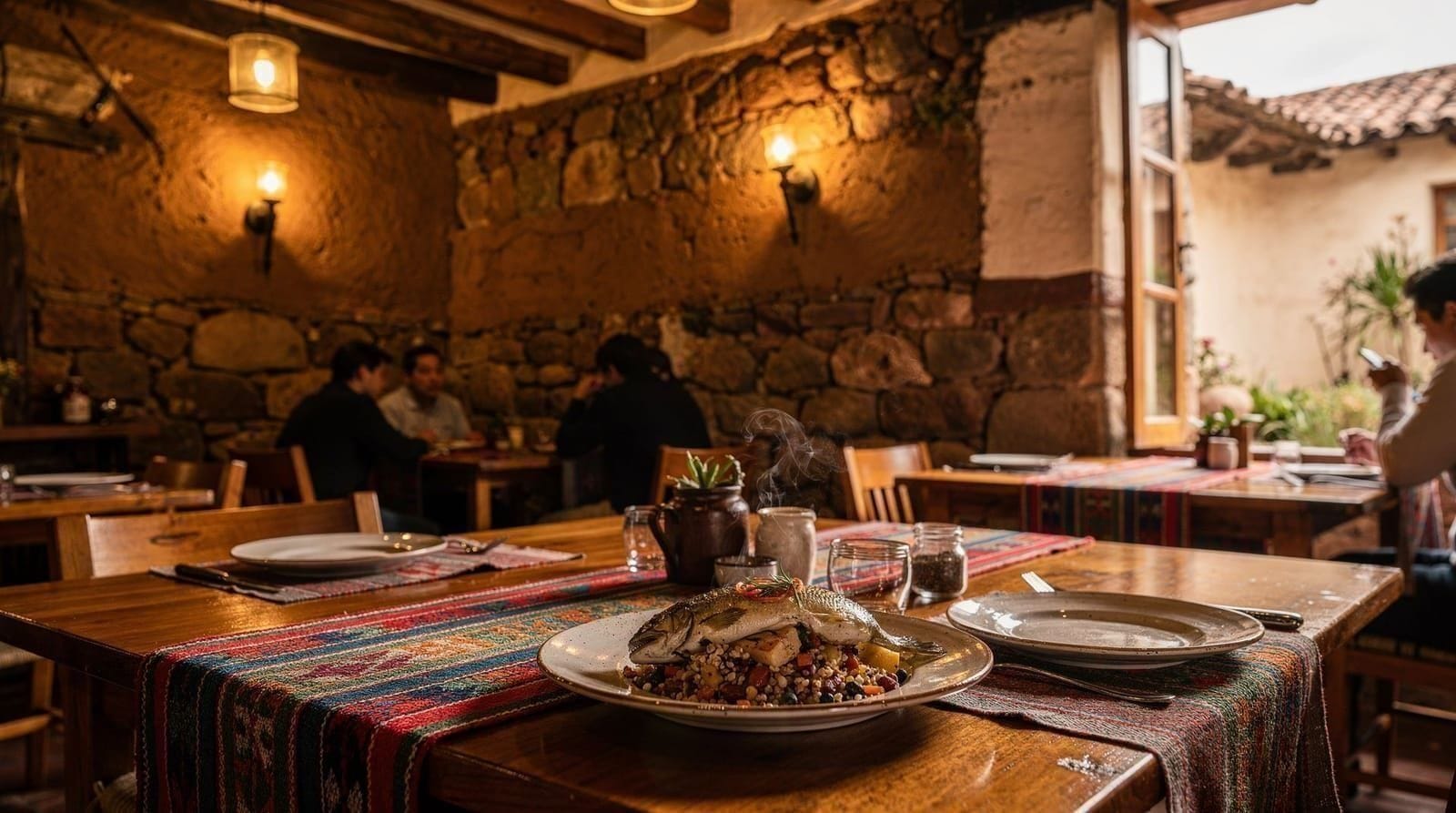
I asked around rather than trusting the restaurants on the Plaza de Armas that have “CUY” plastered across an English menu. The recommendation I kept hearing was to go to a quinta — a kind of garden restaurant Cusqueños use for weekend family meals — slightly out of the centre, where cuy is a normal order rather than a tourist novelty. That’s where I went. It was full of local families, nobody handed me an English menu, and the cuy was clearly the house specialty. The best restaurants in Cusco guide has the broader lay of the land if you want options at different price points.
If you want the safer route into Andean food before committing to a whole guinea pig, a market-and-cooking class is honestly a brilliant on-ramp — you handle local ingredients, learn the techniques, and ease into the food culture.
Cusco cooking class and market tourWhat it cost and how it arrived
A whole cuy at the quinta ran me S/55 (about USD 15), which is more than a normal plate of food but reflects that it’s a labour-intensive specialty and you’re getting a whole animal. In a Plaza de Armas tourist spot I’d seen it listed closer to S/80–90, so the away-from-the-centre version was both cheaper and, by all accounts, better.
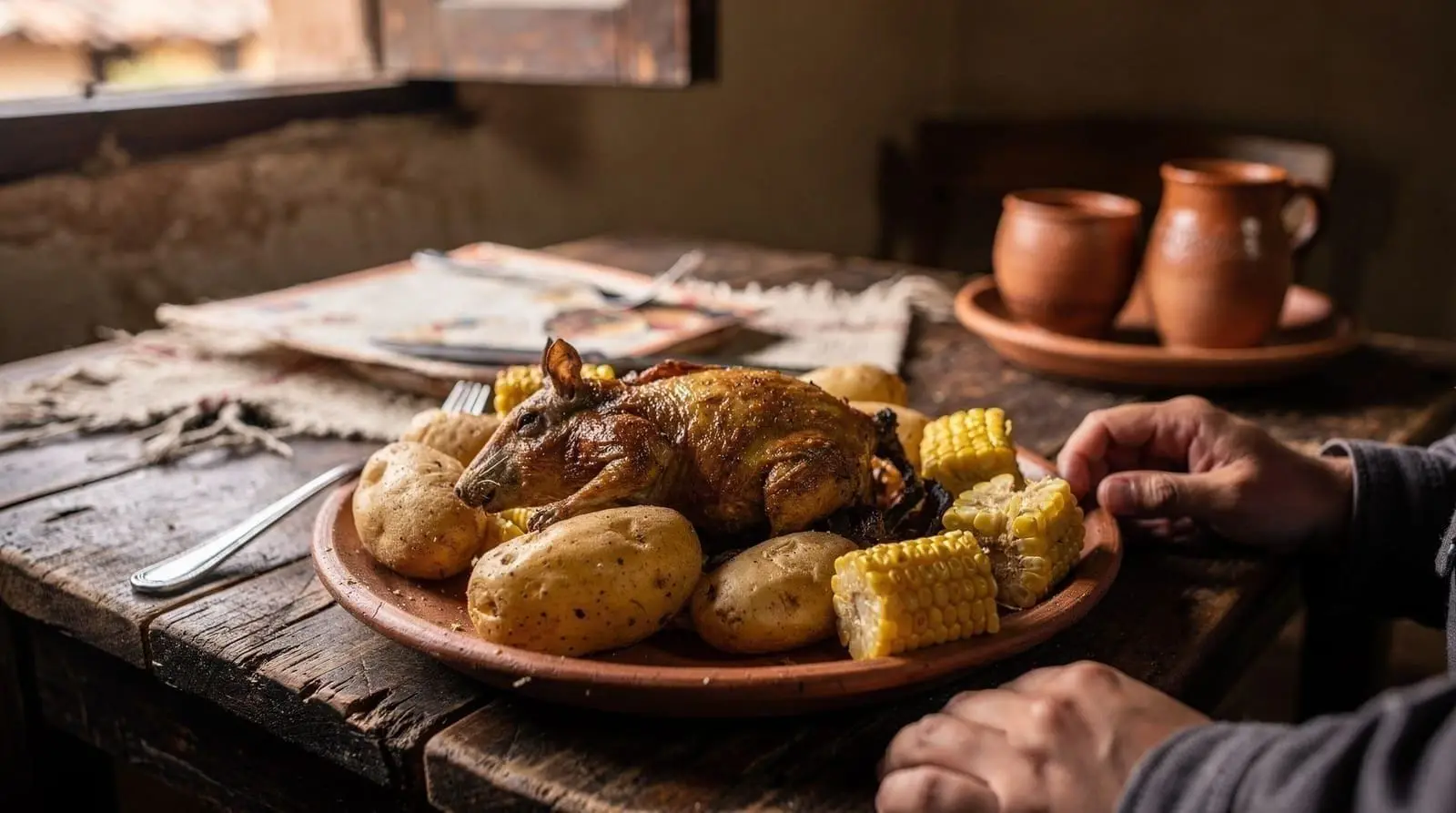
Now, the presentation. I’d been warned and still wasn’t fully ready. It came out whole — recognisably a guinea pig, splayed flat and golden-roasted, head and little teeth and tiny clawed feet all present and correct. Some places present it more “discreetly,” carved up; mine did not. There is a moment, when the plate lands, where you have to make peace with what you’re about to do. I took the moment. Then I picked up a fork.
What it actually tastes like
The honest answer: like a cross between rabbit and the crispy skin of a very good roast chicken, with a slightly gamey, richer edge. The skin — and the skin is the whole point — was crackling-crisp and properly seasoned, easily the best part. The meat underneath is dark, lean and a bit chewy, more like a game bird than chicken.
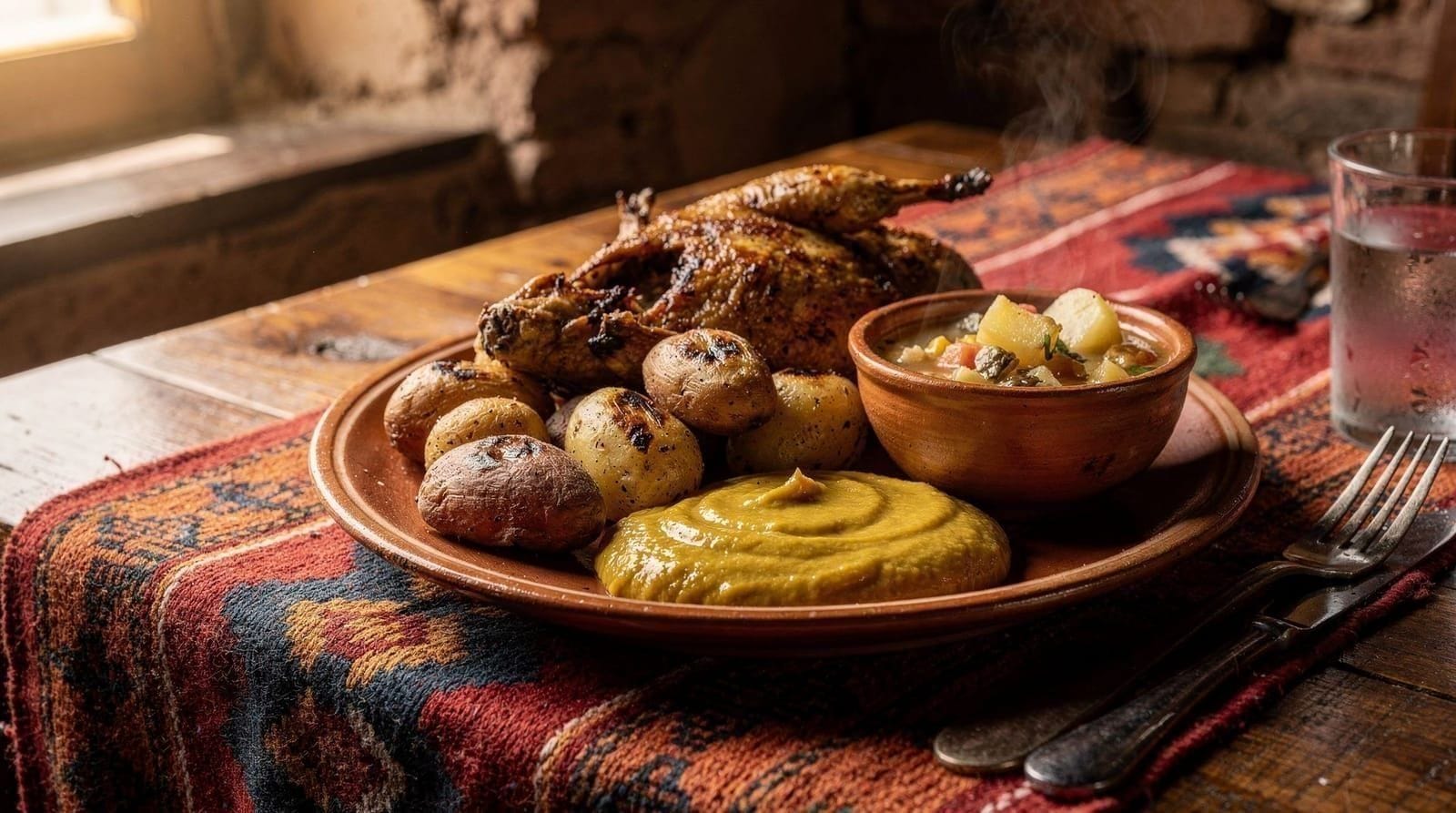
The catch is that there isn’t much of it. A guinea pig is small, and a lot of what’s on the plate is bone, skin and tiny fiddly bits. Eating it is genuinely a faff — you’re working around a delicate little skeleton with your fingers, and the effort-to-meat ratio is low. It came with the usual Andean sides, big chunks of potato and a bit of salad and a punchy ají sauce, which I needed to bulk out the meal.
So: tasty, in a specific crispy-gamey way I genuinely enjoyed. Filling, not really. A novelty I’m glad I had, an everyday dinner, no.
Would I order it again?
Probably not often, and that’s an honest answer rather than a polite one. I’m glad I ate cuy — it’s a real, meaningful Andean dish and the good version was genuinely good. But the fiddliness, the low yield, and the price relative to how much actual food you get mean it’s not something I’d reorder over, say, a properly grilled trout or a plate of lomo saltado. It’s a “once, attentively, in the right place” dish for me rather than a regular.
The one thing I’d push back on hard is skipping it out of squeamishness alone. The taste is not weird. The texture is not weird. The only genuinely confronting part is the presentation, and that’s a five-second hurdle, not a reason to avoid a dish that’s been central to this culture for millennia.
The dishes I’d actually send you toward first
Since I keep landing on “the food around the cuy was better than the cuy,” let me name names. Lomo saltado — beef stir-fried with onions, tomatoes and soy over chips, a perfect Peruvian-Chinese mashup — is everywhere in Cusco and reliably excellent. Ají de gallina, a creamy, mildly spicy shredded-chicken dish, is comfort food at its best. And the trout, trucha, from the high Andean lakes is fresh and clean and a fraction of what you’d pay for similar fish at home.
Then there are the soups, which I came to think of as the real heart of Andean eating — caldo de gallina, sopa de quinua, the big hearty broths that locals swear by for altitude and hangovers alike. A bowl at a market counter for a few soles beat plenty of restaurant meals I paid ten times as much for. The ceviche and Peruvian dishes guide is a good primer if you’re new to all this.
Chicha, the drink that goes with it
You can’t really write about traditional Andean food without the drink. Chicha de jora, the fermented-maize beer the Incas drank, is still made in villages around Cusco and sold at chicherías marked by a red flag or plastic bag on a pole outside. It’s an acquired taste — sour, cloudy, low-alcohol — and emphatically not a tourist product, which is exactly why trying a small glass at a proper chichería felt like more of a cultural moment than the cuy did.
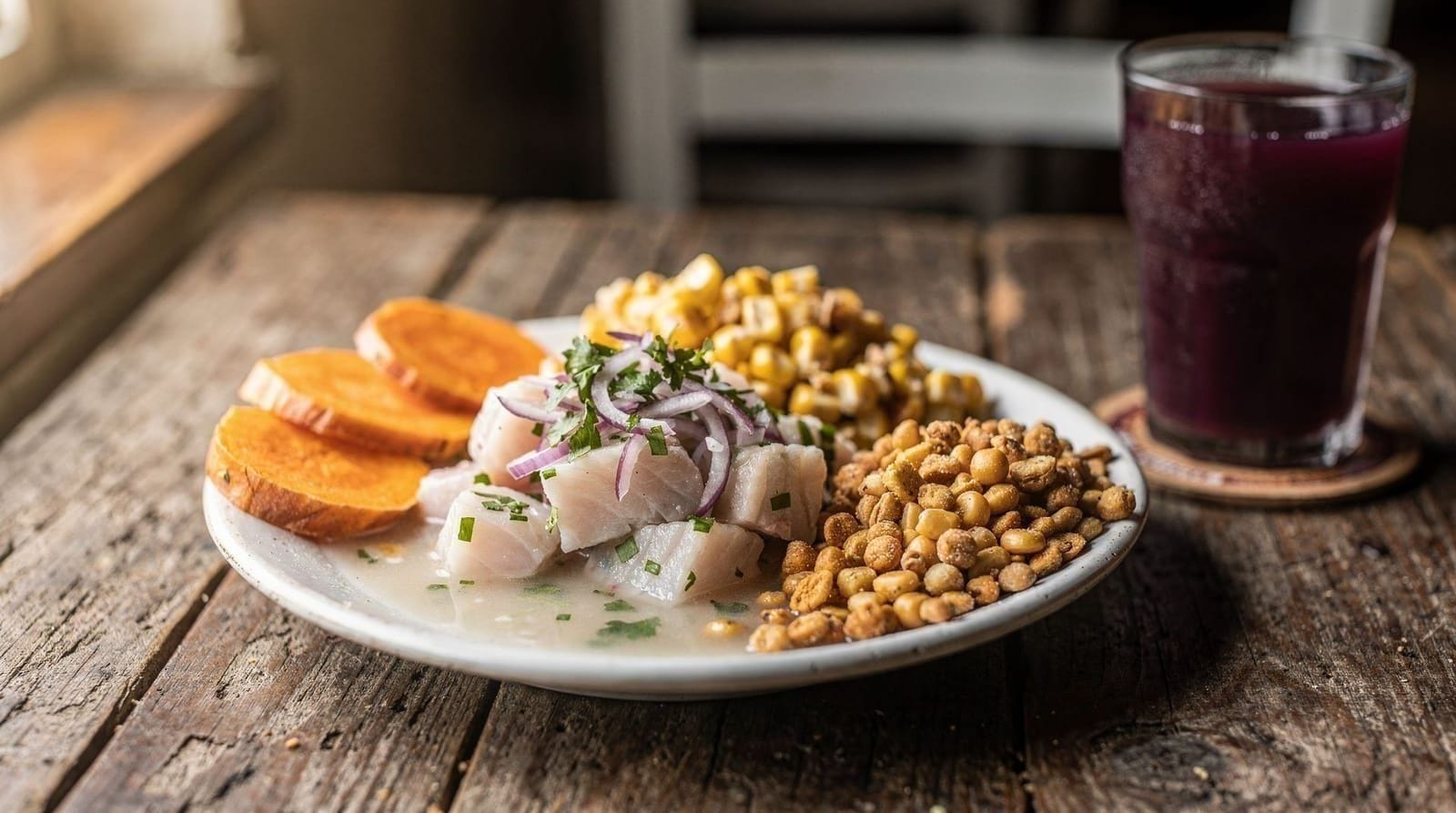
There’s also chicha morada, the non-alcoholic purple-corn drink, which is delicious and everywhere and a much easier sell. I drank it constantly. Between the chicha and the soups, the everyday Andean table won me over far more than the headline guinea pig.
If you do try it, my actual advice
Eat it where locals eat it, not on the main square. Expect it whole — mentally prepare for the head. Go in hungry but order a side or a starter because it won’t fill you. Use your hands, accept the mess, and lean into the crispy skin because that’s where the reward is. And treat it as the cultural thing it is rather than a bucket-list dare; you’ll have a better time.
If guinea pig isn’t going to happen for you — and that’s completely fair — Cusco’s wider food scene is one of the best reasons to visit the city regardless. The Peruvian food guide covers the dishes I’d genuinely send anyone toward, cuy or no cuy.
The potatoes deserve their own paragraph
I keep mentioning potatoes in passing and they really do deserve more. Peru is the birthplace of the potato and the Andes grow thousands of varieties — purple, yellow, black, knobbly, waxy, floury, ones that look nothing like the supermarket version back home. A simple plate of papas with a couple of dipping sauces at a market stall turned into a small education, the vendor naming types I’d never heard of and insisting I try the freeze-dried ones, chuño, which have a texture and tang that takes some getting used to.
The other Andean staple worth seeking out is choclo, the giant-kernelled white corn, served boiled with a slab of fresh cheese. It’s a snack you’ll see sold everywhere, including up at the Sacred Valley sites, and it’s the kind of unglamorous local food that ends up being more memorable than the headline dishes.
A last word on eating respectfully
One thing I’d gently flag for anyone approaching cuy or any traditional food here: come to it with curiosity rather than spectacle. The most uncomfortable thing I saw on that trip wasn’t the guinea pig on my plate — it was a table of visitors loudly making a performance of being grossed out while a local family ate the same dish two tables over. The food means something. Eating it attentively, asking questions, and treating it as culture rather than a dare is both more respectful and, honestly, a better experience.
I came to Cusco the third time partly to finally eat the guinea pig. I left thinking about the soups, the potatoes and the trout. Make of that what you will.
Beyond Cusco: where else cuy shows up
Cuy isn’t unique to Cusco — it’s an Andean staple, and if your Peru trip takes in Arequipa too, you’ll see it there in picanterías alongside the city’s own spicy specialties, often prepared slightly differently with more regional seasoning. If you’re comparing where to try it for the first time, I’d actually rate a good Cusco quinta over the one Arequipa version I had, though that’s a small sample size and Arequipa’s food scene overall gave Cusco’s a real run for its money.
Further afield, the Sacred Valley towns have their own quintas too, often serving a more rustic, family-style version aimed squarely at locals rather than day-trippers — worth seeking out if you’re spending a night in Ollantaytambo or Pisac rather than day-tripping from Cusco, since the versions there tend to skip the tourist-menu translation altogether and lean into whatever the family kitchen does best that week.
If you want the market experience without the whole animal
Not everyone wants to commit to a whole cuy on a first try, and that’s a completely reasonable position. A guided walk through San Pedro Market with a local, tasting smaller, more approachable specialties along the way, is a gentler entry point into Cusco’s food culture that still gets you past the tourist-menu version of Peruvian food.
San Pedro Market food tour and cooking class