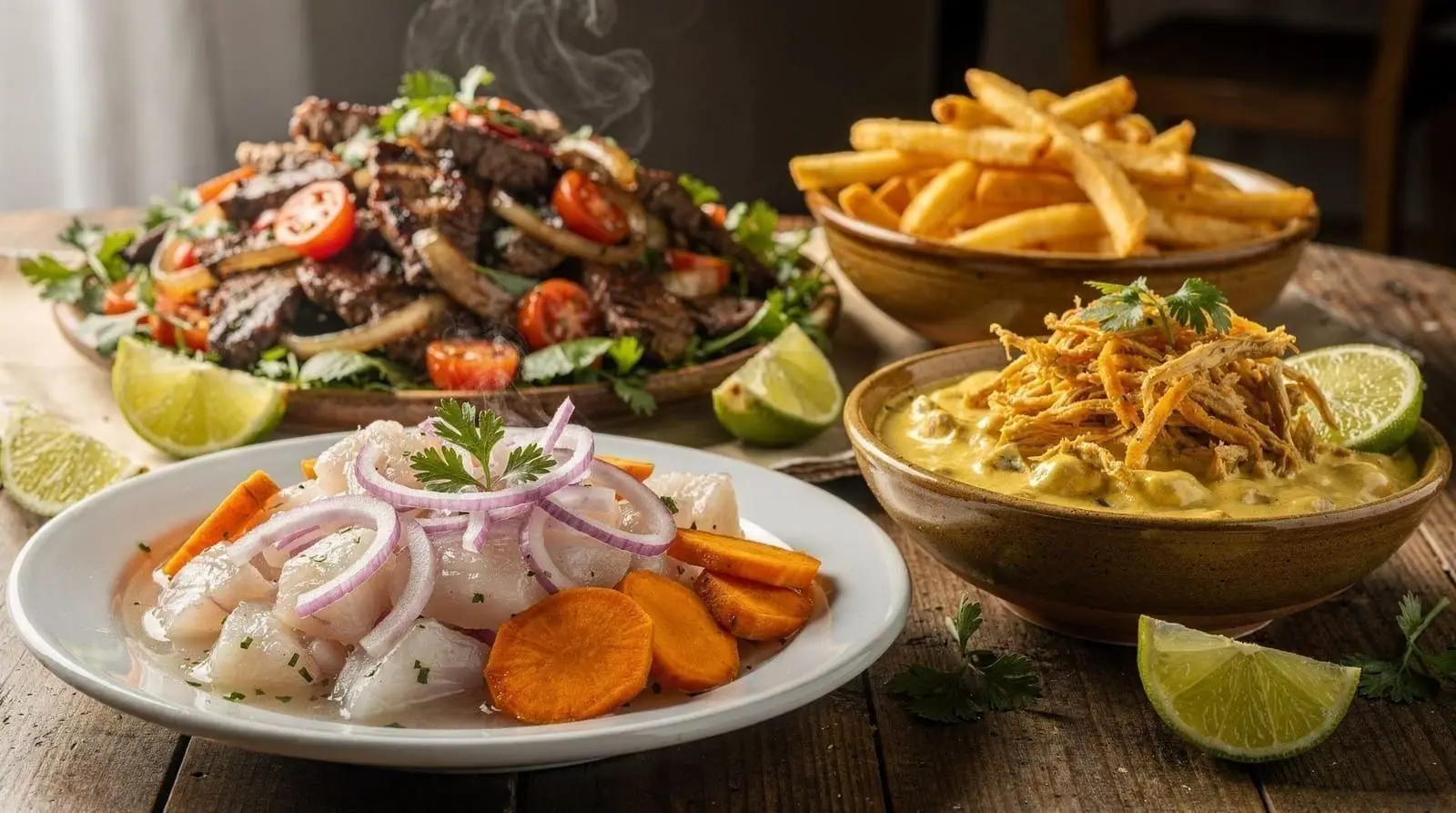
Ceviche and the Peruvian dishes worth ordering
Lima: Historic Center Walking Tour with Pisco Sour Tasting
What Peruvian dishes should I order, and what should they cost?
Start with ceviche, lomo saltado, ají de gallina, causa, and anticuchos — the five dishes that define everyday Peruvian eating. In a solid neighbourhood cevichería or restaurant a main runs S/25-45 (about $7-12); a set lunch menú is S/12-20. Eat ceviche at lunch, when the fish is freshest, never late at night.
Why Peru is worth coming hungry
Peru is one of the few countries where the food alone justifies the flight. The reason is layered history: pre-Columbian Andean staples — potatoes, corn, quinoa, ají chillies — met Spanish, African, Chinese, Japanese, and Italian immigrant cooking over four centuries, and the result is a cuisine with more genuine range than its neighbours. You can eat raw coastal fish at lunch, a stir-fry born in Cantonese kitchens at dinner, and a stew of Andean tubers the next day, all of it unmistakably Peruvian.
| Must-try five | Ceviche, lomo saltado, ají de gallina, causa, anticuchos |
| Set lunch (menú) | S/12-20 |
| À la carte main | S/25-45 |
| When to eat ceviche | Lunch only, never late at night |
| Signature drink | Pisco sour |
This guide is a plain primer, not a list of trophy restaurants. It explains what the core dishes actually are, what they should cost in soles, where each one belongs (coast versus highlands), and how to order without falling into the traps that catch first-timers — chiefly eating ceviche at the wrong time of day. For Lima’s specific cevichería picks see our best ceviche in Lima guide; for highland specialities like cuy and alpaca, see cuy and Andean food. This page is the overview that ties them together.
Ceviche: the dish to understand first
Ceviche is the national dish and the one most worth getting right. At its core it is raw white fish — usually corvina, sole, or mahi-mahi — cut into cubes and cured for a few minutes in fresh lime juice, then tossed with sliced red onion, ají chilli, salt, and coriander. It arrives with sides that are not optional decoration: a chunk of boiled sweet potato (camote) to offset the acid, toasted corn (cancha), and often a wedge of choclo, the large-kernelled Andean corn.
The liquid pooled at the bottom — leche de tigre, “tiger’s milk” — is the cured citrus-fish-chilli marinade, and Peruvians drink it. Some cevicherías serve a shot of it on the side; it is bracing, faintly spicy, and reputedly a hangover cure.
The one rule that matters: eat ceviche at lunch. Coastal cevicherías buy fish in the morning and serve it through the midday rush; by evening the good ones have sold out or switched to cooked dishes. A cevichería pushing fresh ceviche at 9 p.m. is either exceptional or careless, and you cannot tell which. Eat it where there is a lunch crowd, and your stomach will thank you. The variations to know:
- Tiradito — the Nikkei (Japanese-Peruvian) cousin: fish sliced thin like sashimi, no onion, dressed in a smoother ají-based sauce.
- Ceviche mixto — fish plus shellfish, octopus, and squid.
- Leche de tigre as a standalone — served in a glass with bits of fish, sometimes with a fried-seafood garnish.
Lomo saltado and the chifa influence
If ceviche is the coast, lomo saltado is the country’s comfort food. It is strips of beef stir-fried hard and fast in a wok with red onion, tomato, soy sauce, vinegar, and ají, then — the giveaway of its hybrid origin — served over and alongside French fries, with white rice on the plate too. Carbs on carbs, unapologetically.
Lomo saltado is the most famous product of chifa, the Chinese-Peruvian cooking that Cantonese immigrants developed from the 1850s onward. A proper chifa restaurant — and every Peruvian town has them — also does arroz chaufa (Peruvian fried rice), wantán soup, and tallarín saltado (the noodle version of lomo saltado). Chifa is cheap, generous, and a reliable fallback anywhere, with mains around S/18-30.
The criollo core: ají de gallina, causa, anticuchos
Beyond ceviche and lomo saltado, four criollo (creole) dishes anchor most menus and reward ordering:
- Ají de gallina — shredded chicken in a thick, mild, golden sauce of ají amarillo, bread, milk, and walnuts, over rice and potato. Creamy rather than spicy, and a good first dish for cautious eaters. S/22-35.
- Causa — chilled, layered mashed yellow potato whipped with lime and ají amarillo, stuffed with chicken, tuna, or avocado. A cold starter, refreshing at altitude or on the coast. S/18-28.
- Anticuchos — skewers of marinated beef heart, grilled over coals, brushed with ají panca, served with potato and cancha. Street-food royalty; the best come from a smoking grill cart at dusk for a few soles a skewer.
- Papa a la huancaína — boiled potatoes blanketed in a cheese-and-ají amarillo sauce, the default cold starter. Vegetarian-friendly.
These are the dishes that tell you whether a restaurant cooks well. A good ají de gallina or anticucho says more about a kitchen than any tasting menu. For where to find them in the highlands, our best restaurants in Cusco guide names specific spots.
The immigrant kitchens that made the cuisine
Understanding why Peruvian food tastes the way it does makes ordering more rewarding. The cuisine is the product of successive waves of cooking layered onto an Andean base:
- Andean foundation: potatoes (Peru grows thousands of varieties), corn, quinoa, ají chillies, and freeze-dried tubers (chuño) predate every European arrival.
- Spanish (from 1532): beef, pork, chicken, rice, wheat, citrus, and onions — the lime in ceviche is a Spanish import married to a pre-Columbian habit of curing fish.
- African: enslaved cooks shaped the criollo repertoire, including anticuchos, originally made from the offal cuts given to them.
- Chinese (from the 1850s): chifa, the wok, soy sauce, and the stir-fry technique behind lomo saltado.
- Japanese (from the 1890s): Nikkei cooking, which refined raw-fish preparation and gave Peru tiradito and a lighter, faster style of ceviche.
- Italian: pasta dishes like tallarines verdes (a Peruvian pesto) that turn up on home tables and menus.
This is why a single Peruvian menu can swing from sashimi-thin tiradito to a soy-laced stir-fry to an Andean potato stew without contradiction — each thread is genuinely part of the national table. It is also why Lima, where all these communities concentrated, became the country’s culinary capital and now anchors any serious Lima food scene itinerary.
Where to eat each dish
Geography matters in Peru more than in most countries, because the coast, the highlands, and the jungle grow and cook different things:
- The coast (Lima, Trujillo, the south): ceviche and tiradito territory, plus arroz con mariscos (seafood rice) and chupe de camarones (a rich shrimp chowder, especially around Arequipa). This is where seafood is freshest and the cevicherías are best.
- The highlands (Cusco, Puno, Ayacucho): hearty, warming food for the altitude — soups, stews, alpaca, cuy, and an astonishing range of potatoes and corn. Ceviche exists here but the fish has travelled, so it is not the highland strong suit. Eat the mountain food in the mountains.
- The Amazon (Iquitos, Tarapoto): river fish, tropical fruit, and dishes wrapped in bijao leaves, a cuisine most travellers never reach and find startling when they do.
The rule of thumb: eat seafood on the coast, hearty Andean food in the highlands, and treat anything badly out of place — fancy ceviche high in the mountains, say — with mild suspicion.
Drinks: pisco sour, chicha morada, and what to skip
Peru’s signature cocktail is the pisco sour — pisco (a clear grape brandy) shaken with lime, simple syrup, egg white, and Angostura bitters. It is genuinely good and worth one, but pace yourself at altitude: alcohol hits harder above 3,000 m and a pisco sour on your first night in Cusco is a classic mistake.
Non-alcoholic standouts: chicha morada, a deep-purple drink made from boiled purple corn with pineapple, cinnamon, and clove — refreshing and ubiquitous; and inca kola, the bright-yellow, bubblegum-sweet national soda that outsells Coca-Cola here and is an experience if not a pleasure. Skip the overpriced “Andean superfood” smoothies aimed squarely at tourists; a fresh-fruit juice from a market stall is cheaper and better. Beer drinkers should try a Cusqueña or Pilsen Callao with a criollo meal — both pair well with anticuchos and lomo saltado alike.
A guided introduction can shortcut the learning curve. In Lima, the historic centre walking tour with a pisco sour tasting pairs the colonial core with a proper demonstration of how the cocktail is built, which is more instructive than ordering blind at a bar.
For the fuller story of the spirit itself — the grape varieties, the legal difference between pisco and other brandies, and the Ica-region bodegas where it is made — see the dedicated pisco sour guide and pisco: the drink and the town. Travellers heading down the coast can visit the source directly on the Ica vineyards and pisco guide route.
Eating well without overpaying
The single best-value habit in Peru is the menú — the set lunch. For S/12-20 you get a starter or soup, a main, and a drink, in everyday restaurants the locals use. It is the cheapest way to eat real Peruvian food, and the rotation forces you to try dishes you would not order à la carte.
Markets are the other value engine. Lima’s Surquillo market and Cusco’s San Pedro market both have cooked-food counters where a hearty plate or a fresh juice runs single-digit soles. The traps to sidestep:
- Plaza-edge restaurants in Cusco and Arequipa charge a premium for the view; walk a block off the square and prices halve.
- “Free” pisco or chocolate workshops advertised by street touts turn into hard-sell shopping stops.
- Ceviche at dinner in a quiet place — covered above, but worth repeating.
To go deeper than ordering, take a market-and-cooking session early in your trip. In Lima, the ultimate Peruvian food tour walks several neighbourhoods and dishes in one afternoon, and a cooking class with a local Peruvian family turns the market produce into a meal you make yourself. In the highlands, the San Pedro market tour and Peruvian cooking class teaches you to recognise unfamiliar Andean produce before it shows up on every menu afterwards — compare the options in our Cusco cooking classes guide.
A short order-this list by region
To keep it simple, here is what to prioritise where:
- Lima and the coast: ceviche and tiradito at lunch, then chifa or a criollo dinner of ají de gallina or lomo saltado. Lima is also the place to splurge on a tasting menu if you want — see things to do in Lima for context.
- Cusco and the Andes: the criollo staples plus highland specialities — alpaca steak, cuy for the curious, quinoa soups, and a vast range of potatoes — covered in cuy and Andean food.
- The Amazon: river fish like paiche and doncella, juanes (rice and chicken steamed in a leaf), and tropical fruit you will not have seen before.
For planning meals into an actual route, the trip tools at /tools/ and the food-focused tour options at /tours/ help you slot tastings and classes around your sightseeing days.
Ordering with confidence: a few phrases and habits
You do not need fluent Spanish to eat well, but a handful of habits smooth the experience. Ask “¿Qué es el menú del día?” to find the set lunch, which is rarely posted in English and is usually the best-value dish on offer. If you are unsure how a dish is served, ask “¿Viene picante?” (does it come spicy) rather than assuming — as noted above, the heat is usually optional and added at the table. For anyone with dietary restrictions, “soy alérgico/a a…” (I’m allergic to…) is worth memorising, since cross-contamination awareness varies between casual and formal kitchens.
Portion sizes in Peru run generous by international standards, particularly at a menú lunch, so pacing yourself across a food-focused day matters if you plan to sample several dishes. Sharing plates at a cevichería — ordering one ceviche and one tiradito between two people, say — is entirely normal and lets you taste more without overordering.
Tipping is not automatic the way it is in North America: 10% is appreciated at sit-down restaurants and often already added as a service charge on the bill (check before adding twice), while it is not expected at market stalls or street-food carts, where prices are already fixed and low.