The morning I watched condors at Colca Canyon
| Where | Colca Canyon, near Chivay/Arequipa |
| Cost | Around US$55 for the 2-day tour |
| Time needed | 2 days recommended over the 1-day version |
| Getting there | Minibus from Arequipa, ~3–4hrs to Chivay |
| Best time | Dry season (May–Nov) mornings for reliable sightings |
I have been awake at 3am for flights, for parties, and once for a fire alarm. I had never been awake at 3am voluntarily, in the cold, to look at birds. Colca Canyon changed that, and I’d do it again tomorrow.
Setting the alarm in the dark
I’d come down to Arequipa from Cusco and given myself two days for the canyon. Most people do it as a one or two-day trip from Arequipa, and I’d recommend the two-day version — the day trip means leaving Arequipa around 3am and not getting back until late evening, which is a punishing fourteen-plus hours in a minibus for what’s actually a fairly short window at the viewpoint.
I took the two-day option and slept the first night in Chivay, the small town at the canyon’s edge. The two-day Colca tour cost me about US$55 and included the transport, the Chivay accommodation, and a stop at the thermal baths, which after a cold day in the highlands was not the gimmick I’d assumed it would be. The Colca condors guide had warned me the one-day version is exhausting, and seeing the schedule, I believe it.
Chivay and the road in
Chivay sits at around 3,600 metres, higher than Cusco, which caught me off guard — I’d assumed dropping toward Arequipa meant lower altitude the whole way, but the road to the canyon climbs back up across a high pass at over 4,900 metres, the highest point of my entire trip. The minibus stopped there at a windswept viewpoint full of stacked-stone cairns, and stepping out into that thin, cutting air for ten minutes reminded my lungs exactly where they were. We saw vicuñas grazing on the altiplano on the way, wild and skittish, their wool famously the finest and most expensive in the world.
The thermal baths near Chivay that evening — La Calera — cost a few soles and were genuinely lovely, steaming pools under a cold dark sky. I soaked, ate an early alpaca dinner in town for S/30, and went to bed knowing the alarm was set for an unreasonable hour.
Cruz del Cóndor at dawn
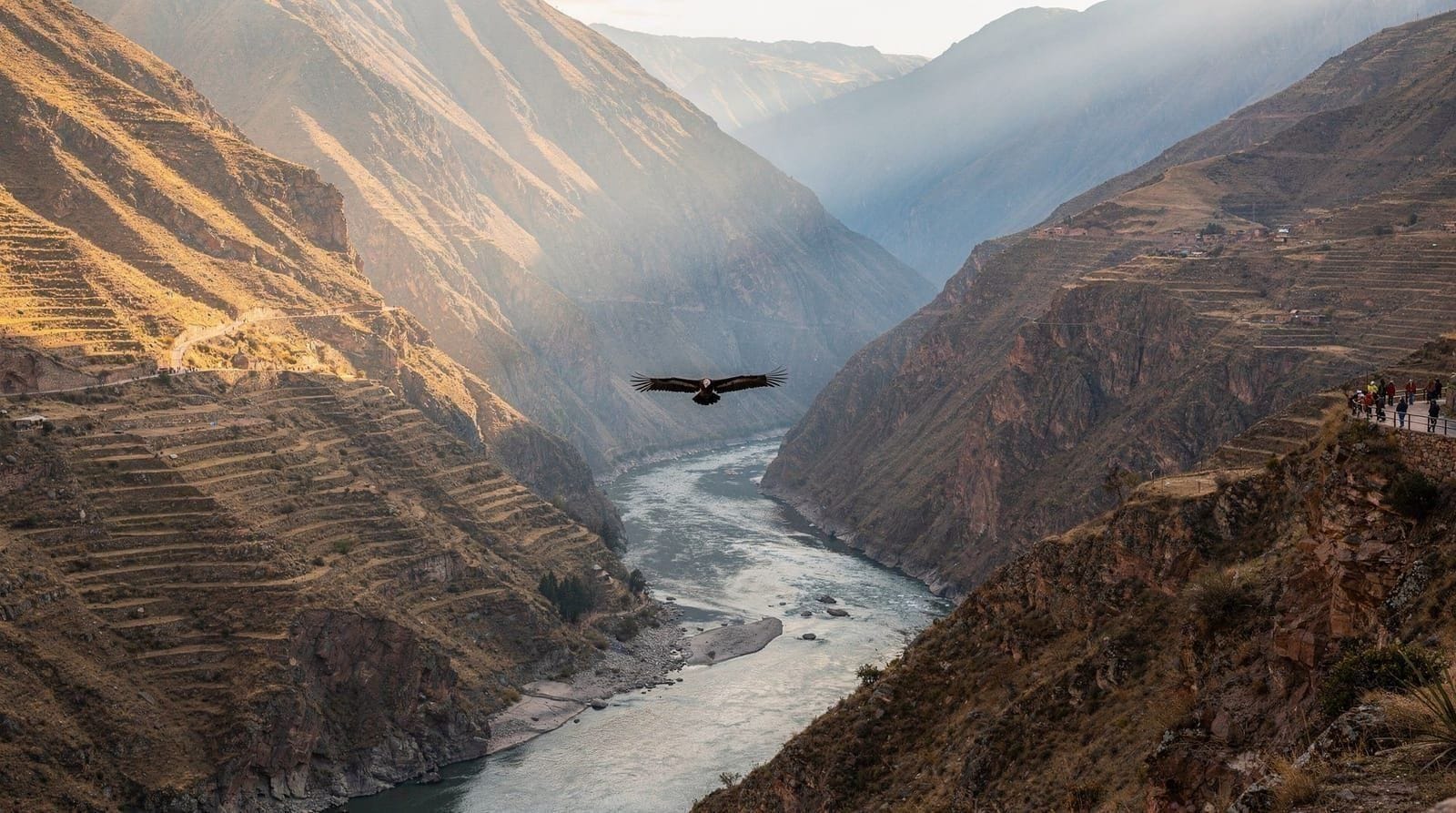
The next morning we drove along the canyon rim in the dark to the Cruz del Cóndor viewpoint. Colca is, depending on how you measure it, around twice the depth of the Grand Canyon, though it’s a different shape — less sheer, more a vast green-and-brown trench with terraced fields clinging to the upper walls. In the pre-dawn cold it was just a black void below the railing, and a slowly filling crowd of other shivering tourists.
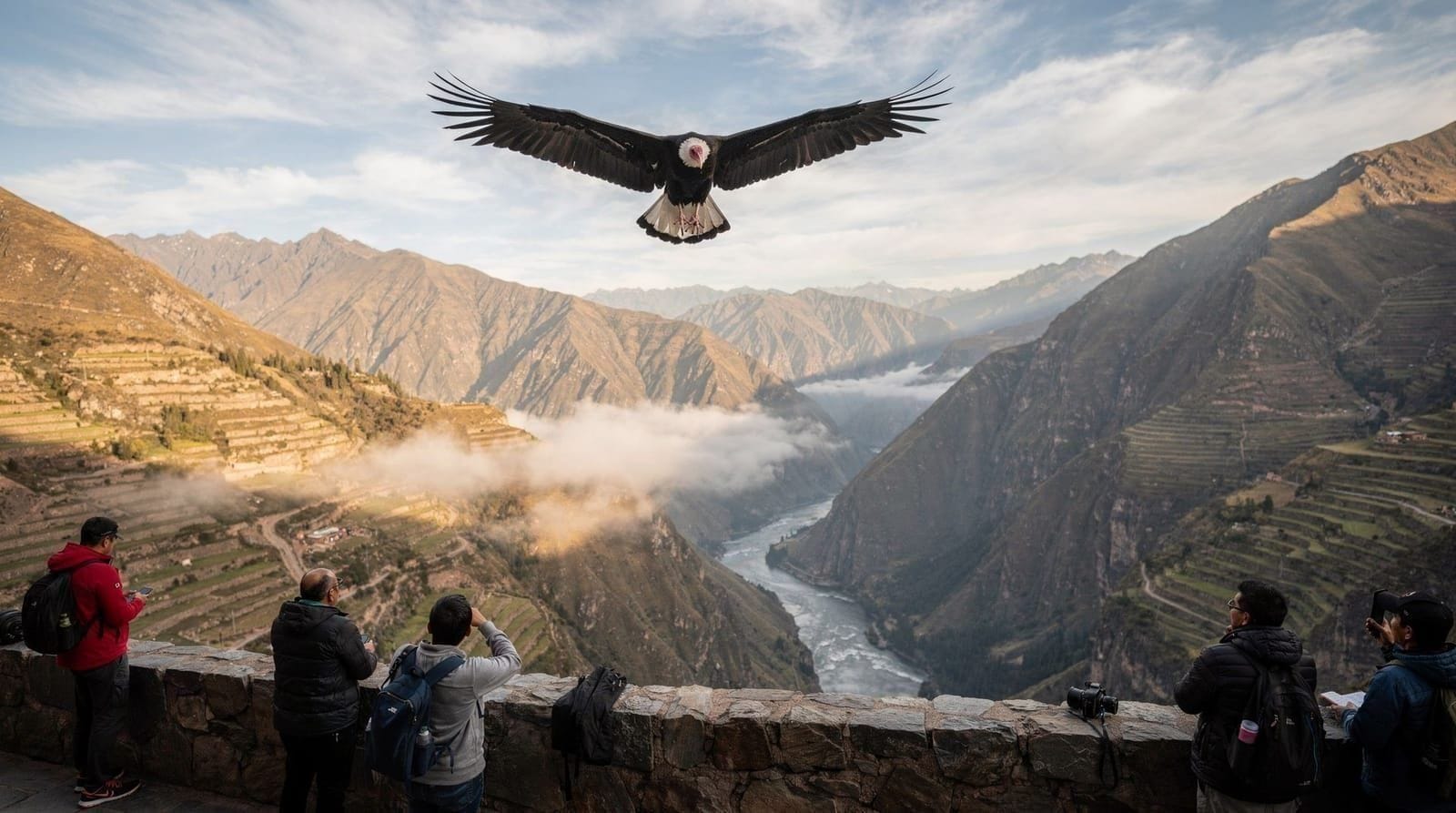
I’ll be honest about the crowds: it’s busy. By the time the light came up there were two hundred people along the rim, jostling for the railing, and a row of women in traditional dress posing with eagles and llamas for tips. It is not a wilderness experience. The Colca Canyon viewpoint is firmly on the tourist circuit and you should arrive expecting that.
And then the condors came.
The twenty minutes
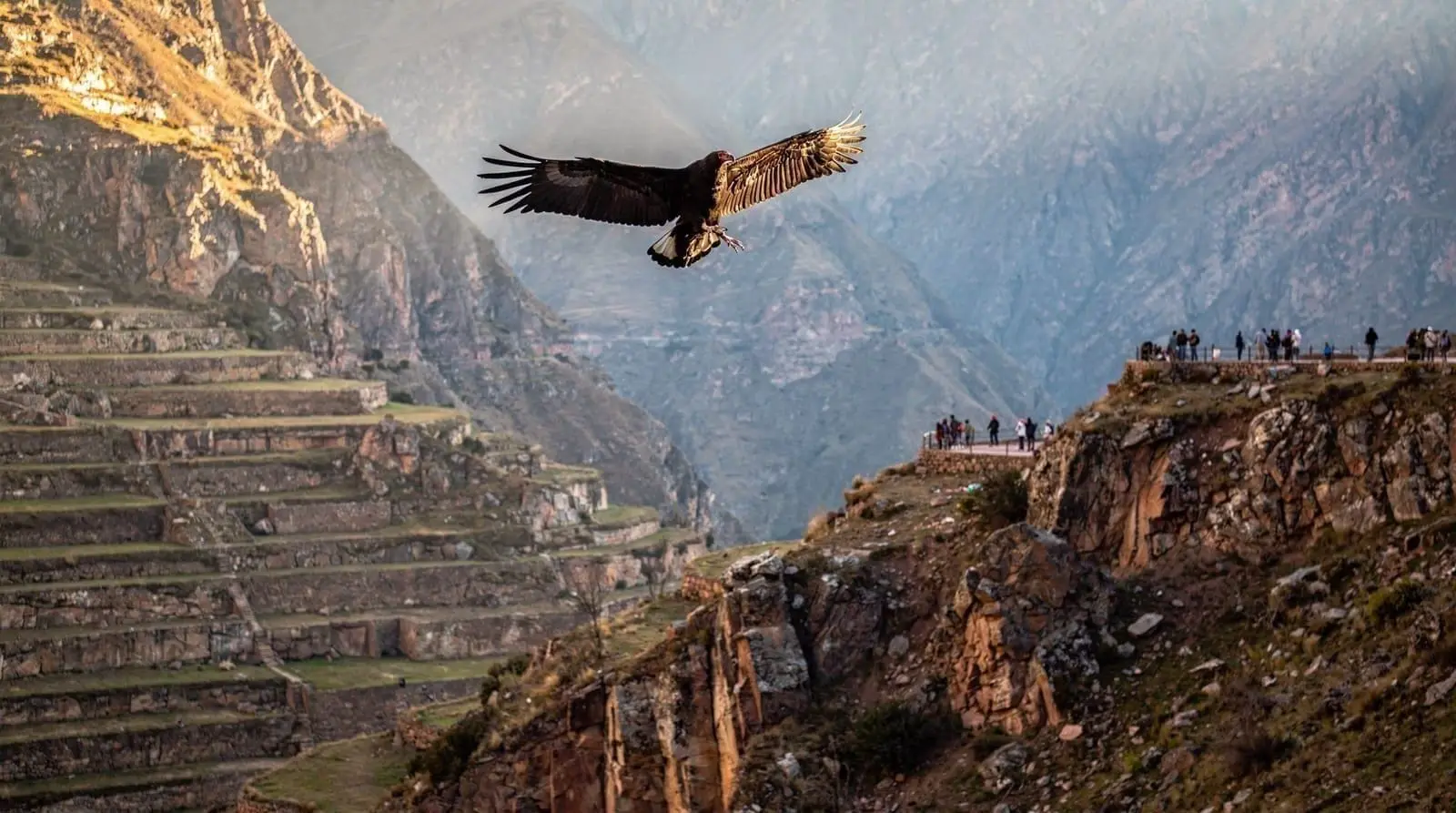
The Andean condor is enormous — a wingspan of over three metres, one of the largest flying birds on earth — and they use the morning thermals rising out of the canyon to climb without flapping. The first one appeared as a black speck far below, and then it just rose, in slow spirals, until it passed the viewpoint at eye level barely fifteen metres away, close enough that I could hear the wind in its feathers and see the white ruff at its neck. Nobody spoke. Even the eagle-tip ladies stopped.
Over the next twenty minutes maybe six or seven condors rode the thermals up past us, banking and circling, completely indifferent to the crowd. It is one of the few wildlife moments of my life that genuinely lived up to the photographs. I’d been braced for disappointment — birds don’t keep appointments — and instead got the full show.
A caveat, because honesty matters: sightings are seasonal and not guaranteed. They’re most reliable in the dry season morning thermals, roughly May to November, and in the early morning specifically. I went in February, the green season, and got lucky with a clear morning; others on my bus had been the day before in cloud and seen nothing. If condors are the whole reason you’re going, weight the odds and go in the dry season.
What else the canyon offers
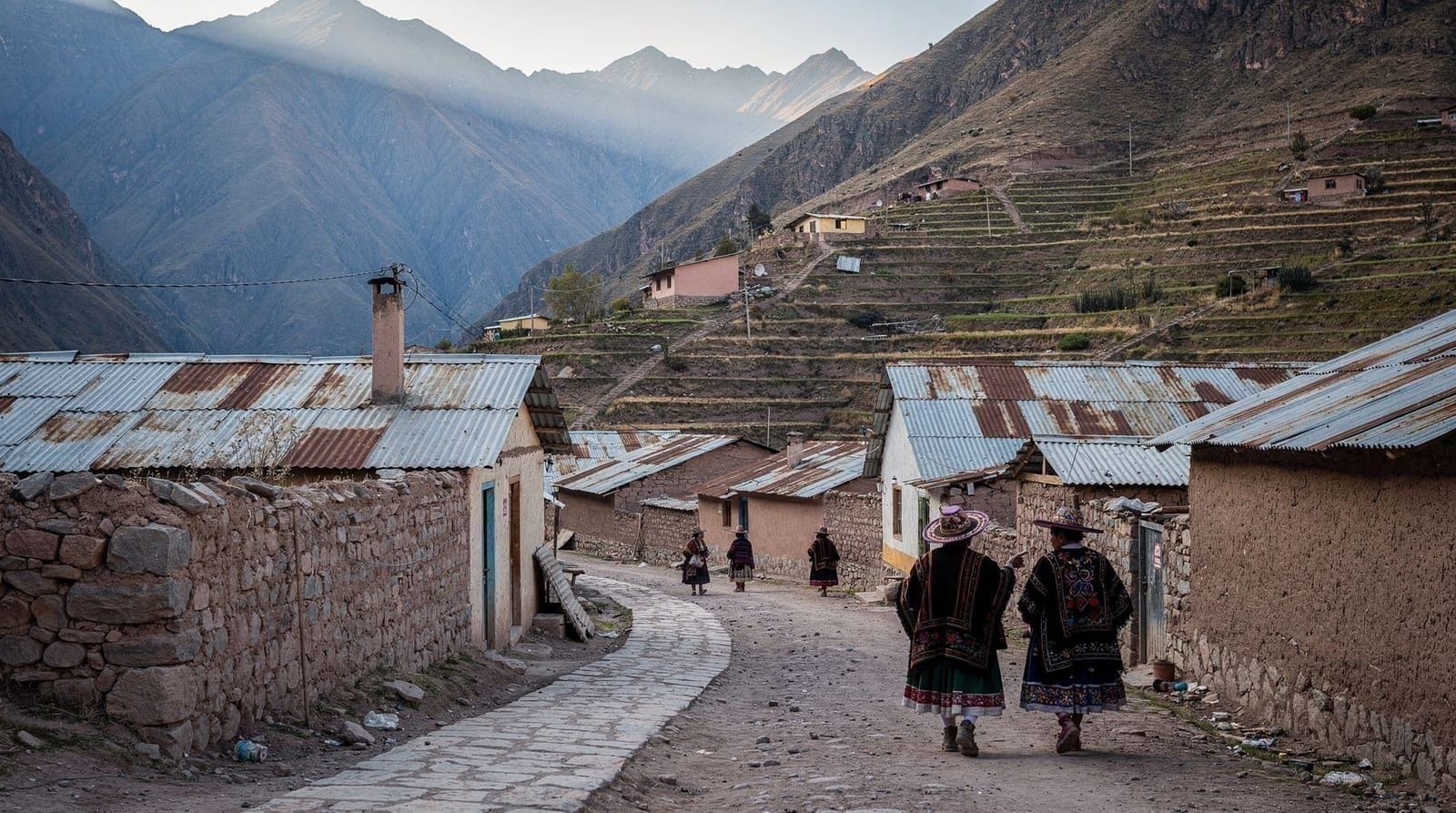
After the viewpoint emptied, the tour stopped in a couple of small villages — Yanque, Maca — with pretty colonial churches and, again, the tip-for-photo economy in full swing. There’s a lovely walk down into the canyon for those with more days; serious trekkers do a two or three-day hike to the oasis at the bottom and back up, which I didn’t have time for but watched a group setting off on with real envy. If I returned, I’d build in the time to trek down rather than just peer over the edge.
The drive back to Arequipa took the rest of the day, with the same high pass and a stop for lunch. I got back to the white city in the early evening, tired and a little sunburnt despite the cold, and absurdly happy about some birds.
Would I tell you to go?
Yes — with three pieces of advice. Take the two-day tour, not the one-day death march. Go in the dry season if condors are your priority, and arrive at the viewpoint braced for crowds rather than solitude. And dress for genuine cold at dawn; I was in a hat, gloves and two jackets and still shivering until the sun cleared the rim.
It’s touristy, it’s an early start, and there’s no guarantee. But standing on a canyon edge at sunrise while a three-metre condor banks past at eye level is the kind of thing you book a whole trip to Peru hoping to find, and on my one clear February morning, Colca delivered it.
When to go if condors are the priority
| Season | Months | Condor odds | Crowds |
|---|---|---|---|
| Dry season | May–November | Best, reliable morning thermals | Busiest |
| Shoulder | March–April, Dec | Good on clear mornings | Moderate |
| Wet season | January–February | Hit or miss, weather-dependent | Lighter |
I got lucky in February, but I wouldn’t plan a trip purely around a wet-season condor sighting the way I would in the dry months. If the condors are the entire reason you’re going rather than a bonus on top of the canyon itself, shift your dates to the dry season and accept the bigger crowds as the trade-off.
Extending it: Colca to Puno
If you’re continuing on rather than doubling back to Arequipa, there’s a route that continues from Colca toward Lake Titicaca and Puno rather than retracing your steps, which saves a day of backtracking on a longer Peru itinerary. It’s a long day either way, so factor in a proper rest once you arrive.
Colca Canyon two-day tour continuing to Puno