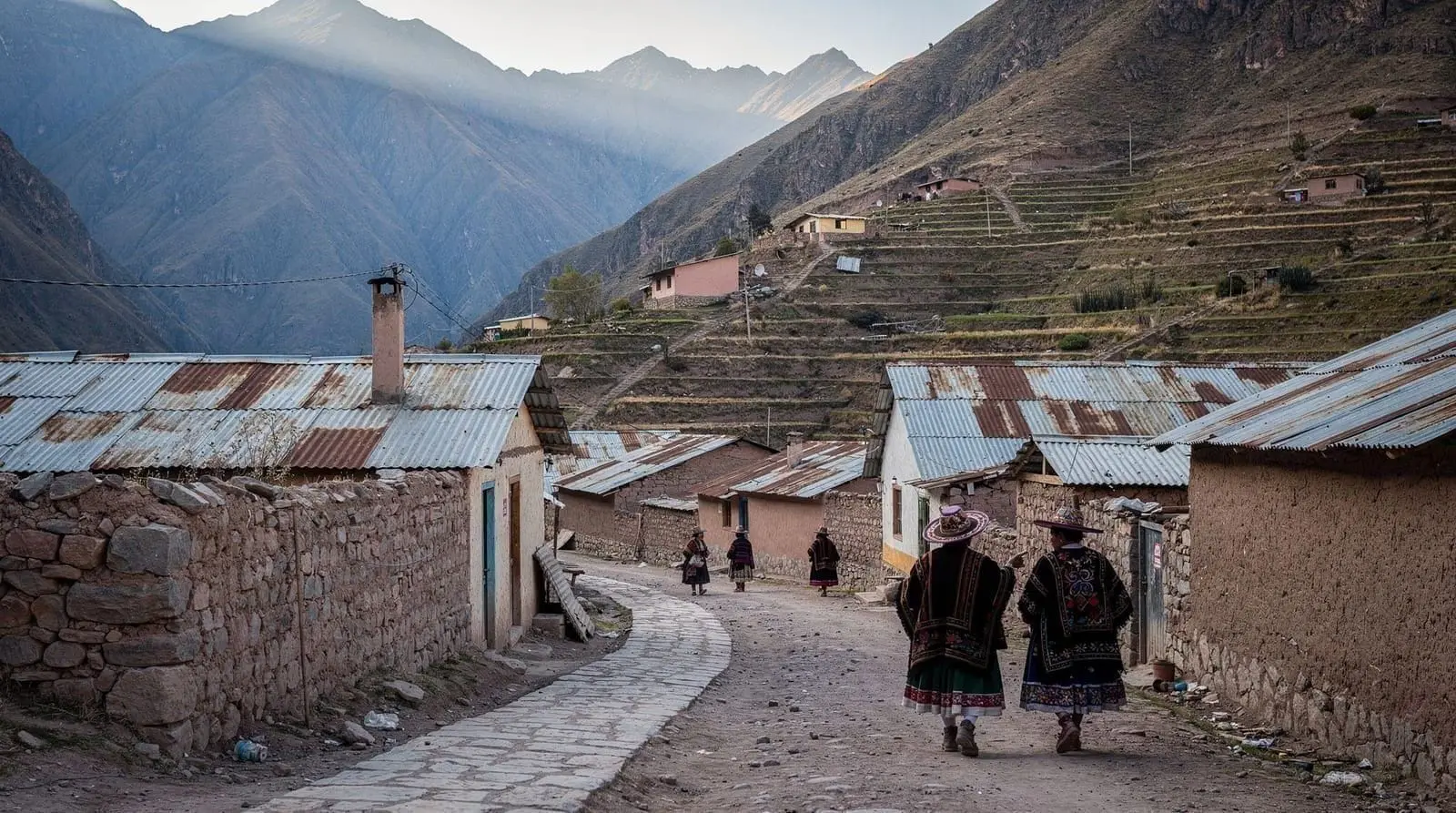
Chivay
Chivay honestly: the Colca Canyon gateway town, La Calera hot springs, altitude at 3,650 m, where to stay and eat, and how it fits a two-day canyon trip.
Arequipa: 2-Day Classic Colca Canyon Tour
Quick facts
- Altitude
- 3,650 m / 11,975 ft — cold nights, take it slowly
- Role
- Main gateway town for the Colca Canyon
- Highlight
- La Calera thermal hot springs
- Best for
- Overnight before the condor viewpoint, thermal baths, acclimatising
What Chivay is for
Chivay is not a destination you travel to Peru specifically to see — it is the practical hub of the Colca Canyon, and that is exactly its value. Sitting at the upper end of the Colca valley at around 3,650 m / 11,975 ft, it is the town where the road from Arequipa meets the canyon, where two-day tours overnight, and where you can soak tired legs in natural thermal springs before the early morning condor viewing. Treat it as a functional, friendly stopover rather than a sight, and it does its job well.
| Where | Upper Colca Valley, 3–4h from Arequipa by road |
| Time needed | 1 night, as part of a 2-day Colca Canyon trip |
| Cost | Thermal baths around S/15–20; tourist menus S/35–55 |
| Getting there | Bus/tour transfer from Arequipa via Patapampa pass |
| Best time | May–November (dry, cold clear nights) |
Most travellers spend a single night here, almost always as part of a two-day Colca trip. The town itself is small and walkable — a tidy Plaza de Armas, a stone church, a covered market and a cluster of guesthouses and simple restaurants. You can see the centre in under an hour.
La Calera thermal baths — the main reason to linger
The standout in Chivay is La Calera, a set of geothermal hot springs about 3–4 km from the town centre (a short taxi or tour shuttle ride). The water emerges naturally hot and is channelled into several pools of varying temperature, the warmest sitting around 38–40 °C — genuinely soothing after a long day of high-altitude driving.
Practical details:
- Entry: around S/15–20 / about $4–5 for foreign visitors (sometimes bundled into two-day tour packages — confirm).
- Hours: generally open from early morning until evening; late afternoon and after dark are the most atmospheric, soaking under the cold Andean sky.
- Bring: swimwear, a towel (not always provided), and flip-flops. Changing facilities and lockers are basic.
- Altitude note: hot water plus high altitude can leave you light-headed, so hydrate, do not stay in too long, and stand up slowly.
A soak at La Calera is the single most pleasant thing to do in Chivay and the reason the overnight is more than just a place to sleep.
The complex has multiple pools stepped at different temperatures, so you can move between a hotter soaking pool and a cooler one rather than sitting in a single temperature the whole time. Sunset is the busiest period as tour groups arrive together; if your schedule allows, an early-morning or after-dinner soak is quieter and, on clear nights, gives you a genuinely dark sky overhead — this is high, remote Andes with minimal light pollution.
How Chivay fits a Colca trip
Chivay’s role is best understood through the standard two-day Colca itinerary from Arequipa:
- Day one: drive up from Arequipa (3–4 hours, crossing the high Patapampa pass at around 4,910 m), arrive in Chivay around midday, explore the valley villages and terraces in the afternoon, and soak at La Calera before an early night.
- Day two: an early but not pre-dawn departure to the Cruz del Cóndor viewpoint for the mid-morning condor flights, then onward — either back to Arequipa or, on some tours, continuing to Puno.
Choosing this two-day structure with the Chivay overnight is far more comfortable than the marathon full-day tour, and it gives your body a night at altitude to adjust. The two-day classic Colca Canyon tour is built around exactly this Chivay overnight. If Lake Titicaca is next, the two-day Colca trek ending in Puno finishes in Puno instead of doubling back, which saves a travel day en route to Lake Titicaca.
Full context on the canyon, the condors and tour choices is on the Colca Canyon page, and the Colca condors guide has the detail on timing your Cruz del Cóndor visit for the best sightings.
| Version | Overnight | Wake-up on viewpoint day | Comfort |
|---|---|---|---|
| Full-day (no Chivay night) | None | Around 3 am from Arequipa | Exhausting, but fastest |
| Two-day with Chivay overnight | Chivay | Reasonable, sub-6 am | Comfortable, recommended |
Given the choice, the two-day structure with a Chivay overnight is the version worth paying the small premium for — you arrive at Cruz del Cóndor rested rather than having sat in a van since before dawn.
Altitude at 3,650 m — take it seriously
Chivay is high — higher than Cusco and well above Arequipa. If you have come straight up from Arequipa (2,335 m) in a single morning, the gain is significant and many travellers feel it on arrival: headache, breathlessness on the gentlest slope, and poor sleep on the first night.
Sensible precautions:
- Spend a night or two in Arequipa first to begin acclimatising before the climb.
- Take the afternoon in Chivay gently — this is not the moment for a strenuous hike.
- Drink plenty of water and eat lightly; avoid alcohol on your first night at this altitude.
- Coca tea is offered everywhere and many find it helps; acetazolamide (Diamox) is the standard preventative if you are prone to symptoms — ask a doctor before your trip.
- Nights are cold, frequently near freezing in the dry season. Confirm heating when you book and pack a warm layer for sleeping.
Eating and staying in Chivay
Where to stay: Chivay has a spread from simple hostels to a few comfortable mid-range lodges and one or two higher-end options on the edge of town. Most two-day tours include the accommodation, so you rarely book independently. If you do, confirm heating and hot water — both can be inconsistent at this altitude and budget tier.
Where to eat: options are modest and tourist-oriented, clustered around the Plaza de Armas. Several restaurants offer a fixed tourist menu (often with an evening folk-music and dance performance) for around S/35–55. The covered municipal market is the spot for a cheap, authentic lunch — soups, alpaca, trout and quinoa dishes for S/8–15. Regional staples worth trying are alpaca steak and adobo.
The folk-music dinners are a genuine local tradition rather than a purely tourist invention — Colca-region huayno and wititi dance performances are a point of local pride — but expect the room to be full of other tour groups on the same two-day circuit as you.
Practical information
Money: there are a couple of ATMs near the plaza, but they are not always reliable — bring sufficient soles from Arequipa, including small notes for the thermal baths, market meals and tips.
Connectivity: mobile coverage (Claro, Entel) works in town; data can be patchy in the wider canyon. Guesthouse Wi-Fi is basic.
Sun and cold: the classic high-altitude combination — intense daytime UV and cold nights. Pack sunscreen and a hat for the day and warm layers for the evening and the baths.
Where Chivay fits in your trip
Chivay exists within the Colca circuit, anchored by Arequipa as the gateway city and the Colca Canyon as the main attraction. It commonly sits on the southern Andes loop continuing to Puno, Lake Titicaca and Cusco. See the itineraries hub for full routings and the planning tools to organise the altitude legs.
Frequently asked questions about Chivay
Is Chivay worth visiting on its own?
Not really as a standalone destination — Chivay is the practical gateway town for the Colca Canyon, and most travellers stay one night as part of a two-day canyon trip. Its main attraction is the La Calera thermal baths, which make the overnight genuinely pleasant rather than just functional.
What are the La Calera hot springs like?
La Calera is a set of natural geothermal pools about 3–4 km from town, with water up to around 38–40 °C. Entry is roughly S/15–20, it is open from morning to evening, and a soak after a long drive is the highlight of a Chivay stop. Bring swimwear, a towel and flip-flops.
How high is Chivay and is the altitude a problem?
Chivay sits at about 3,650 m, higher than Cusco. Coming straight up from Arequipa, many travellers feel the altitude on arrival. Acclimatise in Arequipa first, take the afternoon slowly, stay hydrated, avoid alcohol on the first night, and consider coca tea or altitude medication.
Why do Colca tours overnight in Chivay?
Overnighting in Chivay lets a two-day tour avoid the brutal 3 am start of the full-day version, spreads the altitude gain over two days, and reaches the Cruz del Cóndor condor viewpoint at a sensible hour on day two. The thermal baths are a bonus. It is the more comfortable way to do the canyon.
Where should I eat in Chivay?
Restaurant options are modest and tourist-oriented around the Plaza de Armas, many offering a fixed menu with evening folk music for around S/35–55. For cheaper, more authentic food, the covered municipal market serves soups, trout, alpaca and quinoa dishes for S/8–15. Try alpaca steak or adobo.
Does Chivay have ATMs?
There are a couple of ATMs near the plaza, but they can be unreliable. Bring enough soles from Arequipa to cover the thermal baths, meals and tips, including small-denomination notes, so you are not caught short if the machines are out of service.