Pastoruri Glacier guide: the climate change route
Huaraz: Pastoruri Glacier Day Trip
Is the Pastoruri Glacier worth visiting?
Yes, with realistic expectations. It is one of the few glaciers in the world you can reach by vehicle plus a short walk, at over 5,200 m, and the route doubles as a stark climate-change lesson, the official Ruta del Cambio Climático. The ice has shrunk dramatically, so come for the experience and the message, not a vast glacier.
A glacier you can reach, and a lesson you cannot avoid
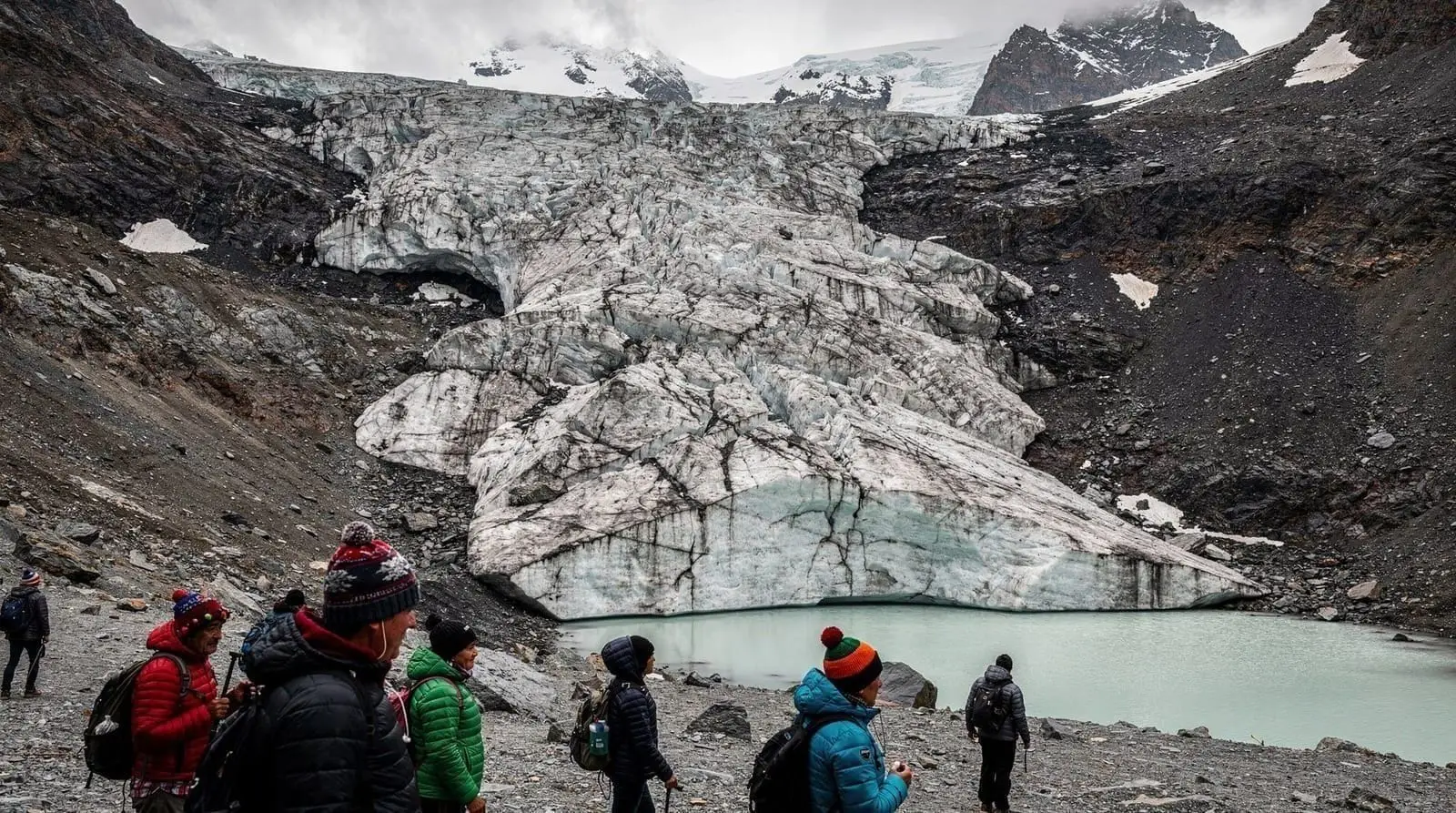
The Pastoruri Glacier was once one of the easiest big-mountain experiences in Peru: drive to a car park near 5,000 m, walk a short distance, and stand on a tropical glacier where people skied and ice-climbed. Those days are gone, and that disappearance is now the entire point of the visit. The glacier has retreated dramatically, losing a large share of its mass since the 1980s, and Peru has officially rebranded the excursion the Ruta del Cambio Climático, the Climate Change Route. You no longer come to ski on the ice. You come to see how much of it is left, read the interpretive signs documenting the retreat, and absorb a sobering, concrete lesson in what is happening to the world’s tropical glaciers.
Set expectations accordingly. If you arrive imagining a vast white expanse, you will be disappointed; what remains is a modest tongue of ice in a high cirque, often grubby with debris at its edges. But if you come for the experience, reaching a glacier at over 5,200 m by road and a short walk, threading a high-altitude landscape few people ever see, and confronting climate change made visible, Pastoruri delivers something the prettier lakes do not. It is also, quietly, one of the most physically accessible ways to stand beside a glacier anywhere on earth, with the crucial caveat that the altitude is unforgiving.
| Where | Huascarán National Park, about 2.5-3 hours from Huaraz |
| Cost | S/40-70 tour + S/30 park fee (or S/150 multi-day pass) |
| Time needed | Full day from Huaraz; the walk itself is 2 km each way |
| Getting there | Group day tour from Huaraz (near-essential) |
| Best time | Dry season (May-September), late in your acclimatisation |
The drive: Pumapampa and the Queen of the Andes
Much of what makes the Pastoruri trip worthwhile happens before you reach the glacier. The route from Huaraz heads south through the Huascarán National Park to the high Pumapampa valley, a vast, windswept puna grassland that feels like the roof of the world. Along the way the tour typically stops at mineral springs and small lakes, but the headline stop is the Puya raimondii.
Puya raimondii, the Queen of the Andes, is the largest bromeliad on earth, growing up to 10 m tall, and one of the strangest plants you will ever see: a giant rosette that lives for decades, sends up a single colossal flower spike with thousands of blooms once in its life, then dies. The Pumapampa valley holds accessible stands of these plants, and a stop here is among the easiest places in the world to walk among them. If your timing coincides with a flowering specimen, it is a genuinely rare sight. Some tours frame the whole day around both the glacier and the Puya, which is the most rewarding version of the trip.
Pastoruri Glacier hike with Puya raimondiiThe walk to the ice, and why altitude is the real challenge
From the car park at around 5,000 m, the walk to the glacier viewing area is short, roughly 2 km each way with modest ascent. On paper it is nothing. At over 5,000 m it is something else entirely. The air holds barely half the oxygen of sea level, and many visitors find themselves breathless within the first few minutes, stopping every dozen steps. This is normal, but it is also exactly why Pastoruri is not a beginner outing despite the short distance.
For those who struggle, horses are available for hire at the car park to carry you most of the way up, around S/20 to S/30, which is a sensible option if the altitude is hitting hard, though walking at your own slow pace is better acclimatisation if you can manage it. At the top, a designated viewing area lets you stand close to the ice and the small glacial pool at its base. Walking on the glacier itself is no longer permitted, both because the retreating ice is increasingly unstable and to protect what remains.
Go slowly, drink water, and be honest with yourself about how you feel. The standard altitude warnings apply with extra force here: a headache painkillers will not touch, repeated vomiting, confusion, or loss of coordination at 5,000 m mean descend immediately. This is the highest of the easy Huaraz day trips, and it punishes the unacclimatised hardest.
Acclimatisation: do not make this your first high day
This deserves its own emphasis. Pastoruri sits higher than Laguna 69, and arriving at over 5,000 m without proper acclimatisation is a recipe for serious altitude sickness. Do not attempt Pastoruri on your first or second day in Huaraz. The sensible place for it is late in your Cordillera Blanca stay, after you have already done lower acclimatisation outings and, ideally, a high hike like Laguna 69.
A reasonable sequence: rest on arrival, walk the mirador above Huaraz, do the gentle Llanganuco Lakes at 3,850 m (covered in the Llanganuco Lakes guide), then Laguna 69 at 4,600 m, and only then Pastoruri at 5,200 m. By that point your body is as ready as a few days can make it. The full protocol is in the Huaraz acclimatisation guide, which is essential reading before any high outing here.
Costs, timing, and practicalities
Budget realistically. A group day tour from Huaraz runs roughly S/40 to S/70 (about $11 to $19 USD) for transport and a guide. On top of that, the Huascarán National Park fee is S/30 per day, or covered by the S/150 multi-day pass. Horse hire near the glacier is extra. Lunch is generally not included on the cheap tours, so bring snacks or buy food before you leave.
Pastoruri Glacier day trip from HuarazTiming and season. The dry season, May to September, gives the most reliable conditions; the high puna is exposed and the weather can turn fast, with cold wind, hail, and snow possible even in the dry months. Tours leave Huaraz in the morning and return in the afternoon, a full day with several hours of driving. Wrap up warmly: it is genuinely cold at the glacier, far colder than the valleys, and a windproof shell, warm layers, hat, and gloves are essential. Strong sun protection is equally essential, because UV at 5,000 m is extreme even when it feels freezing. Bring plenty of water.
The retreat in numbers, and why it matters
It is worth dwelling on what the Ruta del Cambio Climático branding actually documents, because the Pastoruri story is a microcosm of a planet-wide phenomenon. Pastoruri is a tropical glacier, and tropical glaciers are among the most sensitive climate indicators on earth: they sit at the narrow margin where small temperature rises translate directly into melting. The Cordillera Blanca holds the largest concentration of tropical glaciers in the world, and they have been in steady retreat for decades. Pastoruri itself has lost a very large share of its area and volume since the 1980s, and the glacier has split into separate sections as the ice has thinned and pulled apart.
The consequences reach far beyond the loss of a tourist attraction. These glaciers act as natural reservoirs, storing water as ice in the wet season and releasing it slowly through the dry months, feeding the rivers that supply drinking water, agriculture, and hydroelectric power to millions of people on Peru’s coast and in the highlands.
As the glaciers shrink, that buffering capacity diminishes: dry-season river flows become less reliable, and the long-term outlook for water security in the region is genuinely worrying. The interpretive signs along the Pastoruri trail spell this out, turning what was once a casual ski outing into one of the most direct climate-education experiences a traveller can have. You are not just looking at a shrinking glacier; you are looking at a shrinking water tower for an entire region.
There is a quiet irony in the experience, too. Visitors fly across the world and drive to over 5,000 m, with all the emissions that entails, to witness the effects of the very warming those journeys contribute to. The Pastoruri trip does not resolve that tension, but it does make it impossible to ignore, which is arguably the most valuable thing it offers.
The high puna: an ecosystem few travellers ever see
Beyond the glacier and the Puya raimondii, the drive to Pastoruri delivers something the lake trips do not: extended time in the high puna, the vast tropical alpine grassland that blankets the Andes above roughly 4,000 m. This is one of the harshest inhabited environments on the continent, swept by wind, frozen most nights, and bathed in fierce daytime UV, yet it teems with specialised life. The bunchgrasses (ichu) that cover the plateau feed herds of grazing animals, and with luck you may spot vizcachas, the rabbit-like rodents that sun themselves on rocks, or high-altitude birds such as the Andean goose and, occasionally, a soaring caracara.
The route also passes mineral springs, some of them naturally carbonated, where guides often stop to let visitors taste the fizzy, iron-rich water bubbling straight from the ground, and small high lakes that mirror the sky. These stops break up the long drive and give a fuller sense of the landscape than the glacier alone. It is precisely because this puna is so inaccessible, so far above where most people ever go, that the Pastoruri route is valuable: it carries you, with minimal effort beyond enduring the altitude, into a world that trekkers normally reach only after days of walking.
Who should and should not do this trip
It is worth being plain about suitability, because Pastoruri’s reputation as an “easy” excursion, true in terms of walking distance, hides how demanding the altitude makes it. This trip suits travellers who are already well-acclimatised, who have spent several days in the Huaraz region and ideally done a high hike, and who are curious about glaciers, high-altitude landscapes, and the climate story. For that person, it is a rewarding and relatively low-effort way to reach over 5,200 m.
It is a poor choice for anyone newly arrived at altitude, anyone who has had altitude symptoms on lower outings, and anyone with significant cardiovascular or respiratory conditions, who should consult a doctor before contemplating 5,000 m at all. It is also worth managing expectations for families and casual sightseers: while the walk is short, small children and older travellers can be hit hard by the height, and the cold, exposed conditions are unforgiving.
The horse option mitigates the walking but not the altitude itself. If you or anyone in your group is shaky on the lower trips like the Llanganuco Lakes, Pastoruri is not the place to push your luck. There is no shame in skipping it; plenty of seasoned Andes travellers give Pastoruri a miss precisely because the altitude-to-reward ratio does not suit them, and choose the lakes instead.
How Pastoruri fits the bigger picture
Pastoruri is best understood as the high-altitude counterpoint in a Cordillera Blanca trip otherwise built around turquoise lakes. Where Laguna 69 and the quieter Laguna Parón (see the Laguna Parón guide) showcase glacial water, Pastoruri shows you the ice itself, and what is becoming of it. Pairing it with the pre-Inca Chavín de Huántar gives a sense of how long humans have lived beneath these now-shrinking glaciers.
Because it is the highest of the day trips, Pastoruri belongs near the end of your stay, after the acclimatisation ladder has done its work. For the full overview of how to structure a Huaraz visit, see the Huaraz complete guide and the Laguna 69 complete guide. To fit Huaraz into a wider Peru route, the north vs south Peru comparison and the 2-week Peru itinerary are good starting points, and bookable trips are on the tours hub.
What the trip used to be, and what changed
The contrast between Pastoruri’s past and present is the most instructive part of its story. Through the 1980s and 1990s, Pastoruri was marketed as Peru’s premier accessible snow destination. Tour buses brought day-trippers up from Huaraz to ski and snowboard on the glacier, to ride toboggans, and to try ice climbing on its faces; for many Peruvians from the lowlands it was their one chance to touch snow and ice. The glacier was robust enough to support this activity, and the trip was sold purely as a fun snow outing with no environmental subtext at all.
That model collapsed as the ice retreated. The skiing ended, the ice-climbing ended, and eventually walking on the glacier was prohibited altogether as the thinning ice grew unstable and the authorities moved to protect what remained. Faced with a shrinking attraction, the regional tourism authorities made a thoughtful pivot: rather than quietly let the trip fade, they rebranded it as the Ruta del Cambio Climático and installed the interpretive signage that turns the visit into an explicit lesson.
It is a rare example of a destination owning its own decline and converting it into something educational. For the traveller, this means the Pastoruri of today is not a diminished version of the old snow outing but a different and arguably more meaningful experience, provided you arrive understanding that the spectacle is the change itself, not the size of the ice.
What to bring, beyond the obvious
Because Pastoruri combines extreme altitude with genuinely cold, exposed conditions, the packing list deserves more care than most Huaraz day trips. Beyond the windproof shell and warm layers already mentioned, bring sunglasses with strong UV protection rather than ordinary ones — snow glare plus altitude UV is a real risk of temporary snow blindness even without much visible ice. Lip balm with SPF and a barrier cream for exposed skin prevent the cracking that high, dry, cold air causes within hours.
A basic altitude-sickness remedy such as soroche pills, recommended by a doctor beforehand, is worth carrying even for well-acclimatised travellers, since the jump from Huaraz’s 3,050 m to over 5,000 m in a single day can still provoke symptoms. Cash in small soles denominations covers the park fee, optional horse hire, and any snacks bought from vendors at the trailhead, since card machines do not reach this altitude.
Booking the tour: what to check
Group day tours from Huaraz agencies vary more than the near-identical prices suggest. Confirm whether the Huascarán National Park fee (S/30, or covered by the S/150 multi-day pass) is included in the quoted price or an extra collected at the entrance gate — most cheaper operators leave it separate. Ask how much time is actually spent at the glacier itself versus travelling; a rushed tour that allots less than an hour at the top shortchanges the visit, since the walk alone can take 45 minutes to an hour at that altitude for most people. Also ask whether lunch is included, since many budget tours are transport-and-guide only, leaving you to buy food at a roadside stop or bring your own.
Private tours cost more but allow a slower pace tailored to your group’s acclimatisation, which matters more here than on almost any other Huaraz day trip given how hard the altitude hits some travellers. If anyone in your group has struggled on lower outings, the flexibility of a private guide to turn back or slow down without holding up a busload of strangers is worth the premium.
Comparing Pastoruri with Peru’s other high passes
Pastoruri is not the only place in Peru where roads climb above 4,900 m, but it is one of the few where the destination itself, rather than just the pass en route, sits at that height. Rainbow Mountain (Vinicunca) near Cusco reaches a similar altitude via a much harder climb, and travellers who have done both often note that Pastoruri’s short walk makes the altitude, paradoxically, easier to manage because you exert less effort while your body works to compensate for the thin air.
If you are trying to decide how much high-altitude activity to build into a wider Peru trip, weighing Pastoruri against the southern high-Andes options is worth doing before you commit to either — the 2-week Peru itinerary shows how a single high-altitude day trip typically fits into a broader route without overloading it.
Frequently asked questions about Pastoruri Glacier guide: the climate change route
How high is the Pastoruri Glacier?
How hard is the walk to Pastoruri?
How much does a Pastoruri tour cost?
Why is Pastoruri called the climate change route?
What is Puya raimondii and will I see it?
Can you still walk on the Pastoruri glacier?
Top experiences
Bookable activities with verified prices and instant confirmation on GetYourGuide.

