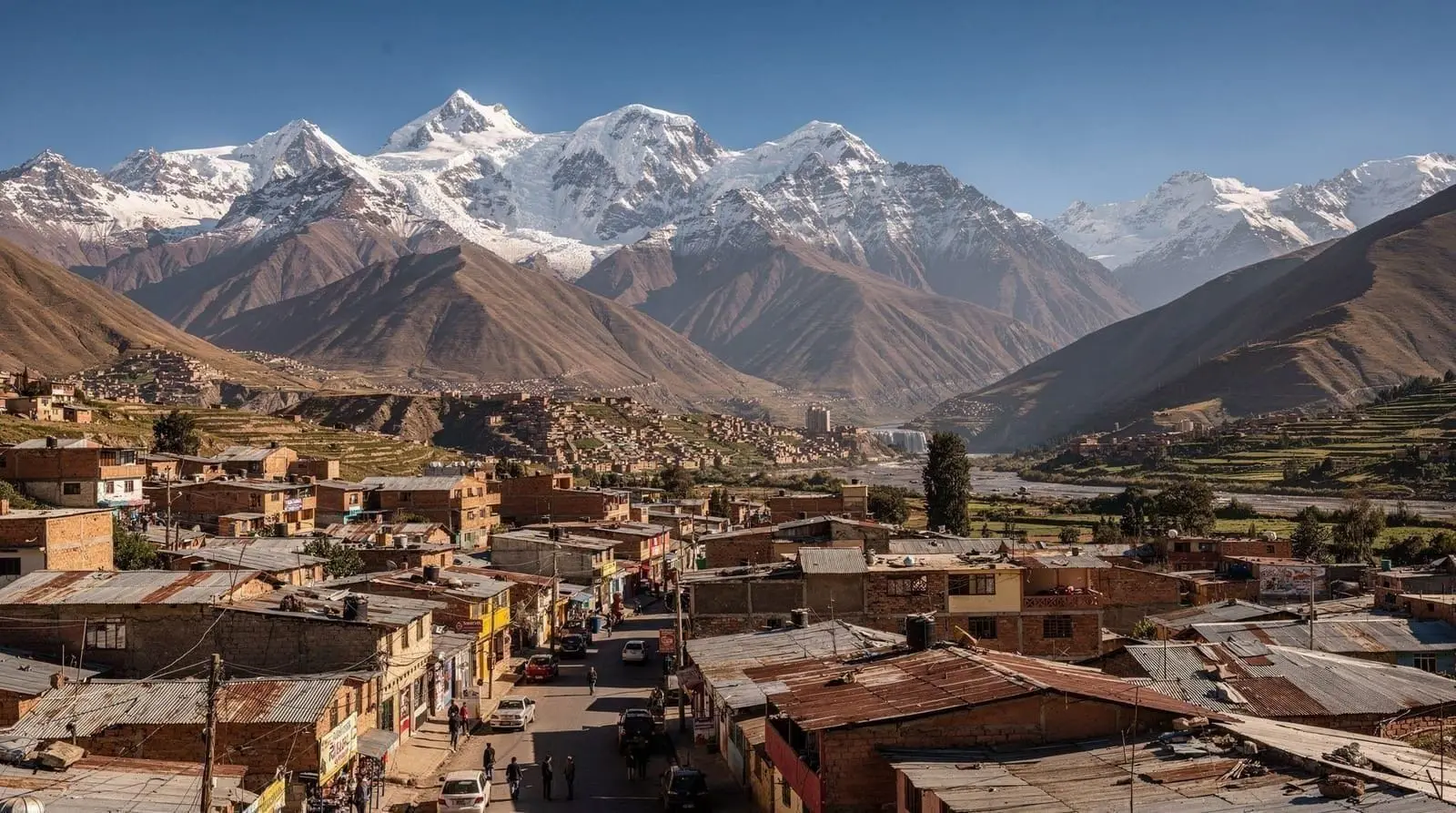
Huaraz acclimatization guide: a day-by-day protocol that works
From Huaraz: Full-Day Laguna 69 in Cordillera Blanca
How long should I acclimatise in Huaraz before hiking?
Plan at least two full days of rest and gentle activity in Huaraz (3,050 m) before any hike above 4,000 m, and three to four days before Laguna 69 (4,600 m) or a multi-day trek. Climb high during the day, sleep low, hydrate, and watch for altitude sickness symptoms.
Why this is the most important page you’ll read about Huaraz
Almost every bad experience travellers have in the Cordillera Blanca traces back to one mistake: not respecting the altitude. Huaraz sits at 3,050 m (10,007 ft), the day hikes routinely cross 4,000 to 4,600 m, and the multi-day treks sleep above 4,000 m for nights on end. People arrive on the overnight bus from sea-level Lima, feel fine for a few hours, and book a hike to Laguna 69 at 4,600 m for the next morning. Then they spend that hike vomiting at the side of the trail, or worse.
Acclimatisation is not a marketing concern or an excuse for slow tour operators. It is physiology. Your body needs time to produce more red blood cells, adjust breathing and heart rate, and adapt to roughly 30% less oxygen per breath. That process takes days, and there is no shortcut — not fitness, not youth, not willpower. A marathon runner who skips acclimatisation will suffer more than a sedentary person who took it slow. This guide gives you a realistic day-by-day plan and the factual information you need to stay safe.
This is general travel information, not medical advice. If you have heart or lung conditions, are pregnant, or have a history of altitude problems, consult a doctor before travelling to high altitude.
| Altitude | Huaraz 3,050 m; day hikes 4,000–4,600 m |
| Minimum acclimatisation | 2 full days before any hike above 4,000 m |
| Before Laguna 69 / a trek | 3–4 days |
| Golden rule | Climb high, sleep low; ascend gradually |
| Emergency response | Descend immediately for HAPE/HACE symptoms |
How altitude sickness actually works
The umbrella term is acute mountain sickness (AMS), sometimes called soroche in Peru. It is caused by the lower air pressure at altitude, which means less oxygen reaches your blood with each breath. It exists on a spectrum from mild and self-limiting to a life-threatening emergency.
Mild to moderate AMS is common — many or most people coming from sea level feel some of it in Huaraz. Typical symptoms:
- Headache (the hallmark sign)
- Nausea or loss of appetite
- Fatigue and weakness
- Dizziness or light-headedness
- Disturbed sleep, often with brief stops in breathing at night
- Shortness of breath on exertion
These usually appear 6 to 24 hours after arriving and ease over a day or two as you adapt — provided you do not go higher. The cardinal rule of AMS: if you have symptoms, do not ascend further until they resolve.
The dangerous escalations are rarer but must be recognised, because they can be fatal:
- HAPE — High-Altitude Pulmonary Oedema: fluid in the lungs. Signs are breathlessness at rest, a persistent dry then wet/bubbling cough, extreme fatigue, and sometimes a blue tinge to lips or fingernails. A wet cough at altitude is a red flag.
- HACE — High-Altitude Cerebral Oedema: fluid swelling the brain. Signs are confusion, clumsiness or loss of coordination (a stumbling, “drunk” walk), a severe headache that painkillers do not touch, and altered behaviour or drowsiness.
Both HAPE and HACE are medical emergencies. The single most effective treatment is immediate descent. Do not wait to see if it improves. Descend, and get medical help. Huaraz hospitals have experience with altitude emergencies.
The golden rules
Before the day-by-day plan, internalise these principles — they matter more than any schedule:
- Climb high, sleep low. It is fine to walk up to a high point during the day; what counts is the altitude you sleep at. Gain sleeping altitude gradually.
- Don’t increase sleeping altitude by more than ~500 m per night once above 3,000 m, and take a rest day every 1,000 m of gain.
- Hydrate hard. Drink 3–4 litres of water a day. Altitude is dehydrating and dehydration mimics and worsens AMS.
- Skip alcohol for the first days — it depresses breathing and disrupts sleep.
- Eat carbohydrate-rich meals, even if your appetite drops.
- Go slowly. Walk at a pace where you can hold a conversation. Rushing is the enemy.
- Listen to your body and be honest with your guide. Pushing through serious symptoms is how AMS becomes HAPE or HACE.
A realistic day-by-day acclimatisation plan
This assumes you arrive in Huaraz from Lima (sea level), which is the usual case. Adjust if you have already spent time at altitude elsewhere in Peru.
Day 1 — Arrival and rest
You step off the overnight bus at dawn, tired and at 3,050 m. Do almost nothing. Check into your accommodation, eat a proper breakfast, drink water steadily through the day, and take a gentle stroll around the centre — the central market on Jirón Luzuriaga, the Plaza de Armas — but no hills, no strenuous activity. Nap if you need to, but try to sleep at night. Expect a mild headache and broken sleep; this is normal. Coca tea, available everywhere, is a mild and harmless aid.
Day 2 — Gentle activity, slightly higher
If you woke feeling reasonable, take a low-intensity walk that nudges you a little higher. The classic choice is the mirador above Huaraz (around 3,400 m), a 90-minute uphill walk that rewards you with the full view of the Cordillera Blanca. Walk slowly, turn back if you feel rough, and sleep again in Huaraz. Still avoid alcohol; keep hydrating.
Day 3 — A higher day hike
Now you can step up to a gentler high-altitude excursion that tops out below the hardest hikes. Good options include the Llanganuco Lakes valley (around 3,850 m) or a moderate trail like the lower Laguna Churup approach. The idea is to spend time at 3,800–4,200 m and return to sleep in Huaraz. See the best day hikes near Huaraz for graded options. If you feel strong and symptom-free, you are on track.
Day 4 — Laguna 69 or equivalent
By the fourth day, most healthy adults who followed the plan are ready for the signature high hikes. Laguna 69 at 4,600 m, the Laguna Churup trek, or the Pastoruri Glacier excursion (which reaches above 5,000 m) become reasonable. Even now, go at altitude pace and turn back if symptoms appear.
Laguna 69 full-day hike in the Cordillera BlancaDay 5 and beyond — Multi-day treks
For the Santa Cruz trek (pass at 4,750 m) you want to be well-adapted, so starting after a Laguna 69-level day is sensible. For the far more demanding Huayhuash circuit (multiple passes near or above 4,800 m), build in four to five days of progressive acclimatisation hikes before you start — see the Huayhuash circuit guide.
The honest minimum: if you only have two days, do days 1 and 2 above and then attempt something moderate, not Laguna 69. If you have three to four days, you can responsibly reach the headline hikes. Compressing this further is where the trouble starts.
Acetazolamide (Diamox): the facts
Acetazolamide, sold as Diamox, is the most studied medication for AMS prevention. It works by mildly acidifying the blood, which stimulates breathing and speeds the body’s adaptation. It is available over the counter in Huaraz pharmacies without a prescription, though buying it in your home country with a doctor’s input is wiser.
What it does and does not do:
- It helps prevent AMS when started a day before ascending and continued for the first couple of days at altitude. Studies show a meaningful reduction in AMS incidence.
- It is not a licence to skip acclimatisation. It speeds adaptation; it does not replace it. You still climb gradually.
- It is not a treatment for HAPE or HACE. Those require descent and emergency care.
- Common side effects include tingling in fingers and toes, increased urination (so hydrate more), and a metallic or flat taste — fizzy drinks notably taste odd. These are harmless but surprising.
- Allergy caution: it is a sulfonamide; people with sulfa-drug allergies should avoid it and consult a doctor.
Dosage and suitability are a medical question — discuss with a pharmacist or doctor rather than guessing. Coca tea and coca leaves, by contrast, offer mild symptomatic relief and are a harmless local tradition, but they are not a substitute for any of the above.
What to pack for altitude
- Reusable water bottles or a hydration bladder — you will drink more than you expect.
- Sun protection: UV intensity rises sharply with altitude. High-factor sunscreen, lip balm with SPF, a hat, and proper sunglasses.
- Painkillers (ibuprofen or paracetamol) for the acclimatisation headache.
- Warm layers: temperatures swing dramatically; high points are cold even in dry season.
- Diamox, if you and your doctor have decided on it, started before you ascend.
Eating and drinking for altitude
What you put in your body affects how well you adapt. The headline advice is hydration: dry mountain air and increased breathing strip water from you faster than at sea level, and dehydration both mimics and worsens AMS. Aim for three to four litres of water a day, more on active days, and check that your urine stays pale. Favour carbohydrate-heavy meals — rice, potatoes, pasta, bread, soups — because carbohydrates require less oxygen to metabolise than fats and are easier to digest when your appetite drops, which it often does at altitude. Do not force large heavy meals if you feel queasy; small, frequent, carb-rich snacks work better.
Go easy on salt-heavy and very rich food in the first days, and skip alcohol entirely until you have adapted — it depresses breathing, fragments sleep, and dehydrates you, a triple penalty at altitude. Caffeine is fine in moderation and there is no need to quit your morning coffee. Coca tea and a soup of mate de coca are pleasant, mildly helpful local staples. The overall principle is gentle on the system: hydrate hard, eat carbs, lay off alcohol, and let your appetite return as you adapt.
When to abandon the plan and descend
No view, no summit, and no fixed itinerary is worth a serious altitude emergency. Descend immediately and seek help if you or anyone in your group shows:
- Breathlessness at rest, or a wet, bubbling cough (possible HAPE)
- Confusion, stumbling, loss of coordination, or unusual drowsiness (possible HACE)
- A severe headache that does not respond to painkillers, with vomiting
- Symptoms that worsen rather than improve despite resting at the same altitude
Descent of even 500–1,000 m often produces rapid improvement. Tell your guide, tell your group, and act early. Most altitude tragedies are not caused by the mountain — they are caused by ignoring early warnings to avoid disappointment.
Acclimatising elsewhere in Peru first
Your arrival route into Huaraz changes the equation. If you fly straight from sea-level Lima onto the overnight bus and step off at 3,050 m, you start from scratch. But many travellers reach Huaraz after time in the southern highlands — Cusco (3,400 m), the Sacred Valley, or Lake Titicaca (3,810 m) — and arrive already partly adapted. If that is you, you can compress the early rest days, though you should still not leap straight to Laguna 69 on arrival, because your body partly deconditions during low-altitude travel in between.
The reverse also helps: spending a couple of nights in a moderate-altitude town before Huaraz softens the jump. There is no perfect formula, but the principle holds — the more high-altitude exposure you bank before the hard hikes, the smoother your Huaraz days will be. Plan your wider route with the altitude profile in mind, not just the map distances.
Children, older travellers, and pre-existing conditions
Altitude affects people unpredictably, and certain groups need extra caution. Children can suffer AMS but may struggle to articulate symptoms, so watch them closely for unusual fussiness, headache, poor appetite, or lethargy, and ascend even more conservatively. Older travellers in good health acclimatise about as well as younger ones — age itself is not a strong risk factor — but underlying heart or lung disease is.
Anyone with cardiovascular or respiratory conditions, sickle cell disease, or who is pregnant should get medical advice before travelling to this altitude, and may be advised against the higher hikes entirely. None of this means avoiding Huaraz, but it does mean planning conservatively and having a low threshold for turning back or descending.
Sleep, breathing, and the first nights
One of the most disorienting parts of acclimatising is what happens at night. At altitude, many people experience periodic breathing — a pattern where breathing speeds up, then briefly stops, then resumes, sometimes waking you with a gasp. It is unsettling but usually harmless and fades as you adapt. Poor, fragmented sleep in the first nights is normal and not in itself a danger sign.
What matters is how you feel by day: improving symptoms mean you are adapting, worsening symptoms mean you should not go higher. Avoid sleeping pills in the first days, as some depress breathing and can mask or worsen altitude problems; if sleep is a real struggle, ask a pharmacist about altitude-appropriate options rather than reaching for a standard sedative.
Where to acclimatise: Huaraz town vs a nearby lodge
Most travellers acclimatise in Huaraz town itself (3,050 m), which has the widest range of accommodation, pharmacies, and tour operators for booking day hikes as your plan progresses. A smaller number choose to spend their first day or two at a quieter countryside lodge in the surrounding valley — some sit at a similar altitude to Huaraz but offer a calmer setting for the low-effort first day, which can matter if the town’s traffic and altitude headache combination feels overwhelming.
Neither location changes the acclimatisation physics: what matters is your sleeping altitude and how gently you build activity, not which specific building you are resting in. Choose Huaraz town if you want easy access to pharmacies, restaurants, and last-minute tour bookings as your plan develops; choose a lodge if quiet matters more to you on day one and you already have your onward hikes booked.
Physical preparation before you arrive
While fitness does not prevent AMS, being reasonably fit does make the acclimatisation days themselves more comfortable and helps you recover faster once you are adapted, since the hikes themselves (independent of altitude) are genuinely strenuous. If you have weeks of lead time before your trip, some cardiovascular conditioning — hiking, running, or stair climbing — pays off once you are past the acclimatisation window and into the harder day hikes and treks.
This is a separate consideration from acclimatisation itself: think of fitness as preparing your legs and lungs for the physical work of the trail, and acclimatisation as preparing your blood chemistry for the altitude, and treat them as two different problems that both need attention rather than assuming one solves the other — a fit but unacclimatised hiker and an unfit but properly acclimatised one will both struggle, just in different ways.
Frequently asked questions about acclimatising in Huaraz
How many days do I need to acclimatise in Huaraz?
Plan at least two full days of rest and gentle activity before any hike above 4,000 m, and three to four days before Laguna 69 (4,600 m) or a multi-day trek. For the Huayhuash circuit, build in four to five days of progressive acclimatisation hikes.
Can I go straight to Laguna 69 after arriving in Huaraz?
You should not. Arriving from sea-level Lima and hiking to 4,600 m within 24 hours sharply increases the risk of altitude sickness. Many operators will take you regardless, but the responsibility to say no is yours. Give yourself at least two to three days first.
Does being fit help with altitude sickness?
No. Fitness has little protective effect against AMS, and very fit people sometimes fare worse because they push too hard too fast. Susceptibility is largely individual and unpredictable. Gradual ascent, hydration, and slow pacing matter far more than fitness.
Should I take Diamox in Huaraz?
Acetazolamide (Diamox) can help prevent AMS and is sold over the counter in Huaraz, but it is a medical decision best discussed with a doctor or pharmacist, especially if you have a sulfa allergy. It speeds adaptation but does not replace gradual acclimatisation, and it does not treat the dangerous forms HAPE and HACE.
What are the warning signs I should descend immediately?
Breathlessness at rest or a wet cough (possible HAPE); confusion, stumbling, loss of coordination, or unusual drowsiness (possible HACE); or a severe headache with vomiting that does not respond to painkillers. These are emergencies — descend at once and get medical help.
Does coca tea help with altitude sickness?
Coca tea offers mild symptomatic relief and is a harmless, widespread Andean tradition. It can ease a mild headache and settle the stomach, but it is not a substitute for proper acclimatisation, hydration, or descent if symptoms become serious.
Is it safe to drink alcohol while acclimatising?
Avoid alcohol for at least the first few days at altitude. It depresses breathing, disrupts sleep, and worsens dehydration — all of which increase the risk and severity of altitude sickness. Save the celebratory beer for after you have adapted.
What if I only arrive with two days before my trek starts?
Do days 1 and 2 of the plan above — rest, gentle activity, hydration — and then attempt something moderate rather than Laguna 69 or a multi-day trek start. Two days is enough to take the sharpest edge off arrival, but it is not enough to safely attempt the hardest hikes. If your schedule genuinely cannot stretch to three or four days, adjust your hiking ambitions downward rather than your acclimatisation time.
Choosing acclimatisation hikes: a quick comparison
If you are deciding which day hike to build into your acclimatisation schedule, this comparison helps:
| Hike | Altitude | Best acclimatisation day |
|---|---|---|
| Huaraz mirador | ~3,400 m | Day 2 |
| Llanganuco Lakes | ~3,850 m | Day 3 |
| Laguna Churup (lower approach) | ~3,850–4,200 m | Day 3 |
| Laguna 69 | 4,600 m | Day 4+ |
| Pastoruri Glacier | 5,000 m+ | Day 4+ |
| Santa Cruz trek (start) | Pass at 4,750 m | After a Laguna 69-level day |