Laguna 69
Laguna 69 sits at 4,600 m above Huaraz: a 14 km round-trip hike to a turquoise glacial lake. Difficulty, acclimatisation, and costs, honestly.
From Huaraz: Full-Day Laguna 69 in Cordillera Blanca
Quick facts
- Altitude (lake)
- 4,600 m (15,090 ft)
- Hike distance
- 14 km round trip, ~600 m ascent
- Time on trail
- 5-7 hours at altitude pace
- Park fee
- S/30 per day (Huascarán National Park)
- Best for
- Fit, acclimatised day hikers chasing one unforgettable lake
The most photographed lake you actually have to earn
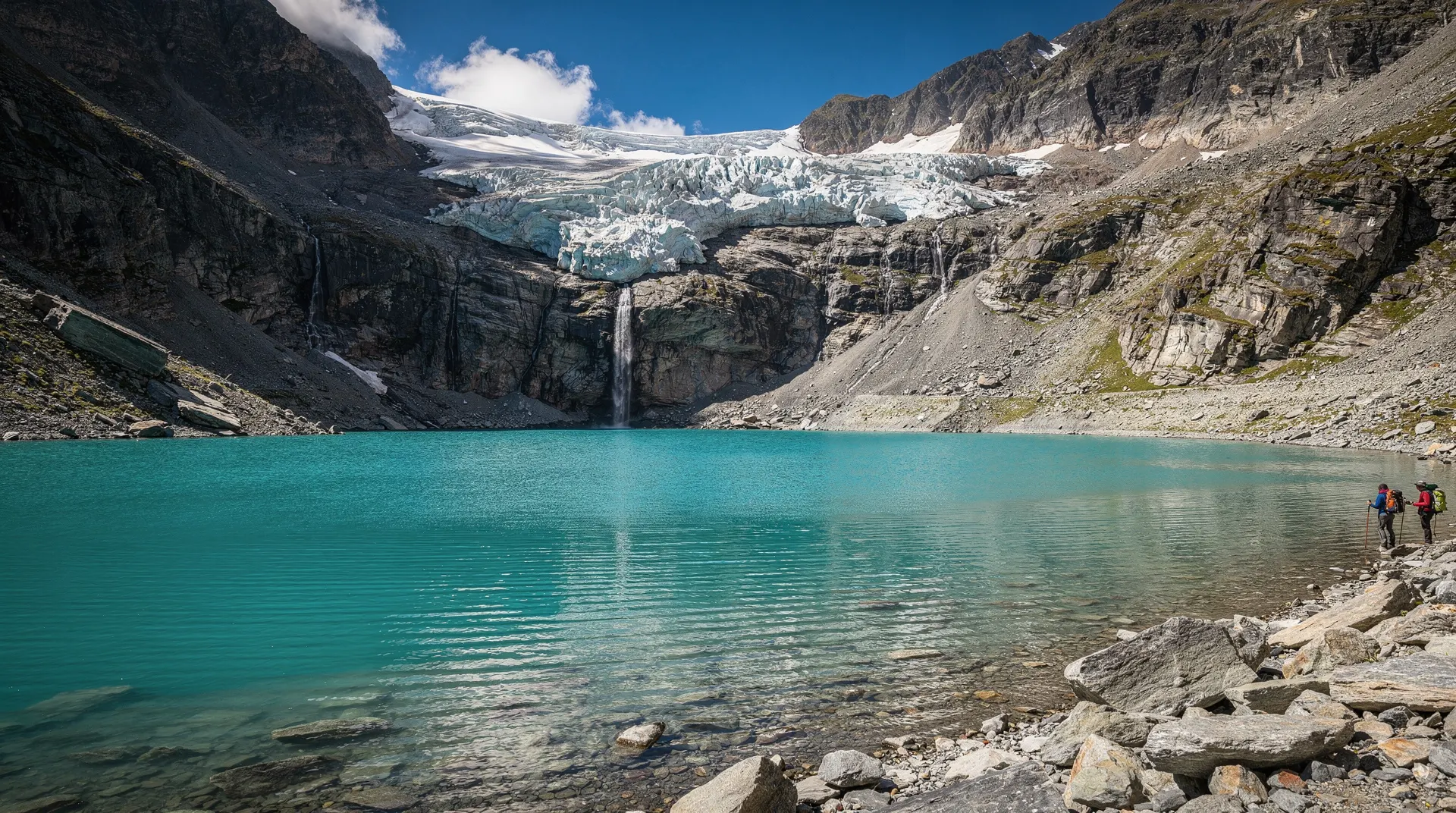
Laguna 69 is the image that sells the Cordillera Blanca: a small, impossibly turquoise lake cupped in a granite cirque beneath the north face of Chacraraju (6,112 m), fed by a thin ribbon of glacial meltwater that spills down the headwall in a thread of white. It appears on half the postcards in Huaraz and in nearly every Instagram feed tagged “Peru hiking.” What those images never communicate is the work, and the altitude, that stand between the trailhead and the view.
This page exists to fill that gap. Laguna 69 is genuinely worth the effort, but it is the single most over-promised and under-explained day hike in northern Peru. Tour agencies in Huaraz sell it as a casual outing to anyone with money, and people regularly attempt it within 24 hours of arriving from sea level. That is how the altitude headaches, vomiting, and the occasional medical evacuation happen. If you read nothing else here, read the acclimatisation section.
The lake takes its prosaic name from a 1930s cataloguing exercise: Peruvian authorities numbered the lakes of the Cordillera Blanca, and this one happened to be number 69. There is no romantic legend. The name stuck, the lake became famous, and the number is now a brand.
| Where | Huascarán National Park, ~110 km north of Huaraz |
| Cost | Around S/50–80 tour + S/30 park fee |
| Time needed | Full day (12–14 hours door to door) |
| Getting there | Organised van tour from Huaraz to the Cebollapampa trailhead |
| Best time | May to September (dry season), weekdays for fewer crowds |
Where it is and how the day works
Laguna 69 lies inside Huascarán National Park, roughly 110 km north of Huaraz by road. The trailhead is at Cebollapampa, a meadow at around 3,900 m in the upper Llanganuco valley, beyond the Llanganuco Lakes themselves. From Cebollapampa the trail climbs to the lake at 4,600 m, a gain of roughly 700 m over about 7 km in each direction.
The standard day is long. Organised tours leave Huaraz between 5 and 6 am, drive three to three-and-a-half hours to Cebollapampa (with a breakfast stop in Yungay), give you five to six hours on the mountain, then drive you back, arriving in Huaraz around 7 pm. It is a full 12-to-14-hour day, most of it at high altitude, and the hiking window is tighter than it sounds once you factor in the slow pace altitude forces on you.
Most visitors join an organised day trip rather than arranging private transport, and for good reason: getting to Cebollapampa by mid-morning without a vehicle means an awkward combi to Yungay and an uncertain onward connection. The guided van removes that headache and includes the park-fee logistics.
Full-day Laguna 69 tour from HuarazIf you want a slightly different framing of the same day, some operators bundle the Llanganuco Lakes viewpoint into the itinerary, which adds context on the drive in and a second photo stop at the lower lakes.
Laguna 69 full day with Llanganuco viewsAltitude: the part the brochures skip
This is the defining fact of Laguna 69, so let’s be blunt. The lake is at 4,600 m. Lima is at sea level. Huaraz, where you’ll base yourself, is at 3,050 m. Going from a beach to 4,600 m in a day or two is a textbook recipe for acute mountain sickness, and at 4,600 m, severe altitude sickness is not a headache to push through — it can become a genuine emergency.
The honest minimum is two full nights in Huaraz before attempting Laguna 69, and three is better. Use those days actively but gently: a walk up to the mirador above Huaraz (around 3,400 m), a low-key visit to the Llanganuco Lakes at 3,850 m, or the shorter Laguna Churup hike. Each of these nudges your body toward the altitude without the brutal jump to 4,600 m. By the time you stand at the Laguna 69 trailhead, you want your body already comfortable sleeping above 3,000 m.
A few practical points. Acetazolamide (Diamox) is sold over the counter at Huaraz pharmacies and helps many people acclimatise faster; if you have any history of altitude trouble, consider starting it the day before you arrive. Coca tea is everywhere and is mildly helpful. Alcohol the night before is a bad idea. Hydration matters more than usual — carry at least two litres. And know the warning signs: a headache that ibuprofen won’t touch, repeated vomiting, confusion, or loss of coordination all mean turn around and descend immediately. No lake is worth a cerebral oedema.
Crucially: the tour vans will take you regardless of how acclimatised you are. The operators do not screen you. The responsibility to say “I arrived yesterday, I shouldn’t do this” is entirely yours.
How hard is the hike, really?
At sea level, 14 km with 700 m of gain is a moderate day hike that a reasonably fit person knocks out in four hours without thinking. At 4,000-4,600 m, it is a different animal. The thin air roughly halves your aerobic capacity, and the final climb to the lake — two steep switchbacking sections separated by a flat shelf with a smaller pond — is where people grind to a crawl.
The profile breaks into three parts. The first kilometre or two from Cebollapampa is nearly flat, crossing the valley floor past grazing cattle and a stream; it lulls you into thinking the whole thing is easy. Then comes the first steep climb up the valley headwall, perhaps 45 minutes of switchbacks. You reach a flat marshy plateau with a small turquoise pond (many tired hikers mistake this for the lake and turn back — don’t, the real one is higher). Then the second, harder climb delivers you to Laguna 69 itself.
Plan on three to three-and-a-half hours up and two to two-and-a-half down. The trail is well-defined and requires no scrambling or technical skill — this is a walk, not a climb — but it is relentless on the lungs. Trekking poles help on the descent. Most operators allow only 30 to 45 minutes at the lake before turning everyone around to make the drive back, so don’t dawdle on the climb if you want time to enjoy the view.
Costs, fees, and what to bring
Budget realistically. A group day tour from Huaraz runs roughly S/50-80 (about $13-22 USD) for transport and a guide, sometimes with breakfast. On top of that, the Huascarán National Park fee is S/30 per day for the single-day Llanganuco-sector ticket (a longer multi-day pass costs S/150 if you’re combining several park hikes across your stay). Lunch is usually a packed sandwich you bring yourself or buy in Yungay; meals are not generally included in the cheap group tours.
What to carry: layers (it can be near-freezing at the lake and warm in the valley within the same hour), a windproof shell, a hat and gloves, strong sun protection (UV at 4,600 m is severe even when it feels cold), at least two litres of water, snacks, and cash for the park fee in case the operator doesn’t cover it. Sturdy shoes with grip are important on the descent; the trail can be dusty and loose. There are basic toilets at Cebollapampa and nowhere reliable on the trail.
For a lower-commitment taste of the area, some operators run a shorter trek option, though the views never rival the full hike to the lake.
Shorter guided Laguna 69 trek optionWhen to go and the crowd reality
The dry season — May through September — is the only sensible window. Trails are clear, the sky is most likely to be blue, and the lake’s colour is at its most vivid under direct sun. June, July, and August are also the busiest months: on a sunny weekend you can share the trail with several hundred people, and the lakeshore gets genuinely crowded around midday when the tour groups converge.
To avoid the worst of it, go on a weekday and push to be among the first to start hiking. The light on the lake is best from late morning to early afternoon when the sun reaches into the cirque — annoyingly, the same window when the crowds peak. The wet season (October to April) brings cloud that frequently hides the peaks and rain that turns the trail to mud and occasionally closes the access road after landslides. The lake is still there, but you may not see it.
Tourist traps and honest warnings
A few things worth knowing before you hand over money. First, the “easy day trip” framing is the trap — treat anyone selling Laguna 69 as casual with suspicion, and never let an agency talk you into doing it on your arrival day. Second, the cheapest tours sometimes cram too many people into a van and run a rushed schedule that leaves slow hikers stranded; ask about group size. Third, photos online are often heavily saturated — the lake is a striking turquoise, but the neon-electric versions you’ve seen are edited, so calibrate expectations to avoid disappointment if you arrive under cloud.
Finally, do not litter and do not swim. The water is glacial-cold and the area is a protected national park; rangers are increasingly present, and the fragile shoreline is showing wear from the volume of visitors.
Combining it with the rest of the Cordillera Blanca
Laguna 69 works best as one day in a longer Cordillera Blanca stay built around Huaraz. A sensible sequence: arrive and rest, spend a gentle day at the Llanganuco Lakes (which also previews the drive to Cebollapampa), then tackle Laguna 69 once acclimatised. Add the Pastoruri Glacier for a high-altitude contrast and the pre-Inca site of Chavín de Huántar for archaeology. Strong hikers often use Laguna 69 as a warm-up before the multi-day Santa Cruz trek, which crosses the same valley.
For wider planning — how many days to allow, where Huaraz fits in a northern Peru route — see the guides hub and the itineraries overview, and browse bookable day trips on the tours page.
Frequently asked questions about Laguna 69
Can I hike Laguna 69 on my first day in Huaraz?
No, and you should refuse if an agency offers it. The lake is at 4,600 m, and arriving from low altitude and hiking that high within 24-48 hours is a leading cause of serious altitude sickness in the region. Spend at least two nights acclimatising in Huaraz first, ideally with a gentle warm-up hike in between.
How difficult is the Laguna 69 hike for an average person?
It is demanding but not technical. The 14 km round trip with about 700 m of gain would be moderate at sea level, but at 4,000-4,600 m the thin air makes it genuinely hard. A reasonably fit, well-acclimatised adult will manage it at a slow steady pace in five to seven hours. Fitness helps; acclimatisation matters more.
Do I need a guide to reach Laguna 69?
The trail from Cebollapampa is well-marked and easy to follow without a guide. The practical reason most people join a tour is transport: reaching the trailhead by mid-morning from Huaraz without a private vehicle is awkward. A guided van handles the three-hour drive, the park-fee logistics, and the early start.
How much does it cost to visit Laguna 69?
A group day tour from Huaraz costs roughly S/50-80 (about $13-22 USD). On top of that, the Huascarán National Park entrance fee is S/30 for a single day in the Llanganuco sector. Budget for lunch separately, as cheap group tours rarely include a hot meal.
What’s the best time of year and day to go?
Visit in the dry season, May to September, for clear trails and the best chance of blue sky. Go on a weekday to dodge the worst crowds, and start hiking early. The lake’s colour is most vivid from late morning to early afternoon when sunlight reaches into the cirque.
What should I pack for Laguna 69?
Layers for a wide temperature swing, a windproof shell, hat and gloves, strong sunscreen and sunglasses (UV is intense at altitude), at least two litres of water, snacks, sturdy grippy footwear, and cash for the park fee. Trekking poles ease the descent. There is no reliable food or water on the trail itself.
Top experiences
Bookable activities with verified prices and instant confirmation on GetYourGuide.
