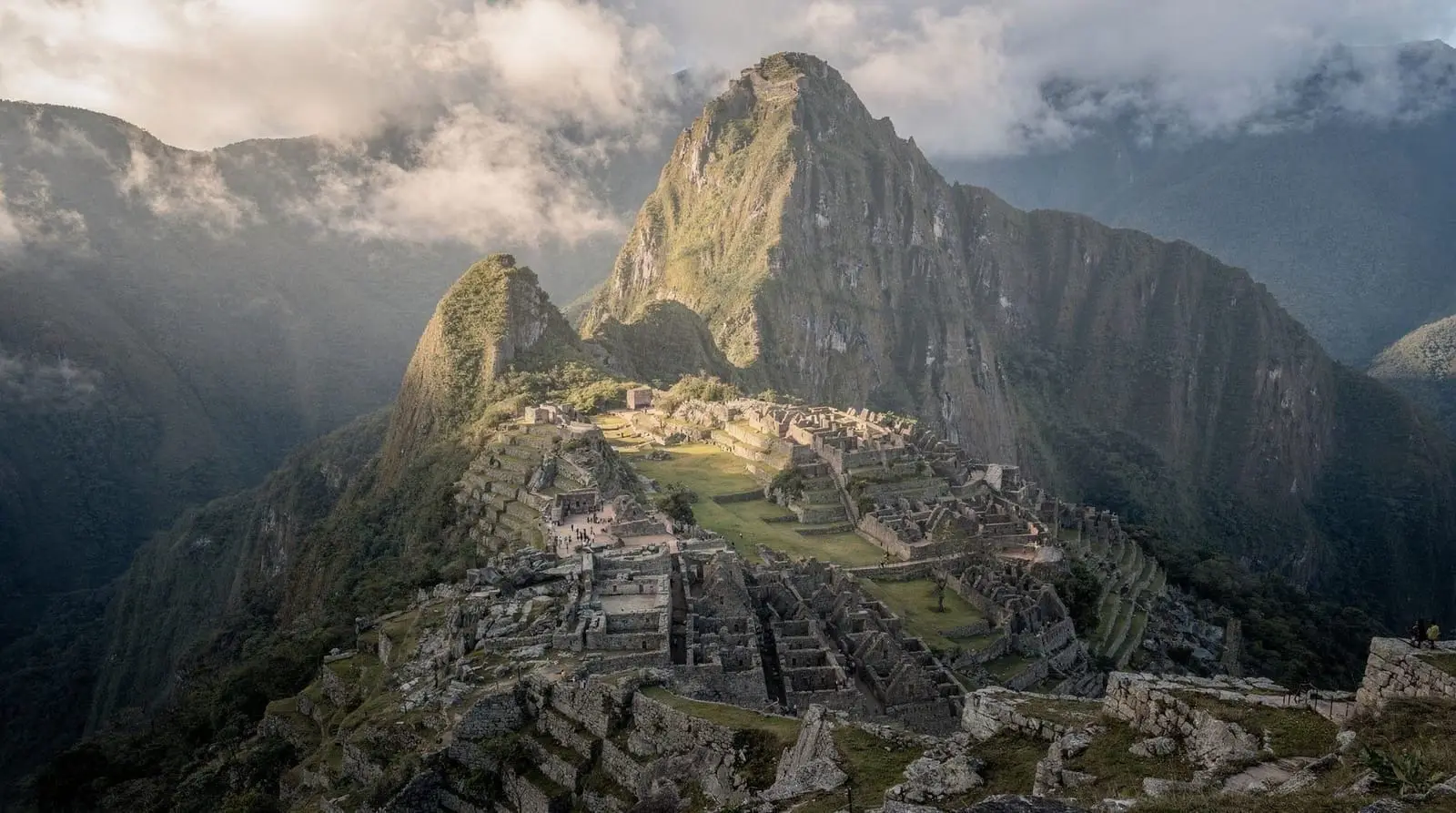
Machu Picchu altitude explained: why it is lower than you think
How high is Machu Picchu?
Machu Picchu sits at about 2,430 m (7,970 ft) — nearly 1,000 m lower than Cusco at 3,400 m. That surprises most visitors, who expect the famous citadel to be the highest point of their trip. In reality, Cusco, the Sacred Valley passes and Rainbow Mountain are all higher, and altitude sickness is far less likely at Machu Picchu itself than in the city you fly into first.
The altitude myth that shapes a lot of bad planning
Ask travellers planning Peru how high Machu Picchu is, and most will guess somewhere very high — it is, after all, the famous mountaintop citadel, the one image everyone has of the Andes. The actual figure surprises nearly everyone: about 2,430 m (7,970 ft). That is nearly 1,000 metres lower than Cusco, the city most people fly into first.
This single fact, once you grasp it, untangles a lot of confused planning. The place people fear for altitude — Machu Picchu — is one of the gentler points of a southern Peru trip. The places that actually challenge your lungs are Cusco, the Sacred Valley passes, and the genuinely extreme spots like Rainbow Mountain at 5,200 m. Understanding the real altitude profile of your trip lets you order it correctly, manage acclimatisation sensibly, and stop worrying about the wrong mountain. This guide lays out the numbers, explains why they matter, and gives the precautions that genuinely apply.
| Machu Picchu altitude | Around 2,430 m (7,970 ft) |
| Cusco altitude | Around 3,400 m — nearly 1,000 m higher |
| Lowest point on the circuit | Aguas Calientes, around 2,040 m |
| Highest point on the circuit | Rainbow Mountain, around 5,200 m |
| Where acclimatisation matters | Cusco and above, not the citadel itself |
The numbers that matter
Here is the altitude profile of a typical Cusco-region trip, lowest to highest:
- Aguas Calientes (the town below the citadel): about 2,040 m
- Machu Picchu citadel: about 2,430 m
- Huayna Picchu (the peak behind it): about 2,720 m
- Ollantaytambo (Sacred Valley): about 2,790 m
- Urubamba (Sacred Valley): about 2,870 m
- Cusco: about 3,400 m
- Sacsayhuamán / ruins above Cusco: around 3,700 m
- Lares and Salkantay trek passes: 4,600–4,800 m
- Rainbow Mountain (Vinicunca): about 5,200 m
Read that list twice. Machu Picchu and Aguas Calientes are the lowest points on the whole circuit. You descend to reach the citadel from Cusco — you do not climb to it in altitude terms, even though you take a cable-style switchback bus up the final road. The mountain looks high because of its dramatic perch above the Urubamba river gorge, but the gorge itself has dropped you to a comfortable elevation.
Why Machu Picchu feels easy compared to Cusco
At 2,430 m, the air holds noticeably more oxygen than at Cusco’s 3,400 m — meaningfully so. Altitude sickness, which strikes a real share of visitors on their first night in Cusco, is uncommon at Machu Picchu’s elevation. If you have already spent a couple of nights acclimatising up in Cusco or the Sacred Valley, descending to the citadel feels, in altitude terms, like a relief. Your body has adjusted to a harder environment and is now operating somewhere easier.
That is the crucial planning insight: the altitude work happens before Machu Picchu, not at it. People who arrive in Cusco and rush straight to the citadel on day one or two are not endangered by Machu Picchu’s height — they are endangered by Cusco’s, and by exhausting themselves while still unadjusted. The fix is acclimatisation in the high places first. Our altitude sickness guide and Cusco acclimatisation plan cover exactly how.
The real exertion: stairs, not thinness of air
Although the air at Machu Picchu is relatively forgiving, the site is not effortless — the challenge is physical, not respiratory. The citadel is built across a steep ridge, and visiting it means climbing and descending a great many uneven stone stairs, terraces and platforms. Combine that with the steep walk up from the bus stop area and the heat of a sunny day, and even at 2,430 m you will be breathing hard on the climbs.
The lesson: pace yourself on the stairs the same way you would at higher altitude, even though the altitude itself is mild. Take the stairs slowly, rest when you need to, carry water, and don’t treat the relatively low elevation as licence to charge around. Tired legs and dehydration cause more discomfort at Machu Picchu than thin air does. For the practical logistics of visiting — circuits, tickets, the bus — see the Machu Picchu destination page.
The Huayna Picchu factor
The one place at Machu Picchu where elevation climbs again is Huayna Picchu — the iconic sugarloaf peak rising behind the classic postcard view. Its summit reaches about 2,720 m, roughly 300 m above the citadel. That is still modest by the standards of your wider trip, so altitude is not the issue. The challenge is the terrain: a short but steep, exposed climb up narrow Inca stairs with significant drop-offs, requiring a separate timed ticket and a decent head for heights.
So if someone warns you that Huayna Picchu is “high,” correct the framing — it is steep and exposed, not high in any altitude-sickness sense. A fit, acclimatised visitor handles the elevation easily; the vertigo and the leg work are what to prepare for. The same goes for Machu Picchu Mountain, the larger, longer alternative climb on the other side of the citadel, which tops out higher still but remains an exertion-and-exposure challenge rather than an altitude one.
How to order your trip around altitude
Because Machu Picchu is the low point, the smart sequencing of a Peru trip is counter-intuitive to many first-timers:
The recommended order: Fly into Cusco, then descend to the lower Sacred Valley (Urubamba, Ollantaytambo) to sleep and acclimatise gently. From there, go to Machu Picchu — comfortably the lowest, easiest-breathing part. Then, with your body well adjusted, return up to Cusco proper and tackle the higher add-ons like Rainbow Mountain. This way you never ask your lungs to do their hardest work while least adjusted.
Our Cusco altitude vs Sacred Valley comparison explains why sleeping in the valley first beats sleeping in Cusco first — a difference of several hundred metres that genuinely eases the adjustment. The key principle across all of it: build up gradually, and don’t let Machu Picchu’s fame trick you into treating it as the altitude summit of your trip. It is the valley floor of your trip, comparatively speaking.
Practical altitude precautions that actually apply
Even though Machu Picchu is mild, a few sensible habits keep your whole high-Andes trip comfortable:
- Acclimatise before the high stuff. Two to three nights at Cusco or Sacred Valley elevation before any serious altitude exertion.
- Hydrate constantly — three or more litres of water a day at altitude. Dehydration mimics and worsens altitude symptoms.
- Go easy on arrival. No strenuous activity on your first day at 3,400 m in Cusco.
- Skip alcohol for the first day or two at altitude.
- Pace the stairs at Machu Picchu regardless of the mild elevation.
- Know the red flags for the dangerous high-altitude conditions (confusion, loss of coordination, a wet cough) — these belong to the high places, not Machu Picchu, but every Cusco-region traveller should recognise them and descend if they appear.
For travellers nervous about altitude generally, the reassuring takeaway is this: the place you most wanted to see is also one of the easiest on your body. The discipline you need is in Cusco and on the high day trips — Machu Picchu itself, at 2,430 m, mostly just asks you to take the stairs slowly. See the Aguas Calientes destination page if you plan to overnight at the lowest, most comfortable elevation of the whole trip before your visit.
What altitude actually does to your body
Understanding why altitude matters at all makes the planning logic click into place. At sea level the air you breathe is roughly 21 percent oxygen, and the atmospheric pressure is high enough to drive that oxygen efficiently into your blood. As you climb, the percentage of oxygen stays the same, but the pressure drops — so each breath delivers fewer oxygen molecules to your lungs and bloodstream. At Cusco’s 3,400 m the effective oxygen available is around 65 percent of sea level; at Machu Picchu’s 2,430 m it is closer to 75 percent. That ten-point gap is exactly why descending to the citadel feels like your lungs have been handed back some breathing room.
Your body responds to thin air by breathing faster and deeper, raising your heart rate, and over several days producing more oxygen-carrying red blood cells. That acclimatisation process takes time — it cannot be rushed and is not improved by being fit. The discomfort people call altitude sickness (soroche in Peru) is the gap between arriving and adjusting: headache, breathlessness, nausea, broken sleep and loss of appetite while your physiology catches up. Because Machu Picchu sits lower, that gap is smaller there, and a body already part-adjusted from Cusco copes easily. This is the whole mechanical reason the sequencing advice in this guide works.
Common altitude mistakes around Machu Picchu
Even though the citadel is mild, travellers make a handful of predictable errors that turn a gentle day into an uncomfortable one:
- Flying into Cusco and rushing to Machu Picchu on day one or two. The danger is not the citadel but the unacclimatised days at 3,400 m on either side of it. Give Cusco or the Sacred Valley time first.
- Treating the low elevation as licence to over-exert. The endless stone stairs, midday sun and the climb from the bus area still tire you. Pace yourself even though the air is forgiving.
- Skipping water because it feels cooler than the coast. Dehydration is the single most underrated trigger of altitude discomfort across the whole trip, including at Machu Picchu.
- Booking the highest day trips before the citadel. Doing Rainbow Mountain at 5,200 m before you have even adjusted to Cusco is a recipe for misery; save the extreme altitude for after you are acclimatised.
- Assuming altitude medication taken for Cusco is needed at the citadel. It is aimed at the high country, not Machu Picchu’s mild elevation.
The thread running through all of these is the same: the altitude planning for a Peru trip is really Cusco-and-above planning. Machu Picchu is the part where, if you have done the rest correctly, you can finally stop thinking about your lungs and look at the ruins.
Altitude and the different ways of reaching the citadel
How you get to Machu Picchu also shapes your altitude experience. The standard train route from the Sacred Valley descends steadily along the Urubamba river, dropping you from around 2,800 m to the 2,040 m of Aguas Calientes — so the journey itself eases your breathing as it goes. By the time you reach the town, you are at the most oxygen-rich point of the trip, which is part of why an overnight there before the visit feels so restorative.
The trekking routes are a different story. The classic Inca Trail, the Salkantay and the Lares trek all cross high passes between 4,200 m and 4,800 m before descending toward the citadel — so trekkers experience the real altitude on the way, then drop to the comfortable elevation of Machu Picchu at the finish. This is why trek operators insist on acclimatisation days in Cusco or the Sacred Valley before departure: the passes, not the destination, are where altitude bites. If you are choosing between walking and the train, factor this in — the train is the low-altitude option, the treks are the high-altitude effort that ends low.
Either way, the citadel waits at the bottom. Whichever route delivers you there, Machu Picchu remains the gentle reward at 2,430 m, and the altitude work — if there is any — happens on the approach, never at the ruins themselves.
Warning signs to take seriously — and where they actually happen
It is worth being precise about where the dangerous altitude conditions occur, because conflating them with ordinary tiredness at Machu Picchu causes needless worry. High-Altitude Pulmonary Edema (HAPE) and High-Altitude Cerebral Edema (HACE) are the two conditions that genuinely matter, and both are diseases of elevation above roughly 3,500–4,000 m — Cusco, Sacsayhuamán, the Salkantay and Lares passes, Rainbow Mountain. Their warning signs are a persistent, wet-sounding cough, confusion or loss of coordination, severe headache unrelieved by rest, and breathlessness even while sitting still.
None of these are typical or expected at Machu Picchu’s 2,430 m. If you or a travel companion show them anywhere on the trip, the response is the same regardless of location: stop, rest, and descend — do not push on to “see how it goes.” For a fuller breakdown of symptoms and thresholds, our altitude sickness guide and the coca tea and altitude remedies guide cover home and pharmacy options that genuinely help at Cusco elevation, alongside what does not (there is no remedy that substitutes for descent in a serious case).
How trip length changes the altitude calculation
The altitude math above assumes a fairly standard Cusco-first itinerary, but the calculation shifts if your trip is shorter or longer. On a tight schedule — say a 3-day Cusco itinerary — there is less slack for a slow acclimatisation ramp, which is exactly why Machu Picchu’s low elevation becomes a genuine asset: it is one part of a short trip where you do not need to budget extra rest days.
On a longer trip, such as a 7-day Cusco, Sacred Valley and Machu Picchu itinerary or the fuller 10-day Cusco and Titicaca route, you have room to spread acclimatisation across the Sacred Valley before climbing back to Cusco’s elevation and beyond — the sequencing this guide recommends is easiest to execute well when you are not rushing.