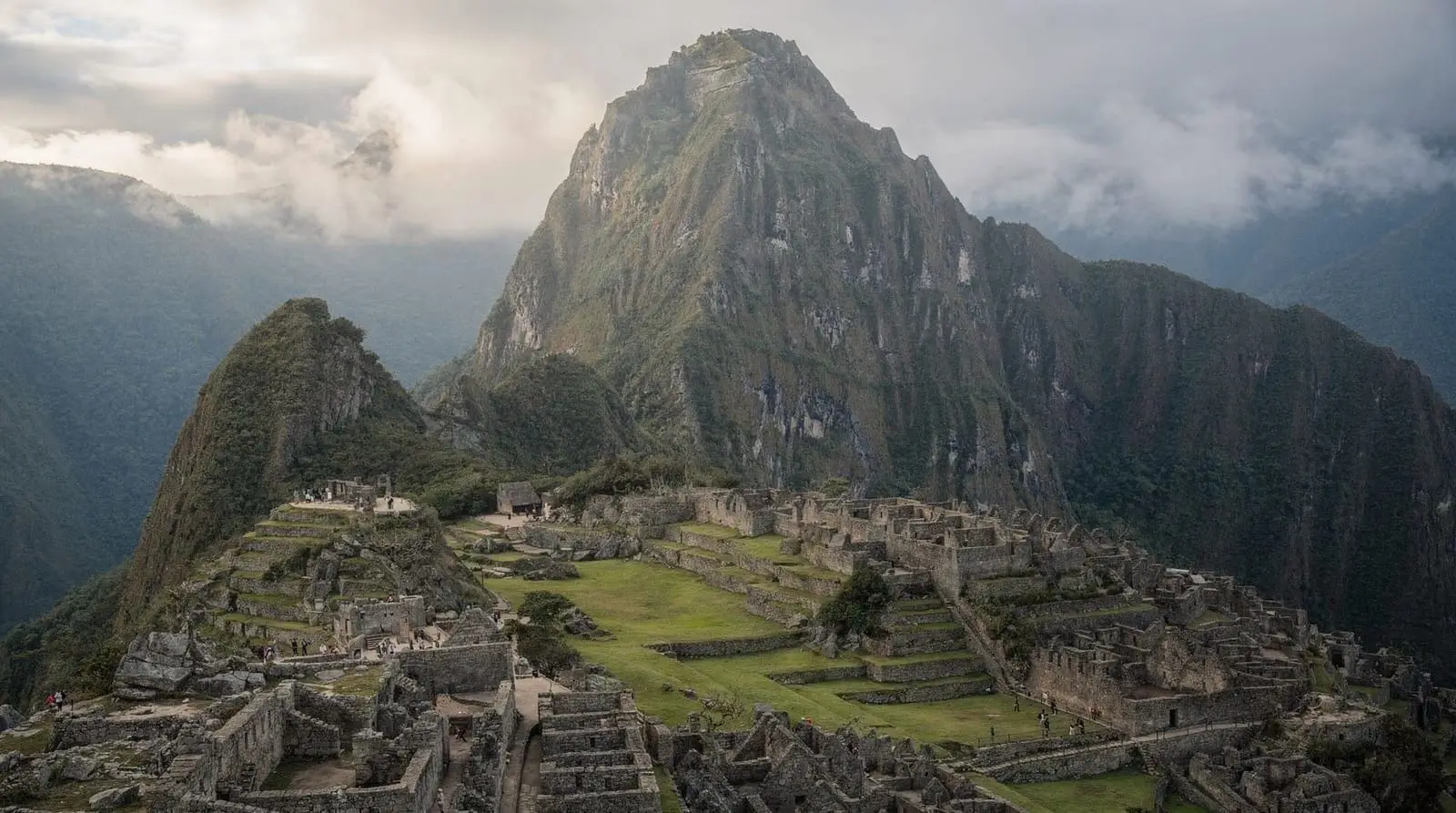
Huayna Picchu
Honest Huayna Picchu guide: the separate permit, the daily quota, how the climb compares to Machu Picchu Mountain, fitness, fear of heights, and booking.
Machu Picchu: Huayna Picchu Entry Ticket
Quick facts
- Summit altitude
- 2,693 m / 8,835 ft
- Height above citadel
- ~260 m / 850 ft climb
- Permit
- Separate, capped at ~200 per day, booked with Circuit 3
- Best for
- Confident hikers without serious fear of heights
What Huayna Picchu actually is
Huayna Picchu (also spelled Wayna Picchu, “young peak” in Quechua) is the steep, sugarloaf pinnacle that rises directly behind the citadel in every classic photograph of Machu Picchu. It is not part of the standard citadel walk. Climbing it requires a separate, limited permit, and the route is a genuinely steep, exposed scramble up Inca-built stone steps to a summit at 2,693 m, about 260 metres above the ruins.
| Where | Behind the citadel at Machu Picchu, Cusco region |
| Cost | Around S/200 / $54, bundled with Circuit 3 entry |
| Time needed | 45–75 min up, 45–60 min down, plus your citadel visit |
| Getting there | Enter via your Circuit 3 slot, then sign in at the control hut |
| Best time | Dry season (May–September); the 7am window for the clearest summit |
The reward is the view most people do not get: looking straight down onto the citadel from above, with the Urubamba river coiling through the gorge far below. On a clear morning it is one of the great vistas in the Andes. The catch is that the permit is among the hardest tickets to secure in all of Peru, the climb is not for everyone, and a fear of heights will make the upper section genuinely unpleasant. This page lays out who should attempt it and how to actually get on the mountain.
The permit: why it is so hard to get
The Ministry of Culture caps Huayna Picchu at roughly 200 visitors per day, split across two morning entry windows (typically around 7 am and 10 am). That is a tiny number against the thousands who enter the citadel daily, which is why this permit sells out faster than anything else at Machu Picchu — often two to three months ahead in dry season.
The permit is not sold on its own. It is bundled with a Circuit 3 entry ticket, because the route to the mountain trailhead runs through the lower circuit. When you book, you choose “Circuit 3 + Huayna Picchu” and a specific climb window. The combined foreign-adult price is about S/200 / $54.
To secure it, book through the official Ministry portal (tuboleto.cultura.pe) the moment your dates are firm, or use a platform that issues a genuine Ministry permit. A Machu Picchu with Huayna Picchu entry ticket bundles the citadel entry and the peak permit in one booking, which removes the risk of securing one but not the other. If you want the whole logistics chain handled, the excursion to Machu Picchu plus Huayna Picchu mountain adds the train and transfers around the same permit.
As with all Machu Picchu tickets, the permit carries your name and passport number and is checked against ID at a control point before the trailhead. Bring the exact passport you booked under.
Huayna Picchu vs Machu Picchu Mountain
The two peaks above the citadel are often confused. They are very different climbs, and choosing the right one matters more than most people realise.
Huayna Picchu — the iconic pinnacle behind the citadel. Shorter in duration (45–75 minutes up) but steeper, narrower, and far more exposed, with sections of near-vertical stone steps and a short stretch near the top where you use hands and, in one spot, a short cable. The summit is small and crowded. This is the one for the dramatic aerial photo and the adrenaline.
Machu Picchu Mountain (Montaña) — the taller summit (3,082 m) on the opposite side. A longer climb (1.5–2 hours up) but on a wider, less vertiginous trail with fewer drop-offs. It gives a sweeping panoramic view of the citadel and surrounding peaks rather than the straight-down angle. It is the better choice if you have any unease with heights or want a steadier, less crowded hike. It is booked the same way, as a Machu Picchu with Huayna Picchu Mountain entry ticket paired with Circuit 3.
If you are nervous about exposure, choose Machu Picchu Mountain. If you want the famous bird’s-eye shot and are comfortable on steep steps, choose Huayna Picchu.
What the climb is like
You enter the citadel on your Circuit 3 slot, walk to the Huayna Picchu control hut, sign in (and out, on return — they track who is on the mountain), and start up. The first section is moderate. The middle and upper thirds are where it earns its reputation: steep, irregular Inca steps, some worn smooth, with significant drop-offs and no continuous railing. A short cabled section near the top assists the steepest pitch.
Fitness. You do not need to be an athlete, but you need to be comfortable with sustained steep climbing and using your hands for balance. Allow 45–75 minutes up and 45–60 minutes down. The descent is harder on the knees than the ascent and demands care on smooth, sometimes damp steps.
Fear of heights. Be honest with yourself. The exposure is real and the upper steps are narrow. People do freeze on the way down. If steep drop-offs distress you, take Machu Picchu Mountain instead.
Conditions. In the wet season (November to March) the steps are slick and the climb is markedly more dangerous; the summit is also more often clouded. Dry season (May to September) gives grippy steps and clear summit views. Whatever the month, the earlier 7 am window gives the best chance of a cloud-free top.
When to climb and how to plan around it
Because the only permit windows are in the morning, Huayna Picchu effectively requires you to be at the gate early — which means staying the night in Aguas Calientes and taking one of the first Consettur buses up. Trying to climb on a same-day trip from Cusco rarely works with the schedule.
The smart sequence: acclimatise in the Sacred Valley and Cusco first, overnight in Aguas Calientes, take the dawn bus, do the standard citadel circuit, then climb in your assigned window. A standalone Machu Picchu Circuit 3 entry ticket is the base ticket the peak permit attaches to, useful to know if you are assembling the booking yourself. For how this fits a wider route, see /itineraries/ or /guides/.
Practical information
Altitude. The summit is 2,693 m. That is lower than Cusco, but the steepness combined with thinner air makes the climb feel harder than the numbers suggest. Be reasonably acclimatised first.
What to bring. Water, sun protection, a hat, and grippy closed shoes — trainers with worn soles are a liability on the smooth steps. A small daypack only; large backpacks are not allowed and there is left-luggage at the gate.
Time limits. You must enter the trail within your assigned window and sign out by a set time. Latecomers are turned away — your citadel slot and your Huayna Picchu window are enforced separately.
Not for everyone. Skip it if you have vertigo, recent knee or heart issues, or are climbing in heavy rain. The view from Circuit 1’s upper terrace already delivers the classic citadel photograph without any exposure.
Bathrooms. None on the mountain. Use the toilets at the gate before you start.
Frequently asked questions about Huayna Picchu
How do I get a Huayna Picchu permit?
The permit is capped at roughly 200 people a day and is sold only bundled with a Circuit 3 entry ticket through the official Ministry of Culture portal or a platform that issues a genuine Ministry permit. Choose “Circuit 3 + Huayna Picchu” and a morning climb window when you book. In dry season it sells out two to three months ahead, so book the moment your dates are firm.
How hard is the Huayna Picchu climb?
It is a steep, exposed 45–75 minute ascent on irregular Inca stone steps with significant drop-offs and a short cabled section near the top. You do not need to be an athlete, but you need to be comfortable with sustained steep climbing and using your hands for balance. The descent is harder on the knees than the climb.
Huayna Picchu or Machu Picchu Mountain — which should I choose?
Choose Huayna Picchu for the dramatic straight-down view of the citadel and the adrenaline of the steep pinnacle, if you are comfortable with heights. Choose Machu Picchu Mountain for a longer but wider, less exposed trail with a sweeping panoramic view — the better option if heights make you uneasy.
Is Huayna Picchu safe if I’m afraid of heights?
Honestly, no. The upper section is narrow and exposed with steep drop-offs, and people do freeze on the descent. If steep heights distress you, climb Machu Picchu Mountain instead, or skip the peaks entirely — Circuit 1’s upper terrace gives the classic citadel photo with no exposure.
Do I need to stay overnight to climb Huayna Picchu?
Effectively yes. The permit windows are in the morning, so you need to be at the gate early, which means overnighting in Aguas Calientes and taking one of the first dawn buses up. Same-day trips from Cusco rarely align with the climb schedule.
What is the best time of year for Huayna Picchu?
The dry season (May to September) gives grippy steps and the clearest summit views. In the wet season (November to March) the stone steps are slick and the climb is markedly more dangerous, with the summit more often clouded. Whatever the month, the earlier 7 am window offers the best chance of a cloud-free top.
Top experiences
Bookable activities with verified prices and instant confirmation on GetYourGuide.

