Cusco's archaeological sites: what to see and what the ticket covers
Cusco: Half-Day City Tour with Sacsayhuaman and Q’enco
What are the main archaeological sites in and around Cusco?
The headliners are Sacsayhuamán, Qorikancha, and the four ruins above the city — Qenqo, Puka Pukara, and Tambomachay — plus the Sacred Valley sites of Pisac, Ollantaytambo, Chinchero, and Moray. Most are covered by the boleto turístico, but Qorikancha and the cathedral are ticketed separately.
A capital built to be read in stone
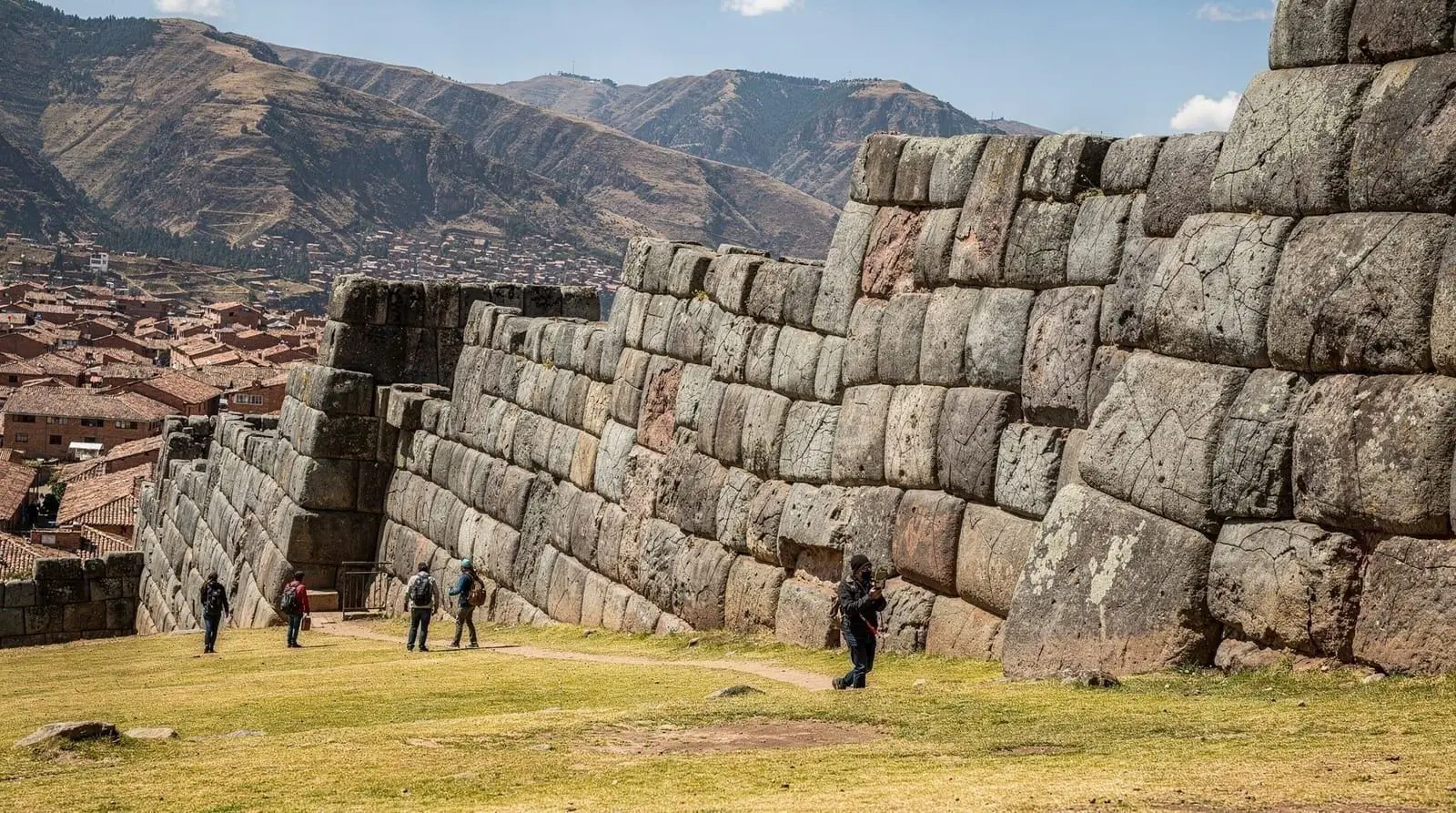
For roughly a century before the Spanish arrived in 1533, Cusco was the political and ceremonial capital of Tawantinsuyu, the Inca empire — the “land of the four quarters.” The Inca did not leave written records, so what they left instead is stone: temples, fortresses, terraces, and waterworks engineered with a precision that still defeats easy explanation. Walls of polygonal blocks weighing many tonnes are fitted without mortar so tightly that a knife blade will not slip between them, and they have outlasted the colonial buildings the Spanish dropped on top of them.
This guide maps the archaeological sites in and around Cusco — what each one is, what it is worth, and crucially how the ticketing works, because confusion over the boleto turístico costs first-timers more money and frustration than almost anything else. It is honest about which sites reward a visit, which are quick stops, and which separate tickets you actually need.
| Where | Cusco city + Sacred Valley, 16 sites total |
| Cost | Boleto S/130 full, S/70 partial; Qorikancha S/15 |
| Time needed | 2-3 days for a proper look |
| Getting there | Walk/taxi in Cusco; tour or car to the valley |
| Best time | Days 2-3 of your stay, once acclimatised |
The boleto turístico: read this before you buy anything
The boleto turístico del Cusco (BTC) is a bundled pass, and understanding it is the key to seeing the region efficiently. It covers sixteen sites in and around Cusco, and — this is the important part — most of those sites have no individual ticket. The boleto is the only way in.
The two main versions:
- Full boleto turístico (BTG): S/130 for adults (about $35), valid 10 days, covers all 16 sites — the four ruins above town, the Sacred Valley archaeological sites, and a cluster of city museums.
- Partial boletos (circuits): S/70 each (about $19), valid 1 to 2 days, each covering a sub-group. Circuit I covers the four ruins immediately above Cusco — Sacsayhuamán, Qenqo, Puka Pukara, and Tambomachay.
A student discount (S/70 full) applies to ISIC holders under 26. Bring cash in soles — many booths do not take cards, and exact change moves the line faster.
What the boleto does not cover, and what visitors most often wrongly assume it does:
- Qorikancha — separate entry, around S/15.
- Cusco Cathedral — separate religious-circuit ticket, around S/40.
- Machu Picchu — an entirely separate national-park system. The boleto does not apply.
The honest takeaway: if you plan a city tour, the four ruins above town, and a Sacred Valley day, the full BTG pays for itself. If you are seeing only one cluster, buy the relevant partial circuit. Both are sold at the COSITUC office on Avenida El Sol or at the gate of the first site you visit.
Sacsayhuamán: the colossus above the city
If you see one Inca site in the immediate Cusco area, make it Sacsayhuamán. Looming on the hill above the city, it is famous for three tiers of zigzag walls built from limestone blocks, some weighing well over a hundred tonnes, fitted together with the impossible precision that defines Inca masonry. The Spanish chronicles describe it as a fortress; many scholars now read it as a ceremonial and religious complex, possibly the head of a puma whose body the Inca city was laid out to form. The colonists used it as a quarry for centuries, which is why much of the upper structure is gone — yet the megalithic base remains, and it is staggering.
It is a 30-minute uphill walk or a short taxi from the Plaza de Armas, and it is included in the boleto. Because the climb is real at 3,400 m, save it for your second or third day once acclimatised. The site hosts the Inti Raymi festival on 24 June, when it fills with thousands; see our Corpus Christi and festival notes for the wider June calendar.
The four ruins above town
Strung along the road above Sacsayhuamán are three more sites, usually visited together with it on Circuit I of the boleto:
- Qenqo — a carved limestone outcrop with channels, niches, and a subterranean altar, thought to be a ritual and possibly funerary site. Compact but atmospheric.
- Puka Pukara — the “red fortress,” a small complex of walls and terraces overlooking the road, probably a control point or way station rather than a true fortress. A quick stop.
- Tambomachay — the “bath of the Inca,” an elegant arrangement of aqueducts, channels, and fountains still running water today, associated with a water cult. The engineering is the draw.
None individually justifies a long visit, but together they make a satisfying half-day, and the boleto is the only way to enter them. A licensed half-day city tour stitches them together with transport and a guide, sparing you the steep climb and the booth queue on a still-acclimatising body — the half-day Cusco city tour with Sacsayhuamán and Qenqo is the standard version, and the Qorikancha and Sacsayhuamán city tour adds the Temple of the Sun.
Qorikancha: the Temple of the Sun beneath the convent
In the heart of the city, Qorikancha is the single clearest illustration of how the Spanish built on, rather than erased, the Inca capital. It was the empire’s most important temple, the Temple of the Sun, its walls once sheathed in gold plate and its courtyard filled with golden figures. After the conquest, the Dominicans raised the Santo Domingo convent directly on top of it — and when earthquakes cracked the colonial church, the curved Inca foundation beneath stood firm. You walk through the convent and meet the Inca walls inside it, perfectly preserved.
Qorikancha is not on the boleto turístico; entry is separate, around S/15, and well worth it. Allow 60 to 90 minutes.
The Sacred Valley sites
The boleto also covers the major archaeological sites of the Sacred Valley, which together are arguably the equal of anything in Cusco itself:
- Pisac — extensive hillside ruins of terraces, temples, and an Inca cemetery, above a town famous for its market.
- Ollantaytambo — a steep temple-fortress and a living Inca town, one of the few places the Inca defeated the Spanish in battle. The terraced approach and the monumental Sun Temple are extraordinary.
- Chinchero — terraces, a colonial church on Inca foundations, and a strong weaving tradition.
- Moray — concentric agricultural terraces sunk into the ground like an amphitheatre, thought to be an Inca crop-experimentation site exploiting microclimates.
These are spread across the valley and best seen on a full day. The full-day Sacred Valley tour covers the classic circuit, while the small-group Pisac, Maras, Moray and Ollantaytambo tour adds the Maras salt pans alongside the ruins. Doing the valley also doubles as acclimatisation, since it sits lower than the city — see Cusco altitude vs the Sacred Valley.
A sensible order, given the altitude
The sites are physically demanding — most involve climbing at 3,400 m or higher — so sequence them around acclimatisation rather than cramming them in:
- Days 1 to 2: the flat city core and Qorikancha while you adjust; ease into the gradient at San Blas.
- Day 2 to 3: the four ruins above town, now that the climb is manageable.
- Day 3 onward: the Sacred Valley sites, ideally as a full day.
Our Cusco acclimatization plan details the day-by-day adjustment. Do not front-load Sacsayhuamán on arrival day; it is exactly the kind of uphill effort that triggers altitude symptoms.
Tourist traps and honest cautions
A few things worth knowing:
- The boleto cannot be split or refunded, so buy the version that matches your actual plan rather than the full pass “just in case” if you are only seeing one cluster.
- Photo touts in traditional dress with llamas around the plaza and ruins expect a tip (a sol or two) for a picture; agree before you snap.
- “Free” workshop flyers around the Plaza de Armas — chocolate, pisco — often turn into hard-sell shopping stops. Unrelated to the ruins, but the same trap-spotting applies.
- Do not assume the boleto covers Machu Picchu. It does not, and the citadel’s timed-entry system and train logistics need separate, advance booking.
How the sites fit a Cusco trip
Cusco’s archaeology is the reason most people come, and it rewards a structured two-to-three-day approach more than a frantic dash. Pair the city sites with the Sacred Valley and Machu Picchu, respect the altitude, and buy the boleto that fits your route rather than the default full pass. For deeper planning on tickets, weather, and logistics, browse /guides/; for multi-day routings see /itineraries/ and the two-week Peru itinerary guide.
Which cluster to prioritise if time is short
Not every trip has room for all sixteen boleto sites plus Qorikancha. If you must choose:
- One day only: Qorikancha plus Sacsayhuamán — the single most photogenic and historically important pairing, both reachable without a long transfer.
- Two days: add the three smaller ruins above town (Qenqo, Puka Pukara, Tambomachay) as a half-day loop.
- Three days or more: add a full Sacred Valley day for Pisac and Ollantaytambo, which arguably rival anything in Cusco itself.
Frequently asked questions about Cusco's archaeological sites: what to see and what the ticket covers
Which Cusco ruins does the boleto turístico cover?
Is Sacsayhuamán worth visiting?
How many days do I need to see Cusco's archaeological sites?
Do I need a guide for the Cusco ruins?
Is Machu Picchu included in the boleto turístico?
Should I buy the full boleto turístico or a partial circuit?
Can I visit Sacsayhuamán and the other ruins on foot without a tour?
Top experiences
Bookable activities with verified prices and instant confirmation on GetYourGuide.


