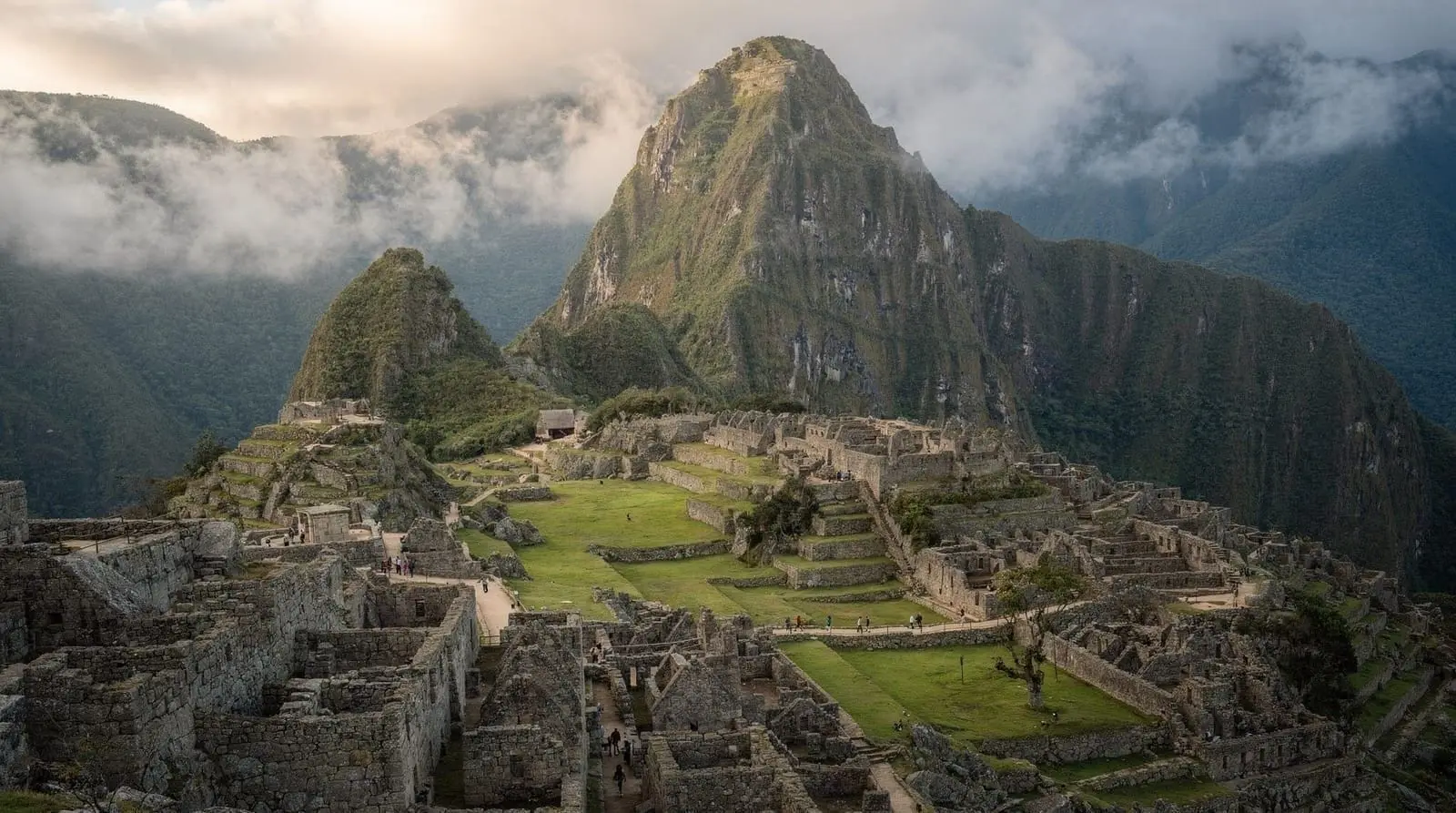
Fake Machu Picchu tickets: how the scams work and how to buy safely
Where do I buy genuine Machu Picchu tickets?
The only official entrance-ticket sources are the government site tuboleto.cultura.pe and the in-person culture-ministry offices in Cusco and Aguas Calientes. Trains are sold by PeruRail and IncaRail. Anyone selling a bundled 'ticket' elsewhere is reselling, and some are outright fraudulent.
Why this scam works so well
Machu Picchu is the rare destination where the official booking process is so awkward that fraud thrives in the gap. The government entrance ticket is sold through a single, clunky Spanish-first government website with a confusing circuit system, a daily visitor cap, and timed entry slots that sell out weeks ahead in peak season. Trains are sold separately by two private rail companies. A guide is a third purchase. Faced with this, an exhausted traveller looking for one button that says “buy Machu Picchu ticket” is the perfect mark.
Scammers exploit that confusion in two directions. Some sell outright forgeries — a permit that looks plausible but does not exist in the system and will not scan at the gate. Others run a legal but predatory operation: charging a steep “booking fee” for the free reservation step, or selling a vague “all-in package” at a markup with no clear breakdown of what you actually receive. The first kind robs you; the second kind overcharges you and leaves you exposed if anything goes wrong.
This guide is consumer protection, not salesmanship. It explains exactly where genuine tickets come from, what a real ticket looks like, the red flags that mark a con, and what to do if you suspect you have been had. There are no affiliate links on this page on purpose — when the subject is fraud, you deserve advice with no commercial angle.
| Official entrance source | tuboleto.cultura.pe (government portal only) |
| Official trains | PeruRail or IncaRail directly |
| Genuine ticket price | around S/152 (~$41) basic circuit |
| Biggest red flag | No passport name printed on the ticket |
| Safe payment | Card only — never wire, crypto, or cash app |
The only official sources
Commit these to memory, because everything else is a reseller of varying honesty:
- Entrance ticket (the permit to enter the citadel): the Ministry of Culture’s official portal, tuboleto.cultura.pe, or in person at the culture-ministry ticket offices in Cusco (on Calle Maruri / Garcilaso) and in Aguas Calientes. This is the only place the permit itself is issued.
- Train to Aguas Calientes: PeruRail (perurail.com) and IncaRail (incarail.com). These are the two licensed operators on the line from Ollantaytambo and Cusco.
- Bus from Aguas Calientes up to the gate: Consettur, bought in Aguas Calientes or online via their official channel.
- Official guide: licensed guides are hired at the entrance or pre-booked through a registered agency.
A legitimate tour operator or established travel platform may bundle these three or four purchases into one transaction for a service fee — that is normal and often worth it for the convenience and the buyer protection. The line between “legitimate reseller” and “scam” is not whether they are official; it is whether they deliver a genuine, verifiable permit in your name and are transparent about price and what you receive.
What a genuine entrance ticket actually contains
You can defeat most fakes simply by knowing what a real ticket looks like. A valid Machu Picchu entrance permit always carries:
- Your exact full name and passport number — the same one you will show at the gate. The permit is nominative; it is not a generic admission. If a ticket has no passport name on it, it is not a real entrance permit.
- A specific circuit (the citadel is divided into numbered routes — Circuit 1, 2, or 3, with sub-routes) and any add-on (Huayna Picchu, Huchuy Picchu, or Machu Picchu Mountain).
- A timed entry slot — a specific date and hour. Entry is no longer open-ended.
- A verifiable reference / QR code that validates against the Ministry of Culture system at the control point.
At the gate, staff check the QR or reference and match your passport to the name on the permit. If they do not match, you are turned away. This is why a forged ticket fails even if it looks perfect: it was never in the system.
For a full, honest walk-through of the circuits, the timed slots, and how to navigate the official site itself, see the Machu Picchu tickets explained guide.
The red flags of a scam
Treat any one of these as a reason to stop and verify before paying:
- No passport name on the ticket. Non-negotiable. A real entrance permit is nominative.
- A price far below the official tariff. The standard foreign-adult entrance is around S/152 ($41) for the basic circuits and around S/200 for routes including Huayna Picchu. A “ticket” offered for a fraction of that is bait.
- A price absurdly above it with no breakdown. A vague “$300 Machu Picchu package” that will not itemise entrance, train, bus, and guide is hiding a markup or a missing component.
- Payment by cash app, crypto, wire transfer, or “friend” transfer. Legitimate sellers take cards and give receipts. Untraceable payment is the scammer’s signature.
- Pressure and false scarcity. “Only two left, pay now in the next ten minutes.” Real availability is checkable on the official system; the urgency is manufactured.
- Sellers in social-media DMs, WhatsApp groups, or street touts with no verifiable company name, address, or registration. The slick logo means nothing.
- A website that mimics the official one but with a slightly different address. Always reach the official portal by typing tuboleto.cultura.pe yourself rather than following a link from an ad or message.
- No timed entry slot specified. Since entry became time-stamped, any “ticket” without an hour attached is suspect.
Other ticket-adjacent scams in Cusco and Aguas Calientes
The forged permit is the headline, but related cons cluster around it:
- The “booking fee” for free steps. Some touts charge to make a reservation that costs nothing, then sell you the actual ticket on top. Reservations on the official system are part of the purchase, not a separate paid service.
- Fake “skip the line” or “VIP entry” upgrades. There is no paid line-skip at Machu Picchu beyond your timed slot; everyone enters by their scheduled hour.
- Counterfeit boleto turístico and bundled-pass confusion. Touts sometimes imply the Cusco boleto turístico covers Machu Picchu. It does not — they are entirely separate systems. The boleto turístico explained guide sets out what that pass actually includes.
- Currency and change tricks at booths. Pay in soles, count your change, and refuse dynamic currency conversion if a card machine offers to bill you in dollars at a poor rate.
These overlap with the broader pattern of tourist-targeting cons across the region; the Peru travel safety guide for 2026 covers the wider landscape.
How to buy safely, step by step
- Decide your date and circuit first. Peak-season slots (May–September) sell out weeks ahead, so check official availability early. Knowing your exact date defuses the “last one left” pressure.
- Buy the entrance from the official portal or office, or from a single reputable operator who clearly itemises entrance, train, bus, and guide. If you want one transaction, an established agency or well-known platform is reasonable — just confirm the entrance permit will carry your passport name.
- Pay by card so you have a paper trail and chargeback rights. Never wire money or pay an individual’s personal account.
- Check the permit carries your passport details, a circuit, and a timed slot the moment you receive it. If anything is missing, query it immediately.
- Book trains directly with PeruRail or IncaRail (or confirm your operator booked genuine ones) and keep those confirmations separate.
- Travel with your passport — the same one on the ticket. No passport, no entry, regardless of the permit.
What to do if you suspect a fake
If the ticket feels wrong, act before you travel, not at the gate:
- Verify it against the official system if your seller gives a reference, or ask a reputable agency in Cusco to check it.
- Dispute the charge with your card issuer if you paid by card and suspect fraud — another reason never to wire money.
- Report the seller to the tourist police (POLTUR) in Cusco and, if relevant, the platform you found them on.
- Try to rebook a genuine permit as early as possible. Do not assume you can sort it on arrival in Aguas Calientes — without a valid timed permit you will be refused entry, and same-day slots are frequently sold out.
The painful truth is that a forged ticket usually cannot be salvaged on the spot. Your protection is buying correctly in the first place and checking the permit the day it arrives.
Why the official system is the way it is
It helps to understand that the friction is not incompetence — it is design. Machu Picchu has a strict daily visitor cap to protect a fragile site, divided into timed entry slots and fixed circuits so the flow of people through the citadel is controlled. That is why entry is nominative (tied to your passport), why slots sell out, and why there is no walk-up flexibility. The system is deliberately rigid, and that rigidity is exactly what scammers exploit by offering the “easy” alternative they cannot legitimately deliver.
Knowing this reframes the whole transaction. When a seller promises to bypass the cap, guarantee a sold-out date, or offer “VIP” entry outside the timed system, they are promising something the official system does not permit — which means either they are lying or they are selling a forgery. There is no secret back door. The only flexibility is buying early enough that the slot you want is still available, which is why the single most protective thing you can do is plan your date and book genuinely well ahead, especially for the May–September peak.
A quick word on trains and buses
The entrance permit gets the attention, but the train and bus legs have their own scam-adjacent pitfalls. Buy train tickets only from PeruRail or IncaRail directly, or confirm your operator booked genuine ones — counterfeit or “discount” train tickets surface in the same channels as fake permits. The bus up from Aguas Calientes to the gate is run by Consettur and bought in town or via their official channel; ignore anyone offering a cheaper “special” bus.
And remember the three are separate purchases: a legitimate bundle simply combines them transparently, while a vague all-in package that will not itemise entrance, train, and bus is hiding either a markup or a missing piece. The Machu Picchu tickets explained guide breaks down how the legs fit together.
Booking for a group or family: extra care
Group and family bookings carry their own risk, because every passport name and circuit assignment has to match exactly. Double-check that each traveller’s name is spelled precisely as it appears in their passport, that children are correctly registered (Peru’s ticket system requires an ID or passport number for every visitor, including minors), and that the whole group is booked onto the same circuit and time slot if you intend to walk through together — mismatched slots can split a family at the gate.
A reputable operator handling a group booking should send you a confirmation itemising every name against every ticket before you pay the balance; if they cannot produce that, treat it as a red flag regardless of how established they claim to be.
Recourse if Peruvian authorities need to get involved
Beyond disputing the card charge, Peru’s tourist police unit (POLTUR) in Cusco handles reports of ticket fraud and can formally document a complaint, which strengthens a chargeback case and creates a paper trail if the scam is part of a larger pattern authorities are tracking. INDECOPI, Peru’s consumer protection agency, is the other avenue for a formal complaint against a Peru-based seller, though it moves slowly and is more useful after the fact than as an emergency fix. Neither will get you into Machu Picchu on a forged ticket; their value is stopping the seller from scamming the next traveller and supporting your bank dispute.
The honest bottom line
Machu Picchu’s booking system is genuinely annoying, and that annoyance is the scam’s oxygen. You do not have to suffer the official site if you would rather pay a reputable operator a fair service fee for one clean transaction — that is a legitimate convenience, not a con. What you must never do is hand untraceable money to an anonymous seller for a ticket with no passport name and no timed slot.
Buy from an official source or a transparent, card-accepting operator; verify the permit the moment it lands; and travel with the passport that matches it. For the full planning picture once your tickets are genuinely sorted, the Machu Picchu complete guide covers everything from circuits to the climb up from Aguas Calientes.