Huayna Picchu vs Machu Picchu Mountain
Machu Picchu: Huayna Picchu Entry Ticket
Should I climb Huayna Picchu or Machu Picchu Mountain?
Huayna Picchu is shorter (about 2–3 hrs round trip), steeper, more exposed, and gives the iconic top-down view over the citadel — but it sells out fastest and is hard if you fear heights. Machu Picchu Mountain is longer (3–4 hrs), a steady staircase with less exposure and wider panoramas, and easier to book. Both need a separate timed permit.
Two peaks, two completely different climbs
When you book Machu Picchu, you are offered the citadel alone or the citadel plus one of two summit hikes. The two are constantly confused because the names overlap, but they are genuinely different experiences, and choosing the wrong one for your fitness or your nerves can ruin an otherwise unmissable morning.
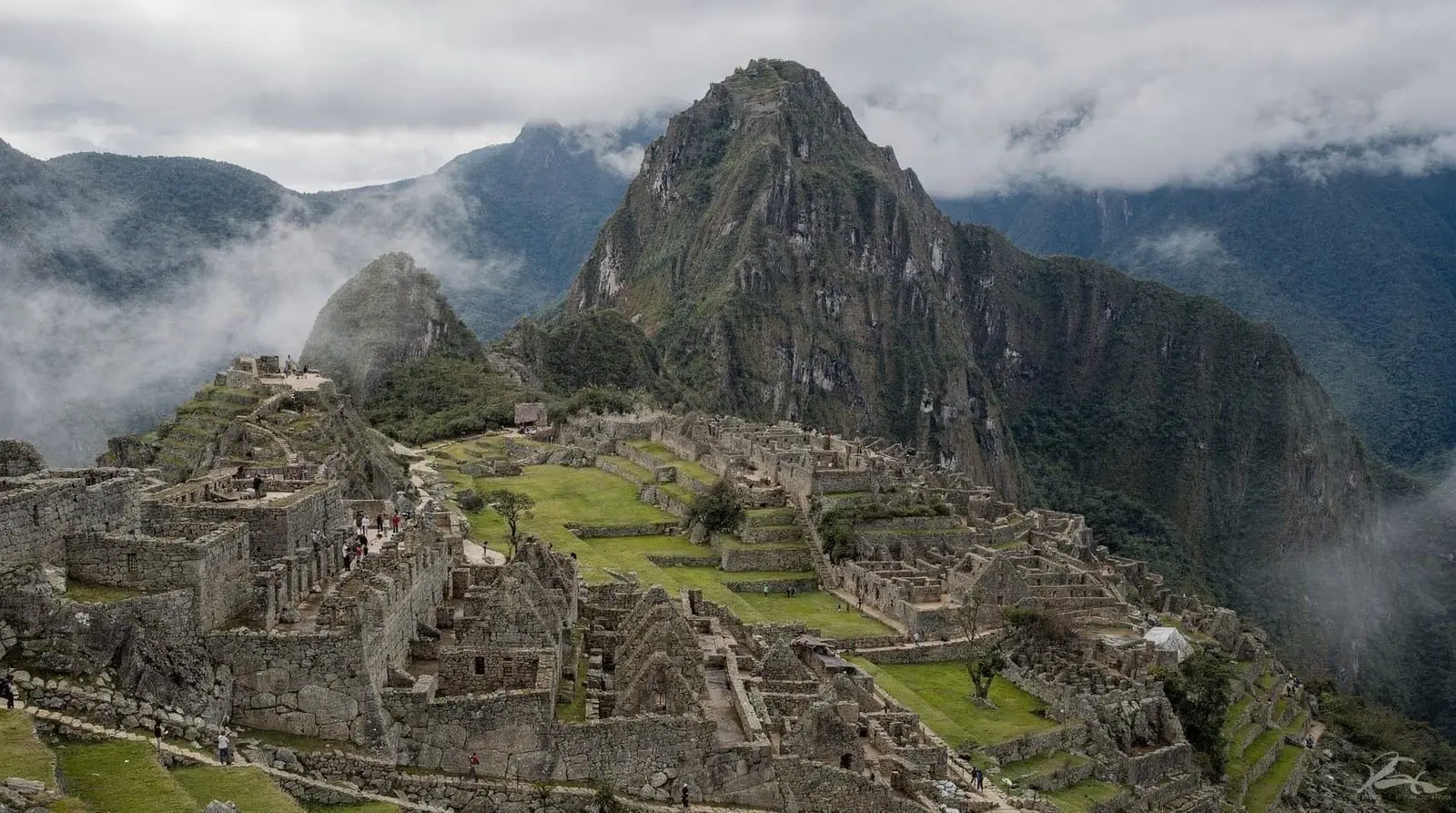
Huayna Picchu (also spelled Wayna Picchu) is the sharp, finger-like peak that rises behind the citadel in every classic photograph. Machu Picchu Mountain (Montaña Machu Picchu) is the larger, broader summit on the opposite side, looming over the ruins from the other direction. You climb up one to look back at the other — and at the ruins between them.
Here is the honest comparison so you can pick before you book, because both require a separate, timed, daily-capped permit that you cannot add on later at the gate.
The headline differences
| Huayna Picchu | Machu Picchu Mountain | |
|---|---|---|
| Summit height | ~2,693 m | ~3,082 m |
| Climb from citadel | ~260 m up | ~650 m up |
| Round-trip time | ~2–3 hours | ~3–4 hours |
| Gradient | Very steep, scrambly | Long, steady staircase |
| Exposure / vertigo | High — narrow, cables, tunnel | Moderate — wider path |
| The view | Top-down onto the citadel | Wide valley panorama |
| Permits | Sell out fastest | Easier to get |
Huayna Picchu: the short, sharp, famous one
Huayna Picchu is the bucket-list climb. The trail is short in distance but punishing in gradient — a relentless scramble up ancient Inca steps, some of them shallow and worn, with stretches of fixed cable, a near-vertical ladder section, and a tight rock tunnel near the top that you squeeze through on hands and knees. The reward at the summit is the shot everyone has seen: the citadel laid out far below, the terraces and plazas in miniature, the Urubamba river curling around the base.
It is genuinely thrilling and genuinely not for everyone. The steps are exposed in places, with long drops beside them, and in the November–March wet season the stone gets slick. People with a real fear of heights regularly start the climb and turn back. The descent is, if anything, more intimidating than the ascent because you are looking down the whole way.
Practicalities:
- Time: allow 2–3 hours round trip, plus the citadel itself.
- Permits: the most competitive at Machu Picchu — book the combined entry-plus-Huayna-Picchu ticket weeks to months ahead in high season. The Machu Picchu Huayna Picchu entry ticket covers the citadel and the peak in one timed slot.
- Slots: you enter in a morning window; you must start the Huayna Picchu climb within your assigned time band.
- Who it suits: reasonably fit travellers comfortable with heights, narrow steps, and a bit of a scramble, who want the iconic top-down view.
There is also a slightly longer Huayna Picchu variant that includes the Temple of the Moon on the far side of the peak — a quieter, atmospheric detour for those wanting more trail and fewer people.
Machu Picchu Mountain: the longer, calmer haul
Machu Picchu Mountain is the underrated choice. It is the bigger climb — roughly 650 m of ascent versus Huayna Picchu’s 260 m — and the summit is nearly 400 m higher, so do not mistake “calmer” for “easier overall.” But it is a different kind of effort: a long, steady, wide stone staircase that just keeps going, rather than a scrambly, exposed scramble. There are no ladders, no tunnel, and far less of the heart-in-mouth exposure.
The view from the top is a sweeping, high-altitude panorama — the whole valley, the surrounding peaks, and the citadel sitting small far below, with Huayna Picchu opposite. It is a grander, wider vista than Huayna Picchu’s intimate top-down shot, though the ruins themselves are less prominent.
Practicalities:
- Time: allow 3–4 hours round trip — it is a sustained climb and the descent on stairs is hard on the knees.
- Permits: considerably easier to get than Huayna Picchu, often available closer to your date. The Machu Picchu Mountain entry ticket combines the citadel and the Mountain climb.
- Altitude: at ~3,082 m the summit is higher than Cusco, so being acclimatised matters — see the altitude sickness guide.
- Who it suits: travellers who want a serious leg workout and a big panorama but dislike exposure and scrambling, and anyone who left Huayna Picchu booking too late.
A third option: the Huchuy Picchu and shorter walks
It is worth knowing that the two big peaks are not the only elevated viewpoints. Machu Picchu’s circuit system includes shorter add-on walks that need no special mountain permit — notably Huchuy Picchu, a small hill beside Huayna Picchu that offers a respectable elevated view of the citadel for a fraction of the effort and none of the exposure, and the walk up to the Inca Bridge (Puente Inca), a vertigo-inducing cliff-edge path that is short but dramatic. The classic Sun Gate (Inti Punku) walk, the spot where Inca Trail trekkers first see the ruins, is another gentle option from inside the citadel on certain circuits.
These suit travellers who want a view and a bit of a walk but have neither the legs for Machu Picchu Mountain nor the nerve for Huayna Picchu, and they are useful fallbacks when both big peaks are sold out. Check which walks your assigned circuit actually permits when you book, because the citadel’s one-way routing means not every path is open from every ticket.
How to actually choose
Decide on three axes:
- Fear of heights. If exposure unsettles you, choose Machu Picchu Mountain without hesitation. Huayna Picchu’s narrow, cabled, tunnelled sections are the wrong place to discover your limits.
- Time and energy. If you want the climb done in a couple of hours and have the legs for steep steps, Huayna Picchu. If you want a longer, steadier slog and can spare 3–4 hours, the Mountain.
- The view you want. Top-down drama onto the ruins (Huayna Picchu) versus a wide valley panorama (the Mountain). This one is purely taste.
A practical fourth factor: availability. Because Huayna Picchu permits vanish first, the choice is sometimes made for you. If you are booking late for a high-season visit, Machu Picchu Mountain may be the only summit still open — and it is a fine consolation, not a poor one.
Permits, timing, and the rules that trip people up
Both climbs sit inside Machu Picchu’s circuit-and-timed-entry system. A few things first-timers get wrong:
- You cannot add a mountain at the gate. The combined permit must be bought in advance; the citadel-only ticket will not let you onto either peak.
- Your entry slot governs your climb window. Choose an earlier morning slot for the best light and the coolest temperatures, and to leave margin if the climb takes longer than planned.
- Bring your passport. Names on tickets are checked against ID at the entrance and at the mountain control points.
- Sign the register. Both peaks have a logbook at the trailhead — you sign in and out so rangers know who is still on the mountain.
- Weather matters. In the wet season the steps are slippery and cloud can swallow the summit view entirely; the dry season (May–September) is safer and clearer. See best time to visit Machu Picchu.
For where to stay the night before so you can take an early slot, the Aguas Calientes guide covers the base town at the foot of the citadel.
Fitness, knees, and who should skip both
Neither climb is technical, but both are real exertion at altitude, and it is worth being honest with yourself before booking.
For Huayna Picchu, the limiting factors are nerve and agility more than raw fitness. The steps are uneven and worn, the exposure is constant in places, and the tunnel and ladder sections demand you are comfortable using your hands and squeezing through a tight space. If you have dodgy knees, the steep descent is the harder half — going down the narrow, exposed steps is slower and more nerve-wracking than coming up. Trekking poles are not practical on the scrambly sections.
For Machu Picchu Mountain, the limiting factor is stamina and, again, knees. It is a long, relentless staircase — hundreds of metres of vertical on stone steps — and the descent pounds the knees hard. Trekking poles genuinely help here, and unlike Huayna Picchu the wider path makes them usable. There is no exposure to speak of, so it suits people who want a tough workout without the vertigo.
Who should consider neither? Anyone not yet acclimatised, anyone with significant knee or heart issues, and anyone who would rather spend their limited time on the ground exploring the citadel slowly. The ruins themselves, walked thoughtfully with a guide, are the main event — the peaks are an add-on, not a requirement, and there is no shame in skipping both and giving Machu Picchu your full, unhurried morning.
What to bring for the climb
- Water — at least a litre; there is none on either trail.
- Sun protection — the exposed sections get fierce sun, even when it is cool.
- A light rain shell — weather turns fast, especially in the wet season.
- Grippy footwear — the steps are slick when damp; trainers with worn soles are a liability.
- Your passport — checked at the mountain control point.
- Snacks — eating is not really permitted inside the citadel, but a quick bite before the climb helps.
- Trekking poles for Machu Picchu Mountain (leave them for Huayna Picchu, where they get in the way).
Start your slot as early as your ticket allows: cooler air, clearer skies before the midday cloud, and a margin if the climb runs long.
A note on doing the citadel itself well
Whichever peak you climb, the summit hike eats a big chunk of your morning, so plan the citadel visit around it. Most people climb first while fresh and the air is cool, then tour the ruins on the way down and out. The combined tickets route you through a specific circuit, and the circuits explained guide shows which route each ticket type actually follows; a guide for the citadel portion adds the context the stones alone do not give. The Machu Picchu destination guide covers the circuits and the on-site logistics.
Booking timeline and getting there
Because Huayna Picchu permits are the daily-capped bottleneck, work backwards from your Machu Picchu date. For a high-season visit, aim to book three to six months ahead if Huayna Picchu matters to you; Machu Picchu Mountain and citadel-only tickets stay available much closer to the date, sometimes even a few weeks out.
The ticket types compared guide breaks down every combination sold, and the how to get to Machu Picchu guide covers the train and bus logistics from Cusco or Ollantaytambo once your entry slot is locked in. Base yourself in Aguas Calientes the night before an early slot rather than day-tripping from Cusco — it removes the single biggest risk of missing your climb window.
Traveling with kids or older relatives
Neither peak is a good idea for young children or anyone with mobility concerns; the exposure on Huayna Picchu and the sheer stair count on Machu Picchu Mountain make both unsuitable for most families with kids under about ten. If you are travelling with children or less mobile relatives, skip the mountain add-on entirely and spend the saved time and budget on a slower, guided citadel visit instead — the Machu Picchu with kids guide has age-specific advice on what does and does not work at altitude and on uneven Inca stonework.
Machu Picchu day trip by train from Cusco (citadel only)