Cusco vs Arequipa: which Peruvian city deserves your days
Cusco: Half-Day City Tour with Sacsayhuaman and Q’enco
Cusco or Arequipa — which should I visit?
Visit both if you can: they complement rather than compete. Choose Cusco if Machu Picchu, Inca history, and Andean treks are the priority; choose Arequipa if you want easier altitude (2,335 m vs 3,400 m), elegant colonial architecture, better restaurants, and the Colca Canyon. Cusco is the headline; Arequipa is the relief.
Why this comparison is slightly the wrong question
Travellers planning southern Peru often frame Cusco and Arequipa as rivals competing for limited days, and ask which one to “choose.” That framing misleads, because the two cities are more complementary than competitive. Cusco is the high-altitude, history-saturated gateway to Machu Picchu and the Andes; Arequipa is the lower, milder, more elegant colonial city that doubles as the base for the Colca Canyon. They do different jobs, and on most southern Peru routes you have time for both.
That said, budgets and calendars are real, and sometimes you genuinely must pick. So this guide does two things: it compares the cities honestly across the dimensions that actually affect your trip — altitude, sights, food, weather, cost, crowds, and feel — and then it tells you which to prioritise if you can only do one, and how to sequence them if you can do both. The short version up front: Cusco offers more and Arequipa offers ease, and the smart play is usually to combine them with Arequipa providing the breather.
| Cusco | Arequipa | |
|---|---|---|
| Altitude | 3,400 m | 2,335 m |
| Headline sight | Machu Picchu, Sacred Valley | Colca Canyon |
| Minimum days | 4–7 nights | 2–4 nights |
| Cost | Higher, tourist-inflated core | Lower, better value |
| Best for | Inca history, trekking | Food, architecture, ease |
Altitude: the most consequential difference
This is the difference that most affects how your body feels day to day.
- Cusco: 3,400 m (11,150 ft). High enough that flying in from sea level and immediately exerting yourself leaves many visitors headachy, breathless, and poorly slept for a day or two. Acclimatisation is mandatory, not optional.
- Arequipa: 2,335 m (7,660 ft). About 1,000 m lower — still elevation, but a meaningfully gentler one. Most travellers breathe and sleep noticeably better here.
The practical implication is real. Arequipa is an excellent place to begin a southern trip (easing into altitude) or to recover after the high exertions around Cusco. Note the asterisk, though: Arequipa’s own headline trip, the Colca Canyon, climbs to viewpoints above 4,800 m, so the canyon itself is high even if the city is not. For the full altitude-pacing logic, see the Cusco trip planning 2026 guide.
Sights and what each city is for
Cusco’s case
Cusco is, simply, the most important historical city in Peru and the indispensable base for the region’s biggest attractions:
- Machu Picchu — the singular reason most people come to Peru at all, reachable only via the Cusco region.
- The Sacred Valley — Pisac, Ollantaytambo, Maras, Moray.
- Inca-on-colonial layering in the city itself — Qorikancha, Sacsayhuamán, the ruins above town.
- High-altitude adventure — Rainbow Mountain, Humantay Lake, the Inca Trail and Salkantay treks.
Nothing in Arequipa competes with this concentration of world-class sites. If your trip is built around Machu Picchu and Inca history, Cusco is non-negotiable. A guided introduction to the city’s layered core, like the half-day Cusco city tour with Sacsayhuamán and Qenqo, is the efficient way to read the stonework with context.
Arequipa’s case
Arequipa is not trying to be Cusco, and that is its appeal. The “White City” — named for the pale sillar volcanic stone its colonial buildings are carved from — offers a different, calmer kind of beauty:
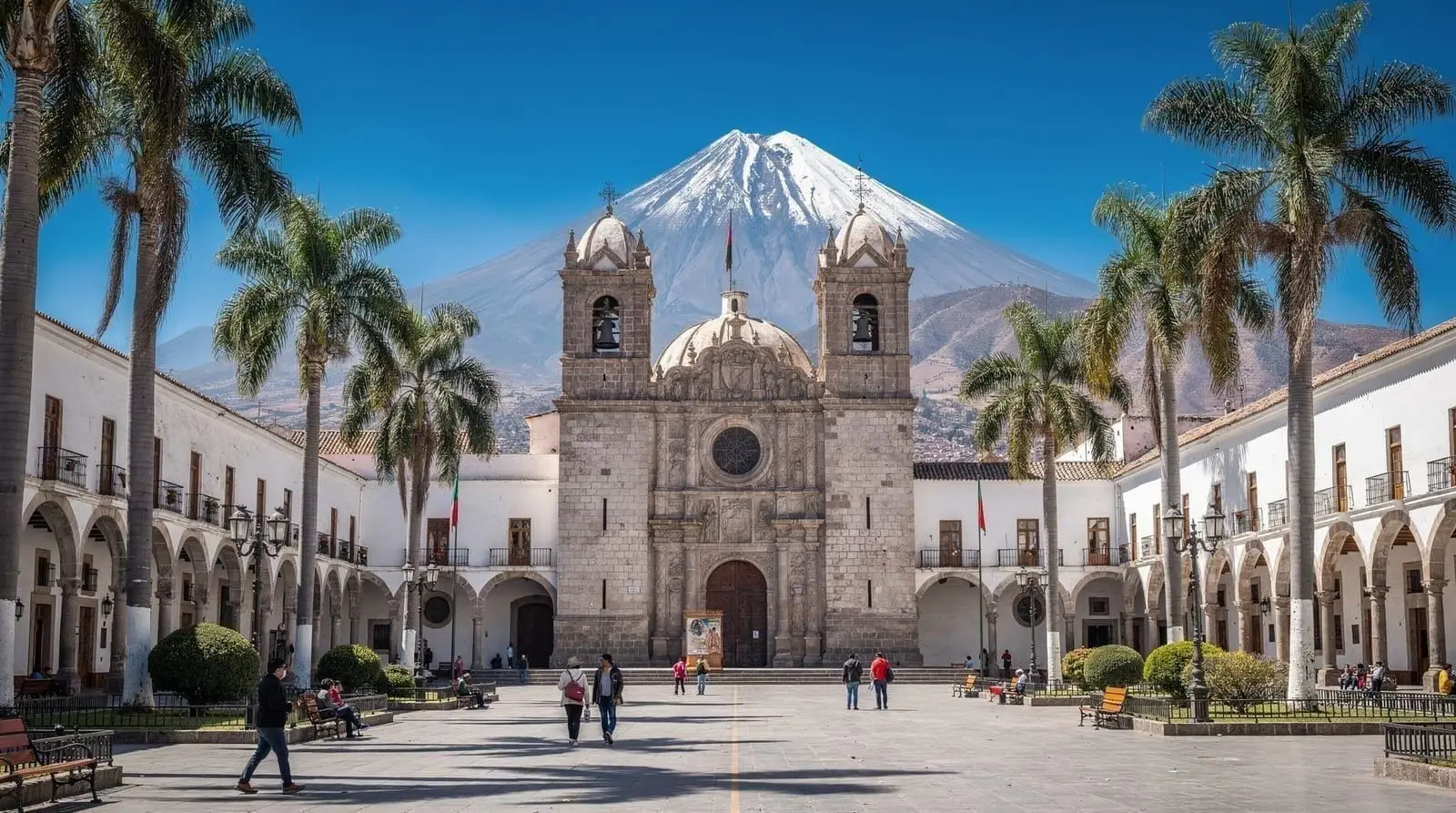
- The historic centre and Plaza de Armas, widely considered Peru’s finest colonial square, framed by the volcano El Misti.
- The Santa Catalina Monastery, a vast 16th-century convent that is a walled city in miniature, painted in ochre and blue — one of the most striking single sights in Peru.
- The mummy “Juanita,” the remarkably preserved Inca ice maiden, in the Museo Santuarios Andinos.
- The Colca Canyon, two of the deepest canyon gorges on Earth, famous for Andean condors riding the morning thermals at the Cruz del Cóndor.
Arequipa’s signature outing is the canyon. A multi-day trip handles the altitude and early-morning condor timing far better than a rushed day trip; the 2-day classic Colca Canyon tour from Arequipa covers the condor viewpoint, the canyon-rim villages, and the thermal baths over two days, which is the realistic minimum to do it justice.
Food: a closer contest than you’d think
Both cities eat well, but they have different strengths.
Cusco leans Andean and novoandina: cuy (roast guinea pig), alpaca steak, quinoa, and an excellent cheap menú scene a block off the plaza. The balcony restaurants on the square are a tourist trap (see the Cusco tourist traps guide), but the real food a short walk away is very good.
Arequipa, by contrast, has a serious regional culinary identity and is arguably the better eating city overall. Its picanterías — traditional regional kitchens — serve dishes you find nowhere else: rocoto relleno (stuffed spicy peppers), chupe de camarones (river-prawn chowder), adobo, and ocopa. Arequipeños are proud, sometimes fiercely, of their cuisine, and the city’s food scene is less tourist-warped and better value than Cusco’s core. If food is a major part of your trip, Arequipa quietly wins.
Weather, crowds, and feel
Weather. Both follow the Andean dry/wet pattern, but Arequipa is markedly sunnier and milder year-round thanks to its lower elevation and desert setting — it is one of the sunniest cities in Peru, with warm days and cool but not bitter nights. Cusco’s dry-season nights can drop near freezing. The wet season (roughly November–March) brings afternoon rain to both, heavier in Cusco.
Crowds. Cusco is one of South America’s most-visited cities and its historic core can feel saturated, especially in peak season and around Inti Raymi in late June. Arequipa receives far fewer foreign tourists and feels like a working Peruvian city that happens to be beautiful, not a city reshaped around visitors.
Feel. Cusco is intense, atmospheric, and slightly hard-edged in its tourist zones. Arequipa is graceful, relaxed, and more livable — many travellers are surprised to find they prefer the time they spend in Arequipa even if Cusco’s sights are bigger.
Cost: Arequipa edges it
Neither city is expensive by global standards, but Arequipa is generally a little cheaper and feels better value, with restaurant and accommodation prices less inflated by tourist demand. Cusco’s historic core carries a premium driven by sheer volume — though the cheap menú lunch holds in both. For day trips, Cusco’s Machu Picchu package is a major one-off cost with no Arequipa equivalent; Arequipa’s Colca trips are comparatively affordable. Across a trip, expect Arequipa to stretch your soles a touch further.
Day trips: two very different orbits
A city is partly defined by what surrounds it, and here the two diverge sharply.
From Cusco, the day-trip and multi-day orbit is the richest in Peru: the Sacred Valley, Machu Picchu, Rainbow Mountain (Vinicunca), Humantay Lake, Maras and Moray, and the trailheads for the Inca Trail and Salkantay treks. You could spend two weeks based in and around Cusco and not exhaust it. This density of world-class excursions is the single strongest argument for giving Cusco more days.
From Arequipa, the orbit is narrower but anchored by one genuinely major attraction: the Colca Canyon. Beyond Colca there are lesser options — the Salinas lagoon, the Sumbay caves, and shorter outings around the city’s volcanoes — but Colca is the headline, and it is a worthy one. The condor viewing at the Cruz del Cóndor is a highlight of southern Peru in its own right. A two-day canyon trip is the standard way to experience it; the full-day Colca Canyon tour from Arequipa is the compressed alternative for travellers genuinely short on time, though it makes for a very long day and a rushed condor stop.
The contrast is instructive: Cusco’s surroundings reward a long stay; Arequipa’s reward a focused two-to-four-night visit. That asymmetry is exactly why the two cities pair so well rather than competing.
Logistics and getting between them
Practical realities also shape the decision:
- Arriving: Both cities have airports with frequent connections to Lima. Cusco’s is 10 minutes from the centre; Arequipa’s a short drive out. Cusco is the more common first stop for Machu Picchu-focused trips.
- Between the two: an overnight bus (10–11 hours, saves a hotel night) or an occasional direct flight that more often routes inconveniently through Lima. The full breakdown is in the Cusco to Arequipa transport guide.
- Onward: Both connect to Puno and Lake Titicaca — Cusco via the Route of the Sun, Arequipa via Colca trips that end in Puno — so either can slot Titicaca into a wider loop.
None of these logistics strongly favours one city; they simply confirm that combining both is straightforward.
The verdict: which, and in what order
If you can only do one:
- Choose Cusco if Machu Picchu, Inca history, and Andean trekking are your priorities — it offers far more and is, for most first-time Peru travellers, unmissable.
- Choose Arequipa if you want a gentler, lower-altitude, less touristy experience with beautiful colonial architecture, the best regional food in Peru, and the Colca Canyon — and you are willing to skip Machu Picchu (a big sacrifice).
For most people, Cusco wins the “only one” contest simply because of Machu Picchu. But the honest truth is that choosing one means missing a lot.
If you can do both (recommended): The smart sequencing uses Arequipa as the altitude buffer. A common, well-paced route:
- Arequipa first (2–4 nights) — ease into altitude at 2,335 m, see the city and the Colca Canyon.
- Cusco next (4–7 nights) — now better adjusted, tackle the city, Sacred Valley, and Machu Picchu.
- Optionally weave in Puno and Lake Titicaca between the two.
The two cities are linked by an overnight bus or occasional flight — the practicalities are in the Cusco to Arequipa transport guide. For how the whole southern circuit fits together, the destination pages for Cusco and Arequipa are the starting points.
Side-by-side: the quick scorecard
For travellers who want the comparison distilled, here is how the two cities stack up across the factors that matter most:
- Altitude: Arequipa wins — 2,335 m versus Cusco’s 3,400 m, a meaningfully easier place to breathe and sleep.
- Headline sights: Cusco wins decisively — Machu Picchu, the Sacred Valley, and the densest cluster of Inca sites in Peru.
- Architecture and city beauty: roughly even, but different — Cusco’s Inca-on-colonial layering versus Arequipa’s elegant white sillar colonial centre and Santa Catalina monastery.
- Food: Arequipa edges it, on the strength of its picantería tradition and better value.
- Weather: Arequipa is sunnier and milder year-round; Cusco’s dry-season nights are bitterly cold.
- Crowds: Arequipa is far quieter and feels like a living Peruvian city; Cusco’s core is saturated in peak season.
- Cost and value: Arequipa is a touch cheaper and less tourist-inflated.
- Day trips: Cusco wins on variety and quantity; Arequipa relies on the Colca Canyon, which is excellent but singular.
- Adventure and trekking: Cusco wins — the Inca Trail, Salkantay, and high-altitude hikes have no Arequipa equivalent.
Read the scorecard and the pattern is clear: Cusco wins on the big-ticket sights and adventure that draw people to Peru in the first place, while Arequipa wins on liveability, ease, food, and calm. Neither sweeps the board, which is precisely why combining them gives you the best of southern Peru rather than a compromise.
A planning thought for first-timers
If this is your first trip to Peru, do not agonise over the choice — the answer for most first-timers is both, with Cusco taking the larger share of days because of Machu Picchu and Arequipa serving as the lower-altitude bookend. The genuine “only one” decision arises mainly for return visitors, very short trips, or travellers who have specifically decided to skip Machu Picchu. For everyone else, the question is not “which city” but “how many days each and in what order” — and the Cusco trip planning 2026 guide handles the Cusco side of that in detail, while the Arequipa destination page covers the city you will likely pair it with.
Practicalities compared: money, connectivity, safety
A few everyday details separate the two cities beyond the headline factors. Cash and cards: both cities have plentiful ATMs and decent restaurant card acceptance, but Cusco’s markets and small tour operators lean more cash-only, simply from higher tourist foot traffic. Connectivity: both have solid urban wifi and mobile coverage from Claro and Movistar; Cusco’s coverage thins out faster once you head into the Sacred Valley or up toward Rainbow Mountain, while Arequipa’s connectivity holds up better around the city itself, thinning mainly inside the Colca Canyon.
Safety in both cities is broadly similar for a Peruvian tourist centre: petty theft and scams around the main squares and bus terminals are the real risk, not violent crime. Cusco, with vastly more foreign visitors, sees a higher volume of tourist-targeted scams — fake tour sellers, inflated taxi fares, counterfeit Machu Picchu tickets (see the fake Machu Picchu tickets guide) — simply because there are more marks. Arequipa’s lower tourist density means fewer opportunistic schemes, though the usual big-city precautions still apply in both.
A worked two-city sample plan
To make the sequencing concrete, here is how a 12-night southern Peru trip built around both cities might run: nights 1–3 in Arequipa (city, Santa Catalina Monastery, a day easing into the altitude); nights 4–5 on the Colca Canyon 2-day trip; nights 6–11 in Cusco (acclimatisation day, city tour, Sacred Valley day, Machu Picchu overnight in Aguas Calientes, a buffer day for Rainbow Mountain or a cooking class); night 12 flying home from Cusco or looping back through Lima. This order banks the easier altitude first and saves the harder Cusco-region exertions for once your body has adjusted — exactly the sequencing logic the Cusco trip planning 2026 guide recommends in more depth.