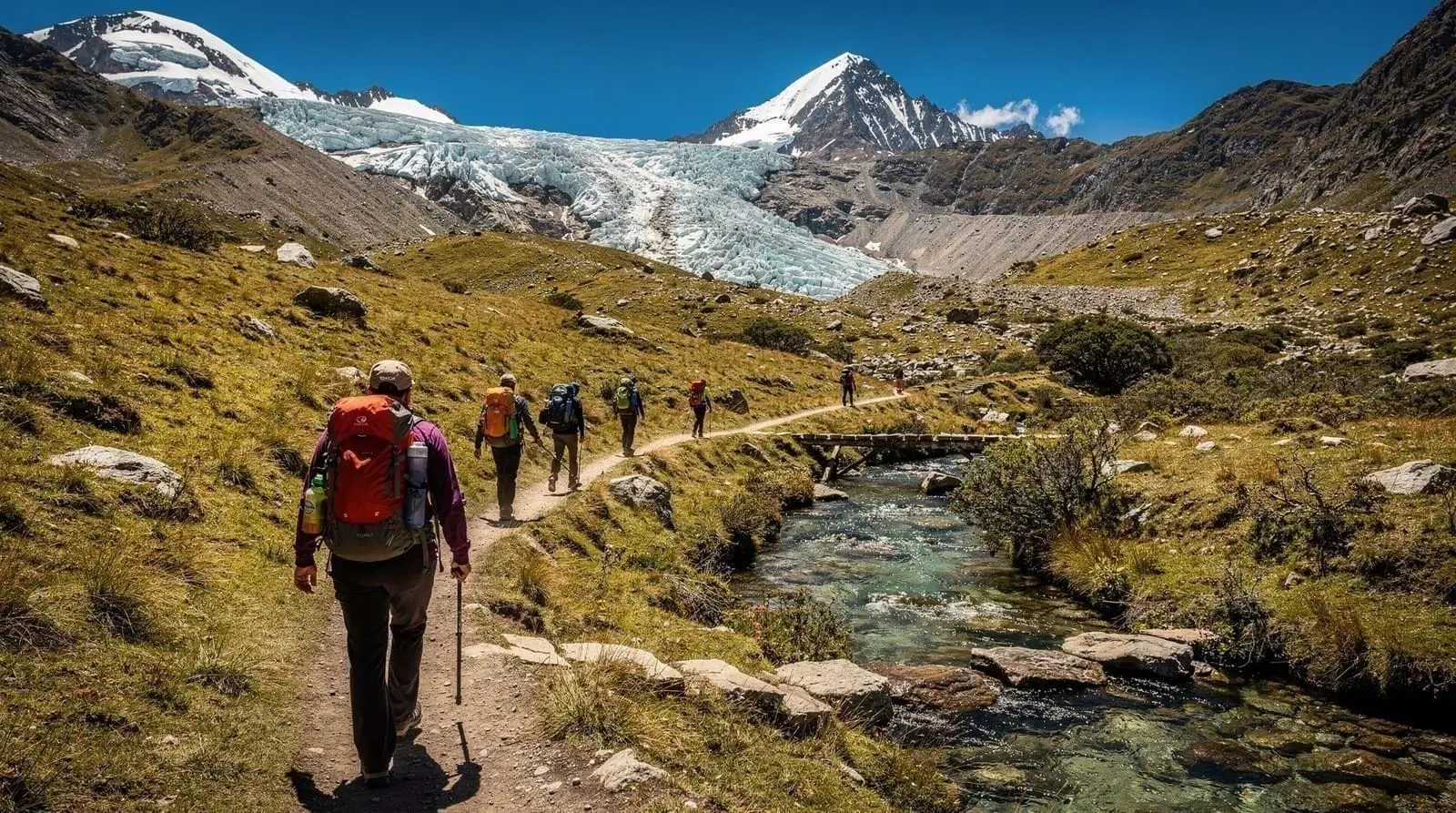
Laguna 69 day hike tips: pacing, packing, and timing
From Huaraz: Full-Day Laguna 69 in Cordillera Blanca
What is the single most important tip for Laguna 69?
Go slow from the very first flat kilometre. The biggest mistake is charging the easy valley floor, arriving at the first steep section already tired, and then struggling at altitude. A steady, almost frustratingly slow pace from the start gets more people to the lake than raw fitness does.
Tips from people who have watched the trail break the unprepared
The Laguna 69 complete guide covers the what and the why of this hike: where it is, the costs, the altitude problem. This page is narrower and more practical. It is the collected, hard-won advice on how to actually have a good day on the trail rather than a survival exercise. Most of it comes down to pacing, packing, and timing, three things entirely within your control and routinely got wrong.
| Where | Cebollapampa trailhead, upper Llanganuco valley |
| Cost | S/10-20/day to rent poles or a shell in Huaraz |
| Time needed | 3-3.5hrs up, 2-2.5hrs down, 30-45min at the lake |
| Getting there | tour van, on the trail by ~9-9:30am |
| Best time | dry season weekday, arriving at the lake late morning |
The trail to Laguna 69 is not technically difficult. It is a marked path with no scrambling, no exposure, and no route-finding once you are on it. What defeats people is the combination of altitude, a deceptive profile, and the very human tendency to walk too fast at the start. Get those three things right and a well-acclimatised, reasonably fit adult will stand at the lake feeling tired but fine. Get them wrong and the same person turns back at the marshy plateau, convinced the hike was beyond them. It usually was not.
Pacing: the tip that matters more than any gear
If you take one thing from this page, take this: go slow from the very first step, especially on the flat. The trail from Cebollapampa opens with a nearly level kilometre or two across the valley floor, past grazing cattle and a stream. It feels easy because, at this point, it is. The mistake almost everyone makes is to stride out across this section at a normal walking pace, burning energy and oxygen they will desperately want an hour later. By the time the first steep switchbacks begin, the fast starters are already labouring.
The mountaineer’s rule applies: walk at a pace you could sustain while holding a conversation. If you are too breathless to talk in short sentences, you are going too fast. On the steep sections, the “rest step”, planting your foot and briefly locking the rear leg straight to take weight off the muscles, lets you keep moving without stopping every twenty metres. Slow and continuous beats fast and gasping every time. The people who reach the lake comfortably are almost never the fittest in the group; they are the ones who paced it.
Timing your day to beat the crowds and catch the light
The standard tour rhythm is fixed by physics and traffic: vans leave Huaraz between 5 and 6 am, drive three to three-and-a-half hours, and put you on the trail around 9 to 9:30 am. You cannot easily change the start, but you can decide how to use it. The first hikers off the vans get a quieter ascent and reach the lake before the midday convergence, when dozens of groups arrive at once and the small shoreline gets genuinely crowded.
So once you are walking, be near the front rather than the back. The light, conveniently, cooperates: the lake’s turquoise is most vivid from late morning to early afternoon, when the sun climbs high enough to reach into the cirque. If you push to arrive around 11:30 am to noon, you get good colour and a head start on the descent before the worst of the crowd. The downside of a weekend in July or August is that “the front” still means sharing the trail with hundreds of people. A weekday in May, June, or September is markedly quieter for the same effort. For broader seasonal planning, see the best time to visit Peru guide.
The packing list that actually gets used
Forget the maximalist gear lists. Here is what earns its place in the pack for a single day.
Layers, and a windproof shell above all. The temperature swings wildly: it can be warm enough for a t-shirt in the valley and near-freezing with wind at the lake within the same hour. A light insulating mid-layer plus a windproof, ideally waterproof, shell covers nearly every scenario. Add a warm hat and thin gloves, because the lake itself is exposed and cold.
Sun protection, taken seriously. UV at 4,600 m is brutal even when the air feels cold and the sky is hazy. High-factor sunscreen, sunglasses, and a brimmed hat or cap are not optional. Sunburn at this altitude happens fast and ruins the rest of your Huaraz trip.
At least two litres of water, plus snacks. There is no reliable water source on the trail, so carry it all. Pack high-energy snacks you will actually eat at altitude, where appetite drops: nuts, dried fruit, chocolate, and a sandwich from the Yungay stop.
Sturdy footwear with grip. The descent is dusty and loose, and worn-out soles slip. Proper hiking shoes or boots make the downhill far more comfortable and safer.
Trekking poles and cash. Poles spare your knees on the way down and steady you on the loose ground. Carry cash for the S/30 Huascarán National Park fee in case your operator does not cover it, and a little extra for snacks at the trailhead.
If you do not own poles or a decent shell, rent them in Huaraz around Jirón Luzuriaga before you go, but inspect rented gear carefully. For the full kit logic and costs, the Laguna 69 complete guide lays it out alongside the tour pricing.
Choosing a tour that does not rush you
Most people reach the trailhead on a group van, and not all vans are equal. The cheapest tours sometimes cram too many people in and run a tight schedule that strands slower hikers, since the driver wants everyone back for the return drive. Before booking, ask two questions: how big is the group, and how long do we get on the mountain? An operator that gives you five to six hours on the trail and keeps groups reasonable is worth a few extra soles over the rock-bottom option.
Full-day Laguna 69 tour from HuarazIf you simply want to see the lake without the full hike, or you are short on acclimatisation, some operators run a shorter trek option. The views are lesser, but it is an honest choice for travellers who know they are not ready for the full 4,600 m climb.
Shorter guided Laguna 69 trek optionReading the trail: a section-by-section briefing
Knowing what is coming removes a surprising amount of the trail’s psychological difficulty, so here is the honest breakdown of what you will actually walk. From Cebollapampa the path starts across the flat valley floor, an easy warm-up of a kilometre or two through meadow with cattle and a stream. Resist the temptation to push the pace here; this is where you bank energy, not spend it.
The trail then begins to climb the valley headwall in the first sustained ascent, a set of switchbacks that take most people around 45 minutes to an hour. This is the first real test of your pacing discipline. At the top you emerge onto a flat, marshy shelf, often boggy underfoot, with a small turquoise pond. This is the great false summit of Laguna 69: every season, tired hikers reach this pond, mistake it for the destination, photograph it, and turn back, missing the actual lake entirely. Do not be one of them. The pond is pretty, but the real Laguna 69 is one more climb above you.
That final climb is the hardest part, a steeper grind up the last headwall where the altitude bites hardest and your pace slows to a shuffle. Then, almost abruptly, you crest a rise and the lake appears, the full turquoise sweep below the Chacraraju glaciers. The whole ascent runs roughly three to three-and-a-half hours for a well-acclimatised, steady walker; faster if you are fit and adapted, considerably slower if you are struggling with the height. The descent retraces the same route and takes two to two-and-a-half hours, easier on the lungs but harder on the knees over the loose, dusty ground.
Photography and making the most of your time at the lake
Most tours allow only 30 to 45 minutes at the lake before the guide starts pushing everyone back down to meet the van’s return schedule. That is not long, so have a plan. The classic shot is from the lake’s outflow looking across the water to the glacier and the hanging ice on Chacraraju behind it; the colour is most saturated when the sun is high enough to light the water directly, roughly late morning to early afternoon. A polarising filter, or the equivalent setting on a phone, cuts the surface glare and deepens the turquoise noticeably.
Beyond the photo, the smartest use of your limited time is simply to sit, eat, drink, and let your heart rate settle before the descent; the lakeshore is exposed and cold, so put on your warm layer the moment you stop moving or you will chill fast. Resist the urge to scramble around the shoreline looking for a better angle, both because the fragile margin is showing wear from foot traffic and because the clock is against you.
If solitude matters more than anything, the only real lever is timing: a weekday outside the July-August peak, with an early start, is the difference between a crowded shoreline and a near-private one. For the broader seasonal trade-offs, the Laguna 69 complete guide lays out the month-by-month picture.
Mistakes that ruin people’s day
A short catalogue of the avoidable ones. Doing the hike too soon after arriving, the cardinal sin, covered exhaustively in the acclimatisation guide. Walking too fast at the start and bonking on the climb. Underpacking on warm layers and freezing at the lake, or forgetting sun protection and burning. Turning back at the marshy plateau with its small pond, mistaking it for the destination when the real lake is one more climb above. Carrying too little water. And drinking alcohol the night before, which sabotages both sleep and acclimatisation.
The flip side is encouraging: none of these mistakes require special skill to avoid. They require restraint, a sensible pack, and a realistic respect for the altitude. Travellers who manage those three things almost always make it, enjoy it, and rate it among the best days of their Peru trip.
Hydration, food, and managing your body at altitude
Beyond pacing, the small physiological details decide whether you feel decent or wretched on the trail. Hydration is the big one. At altitude your body loses water faster than usual, through harder breathing in dry air and increased urination as you acclimatise, and dehydration both worsens altitude symptoms and saps your energy. Carry at least two litres and sip steadily rather than gulping at rest stops; by the time you feel thirsty at 4,500 m you are already behind. Some hikers add electrolyte tablets to one bottle, which helps replace the salts lost through exertion and keeps you drinking.
Food is the other lever, and it works against you a little because altitude blunts appetite. You may not feel like eating, but your body is burning hard, so eat anyway: little and often, favouring easily digestible carbohydrates like dried fruit, biscuits, energy bars, and a sandwich. Heavy, greasy food sits badly at altitude, so save that for the celebration meal back in Huaraz. Avoid alcohol entirely the night before, since it disrupts sleep and acclimatisation, and go easy on caffeine, which is mildly dehydrating. Coca leaves or coca tea, ubiquitous in the highlands, are a mild traditional stimulant that many hikers find genuinely helpful for energy and altitude comfort, and they are entirely legal and normal in Peru.
Finally, manage your temperature actively. The single biggest comfort mistake on the trail, after pacing, is letting yourself get sweaty on the climb and then chilled at rest. Shed layers before you start sweating heavily on the ascent, and add them back the instant you stop. At the lake, where you will be sitting still in cold exposed air, put your warm layer on immediately. Small adjustments like these, made constantly, keep you comfortable across the wild temperature swings of a single Laguna 69 day.
After the hike: recovery and what is next
Back in Huaraz, your body will appreciate rest, water, and an early night, especially if you have more high days planned. Laguna 69 is often a stepping stone rather than an endpoint: many hikers use it as a warm-up for the multi-day Santa Cruz trek through the same valley, or follow it with the Pastoruri Glacier at over 5,000 m or the quieter Laguna Parón above Caraz, covered in the Laguna Parón guide.
For how the lake fits into a wider Cordillera Blanca plan, see the Huaraz complete guide and the Llanganuco Lakes guide. To slot Huaraz into a country-wide route, the 2-week Peru itinerary and the tours hub are the places to start.
If your first attempt didn’t work out
Not everyone reaches the lake on their first try, and that is a fixable outcome, not a failure of character. If you turned back at the marshy plateau or bailed early on a bad acclimatisation day, the fix is usually one or two more nights in Huaraz plus a gentler warm-up hike — the Huaraz acclimatisation guide has the specific protocol. Some hikers simply pick a lower-effort target instead: the Llanganuco Lakes require almost no climbing, and Laguna Parón is reachable largely by vehicle. Neither is a downgrade so much as a different, gentler version of the same glacial-lake experience.
Frequently asked questions about Laguna 69 day hike tips: pacing, packing, and timing
What time should I start the Laguna 69 hike?
How fit do I need to be for Laguna 69?
Do I need trekking poles for Laguna 69?
What should I eat before and during the hike?
Can I do Laguna 69 without a tour?
What if I start feeling altitude sick on the trail?
What should I do if I don't reach the lake on my first attempt?
Top experiences
Bookable activities with verified prices and instant confirmation on GetYourGuide.
