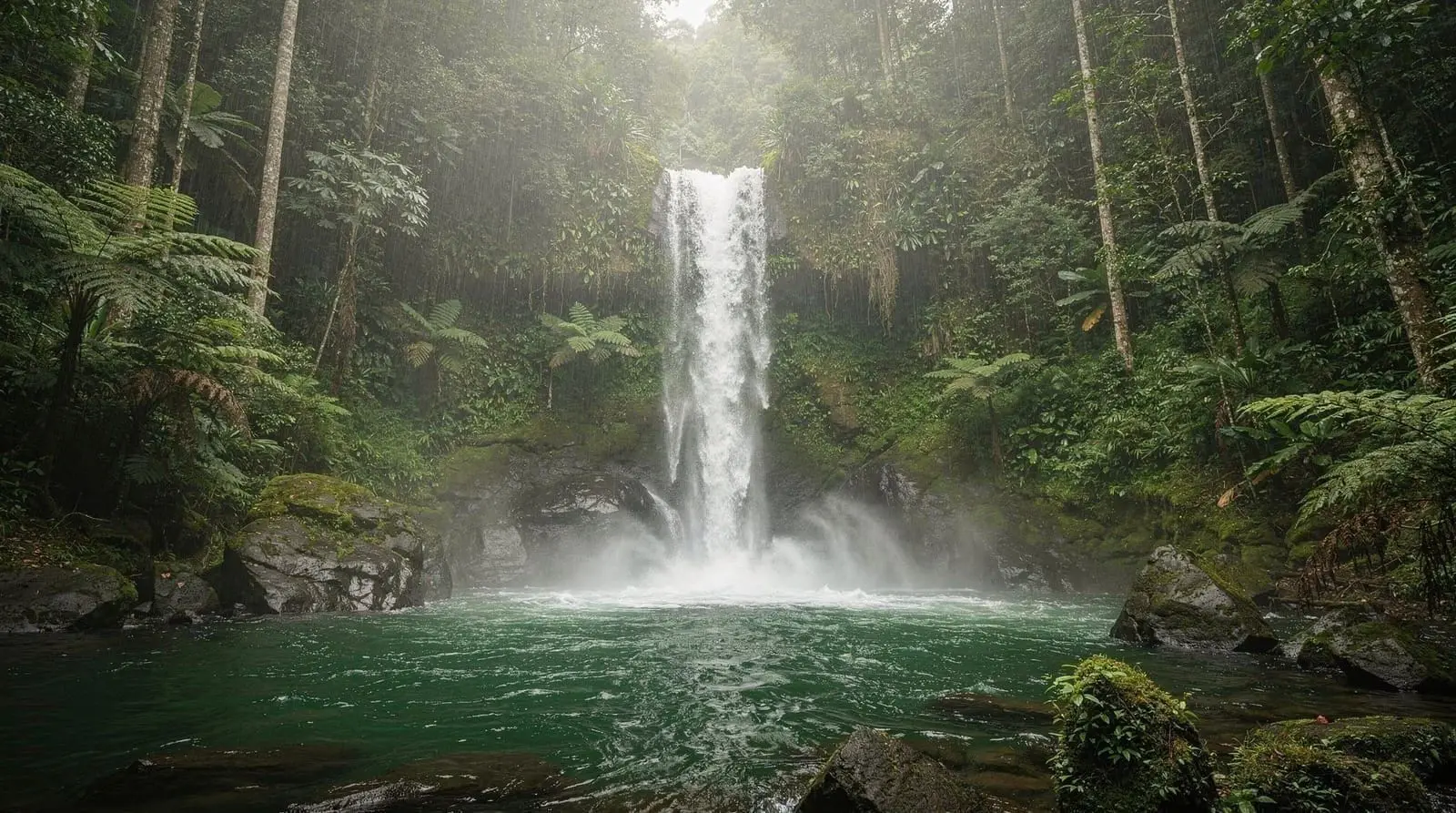
Tarapoto
Tarapoto is Peru's accessible high-jungle town — waterfalls, the Alto Mayo cloud forest, lagoons, and a coffee and cacao scene, an hour's flight from Lima.
Quick facts
- Country
- Peru (San Martín region)
- Altitude
- 356 m (1,168 ft)
- Currency
- Peruvian sol (S/)
- Best for
- Waterfalls, Alto Mayo cloud forest, coffee and cacao, lagoons
Peru’s accessible high jungle
Tarapoto is the Amazon for people who want the jungle’s warmth and green without the full commitment of a lodge expedition. Set in the San Martín region at the eastern foot of the Andes, it is selva alta — high jungle, or cloud-forest fringe — rather than the deep lowland rainforest of Iquitos or Tambopata. At around 356 metres it is hot and humid but not oppressively so, and crucially it is easy to reach: roughly a one-hour flight from Lima, with several daily services, plus road connections that have opened the region up over the past two decades.
That accessibility, combined with waterfalls, lagoons, a pleasant climate, and a fast-growing coffee and cacao culture, has made Tarapoto one of Peru’s most popular domestic getaways. International visitors are fewer, which is part of its charm — this is a place where you share the natural pools more with Peruvian families than with tour groups. It is also the gateway to the Alto Mayo Protected Forest, a cloud-forest reserve that has become a notable birdwatching and conservation destination. Tarapoto will not deliver the wilderness drama of the great Amazon reserves, but as a relaxed, affordable, genuinely jungle-flavoured stop, it has a lot going for it.
| Where | San Martín region, high jungle at the Andes’ foot |
| Cost | Flight from Lima around $50-110 one-way |
| Time needed | 2 to 4 days |
| Getting there | ~1hr15 flight from Lima, or overland via Moyobamba |
| Best time | May to September (drier, easier trail access) |
Getting to Tarapoto
By air from Lima is how most visitors arrive. LATAM and Sky Airline fly the route in about an hour and a quarter, with fares that, booked ahead, can be very reasonable — often in the $50–110 USD range one-way, sometimes less on promotions. Tarapoto’s Cadete FAP Guillermo del Castillo Paredes Airport is close to the centre; a taxi or mototaxi into town costs only a few soles.
By road Tarapoto is connected to the northern Peruvian network. From the coast, the route via Moyobamba and the Alto Mayo valley climbs from Chiclayo and Tarapoto’s western neighbours; the dramatic Fernando Belaúnde Terry highway links the high jungle to the rest of the north. Buses run from Lima (a very long haul of 24-plus hours) and, more usefully for travellers, between Tarapoto and northern hubs. A particularly scenic and popular overland link runs west toward Moyobamba and on toward the Chachapoyas region and the great fortress of Kuélap, making Tarapoto a natural anchor for a northern-Peru loop combining high jungle and cloud-forest archaeology.
The waterfalls
Tarapoto’s headline attractions are its waterfalls, and there are enough to fill several days.
Catarata de Ahuashiyacu is the most famous and the easiest, about 14 km from town on the road toward Yurimaguas. A short walk from the road leads to a 40-metre fall plunging into a pool you can swim in. It is the busiest of the falls, especially on weekends, but deservedly popular and an easy half-day outing.
Cataratas de Huacamaillo, near the village of San Antonio de Cumbaza, require more effort — a hike of a couple of hours involving several river crossings — which keeps the crowds thinner and rewards you with a beautiful multi-tier fall and pools. Sturdy footwear and a willingness to get wet are essential.
Other falls, including the Cataratas de Pucayaquillo and various smaller cascades around the region, can be added depending on time and energy. A clear-eyed note: in the wet season the trails to the harder falls turn muddy and river crossings can become dangerous after heavy rain, so check conditions locally and do not attempt the hiking falls alone in poor weather.
Alto Mayo, lagoons, and the wider region
Beyond the waterfalls, Tarapoto opens onto a varied region worth exploring.
Laguna Azul, near the town of Sauce, is a large lake about an hour and a half from Tarapoto (including a short vehicle ferry across the Huallaga River). It is a popular spot for swimming, kayaking, and overnight stays at lakeside lodges, and it makes a relaxed day trip or overnight escape. Lamas, a hill town about 45 minutes from Tarapoto, is home to the Kichwa-Lamista Indigenous community and a quirky castle, offering a cultural counterpoint to the natural attractions.
Further afield, the Alto Mayo Protected Forest, west toward Moyobamba and Rioja, is a cloud-forest reserve that has gained real international standing among birdwatchers. The reserve and its surrounding conservation projects protect a remarkable diversity of birds — hundreds of species including spectacular hummingbirds and the area’s celebrated owlet and antpittas — and several lodges and feeding stations cater specifically to birders. For anyone with an ornithological bent, the Alto Mayo is reason enough to base in or near Tarapoto.
Coffee and cacao
The San Martín region has transformed itself over recent decades, and one of the most positive threads of that story is the rise of specialty coffee and cacao. Areas that were once associated with coca cultivation have, through substantial alternative-development efforts, shifted toward high-quality coffee and cacao production, and the results now appear on international markets and increasingly in Tarapoto’s own cafés.
Visitors can tour cacao and chocolate operations and coffee farms in the surrounding hills, learning how the beans are grown, fermented, dried, and processed, and tasting the results. Several cooperatives and private farms run visits, and a handful of cafés and chocolate shops in town showcase regional product. It is a low-key, genuinely interesting half-day for travellers curious about where their coffee and chocolate come from, and a way to support the region’s shift toward sustainable agriculture. Ask at your accommodation or a reputable local agency for current farm-visit options, as offerings change.
A realistic half-day plan combines a farm or cooperative visit in the morning, when the light is best for photos and the heat hasn’t peaked, with an afternoon back in town at one of the specialty cafés tasting the finished product side by side with a standard commercial brew — the difference is usually obvious even to a casual coffee drinker. Some farms also grow and process cacao into drinking chocolate on-site, which is worth trying warm rather than only as a bar.
When to visit Tarapoto
Tarapoto is hot and humid year-round, with a wetter and a drier phase rather than a stark dry season. The drier months, roughly May to September, are the easier window: roads and waterfall trails are in better shape, river crossings to the harder falls are safer, and outdoor activities are more reliable. The wetter months, roughly October to April, bring heavier rain, muddier trails, and occasionally disrupted roads, though the forest is lush and the falls run full. Rain can come in any month — this is the jungle — so pack a rain layer regardless.
On health, Tarapoto sits at the gentler end of Amazon precautions but is still in a tropical region. A yellow fever vaccination is recommended for travel to Peru’s jungle regions, including San Martín — get it at least 10 days ahead and carry the certificate. Dengue is present in the region and has seen outbreaks, so mosquito-bite avoidance with repellent and covering up at dawn and dusk is sensible. Malaria risk in the immediate Tarapoto area is generally lower than in the deep lowlands, but discuss your specific itinerary with a travel-health doctor if you plan to venture further into the jungle.
Where Tarapoto fits in a Peru trip
Tarapoto is best understood as either a short, relaxed jungle break on its own — an easy flight from Lima for a long weekend of waterfalls and lagoons — or as part of a northern Peru circuit. Its road links west toward Moyobamba make it a logical anchor for a loop taking in the Chachapoyas cloud-forest country and the towering fortress of Kuélap, combining high jungle, birdlife, and pre-Inca archaeology in one northern journey.
It is not a substitute for a deep-Amazon experience: travellers who want true lowland rainforest with serious wildlife should look to Iquitos in the north or Tambopata in the south. But for accessibility, value, and a gentle introduction to Peru’s jungle, Tarapoto holds its own. For routing ideas that combine the high jungle with the rest of the country, see the itineraries section, and for flights and planning, the tools page. The northern Peru 10-day itinerary is a concrete example that folds Tarapoto into a loop with Chachapoyas and the north coast.
Where to stay and eat
Tarapoto’s accommodation ranges from simple budget guesthouses in the centre (from around S/40-60 a night) to comfortable mid-range hotels with pools, which matter here given the heat and humidity — a place to cool off after a waterfall hike is worth paying a little extra for. A handful of jungle-lodge-style properties sit on the edge of town amid gardens, a quieter option if you don’t need to be central.
On food, the regional specialty is juane (rice and chicken wrapped in bijao leaves, traditionally eaten around the San Juan festival in June), alongside jungle fish like doncella and paiche, and the growing crop of specialty coffee shops serving beans grown in the surrounding hills. The Peruvian food guide covers regional dishes like these alongside the more familiar coastal and Andean cooking.
Extending north: Chachapoyas and the Gocta waterfall
Tarapoto’s most rewarding onward journey is west and north toward Moyobamba and into the Chachapoyas cloud-forest region — a route few travellers doing only the “Cusco and coast” circuit ever see. That road eventually reaches Gocta, one of the tallest waterfalls in the world, and the pre-Inca cloud-forest fortress covered in the Kuélap page.
The how to get to Chachapoyas guide breaks down the road and flight options from Tarapoto and elsewhere, and the Gocta waterfall guide covers logistics for that specific site. For travellers deciding whether a northern loop is worth the extra days versus staying in the well-trodden south, the north vs south Peru guide lays out the trade-offs plainly, and the Peru domestic flights guide covers how the connecting flights within the north actually work.
Frequently asked questions about Tarapoto
How do I get to Tarapoto?
Most visitors fly from Lima, a flight of about an hour and a quarter with several daily services and often inexpensive fares booked ahead. Tarapoto is also connected by road to northern Peru, with a scenic and popular overland route west toward Moyobamba, Chachapoyas, and the Gocta waterfall region. The bus from Lima is a very long haul, so flying is the practical choice for most travellers.
Is Tarapoto a “real” Amazon experience?
Tarapoto is high jungle (selva alta) at the foot of the Andes rather than deep lowland rainforest, so it offers a gentler, more accessible taste of the jungle — waterfalls, lagoons, cloud-forest birdlife, and a warm green setting — rather than the wilderness wildlife of the great reserves. For true lowland rainforest with serious wildlife, look to Iquitos in the north or Tambopata in the south. Tarapoto is excellent for an easy, affordable jungle break.
What are the best waterfalls near Tarapoto?
The most popular and easiest is Catarata de Ahuashiyacu, about 14 km from town, a 40-metre fall with a swimming pool reached by a short walk. For a quieter, more adventurous outing, the Cataratas de Huacamaillo require a two-hour hike with river crossings and reward you with a multi-tier fall. In the wet season, check trail conditions locally, as river crossings can become dangerous after heavy rain.
When is the best time to visit Tarapoto?
The drier months, roughly May to September, are easier for roads, waterfall trails, and river crossings. The wetter months, October to April, bring heavier rain and muddier trails but a lush, full-flowing landscape. Tarapoto is hot and humid year-round, and rain can fall in any month, so always pack a rain layer regardless of when you visit.
Can I visit coffee and cacao farms near Tarapoto?
Yes. The San Martín region has developed a strong specialty coffee and cacao scene, and several cooperatives and private farms in the surrounding hills offer visits where you can see how the beans are grown and processed and taste the results. A handful of cafés and chocolate shops in town also showcase regional product. Ask your accommodation or a reputable local agency for current farm-visit options.
Do I need a yellow fever vaccination for Tarapoto?
A yellow fever vaccination is recommended for travel to Peru’s jungle regions, including San Martín. Get it at least 10 days before travel and carry the international vaccination certificate. Dengue is present in the region, so use repellent and cover up at dawn and dusk. Malaria risk in the immediate Tarapoto area is generally lower than in the deep lowlands, but discuss your plans with a travel-health doctor if venturing further.
What is there to do around Tarapoto besides waterfalls?
Beyond the waterfalls, you can visit Laguna Azul near Sauce for swimming and kayaking, the hill town of Lamas with its Kichwa-Lamista community and quirky castle, and the Alto Mayo Protected Forest, a cloud-forest reserve renowned among birdwatchers for its hummingbirds and rare species. Coffee and cacao farm tours round out a varied few days in the region.