Inti Raymi diary: the day Cusco stopped to face the sun
Waking up to drums
I had not planned my trip around Inti Raymi. I came to Cusco for Machu Picchu and the Sacred Valley, and the Festival of the Sun was a happy accident of timing — I happened to be in town on 24 June, the southern winter solstice. By the time I figured out what was happening, the whole city had been preparing for weeks and I was scrambling to catch up.
What woke me that morning was a brass band somewhere below my window in San Blas, the cobbled neighbourhood uphill from the Plaza de Armas. It was barely seven and already the streets were filling. I want to write this down honestly, the good and the frustrating, because most of what I read beforehand was either breathless (“a once-in-a-lifetime spectacle!”) or a dry list of stage times. The truth sits somewhere in between.
| Date | 24 June every year (winter solstice) |
| Free viewing | Qorikancha (early morning), Plaza de Armas (mid-morning) |
| Paid seating | Sacsayhuamán grandstand, roughly USD 80–200+ |
| Book hotels | Months ahead, expect 30–50% price premium |
| Best free spot | Hillsides above Sacsayhuamán esplanade |
What Inti Raymi actually is
For anyone who, like me, arrived under-prepared: Inti Raymi is a re-enactment of an Inca winter-solstice ceremony honouring Inti, the sun. The version you see today was revived in 1944, so it is theatre rather than an unbroken ritual, but it is theatre performed by hundreds of Cusqueños who take it extremely seriously, in Quechua, in costumes that must cost a fortune.
It runs across three stages over the morning and into the afternoon:
- Qorikancha (the old Temple of the Sun) in the early morning
- Plaza de Armas mid-morning
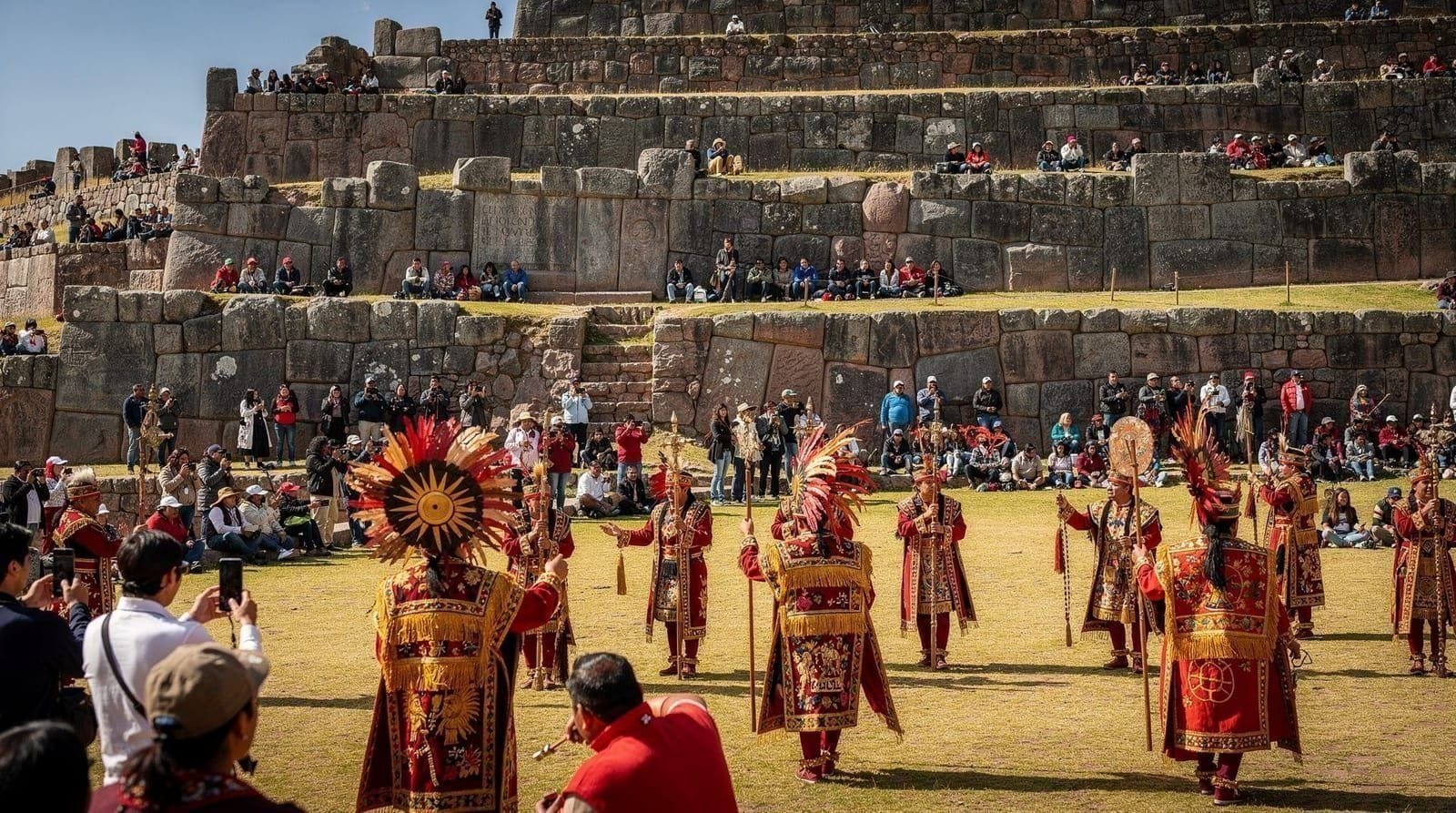
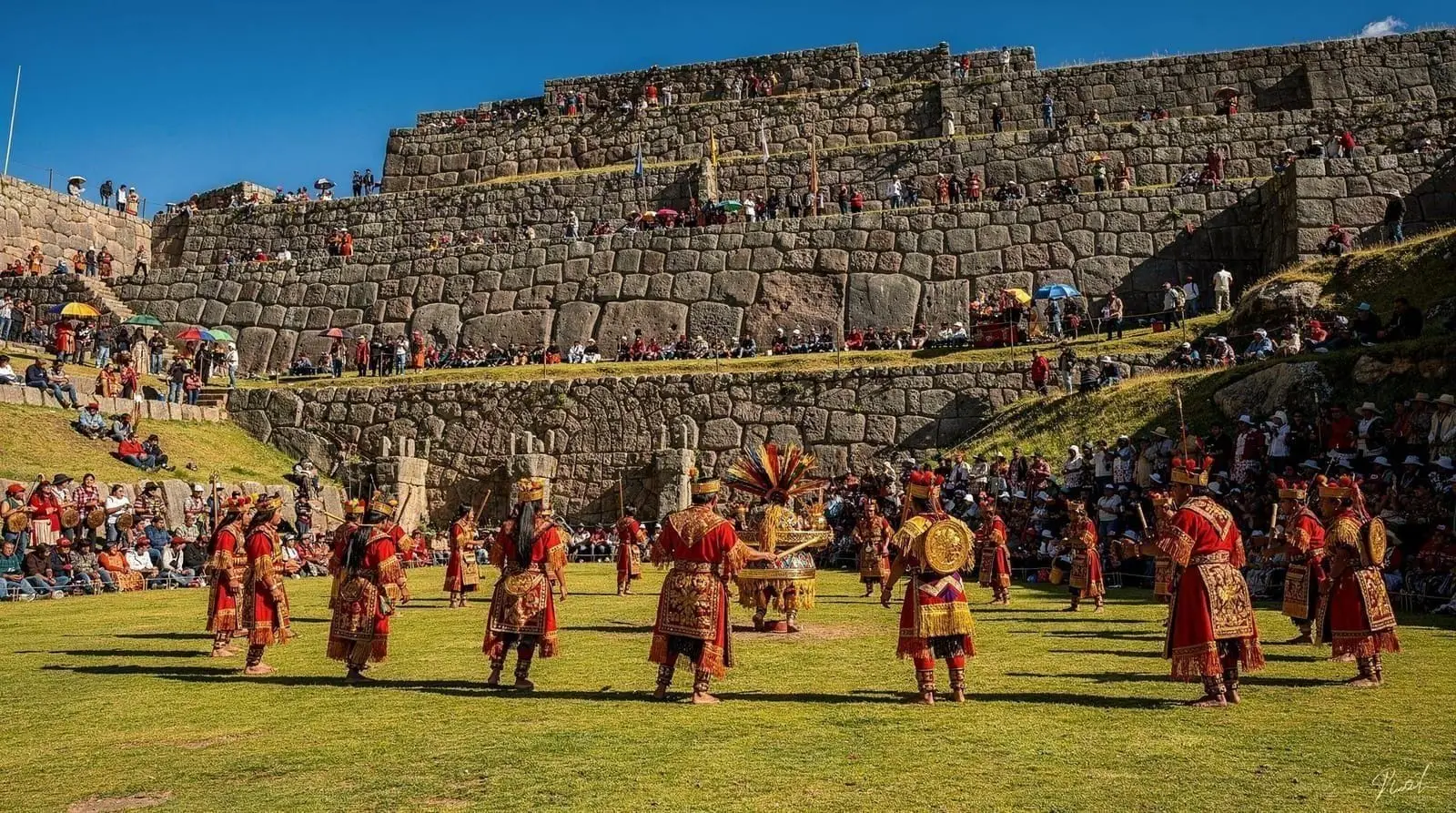
- Sacsayhuamán, the hilltop fortress, for the long ceremonial finale in the afternoon
The first two are free to watch from the street. Only Sacsayhuamán has paid grandstand seating. I did not understand this distinction until I was standing in a crowd, which is exactly the mistake I want to help you avoid.
Qorikancha: the part I almost missed
I got to Qorikancha around 8am and could not see a thing. The opening at the temple is genuinely beautiful — the Sapa Inca is “carried” out, there are invocations to the sun — but the viewing area is small and the people who care had staked their spots before dawn. I caught glimpses between shoulders and a lot of phone screens held up by people taller than me.
Lesson one: if Qorikancha matters to you, treat it like a concert. Arrive by 6:30am, accept that you will stand for hours, and bring water and a hat. The Cusco sun in the dry season is deceptive — the air is cold but the UV is brutal at 3,400 m. I went home that afternoon with a sunburn shaped like my sunglasses.
If you want the temple itself on a calmer day, it is worth visiting outside the festival entirely. The Qorikancha temple of the sun is one of the few places where you can still touch Inca masonry under colonial walls, and on a normal morning you can actually walk around it.
The history behind the pageantry
Knowing a bit of the background made the day mean more than a spectacle. Inti Raymi was the most important festival of the Inca calendar, marking the winter solstice and the start of a new agricultural year, and it was banned by Spanish colonial authorities in the 16th century for being “pagan.” It stayed dormant for centuries until a group of Cusqueño intellectuals revived it in 1944 as a piece of historical theatre, drawing on chronicles from early colonial writers to reconstruct what the ceremony might have looked like.
It has grown every year since into the scale you see now. For the wider context of the empire this ceremony belonged to, the Inca empire for travelers guide and the Quechua culture guide both helped me understand what I was actually watching, rather than just photographing it.
The Plaza de Armas procession
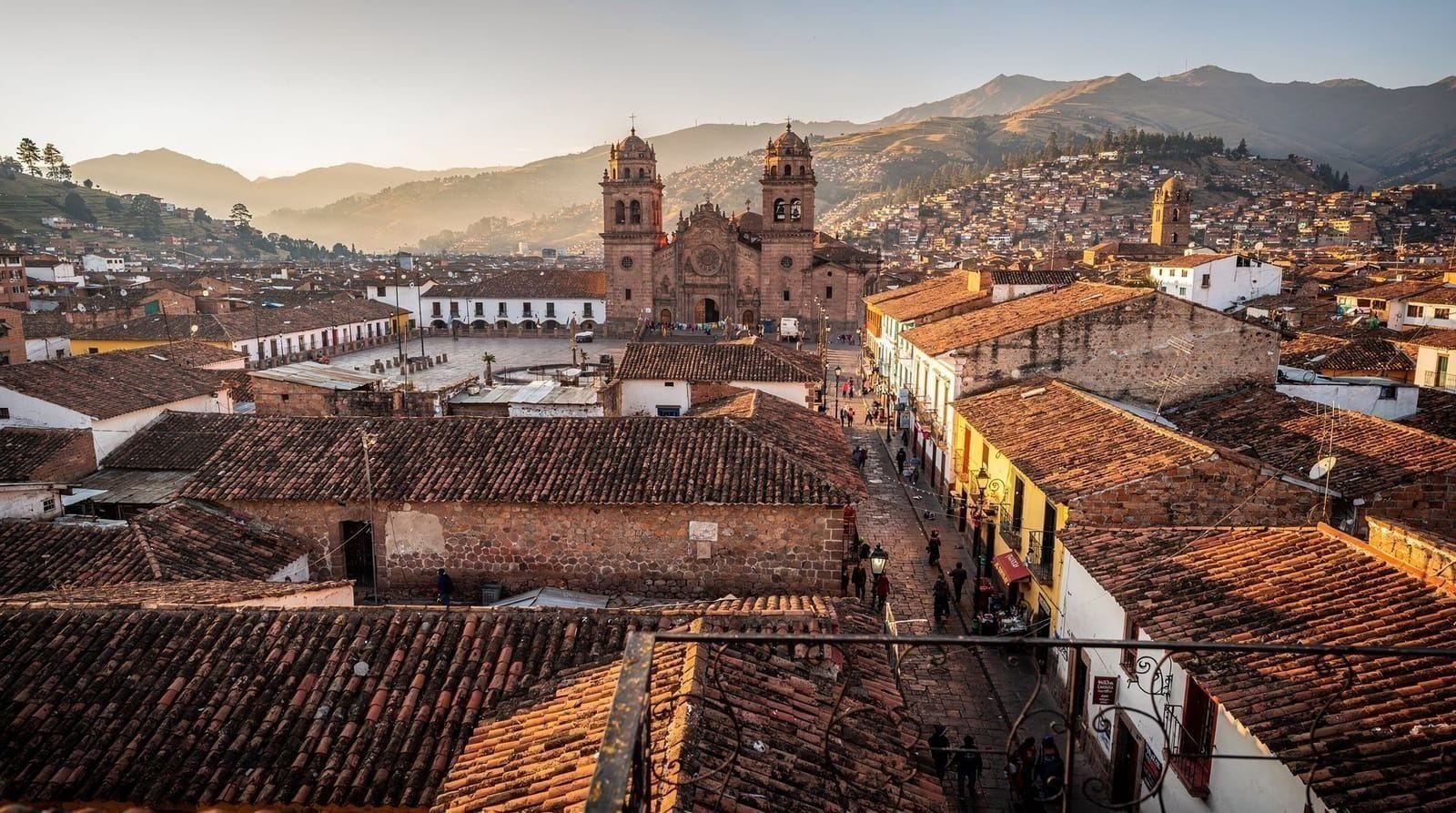
By the time the procession reached the Plaza de Armas I had given up on close views and chosen comfort instead. I found a café table on a second-floor balcony on the south side of the square. It cost me the price of a coffee and a sandwich — maybe S/ 35 (around USD 9) — and it was the single best decision of the day. From above, the whole choreography made sense: the colour blocks of the different “suyos” (regions of the Inca world), the litter-bearers, the dancers fanning out across the plaza.
This is my honest tip if you do not want to fight crowds: skip the street and book a balcony table somewhere on the plaza for late morning. Several restaurants take reservations specifically for the date. You pay a minimum spend rather than a ticket, and you sit down.
Sacsayhuamán: ticket or no ticket?
The afternoon finale at Sacsayhuamán is the headline event, and this is where the money question lands. Grandstand seats — the official ones, sold by EMUFEC, the municipal company that runs the festival — ran from roughly USD 80 to over USD 200 (about S/ 300 to 750) the year I went, depending on whether you wanted shade and a front row. They sell out weeks ahead, and prices climb as the date nears.
I did not buy a seat. I climbed the hillsides above the esplanade with thousands of other people who had made the same call. The view from up there is distant — you see the shapes and the formations more than the faces — but it is free, the atmosphere is communal, and you can leave when your legs give out. Vendors sell anticuchos, choclo with cheese, and warm chicha. I’d estimate I spent S/ 20 (USD 5) on snacks all afternoon.
Would I pay for a seat next time? Honestly, probably not for myself. The ceremony is long — well over an hour of stylised speeches and offerings in Quechua you may not follow — and from a grandstand you are committed to sitting through all of it in the sun. From the hill I could wander, find shade, and watch the bits that gripped me. But if you are travelling a long way specifically for this, or you want the close-up of the llama offering at the centre of the ritual, the seat earns its price.
If you would rather hand the logistics to someone else, organised operators bundle transport and a guide for the Sacsayhuamán portion. A standard Cusco city tour with Sacsayhuamán won’t cover festival day itself, but it is the easiest way to see the fortress properly on the days around it, when the stone is empty and you can actually read the site.
What the festival does to the city
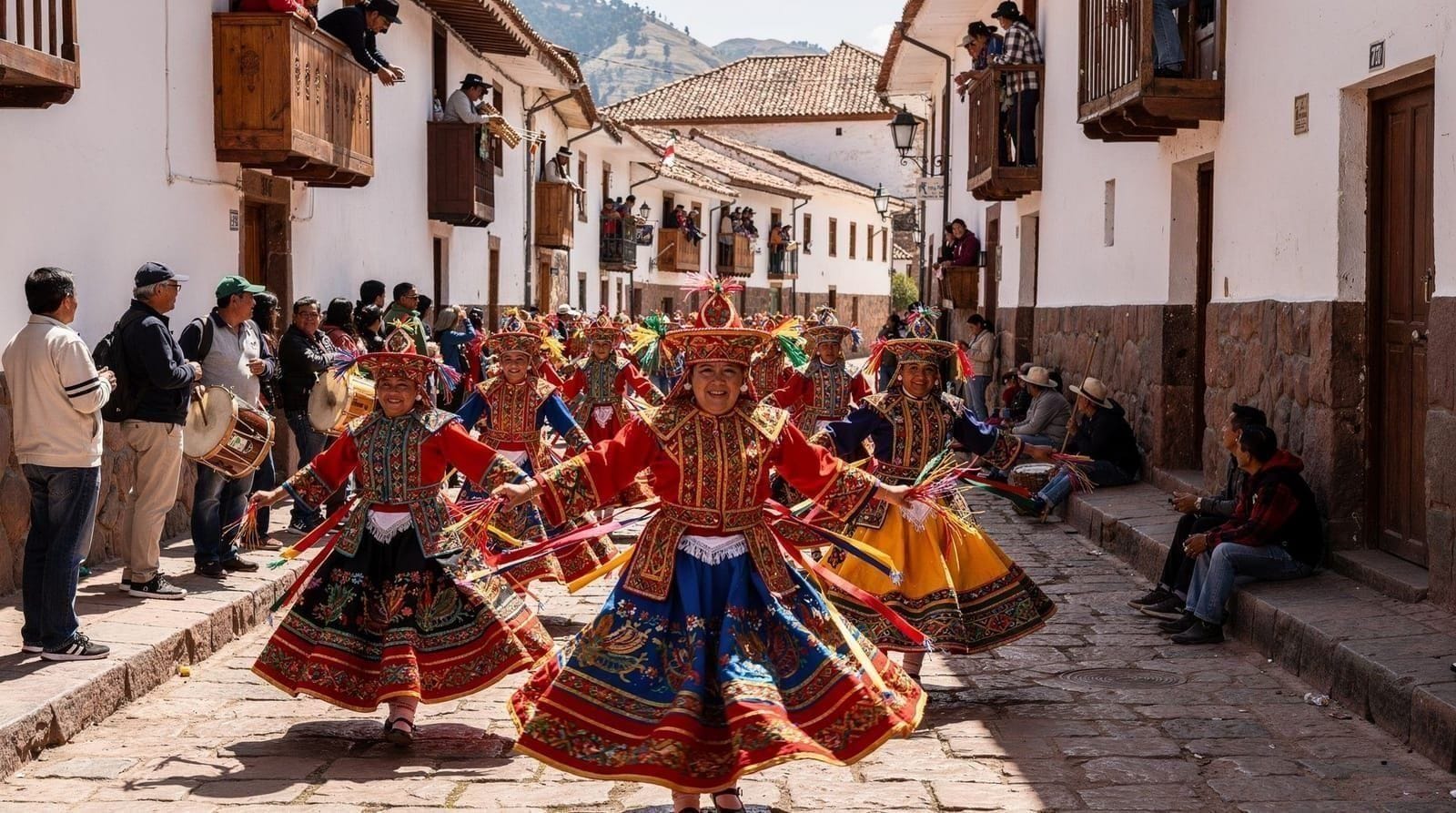
Two things nobody told me. First, Inti Raymi is not a single day — it is the peak of a whole month. Cusco in June is one long festival, with Corpus Christi processions, school parades, and the Cusco festivals calendar packed end to end. I’d walk to dinner and stumble into a brass band and a dancing saint I had no context for. It is wonderful and slightly exhausting.
Second, prices. Hotels in Cusco raise their rates and book out for late June. I had reserved months earlier almost by luck. If you are aiming for the festival, book your room before you book anything else, and expect to pay a premium of 30 to 50 percent over a quiet week.
June in Cusco specifically overlaps with Corpus Christi, the Catholic procession of saints through the plaza that happens roughly a week before Inti Raymi, so if your dates are flexible either side of the 24th, you may catch both — two very different flavours of the same city’s love of a procession.
The moment that stayed with me
Late in the afternoon, after the offering and the speeches, the whole hillside fell quiet for a stretch as the Sapa Inca raised his arms to the sun. I do not speak Quechua and I could not hear the words. But the silence of ten thousand people on a cold Andean hillside, all facing the same low sun, did something to me that the official commentary never could. That was the thing I came back for, and I had not even known to expect it.
Would I recommend planning around it?
Yes, with caveats. If your dates are flexible and June works for your trip anyway, build around 24 June — but go in knowing it is a crowded, logistical day, not a relaxing one. Pair it with quieter Cusco days on either side so you are not exhausted. Acclimatise first; arriving the day before and standing for ten hours at altitude is asking for a headache. And decide in advance whether you are a grandstand person or a hillside person. Both are valid. I am, it turns out, firmly a hillside person — coffee on a balcony for the plaza, a patch of grass for the finale, and money saved for an extra night somewhere.
If you want the practical version with exact stage times and current ticket details, our Inti Raymi festival guide lays it all out. This was just my day, sunburn and all.