Cusco to Arequipa overland — a trip report
After two weeks at altitude in Cusco and the Sacred Valley, I wanted to drop down somewhere a little warmer and a little slower before flying home from Lima. Arequipa, Peru’s elegant “white city” at a gentler 2,300 metres, fit perfectly. The only question was how to get there, and I made the slightly stubborn choice to go overland rather than fly.
| Where | Arequipa, Peru (~2,300m), from Cusco |
| Cost | Bus around US$27–38; flight around US$90 |
| Time needed | Overnight bus ~10hrs; flight usually via Lima |
| Getting there | Cruz del Sur “cama” bus or direct/connecting flight |
| Best time | Year-round; dry season for clearer altiplano views |
The decision: bus or plane
Flying Cusco to Arequipa is quick but indirect — most flights route through Lima, which turns a short hop into half a day of airports and costs more than you’d think. A direct flight, when it exists, was running around US$90 when I looked. The overnight bus, by contrast, was S/90 to S/130 (roughly US$27 to US$38) depending on the seat class, and it left in the evening and arrived at dawn, saving me a night’s accommodation.
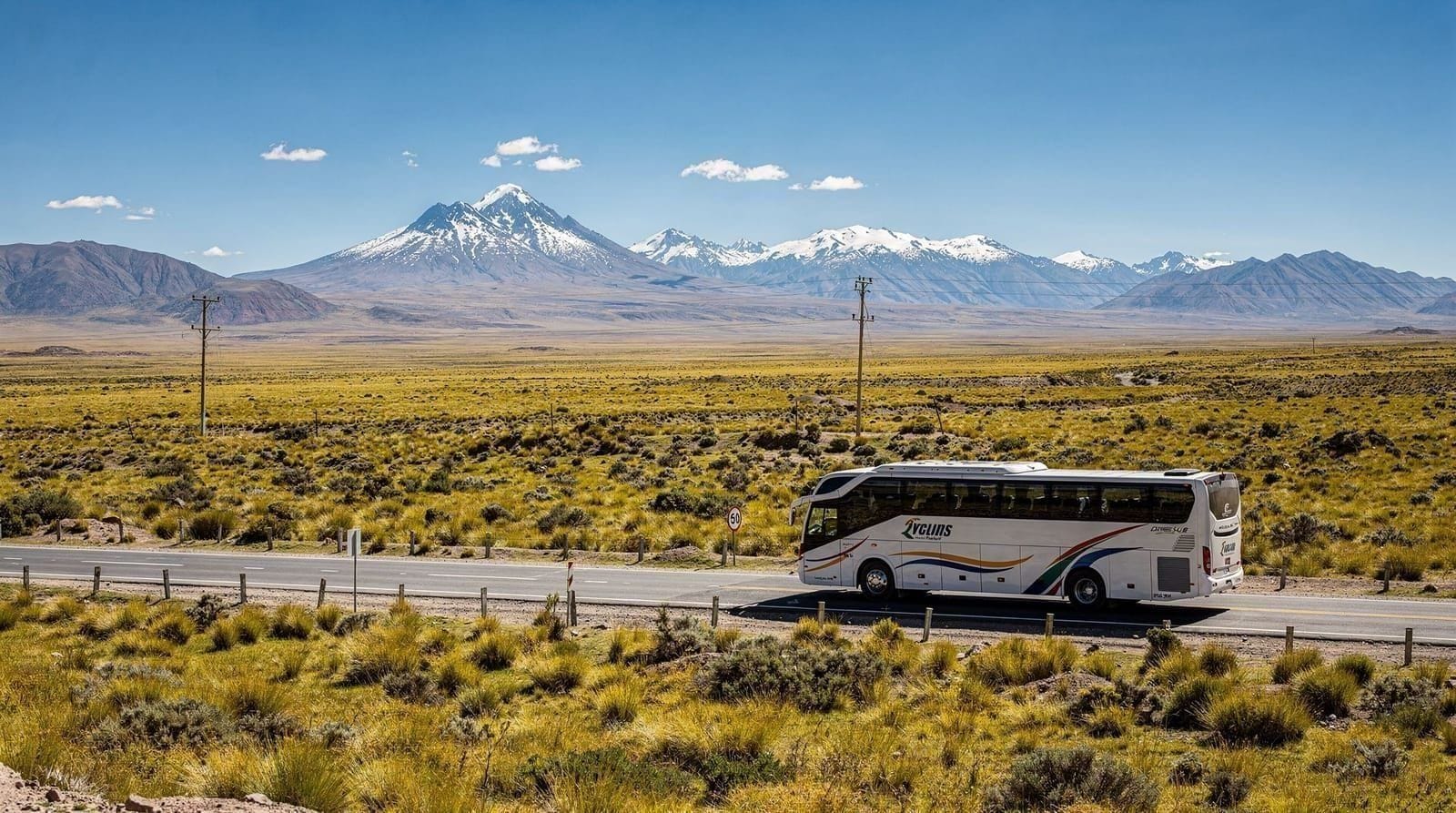
I weighed it up using the Cusco to Arequipa transport breakdown, which lays out the time and cost trade-offs honestly. The bus is about ten hours. The deciding factor for me was that the route climbs across the altiplano past lakes and high plains I’d otherwise never see, and I’m a sucker for a long road.
The night bus, honestly
I booked a “cama” seat with Cruz del Sur, which is the premium operator, for around S/120. The seats recline almost flat, there’s a blanket and a pillow, and they film you boarding and check your bag tag, which felt reassuring on a night bus through the mountains. There’s a basic meal, a toilet on board, and the windows are tinted.
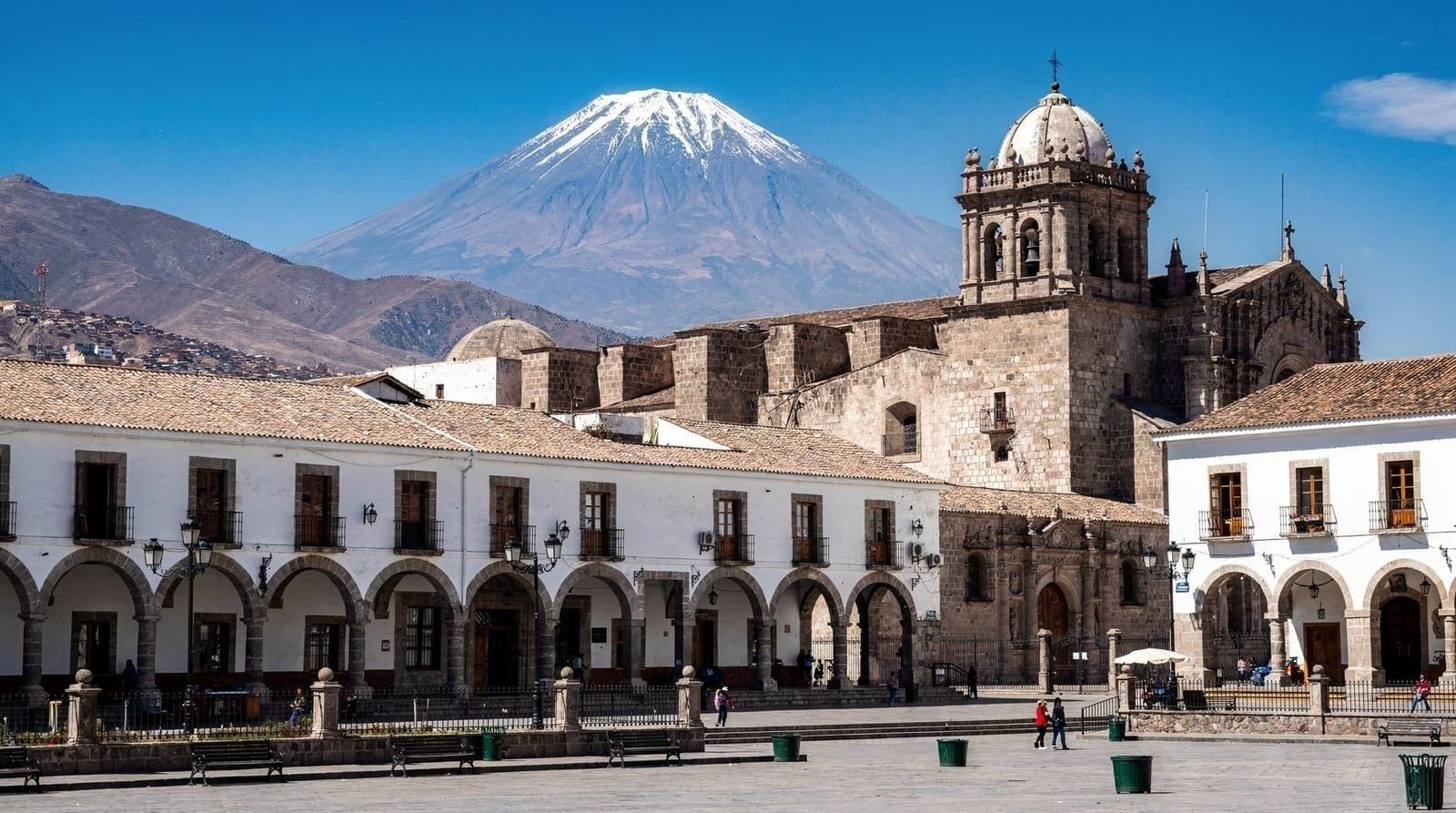
Did I sleep? In patches. The road across the altiplano is high — it crosses passes over 4,500 metres — and I woke once with the familiar altitude headache I thought I’d left behind in Cusco, a reminder that the journey itself goes higher than the cities at either end. I sipped water and it passed. By the time grey light came up we were descending toward Arequipa with the perfect snow cone of El Misti volcano filling the windscreen, and any grumpiness about the lost sleep evaporated.
A practical note: take warm layers in the cabin, not in the hold. The altiplano at night is genuinely cold and the bus heating was patchy. And book the seats on the upper deck at the front if you can — the view at dawn is the whole point.
Arriving in Arequipa
The bus terminal is a short, cheap taxi from the historic centre — I paid S/15 after agreeing the price before getting in, which you should always do. I checked into a small guesthouse near the Plaza de Armas and slept for three hours, because no one truly sleeps on a night bus.
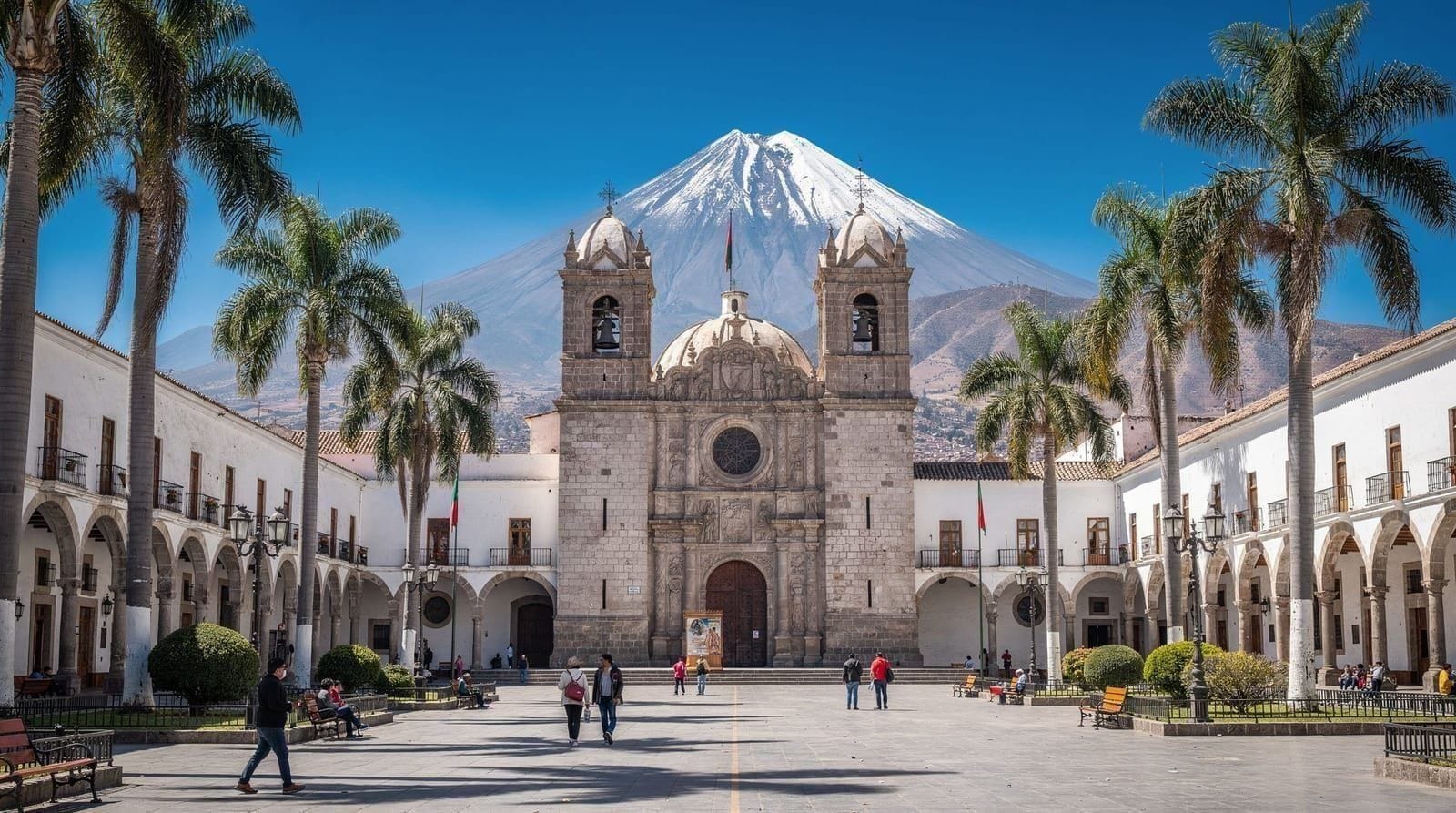
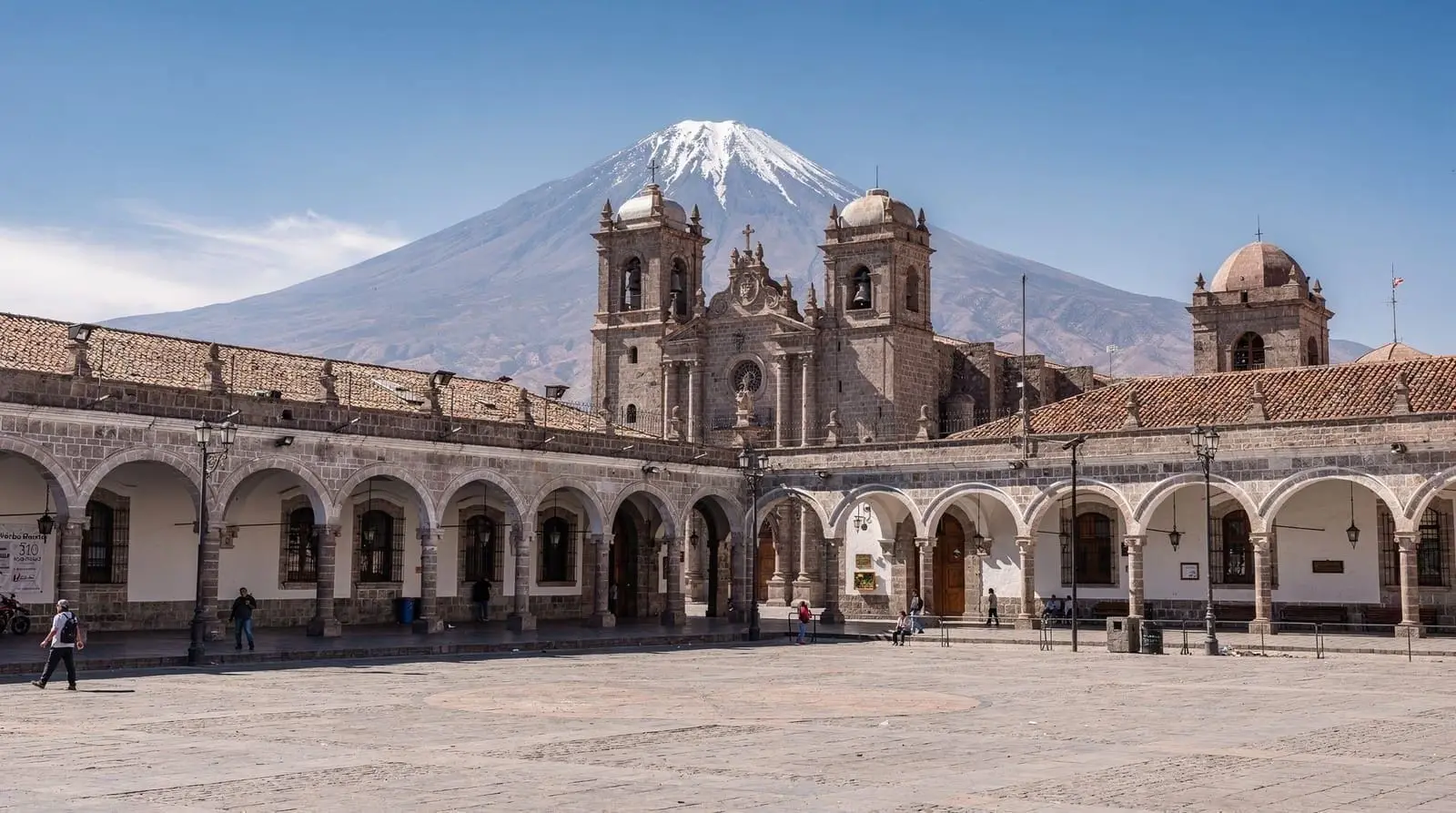
The first thing that struck me about Arequipa was the light. The buildings in the old centre are built from sillar, a pale volcanic stone that glows almost white in the sun, hence the nickname. After the dark stone and steep cobbles of Cusco it felt open and bright and, frankly, easier to breathe in.
What I did with two days
The Plaza de Armas and the cathedral. Arequipa’s main square is, I think, more beautiful than Cusco’s — wider, lined with arched colonnades, with the cathedral running the full length of one side. I had a coffee on a second-floor balcony overlooking it for S/14 and watched the city wake up.
Santa Catalina Monastery. This was the highlight and worth the S/45 entry. It’s a vast walled convent, a city within the city, with lanes painted in deep terracotta and cobalt blue that have barely changed in centuries. I spent nearly three hours wandering it and didn’t notice the time. Go early or late to dodge the harsh midday light and the tour groups.
Eating. Arequipa takes its food seriously, and the local speciality is the picantería — a traditional eatery serving spicy regional dishes. I ate rocoto relleno, a stuffed spicy pepper, and a chupe de camarones, a river-shrimp chowder, at a place called La Nueva Palomino for about S/60 including a chicha. It was one of the best meals of the whole trip and a completely different cuisine from the Andean food up in Cusco.
Cusco versus Arequipa, since everyone asks
I’d been told the two cities are rivals and that you have to pick a favourite. I don’t think you do — they’re different. Cusco is denser, higher, more saturated with Inca history and, honestly, more touristy and more tiring. Arequipa is grander in a colonial way, lower and easier on the body, and feels more like a working Peruvian city that happens to be beautiful rather than a place built around visitors. The Cusco vs Arequipa comparison nails the trade-offs if you’re choosing between them. If you can, do both. If you can only do one and altitude worries you, Arequipa is the gentler introduction.
Arequipa is also the launchpad for Colca Canyon and its condors, which I went on to do next — but that’s a separate story.
Bus versus flight, side by side
| Overnight bus (cama) | Flight | |
|---|---|---|
| Cost | US$27–38 | ~US$90, often via Lima |
| Journey time | ~10 hours | Half a day door-to-door with the Lima routing |
| Saves | A hotel night | Time and altitude-pass discomfort |
| Best for | Flexible schedules, budget travellers | Tight itineraries, comfort priority |
| Bonus | Altiplano scenery, dawn view of El Misti | None beyond speed |
Onward from Arequipa
If Colca Canyon and its condors are on your list, note that Arequipa is the launchpad — most tours leave from the city itself, so you don’t need to backtrack once you’re settled in. I’d also point first-timers to the historic center of Lima if Arequipa is a stop on a longer loop rather than the final one before flying home; the two cities’ colonial cores make an interesting pair to compare against Cusco’s Inca-Spanish layering.