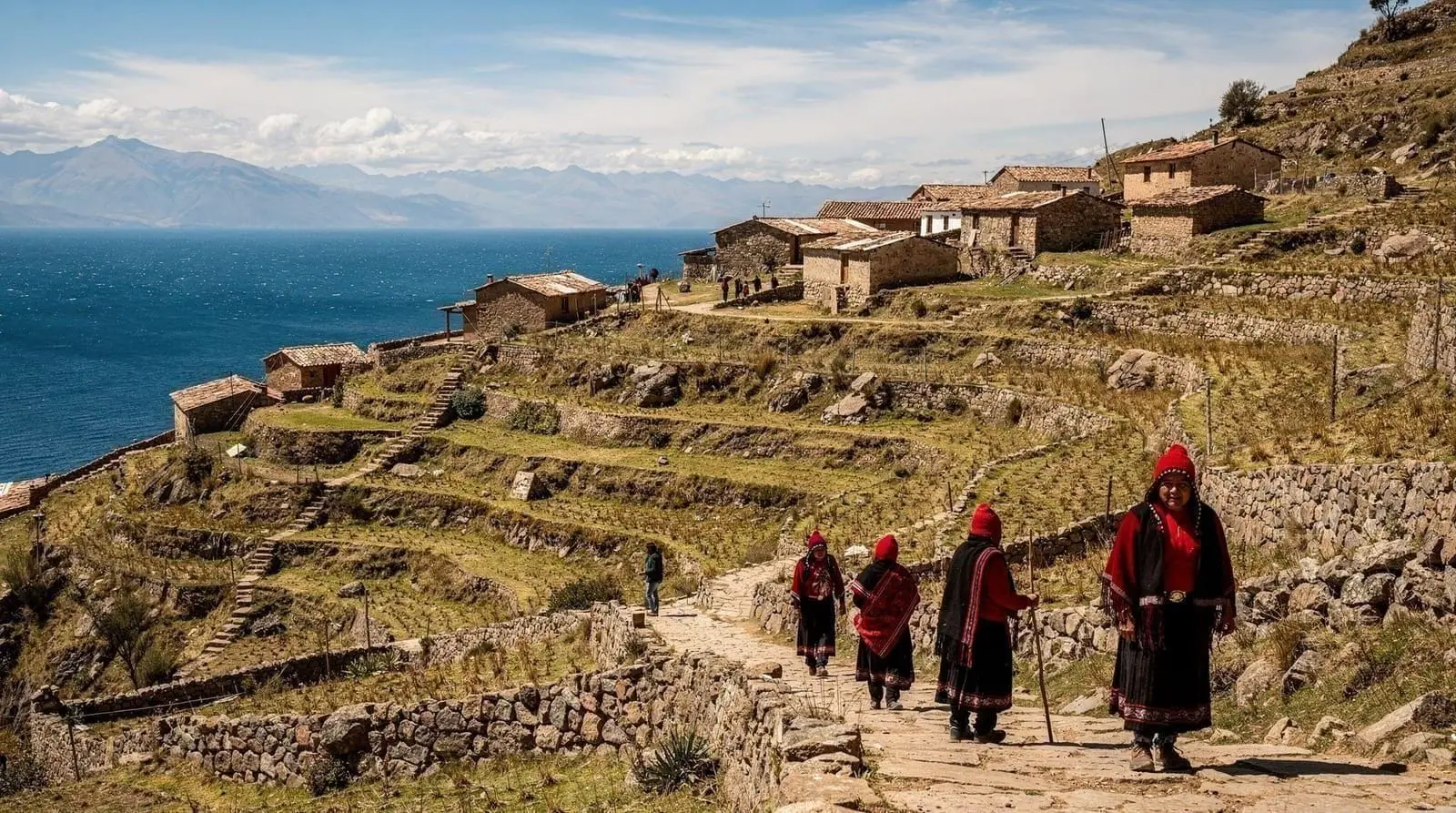
Taquile Island
Taquile Island on Lake Titicaca: the UNESCO textile tradition, the steep climb at 3,800 m, day tour vs overnight, costs and how the visit really works.
Puno: Full-Day Tour of Lake Titicaca and Uros & Taquile
Quick facts
- Location
- Lake Titicaca, ~2.5–3 hours by slow boat from Puno
- Altitude
- 3,810–3,950 m / 12,500–12,960 ft (the village sits above the dock)
- Known for
- UNESCO-recognised textile and knitting tradition
- Best for
- Andean culture, weaving, terraced-island landscapes
Why Taquile is the most rewarding island on the Peruvian side
If the floating Uros islands are the famous photograph and Amantaní is the homestay, Taquile is the island that most rewards curiosity. It is a real working community of farmers and fishers on a long, narrow ridge in Lake Titicaca, with terraced hillsides, stone archways, no roads or vehicles, and a textile tradition so distinctive that UNESCO inscribed it on its list of the world’s intangible cultural heritage.
The catch — and there is always a catch on Titicaca — is the climb. The boat drops you at a dock and the village sits well above it, reached by a long flight of stone steps at almost 3,900 m. For a fit, acclimatised traveller it is a manageable 20–40 minute ascent. For anyone fresh from sea level or struggling with the altitude, it is genuinely hard work. Plan accordingly.
| Where | Lake Titicaca, ~2.5-3hrs by boat from Puno |
| Cost | Around S/100-160 for a full-day Uros + Taquile tour |
| Time needed | Half a day to a full day |
| Getting there | Boat from Puno only, usually as part of a tour |
| Best time | May-October, mornings for the calmest crossing |
The textile tradition, explained
Taquile’s weaving is not a souvenir gimmick — it is a living social system. On Taquile, the men knit and the women weave, and the textiles communicate real information about the wearer:
- A chullo (knitted hat) with a white tip signals an unmarried man; a fully coloured one signals a married man.
- A man’s woven chumpi (waist belt) and the way he wears his hat carry social and marital meaning.
- Boys learn to knit from childhood, and a young man’s knitting skill has traditionally been part of his eligibility for marriage.
The textiles are made from hand-spun wool coloured with natural and synthetic dyes, and the quality is high — these are heirloom-grade goods, which is reflected in the price. A genuine Taquile hat or belt is not cheap, and that is the point: you are buying skilled, slow handwork direct from the maker. The community runs a cooperative shop in the main square where prices are fixed and the proceeds are shared, which is a more reliable place to buy than ad-hoc stalls.
How a Taquile visit actually works
Taquile is almost always visited as part of a Lake Titicaca tour from Puno, not as a standalone trip. The typical structure:
- The crossing. A slow boat takes roughly 2.5–3 hours from Puno port, usually after a stop at Uros. A speedboat cuts this substantially.
- The climb. From the dock you ascend the stone steps to the village square (Plaza de Armas). Take it slowly; there is no rush and stopping to breathe is normal.
- The village and viewpoints. Time in the square, the cooperative textile shop, and viewpoints over the deep-blue lake toward Bolivia’s Cordillera Real on clear days.
- Lunch. Most tours include a simple, fresh lunch in the village — typically lake trout (trucha), quinoa soup and a herbal infusion (muña tea, which also helps with altitude).
- The descent and return. Some tours leave by a different path down the far side; the boat returns to Puno in the afternoon.
The most efficient way to combine the two main islands is a full-day boat tour. The full-day Lake Titicaca tour to Uros and Taquile includes the boat, guide, island entry fees and the village lunch in one booking. If you want more island time and less time crossing, the Uros and Taquile speedboat tour covers the same route faster.
For travellers who want a deeper stay, the two-day tour combining Uros, Amantaní and Taquile includes an overnight homestay on neighbouring Amantaní and a calmer, less hurried visit to Taquile.
Costs and practical details
- Island entry fee: around S/10–20, usually collected on arrival (confirm whether your tour includes it).
- Lunch: typically included in tour packages; if buying independently, budget S/25–40 for trout and soup.
- Textiles: a genuine knitted hat or woven belt ranges widely; expect to pay real money for authentic, high-quality pieces. The cooperative shop is the fairest place to buy.
- Cash only: there are no ATMs or card facilities. Bring small-denomination soles.
The village has basic facilities and a small number of guesthouses if you arrange to stay independently, but most travellers visit on a tour and sleep in Puno or on Amantaní.
Altitude and what to bring
Taquile’s village sits between roughly 3,810 and 3,950 m. The stair climb is the single most demanding part of the visit, so acclimatise in Cusco or build up gradually before you come. Bring:
- Strong sunscreen, sunglasses and a hat — the UV over the lake is severe even in cold weather
- A warm windproof layer for the breezy crossing
- Comfortable shoes with grip for the stone steps, which can be uneven
- Small soles for the entry fee, lunch (if not included) and any textile purchase
- A reusable water bottle and any altitude medication you use
Mornings are calmer on the water; afternoons can get windy, which is why most boats depart Puno early.
Is Taquile worth it?
Yes — arguably more than the Uros islands for travellers who want substance over spectacle. The textile culture is genuine and globally recognised, the island is peaceful, and the lake views from the ridge are among the best on the Peruvian side. The honest caveats are the long boat journey and the steep altitude climb. If both of those sound manageable, Taquile is a highlight; if the climb worries you, the homestay route via Amantaní is gentler and gives you more recovery time.
Taquile day trip vs the Amantaní homestay
The decision most travellers face is whether to see Taquile on a day tour or add an overnight on neighbouring Amantaní. A day trip is efficient: you cover Uros and Taquile in a single day, sleep in a real bed in Puno, and lose no travel time elsewhere in your itinerary. The homestay route trades that efficiency for depth — a night with an Amantaní family, a slower, less rushed climb on Taquile the following morning without a boat waiting, and a genuine (if basic) taste of island life, usually including a communal dinner and sometimes traditional dress for an evening dance.
The trade-off is real: homestay accommodation is simple (shared bathrooms, cold water, an extra layer of cold at night), and the itinerary needs an extra day. Read the Lake Titicaca guide for how the wildlife and birdlife on the lake factor into that choice, and this Lake Titicaca homestay diary for a first-hand account of what an Amantaní night is actually like.
How Taquile’s weaving compares to other Peruvian textile traditions
Peru has several distinct, geographically rooted weaving traditions, and it is worth knowing how Taquile fits among them. In the Sacred Valley, Chinchero is home to weaving cooperatives working with natural dyes and pre-Hispanic backstrap-loom techniques, demonstrated openly for visitors — a good comparison point if you visit both regions.
Taquile’s tradition is distinct in two ways: it is UNESCO-recognised specifically for its social-signalling function (the chullo hat and chumpi belt encode marital and community status, which Chinchero’s weaving does not), and it is knitted by men as much as woven by women, an unusual gender division rarely seen elsewhere in the Andes. The Andean textiles guide covers both traditions, and others around Cusco, side by side.
Planning your visit
Taquile is one stop within a Lake Titicaca trip based in Puno. Read the broader Lake Titicaca page to choose between a day tour and an overnight homestay, then see the itineraries hub for how the lake fits between Cusco and Arequipa, and the planning tools to organise the route. The Peru 10-day Cusco and Titicaca itinerary is a ready-made route that includes Taquile in a realistic schedule.
Frequently asked questions about Taquile Island
How do you get to Taquile Island?
Taquile is reached only by boat from Puno port on Lake Titicaca, usually as part of a guided tour that also stops at the Uros islands. A slow boat takes around 2.5–3 hours; a speedboat is faster. There is no independent ferry service in the conventional sense.
How hard is the climb on Taquile?
The village sits well above the dock, reached by a long flight of stone steps at almost 3,900 m. It is a manageable but genuinely strenuous 20–40 minute climb if you are acclimatised, and difficult for anyone struggling with the altitude. Take it slowly and stop to breathe as needed.
What is Taquile famous for?
Its textile and knitting tradition, recognised by UNESCO as intangible cultural heritage. On Taquile the men knit and the women weave, and the garments — especially the chullo hat — signal a person’s marital and social status through colour and shape.
Can you stay overnight on Taquile?
A few basic guesthouses exist, but most travellers visit Taquile on a day tour and overnight in Puno or on Amantaní. The two-day tour with an Amantaní homestay is the usual way to add an island overnight to a Taquile visit.
How much does it cost to visit Taquile?
A full-day tour combining Uros and Taquile runs roughly S/100–160 plus a small island entry fee (around S/10–20) and lunch. There are no ATMs on the island, so bring small soles for fees, food and any textile purchases.
Is Taquile better than the Uros islands?
For travellers who prefer authentic, less commercialised experiences, many find Taquile more rewarding — the culture is genuine and the island is peaceful. The Uros islands are more photogenic and unusual but heavily touristed near Puno. Most lake tours include both, so you do not have to choose.
Top experiences
Bookable activities with verified prices and instant confirmation on GetYourGuide.
