Machu Picchu was on my bucket list for 15 years. Then I went.
A poster on a bedroom wall
I had a poster of Machu Picchu on my wall when I was nineteen. The classic shot — terraces, the conical peak of Huayna Picchu behind, a llama in the foreground that I was certain had been added in. For fifteen years it sat on the long list of places I told myself I’d get to “one day,” that vague drawer where bucket-list dreams go to gather dust.
| Where | Machu Picchu, via Cusco and Aguas Calientes |
| Best slot | First entry, around 6am, before the crowds fill the terraces |
| Time needed | A full morning minimum; overnight in Aguas Calientes if you can |
| Cost | Train, bus, entrance ticket and guide add up fast — budget generously |
| Booking | Weeks to months ahead in dry season, especially for the classic-view circuits |
This is the story of finally going, told honestly, because bucket-list trips carry a specific danger: the build-up is so long that the reality can only disappoint. Mine very nearly did, and then it very much didn’t.
The danger of waiting too long
When you’ve imagined a place for fifteen years, you don’t have one expectation. You have a thousand. You’ve seen it in films, documentaries, other people’s photos, a dozen friends’ “you HAVE to go” speeches. By the time I boarded the train, Machu Picchu in my head wasn’t a place — it was a saturated, idealised collage that no real morning could match.
I knew this going in, and I was scared of it. I’d had it happen before: a famous sight that, in person, was smaller, busier, more ordinary than the legend. I half-expected to stand at the terraces and feel the quiet click of disappointment, the “oh — it’s just this.”
The build-up that nearly broke the spell
The trip in was not romantic. I based myself in Cusco for a few days first — partly to acclimatise, which you should absolutely do, partly because the city deserves its own time. Then the train down through the Sacred Valley, which is genuinely beautiful, followed by a night in Aguas Calientes, which is genuinely not. The town below Machu Picchu is a damp, overpriced funnel of restaurants and ticket touts. I lay awake in a thin-walled hotel listening to the river and a karaoke bar, thinking: fifteen years for this?
The 4:30am alarm didn’t help. Neither did the bus queue in the dark, nor the line at the gate, nor the realisation that I’d be sharing my private fifteen-year dream with several thousand other people who’d had the same poster.
The moment it clicked
I’d booked the first entry slot and the classic circuit that climbs to the upper terraces — the one that gives you the view. You walk up a stone path, hemmed in, seeing nothing of the site, just steps and the backs of other people’s heads.
And then the path turns, the world opens, and it’s there.
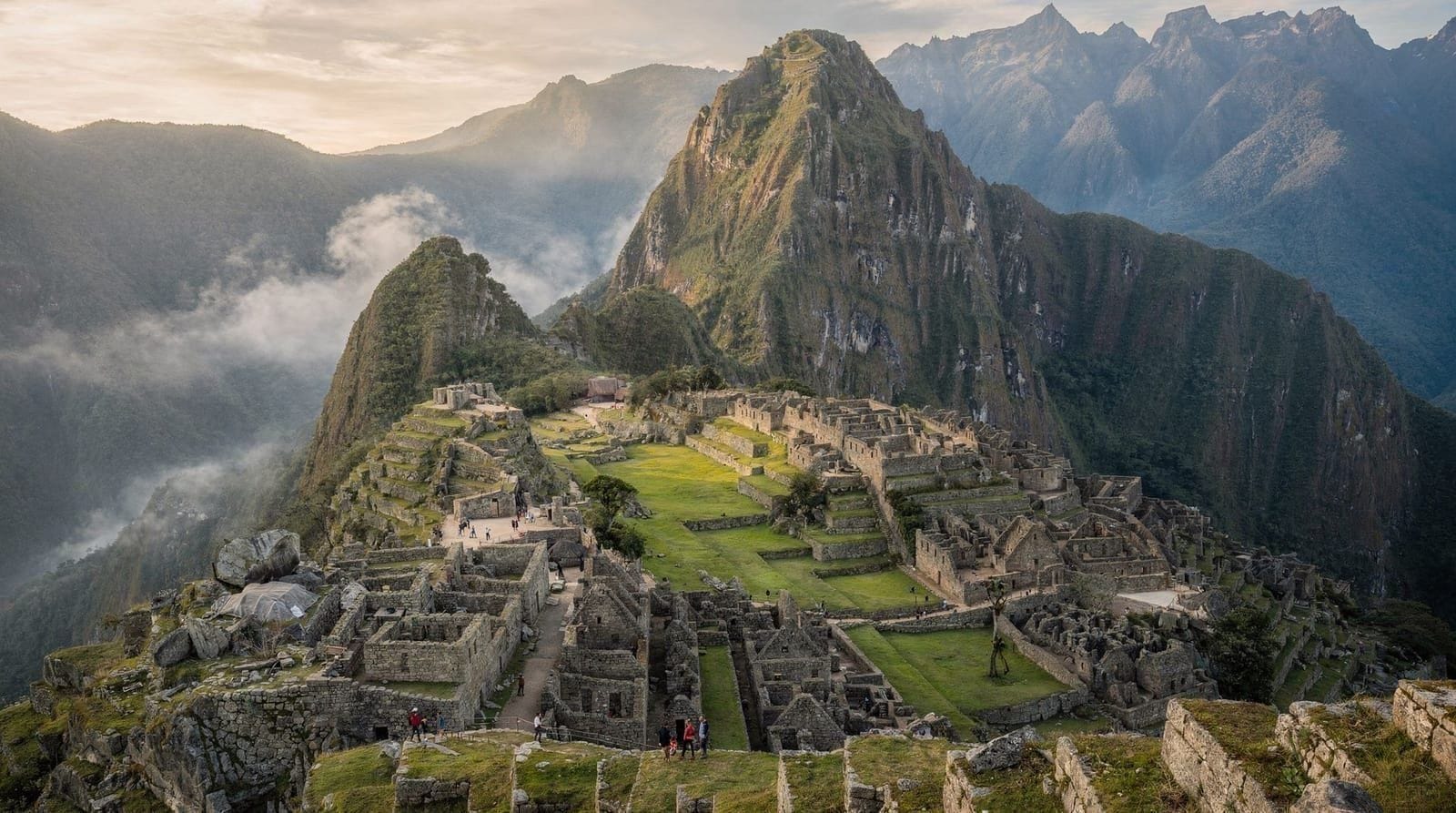
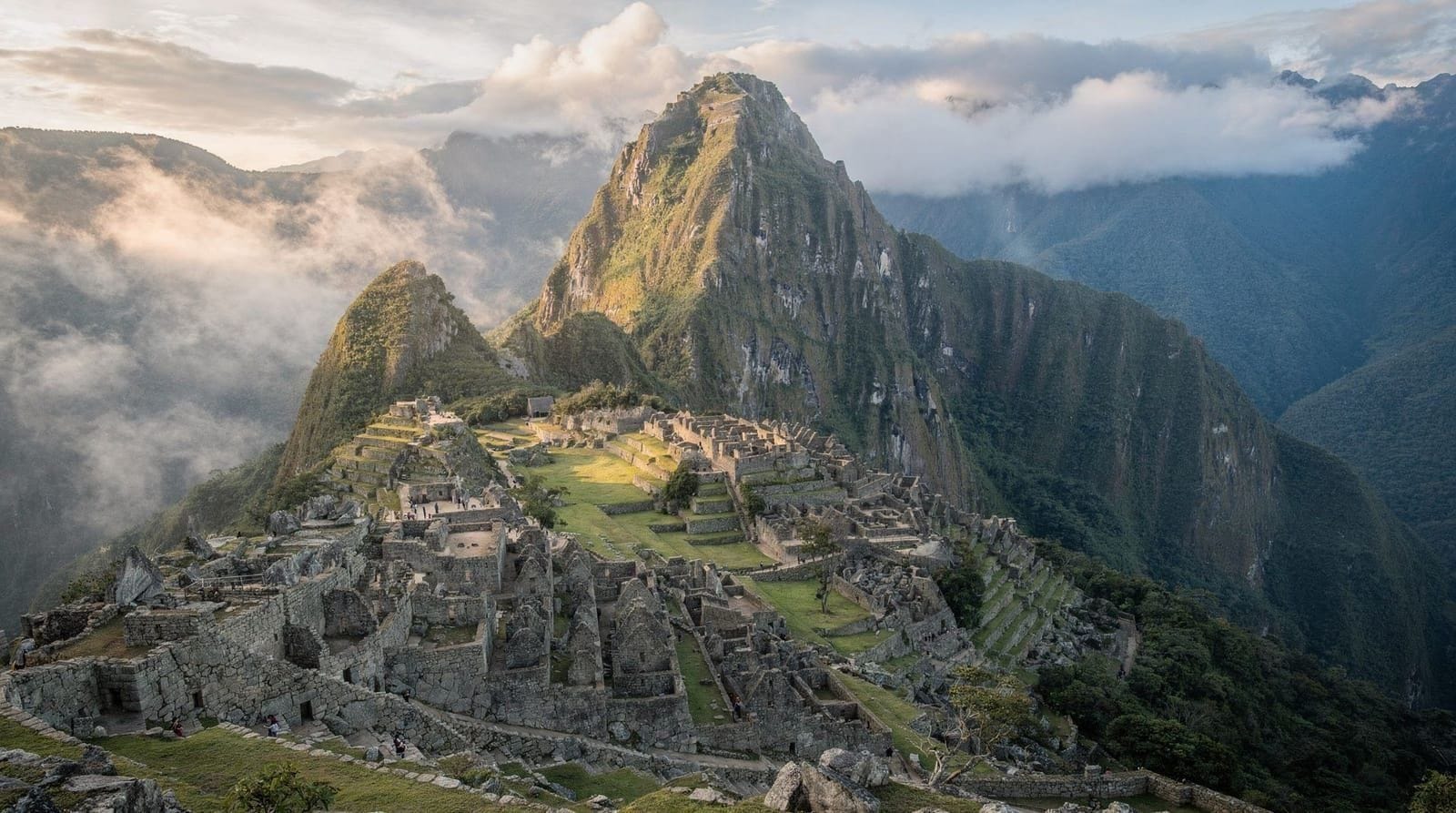
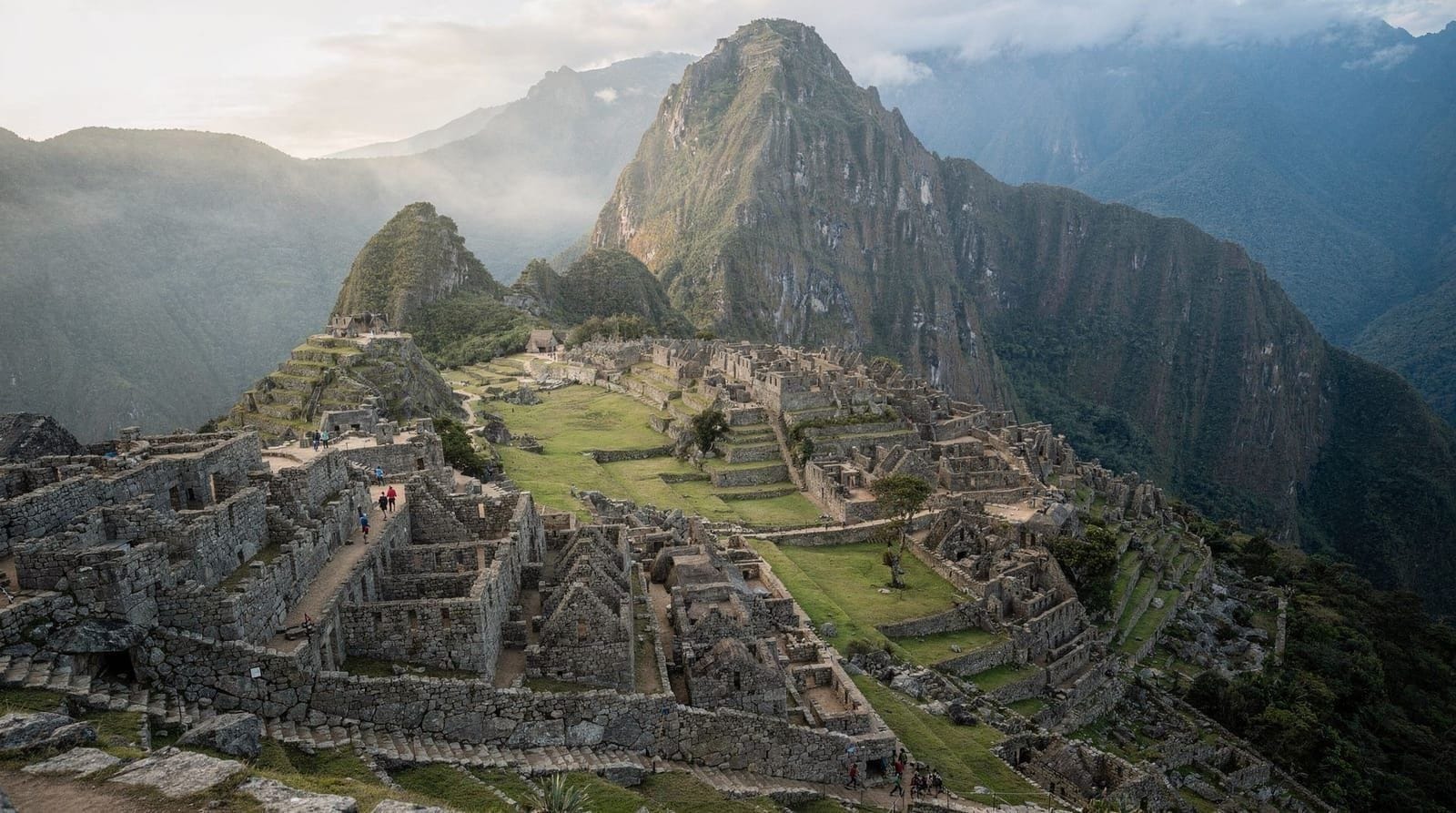
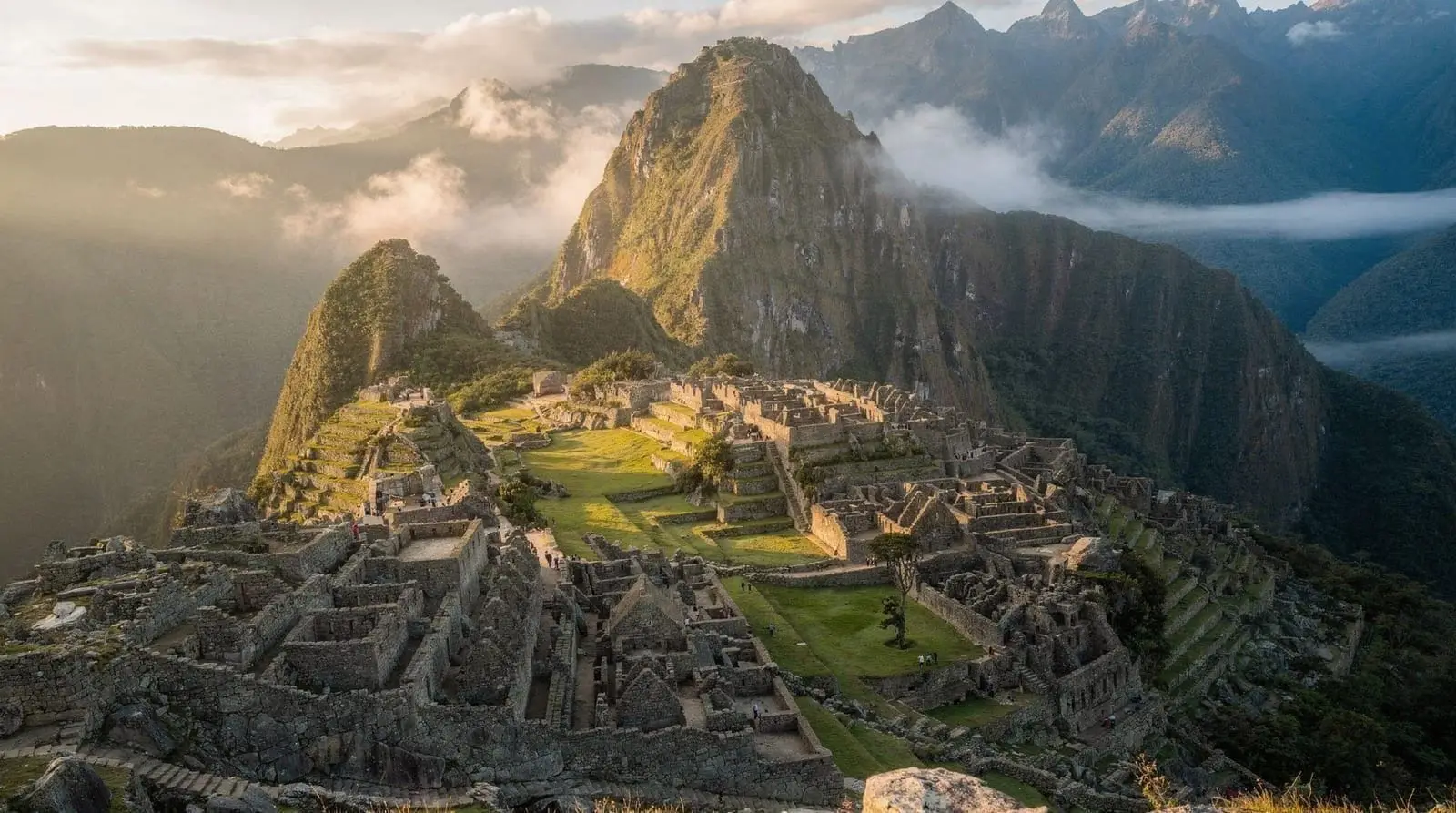
I’m not going to pretend I didn’t get a lump in my throat, because I did, and I’m not usually that person. The thing the poster never told me — the thing no photo can — is the scale and the drop. The city clings to a ridge with thousands of feet of cloud forest plunging away on both sides. There was mist still peeling off the surrounding peaks. Huayna Picchu, the cone I’d half-believed was photoshopped, stood there exactly as promised, real and ridiculous and enormous.
Fifteen years of build-up and it didn’t deflate. It expanded. The collage in my head had been flat; the real thing had depth, weather, vertigo, and a silence in that first hour that the crowds hadn’t yet filled.
Why it didn’t disappoint (when it so easily could have)
I’ve thought hard about why this bucket-list moment delivered when others I’ve had fell flat. A few reasons, and they’re all things you can copy:
I went at first light. The early slot bought me maybe forty minutes before the terraces filled. That window is everything. By nine, the magic was still there but you had to look past people to find it. Read best time to visit Machu Picchu and treat the hour of day as seriously as the season.
I’d read enough to understand it. I knew what the Temple of the Sun was, why the stonework mattered, what the agricultural terraces did. Understanding turns “nice ruins” into “how did they do this,” and the second feeling lasts.
I gave it a whole morning, not a slot between trains. I wasn’t watching the clock for a same-day return. I sat. I let it be boring for a while, and then it wasn’t.
I’d kept my expectations as a feeling, not a checklist. I wanted to feel something, not photograph a specific frame. That’s a lower bar to clear and, paradoxically, a higher reward.
The bits the bucket list never mentions
Some unglamorous truths for fellow long-term dreamers:
- The llamas are real, they roam freely, and they will absolutely photobomb you. The one on my wall was not added in. I owe that poster an apology.
- It’s a lot of stairs. The site is steep and the altitude, while lower than Cusco, still makes you puff. The complete guide covers the physical reality.
- The new circuit system means you can’t wander freely. Pick your circuit deliberately, because the wrong one skips the postcard view.
- You will spend more than you expect — train, bus, ticket, guide. I’d budgeted, and even so it added up fast. The trip cost guide will save you the sticker shock.
Would I tell you to keep it on your list?
Yes. Without hedging. Of all the bucket-list places I’ve finally reached, this is the one that most outran its own hype — and it had fifteen years of hype to outrun.
But keep it on the list and plan it properly. A bucket-list trip ruined by a 10am crowd and a rushed schedule is the saddest kind of disappointment, because you can’t easily go back. Give it the early slot, the overnight, the guide, the whole morning. If you’d rather hand the logistics to someone else so you can just be there, a guided Machu Picchu entry with an exclusive guided experience handles the ticketing and gives you someone to explain what you’re looking at — which, for a fifteen-year dream, is worth the extra outlay.
What I’d tell someone with a similar poster
If you’re carrying your own long-held version of this — any place you’ve built up for years — the lesson I took from Machu Picchu is that the build-up isn’t the enemy, laziness is. A place can survive fifteen years of hype if you show up prepared to meet it on its own terms: early, informed, unhurried. What kills bucket-list moments isn’t the crowd in your photos, it’s rushing through with your expectations pointed at a single frame instead of the whole morning. Treat the best time to visit Machu Picchu guide and your circuit choice as seriously as you’d treat booking the flight itself, because they are the difference between disappointment and the lump in the throat I got.
After the poster
I took the photo, of course. The classic frame, llama and all. It’s on my wall now where the poster used to be, and it’s a worse photo than the poster was. But I don’t look at it the way I looked at the poster. The poster was longing. The photo is memory — of mist lifting off a ridge at six in the morning, of a lump in my throat I didn’t see coming, of a dream that, against the odds, was bigger in person.
Fifteen years was too long to wait. Don’t make my mistake. Go sooner. Just go early.