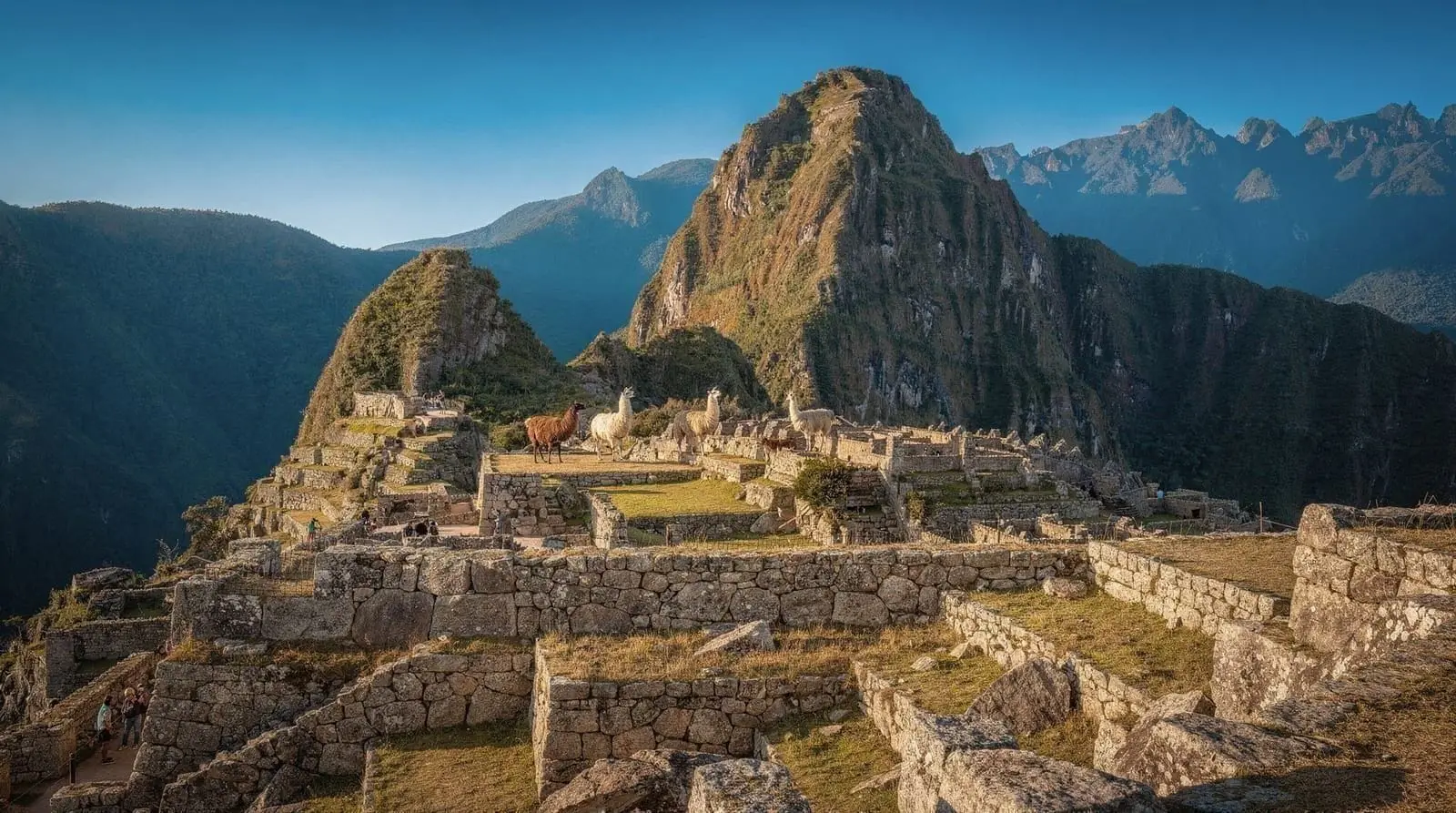
Machu Picchu in each month: weather, crowds and prices
Cusco: Machu Picchu + Tourist Train + Entrance Ticket
What is the best month to visit Machu Picchu?
May and September are the sweet spot: mostly dry, clear mornings, and slightly thinner crowds than the June–August peak. July gives the most reliable clear skies but the biggest crowds and highest prices. April and October are good-value shoulder months. December to March is green, quiet and cheap but cloudy, with the heaviest rain in January and February.
Why Machu Picchu reads differently every month
Machu Picchu sits at 2,430 m in a cloud-forest transition zone — lower, wetter and greener than Cusco up at 3,400 m. That position means the citadel does not have four seasons so much as two: a dry season of clear, cold mornings and a wet season of green, misty afternoons, with shoulder weeks bleeding between them. But within those two halves, every month has its own character — its own crowd level, its own price, and its own odds of the postcard view actually appearing.
This is a month-by-month breakdown so you can match your trip to what you care about most: guaranteed views, the lowest prices, the emptiest gate, or the greenest hillsides. If you want the broad strokes and the planning logic, the best time to visit Machu Picchu guide covers the dry-vs-wet decision; this page goes finer, one month at a time. One rule holds across all twelve: mornings are clearer than afternoons, so an early entry slot helps in every season.
| Best overall months | May and September |
| Clearest views | June–August (July driest) |
| Quietest month | February (also wettest) |
| Best value shoulder | April and October |
| Booking lead time | 2–3 months ahead for June–August |
Month-by-month at a glance
| Month | Weather | Crowds | Prices |
|---|---|---|---|
| Jan–Feb | Wettest, cloud common | Lightest | Lowest |
| March | Transitioning, still wet | Light | Low |
| April | Clearing, still green | Building | Good value |
| May | Dry, clear mornings | Moderate | Below peak |
| Jun–Aug | Driest, clearest | Peak | Highest |
| September | Dry, clear | Easing from peak | Easing down |
| October | Winding down, mostly clear | Moderate | Good value |
| Nov–Dec | Wet season begins | Light (except holidays) | Low (except holidays) |
January
Deep wet season. January is one of the two rainiest months, with heavy afternoon downpours and frequent low cloud that can sit on the citadel for hours. Mornings sometimes clear, but you are gambling. The upside is dramatic: emerald terraces, swollen rivers, very few people, and the lowest train and hotel prices of the year. Trails are slick — bring waterproof footwear. The classic Inca Trail is still open in January (it closes in February), though trekkers face mud and leeches.
February
The wettest month and the quietest. The classic 4-day Inca Trail closes all of February for maintenance, which thins out one whole category of visitor. Rain is near-daily and cloud cover is the rule, so view odds are at their lowest. But if you want the citadel almost to yourself, lush and green, at rock-bottom prices, February delivers — provided you accept you may not get the clear shot. Salkantay treks and the train route stay open, so reaching Machu Picchu is no problem.
March
A transition month. The first half is still firmly wet and quiet; by late March the rains begin to ease and clearer mornings return. Crowds remain light and prices low. March is an underrated pick for travellers who want green hillsides and few people but slightly better odds than the January–February core. Watch the calendar: Easter (Semana Santa) can fall in late March and briefly spikes domestic crowds and prices.
April
Early shoulder season and one of the best-value months. The rains have largely stopped, the hillsides are still vividly green from the wet season, and crowds have not yet built to peak. Clear mornings are common without full dry-season pricing. April is a genuine sweet spot for travellers who want the look of the wet season with the reliability of the dry. If Easter lands in April, expect a short surge around the holiday.
May
One of the two best months, full stop. May is mostly dry with consistently clear mornings, the landscape still holds some green, and crowds — while building — have not reached the June–August crush. Prices sit below peak. For the best balance of weather, scenery and space, May is the month most experienced planners recommend. Book a few weeks ahead for the popular circuits, but you will not face the months-ahead scramble of midsummer.
June
Peak season opens. June brings the dry season’s clearest, coldest mornings and the start of the heavy crowds. The Inti Raymi festival in Cusco on 24 June pulls in waves of visitors, and the whole month sees the most popular Circuit and the Huayna Picchu add-on selling out weeks ahead. View odds are excellent; the trade-off is people and price. The Consettur bus queue at dawn can run 30–45 minutes. Book everything early.
July
The driest, busiest, priciest month. July offers the most reliable clear skies of the year — if your single priority is guaranteeing the postcard view, this is the month. But you pay for it with maximum crowds, top prices, and the most competitive ticket and train slots. Cold dawns, strong midday sun, and packed circuits define July. Reserve your entry ticket and trains two to three months ahead, especially for Circuit 2 or any mountain hike.
August
Still peak, still excellent weather, still crowded. August mirrors July: dry, clear mornings, heavy crowds and high prices. By late August the dry season is at its most reliable. If you are travelling in the northern-hemisphere summer window, August is a fine choice for weather — just plan as far ahead as you would for July, and expect company on every circuit.
September
The other best month, alongside May. September is mostly dry with clear mornings, and the peak crowds thin noticeably after the August rush. Prices ease back from their summer high. The landscape starts greening again toward month’s end as the first rains hint. For travellers who want dry-season reliability without the July–August crush, September is the smart pick. A guided Machu Picchu entry experience is easier to book in September than in midsummer, when good guides and slots get scarce.
October
A relaxed shoulder month. The dry season is winding down, with occasional early showers but still many clear mornings. Crowds and prices drop from their peak, and the hillsides begin to green up. October offers good odds and good value for travellers who can be a little flexible about the weather — a strong choice if you missed the May or September windows.
November
The wet season begins, gently. Rain becomes more frequent through the month, especially in the afternoons, but mornings often still clear. Crowds are light (outside any holiday spikes) and prices are low. November suits travellers who want low-season value and emerging green scenery while still keeping decent morning view odds. Pack a proper rain shell.
December
Wet and green, with one big exception. Most of December is low-season: cloudy afternoons, frequent rain, few crowds, low prices. The exception is the Christmas-to-New-Year window, when domestic and international travellers surge and Aguas Calientes hotels and trains fill and spike in price. Visit in early or mid-December for quiet and value; avoid the last week unless you book far ahead. A bundled Machu Picchu day trip with train and entrance can simplify logistics during the busy holiday stretch when independent slots get tight.
The two seasons behind the twelve months
It is worth understanding the machinery behind the month-by-month picture, because it explains why the shoulder months are so reliable. Machu Picchu’s climate is driven by the Andean wet-dry cycle, not by temperature swings. From roughly May to September, dry air settles over the eastern Andes and mornings clear quickly — this is the dry season, and its reliability is why it draws the crowds and the prices. From November to March, moist air pushes up from the Amazon basin and condenses against the mountains, producing the afternoon rain and persistent cloud of the wet season, heaviest in January and February.
The shoulder months — April and October — sit on the hinges of that cycle. April catches the tail of the wet season’s green hillsides with the dry season’s clearing skies; October catches the reverse. That overlap is exactly what makes them such good value: you get much of the dry season’s reliability before peak pricing and crowds arrive. Understanding this also explains the constant across all twelve months — afternoons are when the Amazon moisture builds, so mornings are clearer year-round, and an early entry slot is the single best lever you have on view odds in any season.
How crowds move through the year
Weather is only half the month-by-month story; crowds follow their own rhythm, partly tied to the dry season and partly to the calendar. The baseline curve rises from a quiet January-February trough, climbs through the April-May shoulder, peaks hard from mid-June through August, eases in September-October, and falls back toward the November-December low. On top of that baseline sit predictable spikes: Inti Raymi around 24 June, Semana Santa (Easter, March or April), the Fiestas Patrias holiday in late July, and the Christmas-to-New-Year window in late December.
These spikes can crowd an otherwise quiet month and tighten ticket and train availability for a week or two, so check the calendar against your dates. Outside the spikes, the quietest gates of the year are in February and the first half of March — the price of that quiet being the cloudiest skies. If you want the broader Peru-wide seasonal picture beyond the citadel, the best time to visit Peru guide places Machu Picchu’s calendar alongside the coast and the Amazon, which run on different cycles.
Matching the month to your priority
Want the guaranteed view? July, then June and August. Highest crowds and prices, best odds.
Want the best balance? May or September — dry-season reliability, fewer people, lower prices.
Want value and green scenery? April and October, the shoulder months, hit the sweet spot.
Want the quietest, cheapest, greenest citadel? January to March, accepting that you are gambling on the view and that February closes the classic Inca Trail.
Travelling with children? Aim for the shoulder months (April, May, September, October): manageable weather, thinner crowds, and shorter bus queues than peak, which matters with kids in tow. Avoid the wettest months if a rained-out morning would be a disappointment they cannot wait out.
Whichever month you choose, base yourself for an early gate. Staying a night in Aguas Calientes lets you catch the first buses and the clearest morning light — the one variable that improves your odds in every single month of the year.
A note on cloud-forest microclimate
One reason month-by-month rules of thumb only get you so far: Machu Picchu sits in a transition zone where Andean and Amazonian weather systems meet, and that produces genuine day-to-day variability within any month. A “dry season” morning in July can still open with cloud sitting on the citadel that burns off by 8 am; a “wet season” morning in January can deliver a clear, sharp window before the afternoon storms roll in. The monthly odds described above are real and useful for planning, but they are odds, not guarantees.
This is the strongest practical argument for an overnight in Aguas Calientes in any month where the view matters to you: it lets you be at the gate at first light and gives you a second morning if the first is socked in. A single rushed day trip bets everything on one morning’s weather, which the microclimate does not always cooperate with — even in the driest months.
Combining the calendar with the rest of your trip
The month you choose for Machu Picchu also shapes the rest of a Cusco-region itinerary, since several nearby highlights run on the same dry-wet cycle. Rainbow Mountain, at 5,200 m, is at its most reliably clear and least muddy in the same June–September window that suits Machu Picchu, so travellers combining both often find the calendars line up naturally.
The high mountain passes on the Salkantay and Inca Trail treks are similarly easier and safer in the dry season, which is part of why the classic trail closes in February. If your trip also includes lower-altitude stops like the Sacred Valley or Lake Titicaca, those destinations are more forgiving of wet-season timing than the high mountain days, giving you some flexibility to shift a rainy-season trip’s harder days toward the shoulder months.
Holiday spikes worth planning around
Beyond the broad seasonal pattern, a handful of specific dates reliably tighten availability regardless of the month’s usual crowd level. Inti Raymi on 24 June brings a wave of visitors to Cusco and the citadel that can make an already-busy June feel like July. Semana Santa (Easter week, which falls in March or April depending on the year) spikes domestic tourism sharply for several days.
Fiestas Patrias in late July adds a second surge on top of already-peak crowds. The Christmas-to-New-Year window in late December briefly turns a quiet month into one of the tightest of the year for trains and Aguas Calientes hotel rooms. If your travel dates land near any of these, book your entry ticket, train and accommodation as far ahead as you would for peak dry season, even if the surrounding month is normally easy-going.
Frequently asked questions about Machu Picchu in each month: weather, crowds and prices
Which month has the clearest views at Machu Picchu?
When is Machu Picchu least crowded?
Does Machu Picchu close in any month?
Is the rainy season a bad time to visit Machu Picchu?
When are Machu Picchu prices lowest?
What should I pack depending on the month?
Do holidays affect Machu Picchu crowds regardless of the month?
Does the Machu Picchu calendar line up with Rainbow Mountain or the treks?
Top experiences
Bookable activities with verified prices and instant confirmation on GetYourGuide.
