Colca Canyon 2-day tour from Arequipa: an honest review
Arequipa: 2-Day Classic Colca Canyon Tour
Colca Canyon is twice as deep as the Grand Canyon and the most reliable place in Peru to see Andean condors at close range. The catch is the distance from Arequipa, which forces a real choice: cram it into one exhausting day or split it across two. This review covers the standard 2-day Colca tour, honest 2026 prices, the condor timing, the ticket and hot-spring extras nobody mentions upfront, and whether the slower version is worth the extra night.
| Where | Colca Canyon, about 3.5–4hrs north of Arequipa |
| Cost | around S/180 (USD 48) tour + S/70 boleto turistico + S/15–20 hot springs |
| Time needed | 2 days, 1 night |
| Getting there | pick-up from your Arequipa hotel, included |
| Best time | year-round; condors most reliable 8–10am |
What the 2-day tour covers
The classic 2-day Colca tour is a comfortable bus circuit, not a trek. You can book the 2-day classic Colca Canyon tour from Arequipa, which is the standard non-trekking product reviewed here.
Day one typically includes hotel pick-up in Arequipa, the scenic drive over the high Patapampa pass with stops for vicuña spotting and the altiplano lakes, arrival in Chivay, and an afternoon at the La Calera hot springs before an overnight in a Chivay or Yanque hotel. Day two starts early for Cruz del Condor, the famous condor viewpoint, then visits a village or two and the Maca church before the return to Arequipa by mid-to-late afternoon.
What is usually included: transport, guide, and one night’s accommodation with breakfast. What is usually not: the Colca tourist ticket (boleto turistico), the hot-springs entry, lunches and dinner, and tips. This is the recurring sticker-shock pattern, so read your voucher. The fuller condor-watching strategy is in the Colca Canyon condors guide.
Prices: what you should actually pay
In 2026, the 2-day Colca tour runs S/120-250 (USD 32-67) through Arequipa agencies depending on hotel class, and USD 60-120 online with better lodging and English guides. The headline rarely includes the mandatory extras.
Realistic budget:
- 2-day tour (basic hotel): S/180 (USD 48) typical
- Colca boleto turistico: S/70 (USD 19) cash at the checkpoint
- La Calera hot springs: S/15-20 (USD 4-5)
- Meals not included: S/60-100 (USD 16-27)
- Tips: S/20-40 (USD 6-11)
So a “S/180” tour realistically costs S/350-400 all in. Still good value for two days and an overnight, but budget the real figure. Where to stay and eat in the launch city is in the Arequipa destination guide.
The condors: timing is everything
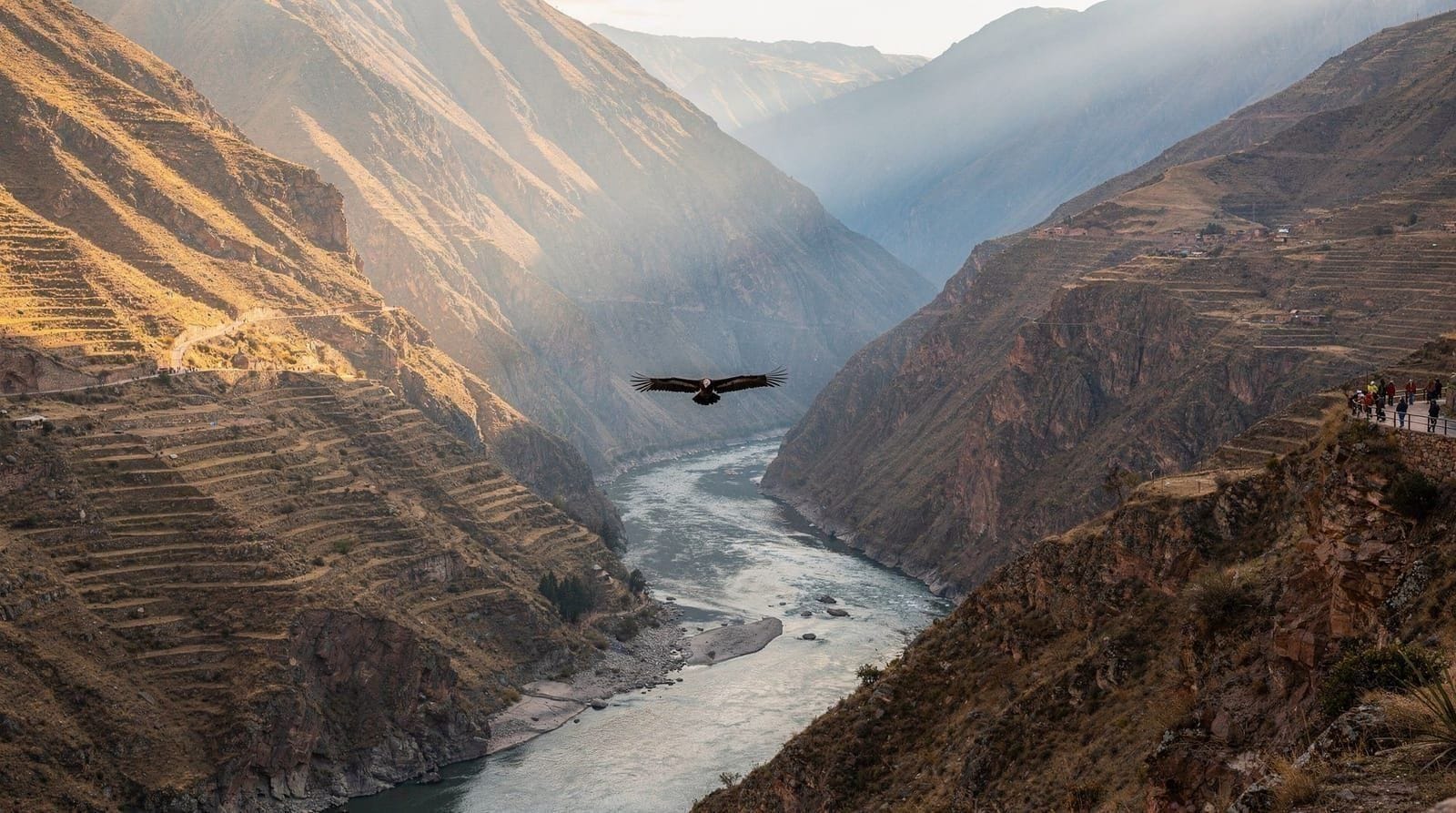
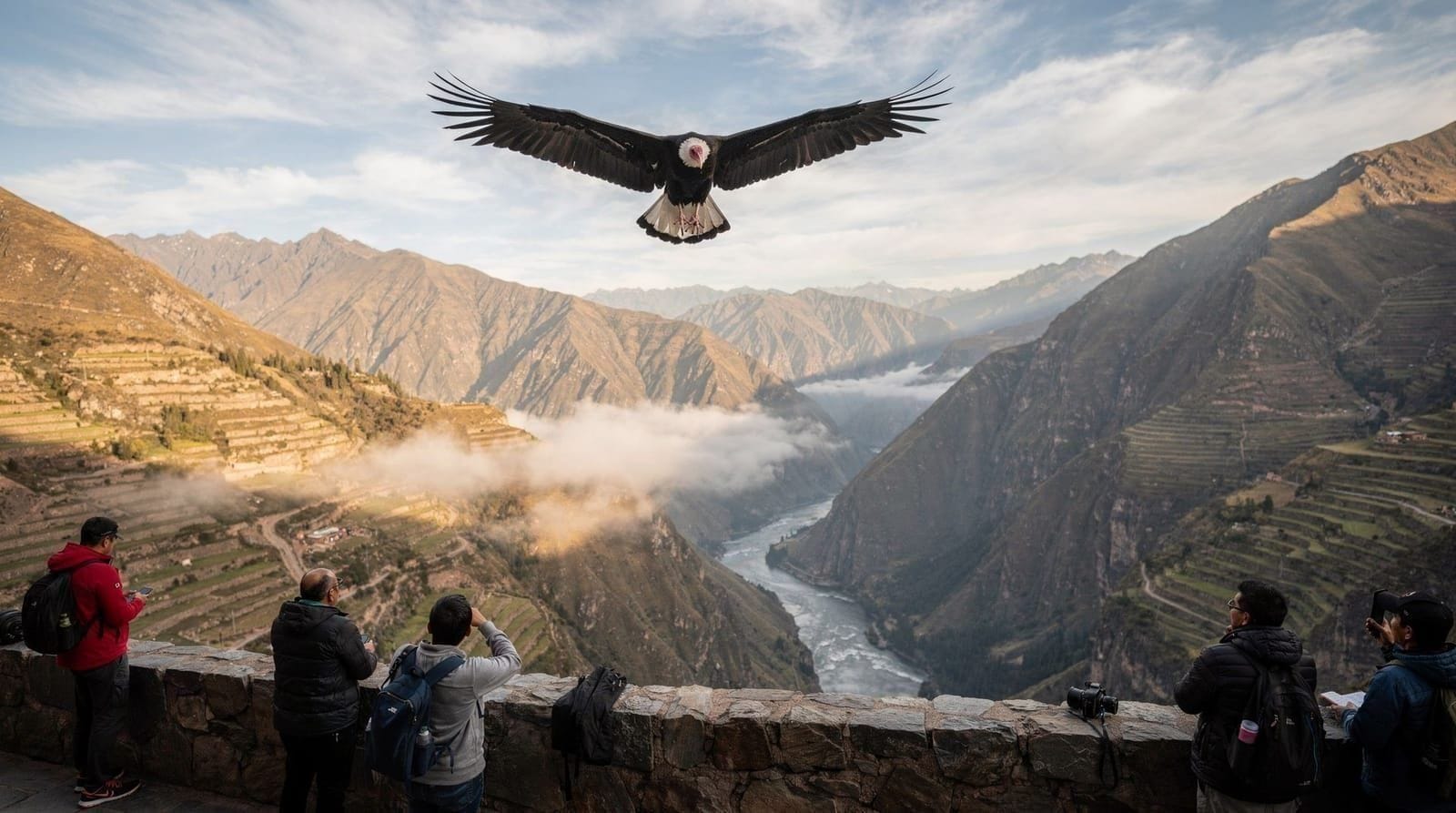
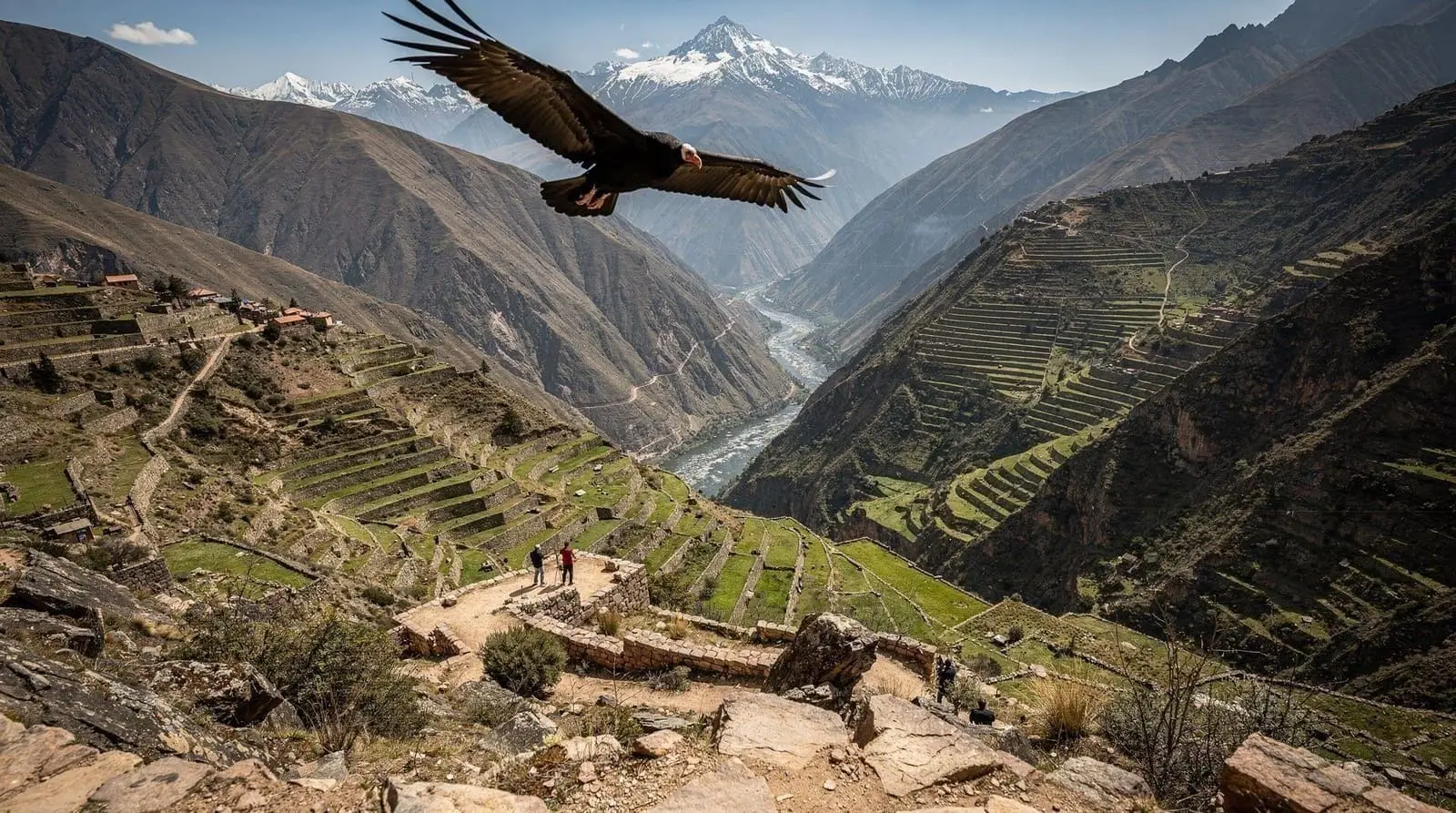
Cruz del Condor is the highlight, and the 2-day tour exists largely to get you there at the right time without a 3 am departure. Andean condors-among the largest flying birds on earth, with wingspans approaching three metres-ride the morning thermals out of the canyon, and the prime window is roughly 8:00 to 10:00 am. Arrive too early and they are still roosting; arrive too late and they have drifted off.
This is exactly where the full-day tour falls down. Squeezing the same viewpoint into a single day means leaving Arequipa around 3:00 am and still risking a rushed, crowded condor stop. The 2-day version puts you at the viewpoint relaxed and on time. There are no guarantees with wildlife-some mornings produce a dozen condors, others just two or three-but your odds are far better with the overnight pacing.
The hot springs, villages, and the high pass
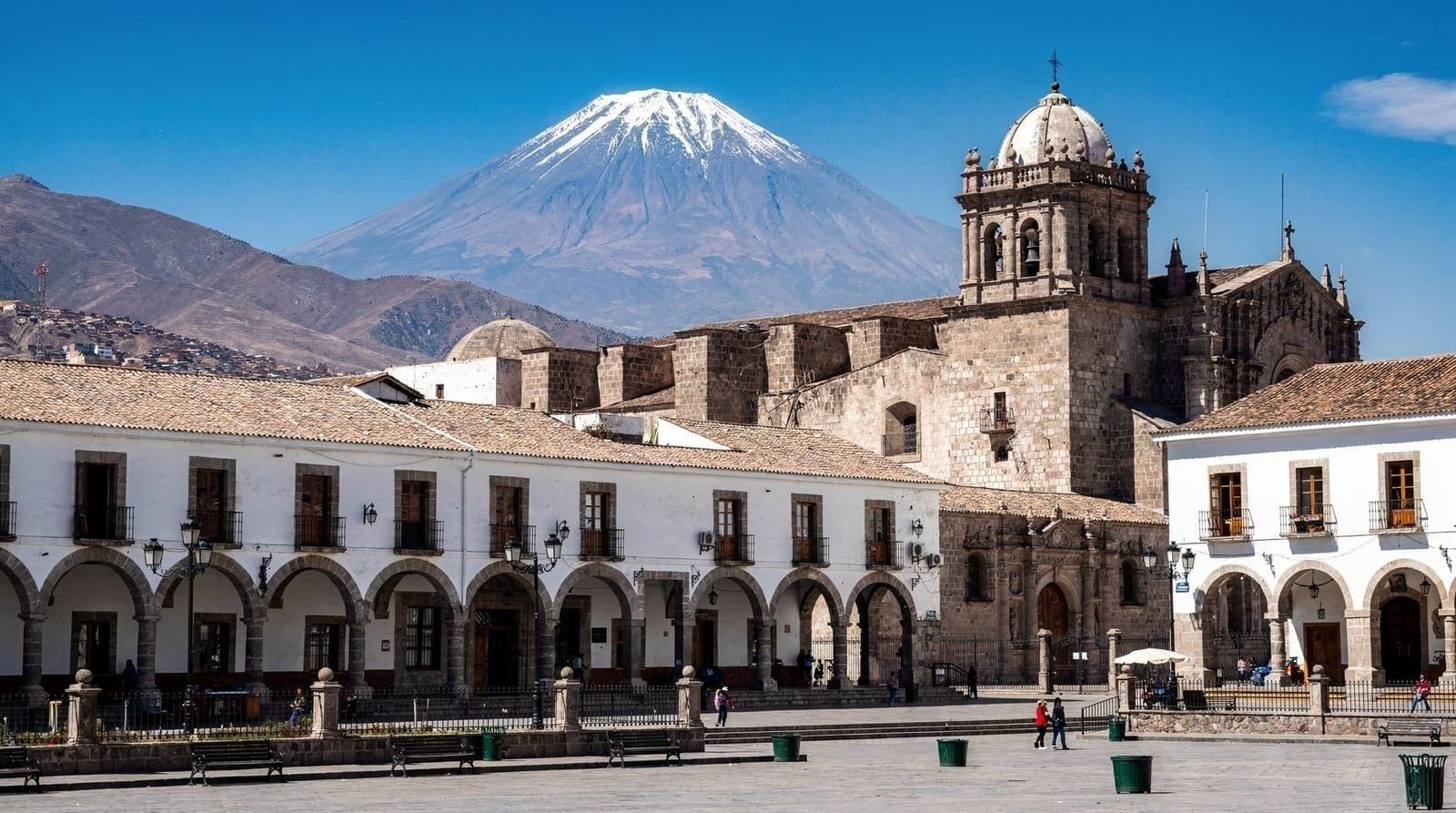
Day one’s hot springs at La Calera are a genuine perk after the long drive-thermal pools at altitude, ringed by mountains. The villages of Chivay, Yanque, and Maca offer colonial churches and a slower, agricultural Andean rhythm that the day trip skips entirely.
The wild card is the Patapampa pass at about 4,910 m on the drive in. It is a brief crossing with a photo stop among stone cairns, but it is genuinely high-higher than anything in Cusco-and unacclimatised travellers can feel it sharply. Acclimatise in Arequipa (2,335 m) for a day or two first, and read the altitude sickness guide if you are coming from the coast. The Colca Canyon destination guide covers the route in more detail.
2-day tour, full-day tour, or end in Puno?
| Option | Duration | Condor timing | Best for |
|---|---|---|---|
| Full-day tour | ~14-16 hrs round trip | Rushed, pre-dawn drive | Travellers with only one spare day |
| 2-day classic tour | 2 days, 1 night | Relaxed morning window | Most visitors-the sensible default |
| 2-day ending in Puno | 2 days, 1 night | Same condor window | Travellers continuing to Lake Titicaca |
If your trip continues to Lake Titicaca, the 2-day Colca trek ending in Puno saves a backtrack to Arequipa-it drops you in Puno ready for the lake. If you genuinely have only one day, the full-day Colca Canyon tour is the compromise, with the honest caveat that it is a long, tiring day with a less reliable condor stop.
A realistic timeline of the two days
Day one usually runs: pick-up around 7:00-8:00 am, the scenic drive over the altiplano with stops for vicuña and the high lakes, the Patapampa pass photo stop around midday, arrival in Chivay early afternoon, lunch, and the La Calera hot springs in the late afternoon before dinner and an overnight in Chivay or Yanque. Day two is the early one: a roughly 5:30-6:00 am departure to reach Cruz del Condor for the 8-10 am condor window, then the village and church stops before the long drive back to Arequipa, arriving mid-to-late afternoon.
The pacing is the whole point of the 2-day format. By splitting the drive and overnighting near the canyon, you reach the condor viewpoint relaxed and on time-the single biggest reason it outperforms the full-day version, which compresses everything into one punishing push.
Beyond the condors: what else the canyon offers
The condors are the headline, but the 2-day tour delivers more. The drive itself crosses spectacular altiplano-herds of wild vicuña, flamingo-dotted lakes, and the surreal cairn fields of the Patapampa pass. The colonial churches of Yanque and Maca, the pre-Inca agricultural terraces lining the canyon walls, and the slow village rhythm of Chivay give the trip texture beyond the wildlife. The La Calera hot springs, soaking in thermal water at altitude after a long drive, are a genuinely restorative perk that the day trip skips entirely.
The canyon is also one of the world’s deepest-more than twice the depth of the Grand Canyon at its lowest-and the scale only registers when you stand at the viewpoints. Photos flatten it; in person the drop is staggering.
How Colca fits a southern Peru route
Colca Canyon is the natural companion to Arequipa and a common bridge between Arequipa and Lake Titicaca. Many travellers run the loop Cusco to Puno to Arequipa to Colca and back, or use the version that ends in Puno to fold the canyon into the journey toward Lake Titicaca without backtracking. Because the tour crosses a 4,910 m pass, acclimatising first-ideally a day or two in Arequipa, or arriving already adjusted from the Cusco region-makes the high point comfortable rather than queasy.
Who this tour is for, and who should skip it
Book the 2-day tour if you want the most reliable condor sighting with humane pacing, enjoy soaking in hot springs at altitude, and appreciate a slower look at Andean village life. It is the right default for the majority of visitors to Arequipa.
Skip the 2-day version if you are extremely tight on time-take the full day-or if you specifically want to trek down into the canyon to the river oasis, which is a separate, far more demanding multi-day product. Travellers with serious altitude concerns should weigh the 4,910 m pass carefully.
Practical tips
Pack layers and a warm jacket: Chivay nights are cold, and the high pass is colder. Bring swimwear for the hot springs and small soles notes for the boleto turistico, the springs, and meals-card payment is unreliable in the valley. Carry sun protection for the exposed viewpoints. And set expectations on the condors: they are wild, the morning window is short, and patience pays off.
How to reach Arequipa from Cusco is covered in the Cusco to Arequipa transport guide, and the broader case for Arequipa as a base is in Cusco versus Arequipa.
What to pack and altitude prep
Layer aggressively: daytime at the viewpoints can be warm in the sun but Chivay and Yanque nights drop close to freezing, especially May through August. A warm jacket, hat, and gloves make the overnight far more comfortable than most first-timers expect from a “canyon” tour. Because the Patapampa pass sits above 4,900 m-noticeably higher than Cusco-spend at least one full day in Arequipa (2,335 m) beforehand if you have not already acclimatised elsewhere in the Andes, and drink more water than usual on the drive. Symptoms like headache or breathlessness at the pass photo stop are common and normally pass quickly once you descend back toward Chivay; if they do not, tell your guide.
Booking tips and group size
Book through your Arequipa hotel, a street-level agency in the city centre, or online a few days ahead-availability is rarely the constraint, quality is. Group sizes on the standard tour typically run 10-16 people in a single bus, which keeps costs down but means the Cruz del Condor viewpoint can feel crowded during peak months (June-August, and around Fiestas Patrias in late July). Smaller or private versions exist at a premium and suit travellers who want a slower pace or more flexibility on photo stops. Whichever you choose, confirm in writing whether the boleto turistico and hot springs are included, since this is the single most common source of “hidden cost” complaints in traveller reviews.