Altitude medicine scams in Cusco: what to skip
What altitude remedies in Cusco are a waste of money?
Oxygen bars, overpriced canned oxygen, branded coca candies, and pharmacy soroche pills sold without a prescription are mostly marketing. The things that genuinely help — rest, hydration, slow ascent, and proper acetazolamide prescribed by a doctor before you travel — are cheap or free. Most paid altitude products in Cusco target tourist anxiety, not physiology.
Why Cusco sells anxiety by the canister
Step off a plane in Cusco and within an hour you will be offered oxygen, soroche pills, coca tea, coca candy, coca-leaf bags, and a menu of altitude “treatments” from your hotel front desk. The pitch is always the same: you are at 3,400 m (11,150 ft), the air holds roughly 35 percent less oxygen than at sea level, and something feels off. That part is true. What follows it — the upsell — often is not.
The hard fact is that most paid altitude products in Cusco target your worry, not your physiology. Acclimatisation is something your body does on its own timescale, and the few interventions with real evidence are cheap or free. The expensive stuff exists because a nervous, jet-lagged tourist with a headache will pay for the feeling of taking action. This guide separates the genuinely useful from the money-burning, so you spend on what works and ignore the theatre.
This is not medical advice — altitude illness can become dangerous, and the serious forms need a doctor. It is a consumer-protection look at what gets sold to travellers and whether it is worth your soles.
| Where it’s sold | Pharmacies and shops on Avenida El Sol, hotel front desks, Plaza de Armas kiosks |
| What actually works | Slow ascent, rest, hydration, prescribed acetazolamide — all cheap or free |
| What’s mostly marketing | Canned oxygen, oxygen bars, branded coca sweets, over-the-counter soroche pills |
| Typical spend if you’re smart | Near S/0 beyond bottled water and maybe coca leaves |
| When to actually pay | Confusion, severe breathlessness at rest, a wet cough — descend and get real medical care |
The honest hierarchy of what works
Before the scams, here is what actually helps, roughly in order of evidence. Notice how little of it costs money.
- Slow ascent. The single best defence. Sleeping a night or two in the lower Sacred Valley — Urubamba (2,870 m) or Ollantaytambo (2,790 m) — before coming up to Cusco is genuinely easier on your body than flying straight into the city. It is also free.
- Rest on arrival day. Do nothing strenuous for the first 24 hours. No Sacsayhuamán climb, no hauling bags uphill.
- Hydration. Three-plus litres of water a day. Dehydration mimics and worsens soroche.
- Avoiding alcohol for the first 24–48 hours. The celebratory night-one pisco sour is the classic mistake.
- Eating light. Heavy meals divert oxygen-hungry blood to digestion.
- Acetazolamide (Diamox) — the one drug with strong evidence, but prescription-only and best started before you ascend (more below).
That is the whole list of high-value moves, and almost none of it is for sale. Everything that follows is what gets sold instead.
Canned oxygen: a few breaths, then nothing
Pharmacies and shops on Avenida El Sol and around the Plaza de Armas sell little aerosol cans of oxygen for S/30–60 ($8–16). The marketing implies a quick fix for soroche.
The physiology does not support it. A few breaths from a canister lift your blood oxygen for seconds, then it drops back to where it was. The can holds only a tiny volume — a handful of breaths — and does nothing to help your body adapt to the altitude, which is the actual problem. You are paying tourist prices for a placebo with a one-minute half-life.
This is different from medical oxygen: a continuous flow from a proper cylinder, delivered by a clinic to someone who genuinely needs it. That can be appropriate care for a struggling traveller. The canister on the pharmacy shelf is not that.
Oxygen bars: the purest tourist trap
A handful of cafés and “wellness” spots near the centre run oxygen bars — you pay to breathe flavoured oxygen through a nasal tube for ten or fifteen minutes. It is the clearest example of selling reassurance. There is no lasting benefit; the moment you stop, your levels return to whatever your acclimatisation allows. Skip it entirely and put the money toward water and an early night.
Soroche pills: the right drug, the wrong way to buy it
Walk into almost any Cusco pharmacy and ask for “soroche pills” and you will be handed something over the counter, often a branded blend. Some are just caffeine, aspirin, and salicylates dressed up. The genuinely effective ingredient is acetazolamide (Diamox), and here is the catch worth understanding.
Acetazolamide works — it nudges your body to acclimatise faster and has solid evidence behind it. But it is a real prescription medication. It does not suit everyone: people with sulfa-drug allergies should avoid it, it has side effects (tingling fingers, frequent urination, flat-tasting fizzy drinks), and it should ideally be started the day before you go up, not after you already feel sick.
The honest play is to talk to a doctor at home, get a proper prescription, understand the dosing, and travel with it. Buying it casually over a Cusco counter from someone who has not assessed you — and may sell you the wrong thing at a marked-up price — is the part to avoid. The drug is fine; the unsupervised arrival-day purchase is the trap.
Coca, in all its forms
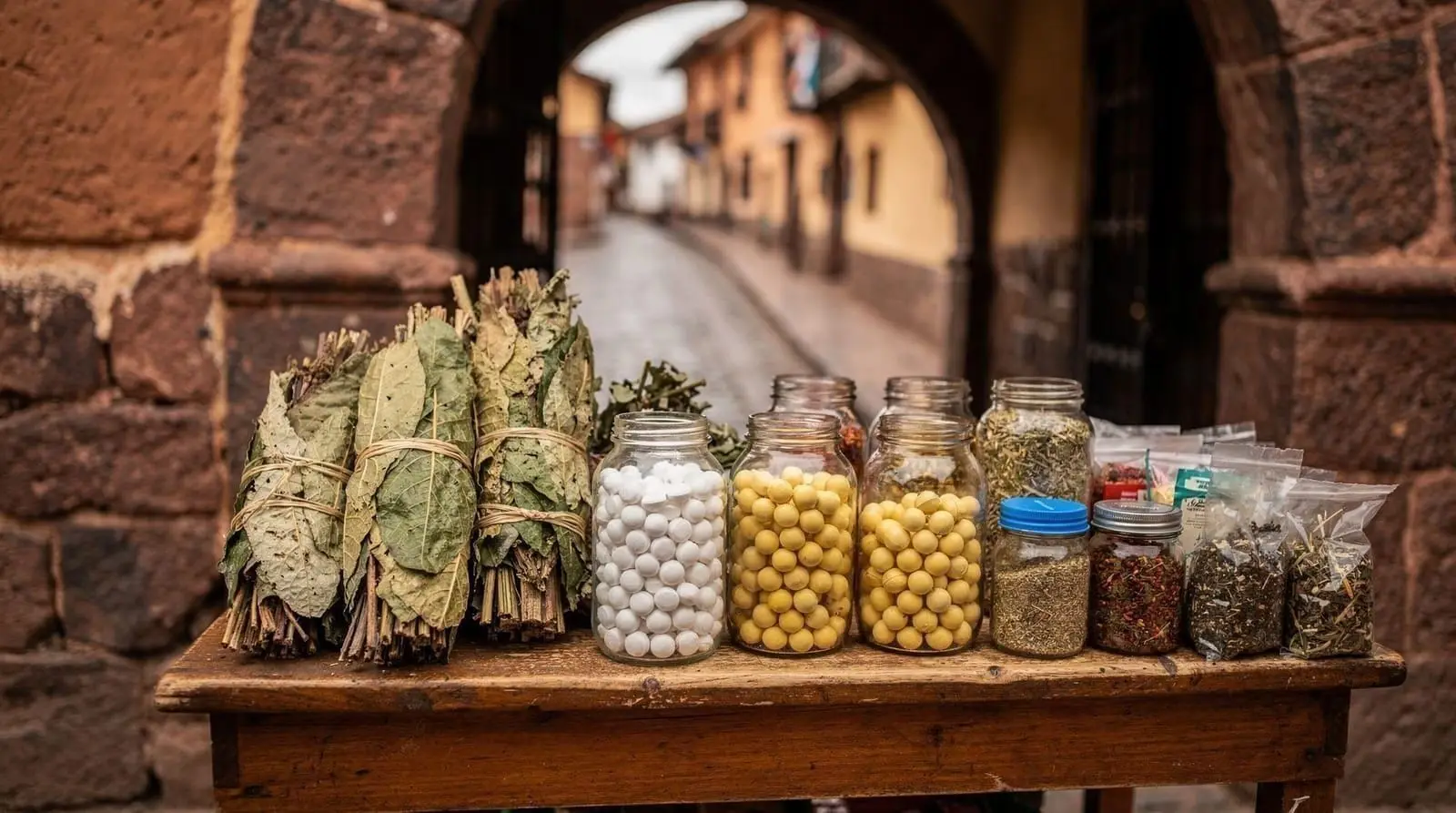
Coca is everywhere in Cusco: free mate de coca (coca-leaf tea) in hotel lobbies, bags of dried leaves to chew, and a whole shelf of branded coca candies, sweets, and “energy” products sold at a premium.
The honest position: coca is a mild stimulant that can genuinely take the edge off a headache and settle your stomach. It is legal, culturally rooted, and pleasant. Drink the free lobby tea by all means. What it does not do is speed acclimatisation or prevent serious altitude illness — it is comfort, not cure. The branded candies and “altitude” sweets at the souvenir shops are the same leaf with a markup; there is no reason to pay extra for them over the bulk leaves at San Pedro market.
One real caveat that the sellers rarely mention: coca can produce a positive drug test for cocaine metabolites for several days afterward, which matters if you are tested for work or travel onward to countries where it is illegal to carry.
Hotel oxygen upsells: the grey area
The murkiest territory is the hotel front desk. Many Cusco hotels can arrange clinic-delivered oxygen and trained staff for guests who are genuinely unwell — and for someone with worsening symptoms, that is appropriate, even life-saving care.
The grey area is the upsell. A guest with a mild first-night headache who really just needs water, rest, and time may be steered toward a S/150–250 oxygen session they do not need. Before agreeing to a paid altitude service, ask plainly: do I actually need this, or do I need to lie down and drink water? A reputable hotel will give you a straight answer. If your symptoms are mild and easing, save the money. If they are severe — confusion, loss of coordination, breathlessness at rest, a wet cough — that is no longer a money question; descend and get real medical help.
Red flags that you are being sold anxiety
- A product promising to “cure” or “prevent” altitude sickness in a sentence. Acclimatisation does not work that way.
- Pressure to buy on arrival, while you are tired and disoriented.
- Canned oxygen or oxygen bars pitched as a fix rather than a momentary top-up.
- Prescription drugs (Diamox) sold casually without anyone asking about allergies.
- Branded “altitude” superfoods, supplements, or sweets at several times the price of plain coca leaves or water.
The reliable rule: if it is cheap or free (rest, water, slow ascent, lobby coca tea), it probably helps. If it is expensive and aimed at your fear, it probably does not. For the actual physiology, prevention timeline, and danger signs, read the full altitude sickness in Cusco guide, and plan your Sacred Valley acclimatisation before high-altitude trips like Rainbow Mountain. For broader trip-safety planning, see /guides/peru-travel-safety-2026/ and the planning tools at /tools/.
The wider menu of dubious altitude products
Beyond the big four — canned oxygen, oxygen bars, counter-bought pills, and branded coca sweets — Cusco’s tourist shops carry a long tail of products that ride the same anxiety. Knowing them by category saves you from being upsold one by one.
“Altitude” supplements and superfoods. Capsules of maca, chlorella, spirulina, and assorted “oxygenating” blends are marketed with vague promises about energy and altitude. Maca is a perfectly good Andean root, but there is no good evidence that a souvenir-shop capsule prevents soroche. These are sold at a steep markup over the same products in a normal Peruvian pharmacy or market.
Branded “soroche” teas and sachets. Beyond plain coca, you will see boxed herbal blends — muña (Andean mint), coca, and others — packaged for tourists at several times the price of the loose herbs at San Pedro market. Muña tea is pleasant and may settle the stomach a little, but you are paying for the box, not a cure.
Pulse oximeters at inflated prices. Some shops sell fingertip oximeters to “monitor your oxygen.” A cheap oximeter can be reassuring, but reading the number without understanding it causes more anxiety than it solves — healthy acclimatising travellers often show readings that would look alarming at sea level. Buy one at home for a fraction of the price if you want one at all.
“Detox” and IV-drip clinics. A newer arrival is the wellness clinic offering vitamin IV drips pitched at altitude recovery and hangovers. For a healthy traveller with mild soroche, an IV drip is an expensive way to do what drinking water does for free, and any needle carries a small risk. Reserve IV fluids for genuine medical need.
The pattern across all of them is the same: a real or semi-real ingredient, a tourist-grade markup, and a promise that outruns the evidence. None of them is dangerous in itself; they simply separate worried travellers from money that would do more good as rest and water.
How to budget for altitude, honestly
If you want a rule of thumb for spending: budget almost nothing. The high-value measures are free. The one item worth money is doctor-prescribed acetazolamide bought at home, plus ordinary bottled water and perhaps a few soles of plain coca leaves or muña tea for comfort. If you genuinely fall ill, the worthwhile spend is real medical care — a clinic, medical oxygen, a doctor — not a shelf product. Everything in between, from the canister to the IV drip, is optional at best. Spending more does not buy faster acclimatisation; only time does that.
What to actually pack instead
Since the shelf products mostly disappoint, the smarter move is arriving with the few things that genuinely help. A refillable water bottle you will actually use, a strip of your usual paracetamol or ibuprofen for the headache (cheaper and just as effective as anything branded “soroche relief”), and — if a doctor has prescribed it — your own acetazolamide from home rather than a Cusco pharmacy substitute. None of this needs to be bought in Cusco at all, which is itself the clearest sign of how much of the local altitude-product market is aimed at people who arrived unprepared and anxious rather than genuinely unwell.
If you do want a local comfort ritual, a cup of free lobby mate de coca or a bag of loose leaves from San Pedro market costs almost nothing and is culturally part of the visit — just do not mistake it for medicine. Save your soles for the Sacred Valley acclimatisation nights that actually move the needle, covered in the altitude sickness in Cusco guide.