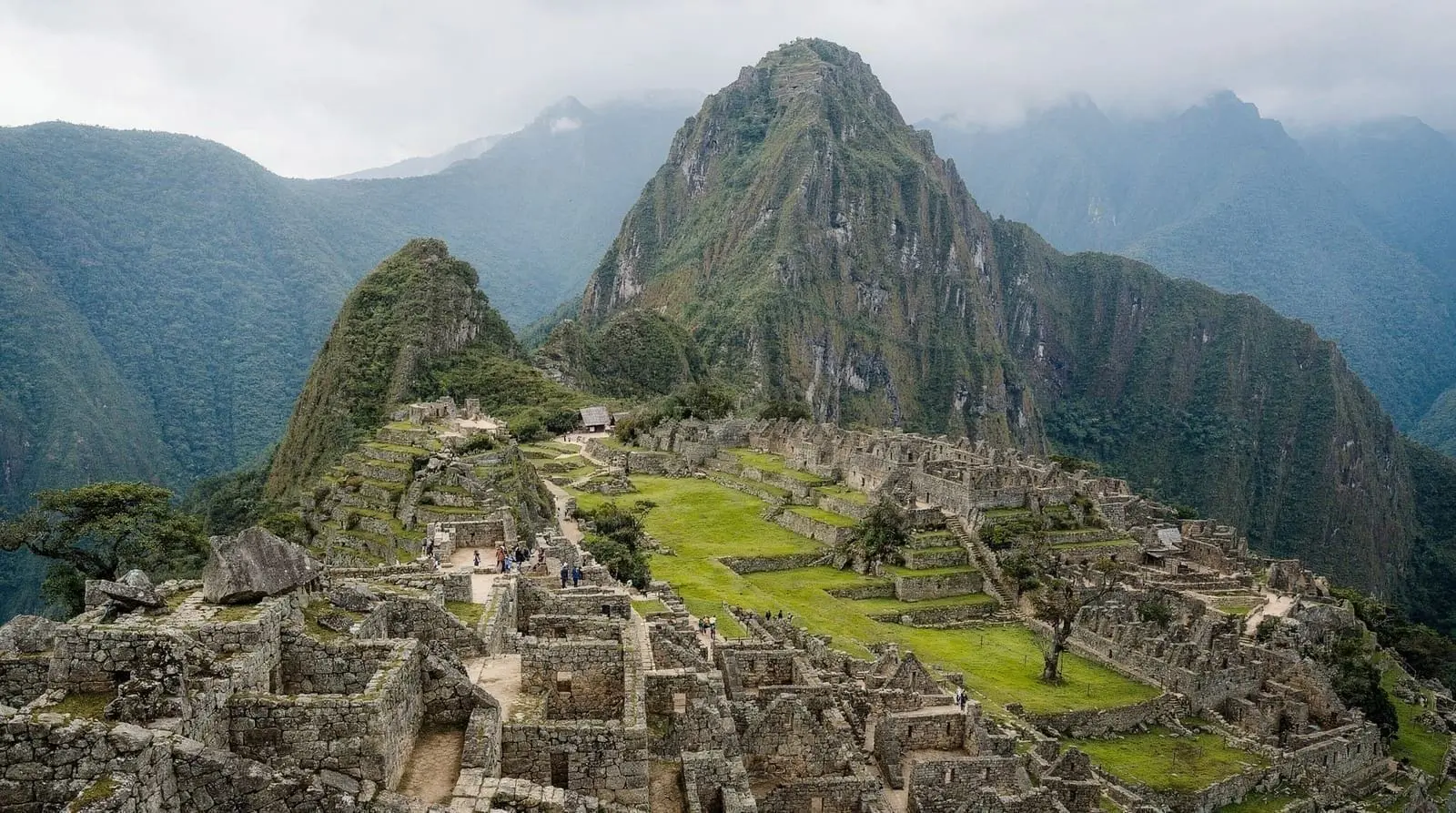
Machu Picchu day trip from Cusco: is it worth it?
Cusco: Machu Picchu + Tourist Train + Entrance Ticket
Can you visit Machu Picchu in one day from Cusco?
Yes, but it is a roughly 16-hour door-to-door day: pre-dawn road transfer to Ollantaytambo, train down, the citadel for a few hours, early-afternoon train back, and a road return to Cusco after dark. It works if you are short on time, but staying one night in Aguas Calientes gives a calmer, earlier visit for not much more money.
The question everyone short on time asks
Most people arrive in Cusco with a fixed number of days and a long Peru wish list, and sooner or later the question comes up: can I just do Machu Picchu in a single day and keep the rest of the trip intact? The honest answer is yes — it is entirely doable — but the day is long, tightly timed, and unforgiving of a missed connection. Whether it is the right call depends on what you are willing to trade.
This guide lays out the realistic day-trip timeline hour by hour, what it costs, the trains that make it work, the failure points to watch, and the case for staying one night instead. For the full mechanics of tickets, circuits, and the bus, read the complete Machu Picchu guide alongside this. Here the focus is the single-day decision.
| Where | Cusco to Machu Picchu and back, same day |
| Cost | Around $230–360/person |
| Time needed | About 16 hours door to door |
| Getting there | Road to Ollantaytambo, then train |
| Best for | Tight schedules with no spare night |
The realistic timeline, hour by hour
A Cusco day trip looks roughly like this. Times shift with your exact train and slot, but the shape is fixed:
- 4:00–5:00 am — leave Cusco by road for Ollantaytambo. The drive is about two hours.
- 6:30–7:00 am — board an early train at Ollantaytambo for the 1 hour 40 minute run down the canyon.
- 8:30–9:00 am — arrive at Aguas Calientes. Join the Consettur bus queue (up to 45 minutes in peak season).
- 9:30–10:00 am — reach the gate for your entry slot; walk your circuit for two to three hours.
- 12:30–1:30 pm — bus back down to Aguas Calientes; grab a quick lunch.
- 2:00–3:00 pm — catch the early-afternoon return train.
- 4:30–5:00 pm — back at Ollantaytambo; road transfer to Cusco.
- 7:00–8:00 pm — arrive in Cusco after dark.
That is roughly 16 hours door to door, of which only two to three are at the citadel itself. The rest is transit. It is a real day out, not a relaxed one.
The cleanest way to do it without juggling every leg is a packaged trip. A Machu Picchu day trip with the tourist train and entrance ticket bundles the road transfer, the train, the bus, and the timed entry into one booking, which removes the connection risk that makes the DIY version stressful.
What it costs
A day trip does not save much over an overnight, because the expensive parts — train, ticket, bus — are the same either way. Per person, roughly:
- Entry ticket: S/152 / about $41 for the standard foreign-adult circuit.
- Round-trip train from Ollantaytambo: $130–220 depending on class.
- Consettur bus: about $24 round trip.
- Road transfer Cusco–Ollantaytambo: $15–40 each way by private car, far less by colectivo.
- Guide: $15–40 if shared.
That lands around $230–360 per person for the day. The only real saving versus an overnight is one night’s accommodation — $15–25 at the budget end in Aguas Calientes — which is why the time-versus-comfort trade-off, not money, is the real deciding factor.
The trains that make a day trip possible
The whole day hinges on two trains: an early enough outbound from Ollantaytambo and an early-afternoon return that gets you back in time to road-transfer to Cusco the same evening.
The early-afternoon return slots, roughly 1 to 3 pm, are the bottleneck of the entire plan — they are the first to sell out precisely because every day-tripper needs one. Book your entry ticket first, then grab one of those return slots immediately; if they are gone for your date, a same-day trip may not be possible at all. The Machu Picchu by train guide covers classes, operators, and how to read the schedule. Note that direct Cusco (Poroy) trains are usually not the answer — they are pricier and often suspended, so the road-to-Ollantaytambo plan is standard even for a day trip.
The failure points to plan around
A day trip has no slack, so the things that go wrong cost the whole day:
The bus queue. The gate enforces your entry slot, not your bus departure. If the morning queue runs long and you miss your slot, there is no second chance. Build in buffer and consider buying the Consettur ticket in advance.
A missed train. Trains run to a fixed schedule and a missed return is expensive and disruptive to fix. If your outbound road transfer hits traffic or roadworks on the Cusco–Ollantaytambo route, the whole chain slips.
Altitude fatigue. A pre-dawn start after only a day or two in Cusco’s thin air is harder than people expect. Acclimatise for two to three nights in Cusco or the Sacred Valley before attempting a long day.
No early light. Day-trippers arrive mid-morning, by which point the first soft light and the quietest hour are gone and cloud may be building. You see the citadel at its busiest.
Booking a guided slot helps with the on-site half: a Machu Picchu entry with an exclusive guided experience gives you a licensed guide for the few hours you do have, so the limited time is used well, and it satisfies the official guide-required-for-first-entry rule.
When to stay overnight instead
For most people who can spare a second day, the overnight wins. One night in Aguas Calientes lets you take the first 5:30 am Consettur buses and walk into a near-empty citadel in soft morning light, before the day-trip wave arrives around 10 am. It also removes the single-point-of-failure risk: a delayed train or long queue no longer wrecks the only window you have.
The town itself is unlovely and overpriced, but the early gate is the payoff. A 2-day Machu Picchu tour from Ollantaytambo packages the train, the overnight, the bus, and the entry into one booking, which is the low-stress way to do the two-day version from the Sacred Valley.
If money rather than time is the constraint, the Hidroeléctrica budget route is a two-day option that roughly halves the transport cost by swapping the train for a minivan and an 11 km walk — the opposite trade to the day trip, spending time to save money.
How to make a day trip work if you commit to it
If the schedule forces a day trip, a few choices stack the odds in your favour:
Book a mid-morning entry slot, not the earliest. Counterintuitively, the very first slots are hard to make on a day trip because they demand an even earlier train than the logistics comfortably allow. A slot around 9 to 10 am gives the bus queue room and still leaves you the early-afternoon return.
Buy the Consettur bus ticket in advance. On a day with no slack, standing in two queues — one to buy the bus ticket, one to board — is a risk you can remove by purchasing ahead in Cusco or online.
Pick Circuit 2 or Circuit 1, not a mountain. A peak climb plus the day-trip transit does not fit; you would have no time. Save Huayna Picchu and Machu Picchu Mountain for an overnight visit and use your day-trip hours on the citadel itself.
Travel light. Large bags are barred inside the citadel and limited on the train, so bring only a small daypack with water, a layer, sun protection, and your passport. There is nowhere convenient to stash luggage on a one-day round trip.
Pre-acclimatise. A 4 am start is brutal on lungs still adjusting to Cusco’s altitude. Give yourself two to three nights at altitude in Cusco or the lower Sacred Valley before the day trip, or you will spend it exhausted.
Have the bookings offline. Signal vanishes in the canyon. Screenshot your train, bus, and entry tickets, plus your passport details, before you leave Cusco.
A note on day trips from the Sacred Valley
If you are not starting in Cusco at all but staying in the Sacred Valley — in Ollantaytambo or Urubamba — a day trip becomes far more sane. You are already close to the train, so you skip the two-hour pre-dawn road transfer at both ends. From Ollantaytambo you can catch an early train, spend the morning at the citadel, and be back at your valley hotel by mid-afternoon, turning a 16-hour ordeal into a manageable day out. This is one of the underrated reasons to base in the Sacred Valley rather than Cusco for the Machu Picchu portion of a trip — the Ollantaytambo destination page covers staying there.
So, is the day trip worth it?
Do the day trip if your Peru itinerary genuinely cannot give up a second day and you accept that you are buying a few hours at a busy citadel for a 16-hour effort. It works, plenty of people do it, and a packaged tour makes it manageable.
Skip it in favour of an overnight if you can spare the time, want the quiet early gate, or simply do not want a missed connection to be the difference between seeing Machu Picchu and not. For how the citadel fits into a wider trip, see the complete Machu Picchu guide and the Machu Picchu destination page.
What a day trip means for your wider Peru plan
The reason day trips tempt people is almost always the rest of the itinerary. Peru is large and the highlights are spread out, so a day saved at Machu Picchu can become a day spent in Cusco, the Sacred Valley, or further afield. Before you commit to the long single day, though, it is worth checking whether your schedule is really as tight as it feels.
A common pattern is to allow three or four nights in the Cusco region: two to acclimatise and see Cusco and the Sacred Valley, then the Machu Picchu portion. Within that, slotting in an overnight at Aguas Calientes rather than a day trip often costs only one extra night and transforms the citadel visit, while still leaving the rest of the trip intact. The squeeze usually comes from trying to bolt Machu Picchu onto a Peru itinerary that was already too rushed — and the fix there is to add a day to the whole trip rather than to compress the one place that most rewards an unhurried morning.
If the days genuinely are not there, the day trip is a legitimate choice and millions make it work. Just go in clear-eyed about what you are trading. For sizing the overall trip, how many days in Peru and the Peru trip cost guide help you weigh the extra night against the rest of the route.
What you give up on a day trip
To be concrete about the trade, a day trip costs you four things an overnight keeps: the first soft morning light on the citadel; the quiet hour before the day-trip wave arrives; the safety margin against a delayed train or long queue; and the option to climb a peak, which simply does not fit the timetable. What you gain is one day back for the rest of Peru. For some itineraries that is the right call; for most travellers with any flexibility, the overnight is worth the extra night. Decide based on how scarce your days actually are, not on the assumption that a day trip is the cheaper or simpler default — it is barely cheaper and, on a tight schedule, distinctly more stressful.
How groups and families should think about it differently
A day trip changes character with who you are travelling with. Solo travellers and couples in good health handle the 4 am start and the long transit hours reasonably well; families with young children and larger groups usually find the day considerably harder, since the pre-dawn wake-up, the bus queue, and the compressed circuit time leave little room for a tired child or a slower walker to set the pace.
If you are travelling with a mixed-ability group, the honest move is to build in a genuine buffer at every link — a mid-morning entry slot rather than the earliest one, a Circuit 1 or Circuit 2 pace rather than a rushed Circuit 2 sprint, and a private rather than shared road transfer so you are not waiting on other passengers. None of this makes the day trip effortless, but it does make it survivable for a wider range of travellers.
Weather risk on a day trip specifically
Because a day trip has essentially no slack, weather-related delays hurt it more than they hurt an overnight visit. In the wet season (November–March), rain can slow the Cusco–Ollantaytambo road with minor debris clearing, and low cloud occasionally delays the first Consettur buses at Aguas Calientes — a delay that eats directly into your citadel time rather than just changing when you arrive. In the dry season (May–September) the physical risk drops close to zero, but the trade-off is that the popular early-afternoon return trains sell out earliest of all, so the risk shifts from weather to availability. If you are set on a day trip and have any choice of season, dry season removes more of the failure points than it removes of the crowds.
Frequently asked questions about Machu Picchu day trip from Cusco: is it worth it?
How long is a Machu Picchu day trip?
Is a Machu Picchu day trip worth it?
What time do you have to leave Cusco?
Which train do I need for a day trip?
Should I do a day trip or stay overnight?
Is a Machu Picchu day trip harder with kids?
Does the season affect day-trip risk?
Top experiences
Bookable activities with verified prices and instant confirmation on GetYourGuide.
