Lord of Sipán guide
Chiclayo: Tomb of the Lord of Sipán & Site Museum Day Tour
Who was the Lord of Sipán?
A Moche ruler buried around 300 CE near Chiclayo, found intact in 1987 with the richest haul of gold, silver and turquoise ornaments ever excavated in the Americas. His tomb is displayed at the Tumbas Reales museum in Lambayeque, and the burial mound itself can be visited at Huaca Rajada.
The discovery that rewrote Moche archaeology
In February 1987, looters broke into a Moche platform mound near the village of Sipán, 35 km east of Chiclayo, and pulled out a sackful of ancient gold. A dispute over the spoils led to a tip-off, the police raided a house, and the archaeologist Walter Alva was called to assess what had been taken. Realising the looters had only scratched the surface of an undisturbed royal tomb, Alva mounted an emergency excavation under police guard — local villagers, furious that “their” treasure was being claimed by the state, at one point threatened the dig.
What emerged over the following months was the most important archaeological find in the history of the Americas. The principal tomb held a Moche lord buried around 300 CE, surrounded by hundreds of gold, silver, copper and turquoise objects, three sacrificed attendants, two women, a guardian whose feet had been amputated, a dog and two llamas. The press named him the Lord of Sipán. Subsequent seasons uncovered the older “Old Lord of Sipán” beneath him and a high priest’s tomb nearby. For a culture previously known mainly from looted ceramics, this was a revelation: suddenly the Moche had names, faces, and a documented royal hierarchy.
This guide covers how to see all of it today — both the mound at Huaca Rajada and the museum where the treasure now lives. For the wider context of Moche society, the Moche and Chimú civilisations guide goes deeper into who these people were.
| Where | Huaca Rajada (35km east) + Tumbas Reales museum, Lambayeque (12km north) |
| Cost | Museum S/15, Huaca Rajada S/10, guide ~S/30 |
| Time needed | Half to full day for both |
| Hours | 9am-5pm, museum closed Mondays |
| Photography | Forbidden inside the museum |
The two halves of a Sipán visit
The Lord of Sipán is split across two locations, which trips up first-time visitors. The mound where he was found is mostly empty; the treasure is in a museum 40 minutes’ drive away. To understand the discovery you really want both.
Huaca Rajada is the archaeological site near Zaña, 35 km east of Chiclayo, where the tombs were excavated. Museo Tumbas Reales de Sipán is in Lambayeque, 12 km north of the city, where the artefacts and reconstructed burials are displayed. Decide your order before you go — most tours run museum-first to set up the story, then the mound; doing the mound first works equally well if you have a guide to narrate.
For a single booking that handles transport and a guide across both points, the standard day tour is:
Chiclayo: Tomb of the Lord of Sipán & Site Museum Day TourVisiting Huaca Rajada
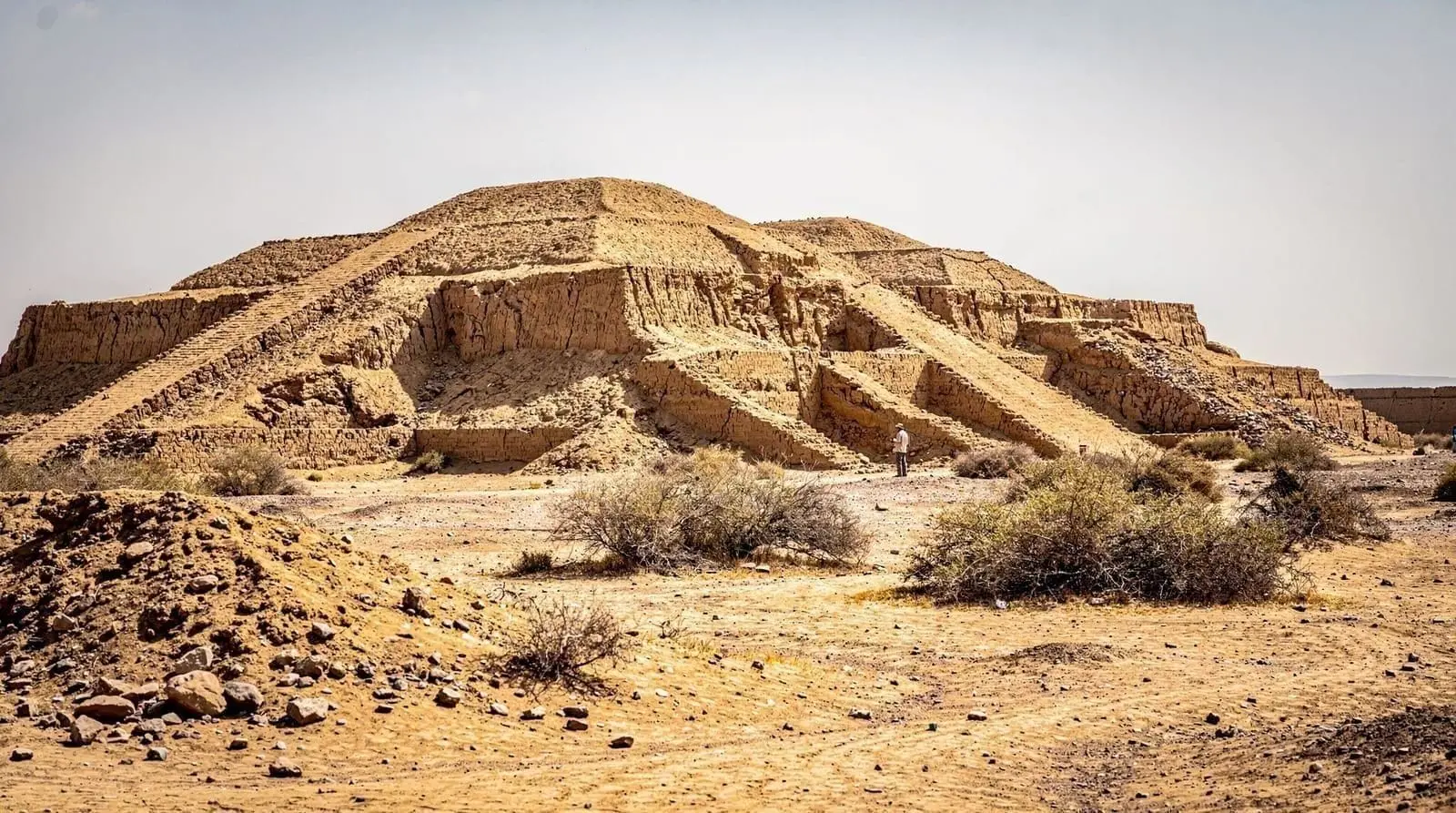
Huaca Rajada is a pair of eroded adobe platforms typical of Moche ceremonial architecture — raised mud-brick structures built up over generations as administrative and ritual centres. The famous tombs were cut into a smaller platform beside the main pyramids. Today a walking circuit leads past the excavation pits, several of which contain in-situ reconstructions showing how each body and its grave goods were laid out. There is a small but well-organised on-site museum, the Museo de Sitio Huaca Rajada, opened in 2009, displaying finds from later excavation seasons that were kept here rather than moved to Lambayeque.
Entrance is S/10. Hours are typically 9am to 5pm, though rural sites can close earlier; arrive before mid-afternoon. Signage is bilingual but thin, so the S/30 site guide is money well spent — they explain the looting story, the stratigraphy, and which pit held which lord. Allow about an hour, longer with a guide.
The setting matters. Standing on the platform where, in 1987, a routine looting case turned into a global discovery gives the museum gold a context that photographs cannot. The surrounding sugar-cane fields and the silhouette of the larger unexcavated pyramids make clear how much of the Moche world still lies underground.
Visiting the Tumbas Reales museum
The Museo Tumbas Reales de Sipán in Lambayeque is the reason to come to northern Peru at all. Opened in 2002, the building is a deliberate echo of a Moche pyramid — a sloping, windowless mass of terracotta-coloured concrete you enter from the top and descend through, mirroring the way archaeologists worked downward into the tomb.
The collection is staggering. The Lord of Sipán’s burial is reconstructed at full scale, and the original ornaments are displayed alongside: a gold-and-turquoise backflap that hung from his waist, a necklace of ten gold and ten silver peanuts (the metals split left and right, symbolising day and night), beaded pectorals in dozens of colours, gold-and-silver ear ornaments depicting warriors in miniature, nose ornaments, sceptres, and feather-and-gold headdresses. The technical sophistication — granulation, alloying, lost-wax casting — would not be matched in Europe for centuries.
Practical details: admission is S/15 (USD 4); hours are 9am to 5pm, closed Mondays. Photography is strictly forbidden and bags must be checked at the door, so leave large packs at your hotel. Allow at least 90 minutes; two hours if you read the panels. A guide can be arranged at the entrance and adds real value, as the dim, reverent lighting and minimal English labelling can otherwise leave you guessing.
If you want a booking that bundles the museum with Huaca Rajada and the royal tombs context, this option covers the trio:
Chiclayo: Sipán Museum, Huaca Rajada & Royal TombsWhat the burial tells us about the Moche
The Lord of Sipán matters beyond the gold because of what an intact royal tomb reveals about Moche society — a culture that, before 1987, was known almost entirely from looted ceramics with no documented context. The arrangement of the principal tomb was a frozen ritual: the lord lay in a plank coffin at the centre, flanked by sacrificed retainers whose roles the grave goods imply — a military commander, a standard-bearer, women perhaps from his household, and a guardian buried at the entrance with his feet amputated, symbolically rooted to his post. A dog and two llamas accompanied them.
The ornaments are not merely wealth; they are a costume of power. The same regalia — the crescent headdresses, the backflaps, the rattles and sceptres, the warrior-priest imagery — appears in Moche painted ceramics depicting elaborate sacrifice ceremonies. The Sipán find effectively proved that those painted scenes were not myth but records of real rituals performed by real rulers dressed exactly as the tomb shows. The detail that the peanut necklace splits ten gold beads on one side and ten silver on the other, encoding a duality of sun and moon, male and female, is the kind of cosmological precision that the burial made legible for the first time.
Later seasons deepened the picture. Beneath the Lord of Sipán lay the Old Lord of Sipán, a still-earlier ruler whose gold included a famous crab-deity figure and a remarkable spider-on-a-web ornament. A separate tomb held a high priest, identifiable by his owl-headdress and goblet — the very objects shown in the ceramic sacrifice scenes being used to collect and drink the blood of captives. Together the tombs sketch a Moche elite organised around warfare, ritual bloodletting and a religion of dazzling material expression.
Planning the day
Combined, the two sites make a comfortable half to full day. A sensible rhythm: leave Chiclayo mid-morning, do the Tumbas Reales museum in Lambayeque, eat lunch there (Lambayeque is famous for its own version of king kong), then drive out to Huaca Rajada in the early afternoon before the site closes. Reverse the order if you prefer to end on the museum’s high note.
If you are building a broader trip, Sipán slots naturally alongside the other Chiclayo sites. The Túcume pyramids and the Sicán museum form the northern half of the region’s archaeology, and the Chiclayo complete guide sequences the whole circuit over two days. Travellers continuing south can compare these Moche royal tombs with the Moche Huacas and Chimú Chan Chan near Trujillo.
Practical logistics and timing
A few specifics that smooth the visit. Carry cash in soles: the Huaca Rajada entrance (S/10), its site guide (around S/30) and the Tumbas Reales admission (S/15) are cash-only, and there is no ATM at either location. The Tumbas Reales museum closes on Mondays, as do most of the region’s archaeological sites, so do not anchor your plan to a Monday. Huaca Rajada’s rural hours can shorten in low season, which is why most itineraries front-load the museum and reach the mound by early afternoon.
For independent visitors, colectivos run frequently from Chiclayo to Lambayeque (S/3–5, about 20 minutes), making the Tumbas Reales easy to do on its own. Huaca Rajada is the harder leg — colectivos toward Sipán and Zaña exist but are slower and less frequent, so for the mound a hired taxi (around S/80–120 round trip with waiting) or a tour is the practical choice. Because the two sites sit on opposite sides of Chiclayo, anyone wanting both in a day should arrange transport rather than chain colectivos.
If you only have time for one, choose the museum without hesitation — it holds the gold and the reconstructed burials, and it is the experience visitors remember. Huaca Rajada is the worthwhile second act once you have the freedom of a tour or a hired car.
The looters, the raid, and what happened after
The human story around the discovery is worth knowing before you visit, because it shapes how the site presents itself today. After the February 1987 looting, several of the stolen pieces surfaced on the international antiquities black market before Peruvian and American authorities, working with Interpol, managed to recover a significant number of them over the following years — some were seized in raids as far away as the United States.
Walter Alva’s emergency excavation was conducted under armed police guard precisely because looting in the region was (and to some extent remains) a serious organised activity, and the local community’s initial anger reflected a genuine tension between subsistence looting, driven by rural poverty, and archaeological preservation.
That tension is part of why the Peruvian state invested so heavily in building the Tumbas Reales museum near the find site rather than shipping the treasure to Lima — a deliberate decision to keep the discovery, and its economic benefit through tourism, in the region where it was found. Locals who once dug for treasure now work as museum guides, guards, and site staff, a genuine, if imperfect, redirection of the same economic pressure that caused the looting in the first place.
Comparing Sipán with the region’s other Moche and Chimú sites
Northern Peru holds several major pre-Inca sites, and travellers often ask how Sipán stacks up. The Sicán museum covers a related but distinct culture that flourished after the Moche, with its own dazzling gold tradition and a comparable “why isn’t this as famous as Machu Picchu” reaction from first-time visitors. The Túcume pyramids, a vast complex of 26 adobe pyramids, offer scale and atmosphere rather than a single dazzling artefact collection.
Further south near Trujillo, Chan Chan represents the later Chimú civilisation’s capital, an entirely different kind of site: a sprawling mud-brick city rather than a royal tomb. If you can only choose one Moche-era experience in the north, Sipán has the edge for sheer artefact quality and the completeness of its story — from looting to excavation to interpretation — but the Chiclayo complete guide makes the case for seeing several together, since they add up to a coherent picture of pre-Inca coastal civilisation that no single site tells alone.
Honest cautions
Three things to know. First, the museum bans photography and means it — guards watch closely, and there is no reason to risk being escorted out. Accept that the images will live in your memory, not your phone. Second, Huaca Rajada can feel underwhelming without a guide; the pits and reconstructions need narration to come alive, so do not skip the guide to save S/30. Third, avoid bargain “Sipán tours” sold by terminal touts that cut the museum visit short to fit other stops — the museum is the whole point and deserves its full 90 minutes.
Frequently asked questions about Lord of Sipán
Where is the Lord of Sipán now?
How much does it cost to see the Lord of Sipán?
Can I take photos inside the Tumbas Reales museum?
Should I visit Huaca Rajada or just the museum?
How long does it take to see the Lord of Sipán properly?
Is the Lord of Sipán really comparable to Tutankhamun?
How does Sipán compare to Túcume and Chan Chan?
Top experiences
Bookable activities with verified prices and instant confirmation on GetYourGuide.
