Nazca Lines flight tour review: is the 30-minute overflight worth it?
From Nazca: 30-Minute Flight over Nazca Lines
The Nazca Lines are one of those sights that look spectacular in photographs and far more abstract in person. From ground level you see almost nothing; the geoglyphs only resolve into figures from a few hundred metres up. That single fact drives the entire economy of Nazca town, and it is why almost every visitor ends up weighing the same decision: pay for a light-aircraft overflight, or settle for the roadside mirador and move on. This review covers the 30-minute flight that departs directly from Nazca, what you genuinely get for the money, and the trade-offs that the booking pages tend to gloss over.
| Where | Maria Reiche Neuman Airport, Nazca |
| Cost | around S/280-400 (USD 75-110) + S/30 airport tax |
| Time needed | ~30-35 minutes in the air, ~2 hrs total with check-in |
| Getting there | Nazca sits ~6-7 hrs by bus south of Lima |
| Best time | Morning slots (8-10am), before wind and haze build |
What the flight actually includes
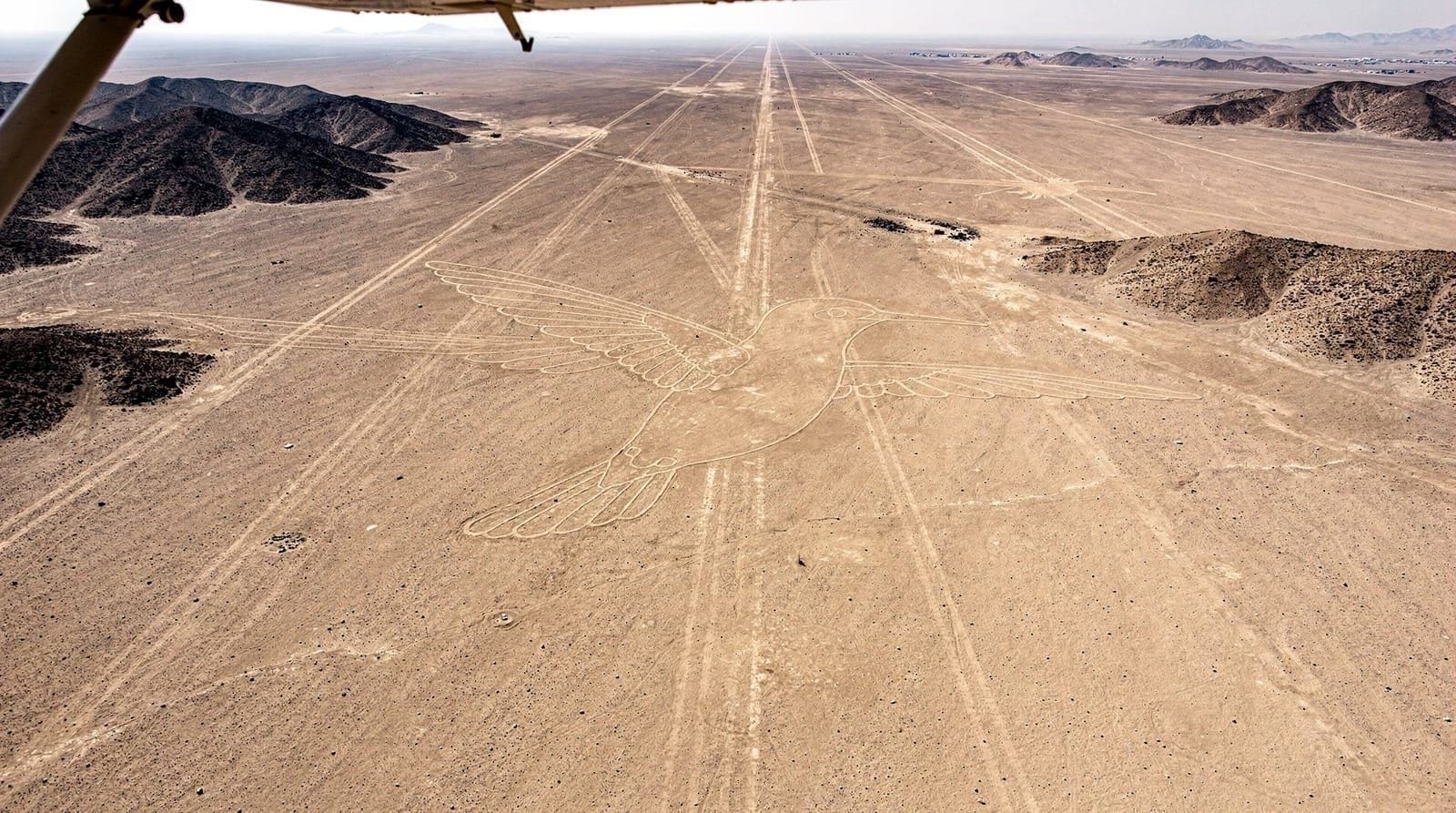
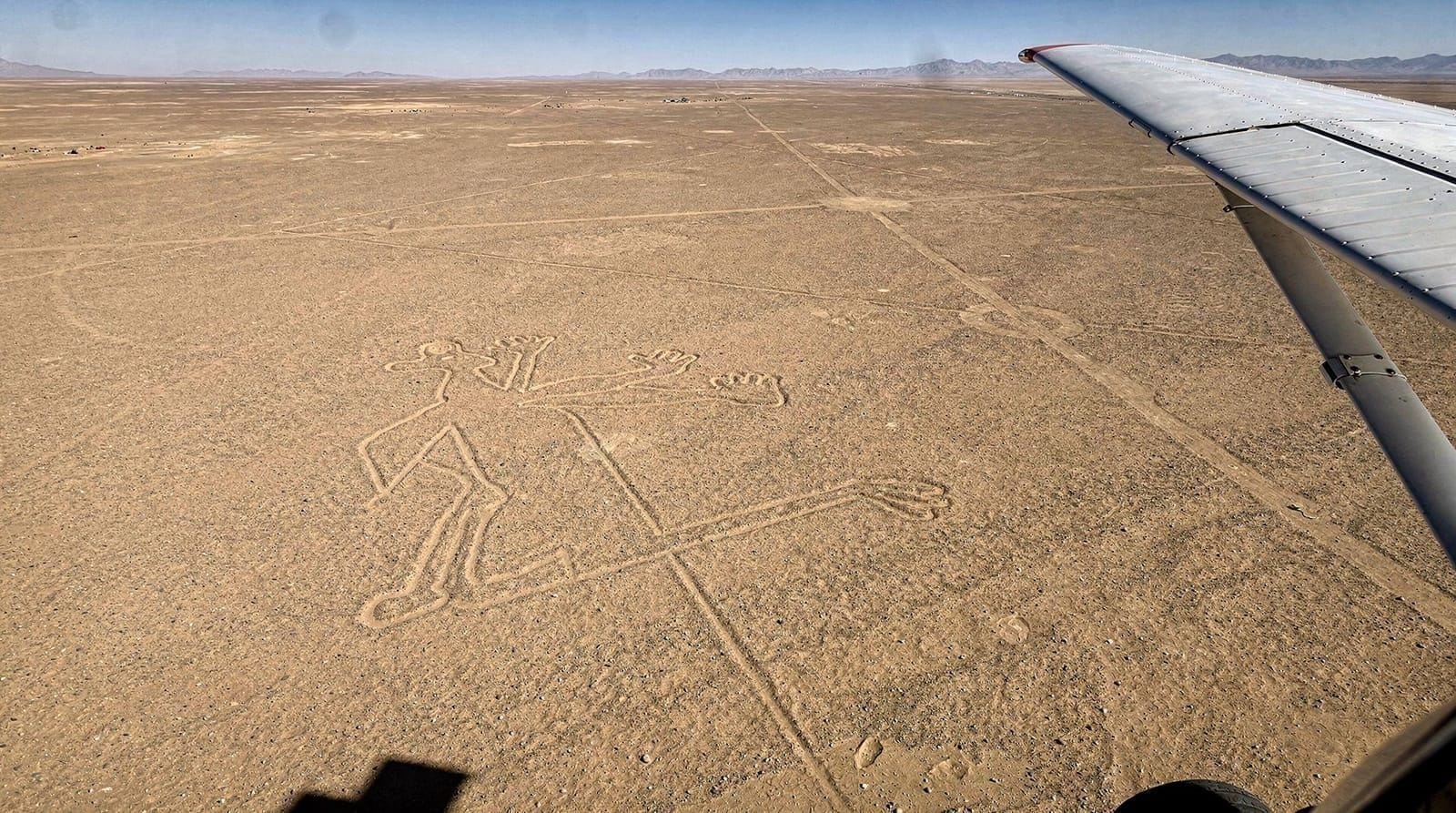
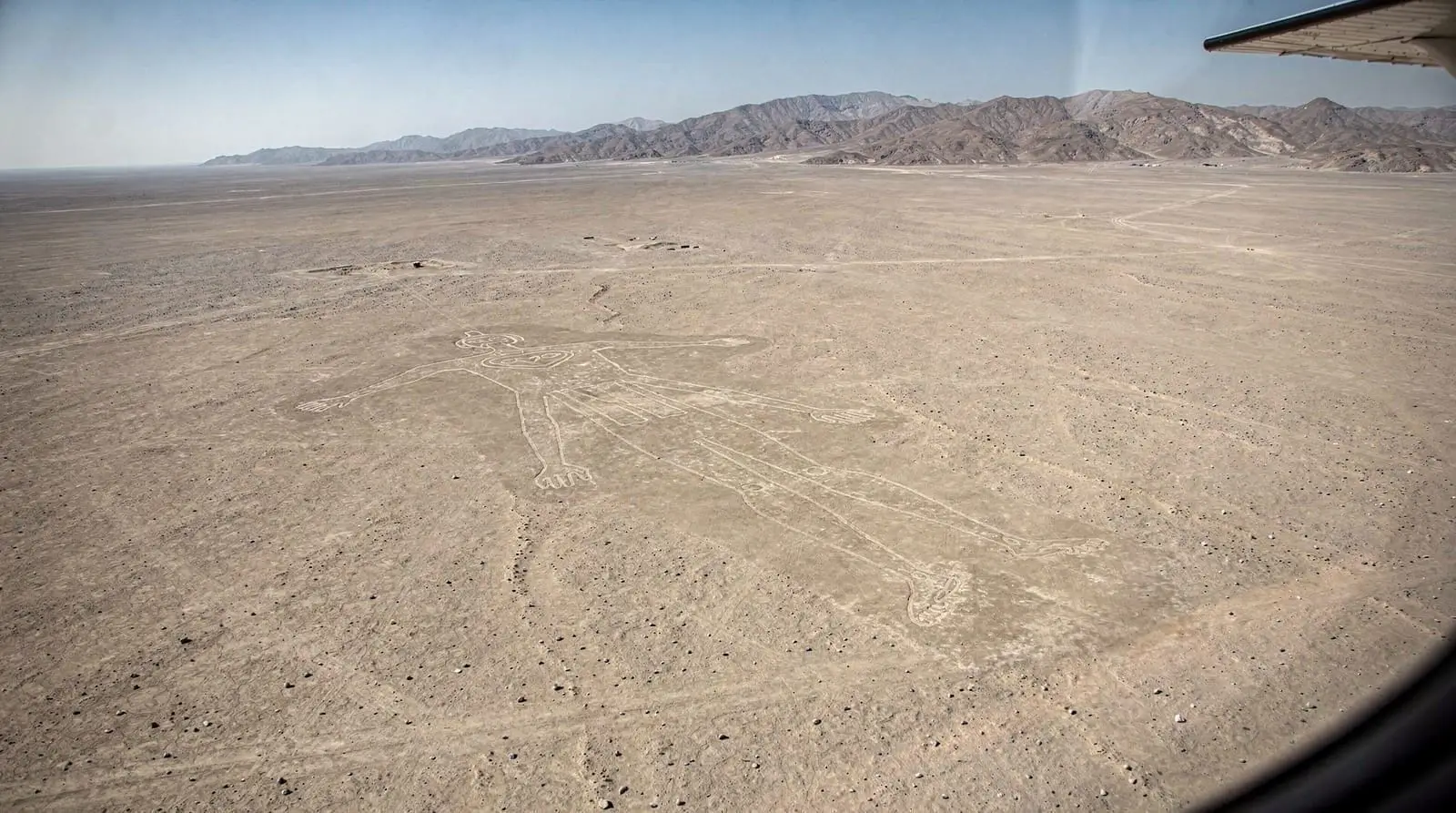
The product is straightforward. You depart from Maria Reiche Neuman Airport on the southern edge of town, fly a fixed loop over the main cluster of figures, and return. A typical run takes in twelve geoglyphs: the Whale, the Trapezoids, the Astronaut (also called the Owl Man, carved into a hillside), the Monkey, the Dog, the Hummingbird, the Condor, the Spider, the Hands, the Tree, the Parrot, and the so-called Triangles. The pilot calls each one out by name and number over the headset and banks the plane so that passengers on both sides get a look.
What is included: the flight itself, a pre-flight briefing with a route map, and the headset commentary. What is not included and routinely surprises people: the airport departure tax of around S/30 (about USD 8), payable in cash at the terminal, and any hotel transfer unless you booked a package that bundles it. Budget for both.
Check current prices and departure slots for the 30-minute Nazca flightPrice reality: soles, dollars, and the hidden extras
Pricing for the Nazca-departing flight typically lands between S/280 and S/400 (roughly USD 75 to USD 110) depending on season, operator, and how far ahead you book. That is for the seat only. Add the S/30 airport tax and, if you came from Lima or Cusco specifically for this, the cost of getting to Nazca in the first place.
Compared with the alternatives, this is the cheapest legitimate way to fly the lines, because Nazca town sits directly beneath them. The flights that depart from Ica add about 40 minutes of transit each way and a higher base price; the full-day version from Lima is a long, tiring round trip that can run USD 300 or more once you factor the eight to ten hours on the road. We break those down in the comparison below.
What we liked
The figures, when the light is right, are genuinely strange and worth the trip. The Hummingbird and the Spider in particular hold up to the hype; their precision over such a scale is hard to process from the cockpit. Departing from Nazca means minimal overland transfer, so you are over the pampa within minutes of take-off and the whole experience can be done in well under two hours including check-in.
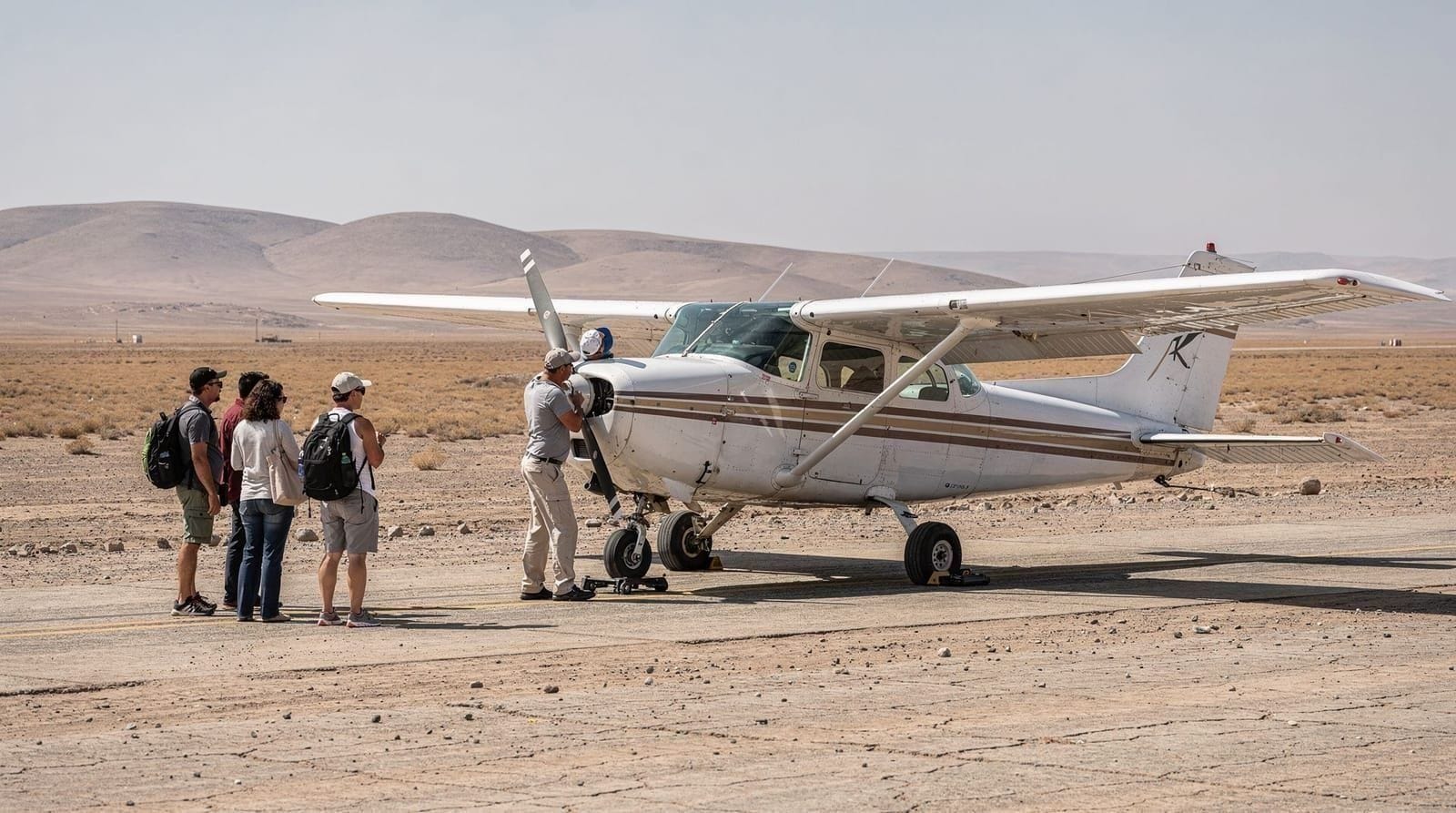
The smaller operators that run two-pilot Cessna Grand Caravans give a noticeably smoother, more reassuring ride than the cramped single-engine planes, and the per-figure narration is clear enough that you always know what you are looking at.
What we did not like
The banking is aggressive and relentless. To show both sides of the cabin, the pilot tilts the plane 30 to 45 degrees over each figure, then immediately rolls the other way for the next. Over 25 minutes of this, motion sickness is common even among people who never normally suffer it. Sick bags are standard equipment for a reason.
Scheduling can also be loose. Flights are weight-balanced, so departures are sometimes delayed an hour or more while the operator fills or rebalances a plane. Build in slack rather than booking a tight onward bus.
And the lines themselves divide opinion. Some travellers find them underwhelming after the build-up: faint scratches on a brown plain. If you are not already curious about the archaeology, read our Nazca Lines complete guide first to decide whether the mystery grabs you before you commit the budget.
The figures, one by one
It helps to know what you are looking for before the plane banks. The route is fixed, so the order rarely changes, and the pilot announces each figure by its catalogue number. The Whale comes early and is one of the harder ones to read, a long, blunt shape that pre-dates many of the more famous geoglyphs. The Trapezoids and long straight lines criss-cross the whole pampa and are the easiest to spot, vast cleared runways that fuelled decades of speculation about their purpose.
The Astronaut, carved into a hillside rather than the flat plain, is the only figure best seen from a slight angle, and its owl-like face is genuinely odd. The Monkey, with its spiralled tail, and the Dog are mid-route. The Hummingbird is the postcard figure, and in person its symmetry over roughly 90 metres is the moment most people remember. The Condor is the largest bird, the Spider is small but precise, and the Hands, the Tree, and the Parrot cluster near the roadside mirador at the end of the loop. Knowing the sequence means you are ready with the camera rather than fumbling when the pilot calls the figure you came for.
A word on the archaeology: the leading theory ties the lines to water and astronomy, made by the Nazca culture between roughly 500 BC and 500 AD by clearing the dark, oxidised surface stones to reveal the pale ground beneath. They have survived two millennia because this is one of the driest places on Earth. Maria Reiche, the German mathematician who spent decades documenting and protecting them, is the reason the airport carries her name. A guide on the ground, or our Nazca Lines complete guide, adds the context that the in-flight commentary skips.
Who this tour is for
This flight makes sense if you are already passing through the south coast on the Lima to Arequipa or Lima to Cusco overland route, you are physically fine with small aircraft and tight turns, and you have a real interest in the archaeology rather than just a checklist. It is also the right pick if you want the experience for the lowest defensible price, since the Nazca departure undercuts every other option.
It is the wrong tour for severe motion-sickness sufferers, for very young children, and for anyone who is nervous in light aircraft and would spend the whole flight white-knuckled rather than looking out of the window. For those travellers, the roadside mirador plus the Chauchilla cemetery and local archaeology make a satisfying ground-based day instead.
How it compares to the other Nazca flights
The four flight products differ mainly in where they depart from and how much of your day they eat. The Nazca-departure flight reviewed here is the leanest. The Ica departure suits people based in Huacachina who do not want to push further south. The Lima full-day flight is for travellers with one free day and no appetite for an overnight on the coast, but it is punishing. The Pisco departure works for those staying in Paracas who want to combine the lines with the Ballestas Islands.
Use the comparison table on this page to weigh departure point, duration, and price side by side before you book.
Book the 30-minute flight from NazcaPractical tips before you fly
Take a motion-sickness tablet roughly 45 minutes before departure, not at the gate. Eat a light, dry breakfast; an empty stomach is as bad as a full one. Wear sunglasses, because the cabin glare off the pampa is intense. Bring cash in soles for the airport tax. And book a morning slot: by early afternoon the desert wind makes the ride rougher and the haze dulls the contrast that makes the figures legible.
If you are stitching the south coast together, our Lima to Paracas and Nazca itinerary lays out a sensible two- to three-day loop that puts you in Nazca for a morning flight without backtracking.
Getting to Nazca and timing the flight
Nazca sits about 450 km south of Lima on the Panamericana Sur, a six- to seven-hour bus ride with companies like Cruz del Sur and Oltursa, or a shorter hop from Ica or Paracas if you are already on the coast. There is no commercial passenger airport for arrivals; the Maria Reiche field handles only the sightseeing flights. Most travellers arrive the night before, sleep in town, and fly first thing in the morning, which is also the smoothest air.
If you are based further north and do not want to overnight in Nazca, the flights departing from Ica or Pisco let you stay near Huacachina or Paracas and still reach the lines, at the cost of a longer transfer and a higher fare. The full-day option from Lima removes the overnight entirely but turns the whole thing into a brutal one-day round trip. For most independent travellers the Nazca-night, morning-flight rhythm is the most comfortable and the cheapest overall.
Booking ahead matters in the June-to-August high season and around Fiestas Patrias in late July, when both seats and morning slots fill. In the shoulder months you have more flexibility, but the early slots still go first because everyone wants the calm air, so reserve your preferred time rather than turning up and hoping.
Choosing between the four departure points
| Departure | Extra transit | Typical price | Best for |
|---|---|---|---|
| Nazca (this review) | None-airport is in town | Cheapest, S/280-400 | Anyone already staying in Nazca |
| Ica | ~40 min each way | Higher than Nazca | Travellers based in Huacachina |
| Pisco/Paracas | ~1.5-2 hrs each way | Similar to Ica | Travellers staying in Paracas |
| Lima (full day) | 8-10 hrs round trip | USD 300+ | One free day, no overnight on the coast |
The Nazca-departing flight wins on price and simplicity every time you can arrange an overnight in town. The other departures exist purely to save you the detour, at a real cost in either money or time-choose based on where you are already sleeping that night rather than the flight price alone.
Weight, safety, and what operators actually check
Because the light aircraft used for these flights are weight-balanced, reputable operators ask for passenger weight at booking and may adjust seating or, rarely, split a group across two flights to keep the plane within safe limits. This is a genuine safety measure, not an upsell, and it is one more reason to book with an established operator with a public safety record rather than the cheapest street-level seller. Ask specifically about the aircraft type (two-pilot Cessna Grand Caravans are the standard for reputable operators) and how recently it was serviced; a transparent answer is itself a good sign.
Motion sickness: a fuller strategy
Because banking hard over each figure is unavoidable, motion sickness deserves more than a single tip. Take an anti-nausea tablet 45 minutes before boarding, not on the tarmac when it is too late to take effect. Skip a heavy or greasy breakfast but do not fly on an empty stomach either; dry crackers or toast an hour before is the sweet spot many frequent flyers over the pampa recommend.
Ask for a middle-row window seat if the operator allows seat selection, since the roll is less extreme there than at the very front or back. Fix your eyes on the horizon between figures rather than down at the ground, and if you do feel unwell, tell the pilot; most will shorten the remaining circuit if a passenger is struggling. Sick bags are standard equipment precisely because this is common, not because something has gone wrong.
Is the Nazca Lines flight worth it overall?
For most travellers passing through the south coast, yes. The figures are genuinely strange from the air, the Nazca-departure flight is the cheapest legitimate way to see them, and the whole outing, including airport time, fits inside two hours. The honest caveats are real, though: the banking causes motion sickness in a large share of passengers, the desert lines themselves divide opinion once the initial novelty passes, and safety depends on choosing an operator with modern, well-maintained two-pilot aircraft rather than the cheapest seat available. Book a morning slot, take your motion-sickness precautions seriously, and choose the operator on safety record first and price second.