Ballestas Islands and National Reserve tour review: the full Paracas day
Paracas: Ballestas Islands and National Reserve
Paracas sells two completely different experiences under one umbrella, and the tour reviewed here packages both: a morning speedboat run out to the wildlife-crammed Ballestas Islands, and an afternoon minibus circuit through the stark desert and red-sand beaches of the Paracas National Reserve. People often book the boat alone and then wish they had seen the reserve too, so the combined version is usually the better value. Below is what each half delivers, what the listing pages tend not to mention, and whether the combined day is the right call for you.
| Where | El Chaco pier, Paracas town (boat) + Paracas National Reserve (minibus) |
| Cost | around S/110–190 (about USD 30–50) plus S/10–16 dock tax and S/11 reserve fee |
| Time needed | half day, roughly 4–5 hours door to door |
| Getting there | 3.5–4hrs by bus/car from Lima, or fly Lima–Pisco and transfer |
| Best time | morning departure for calmer seas; April–October for penguins |
What the tour actually includes
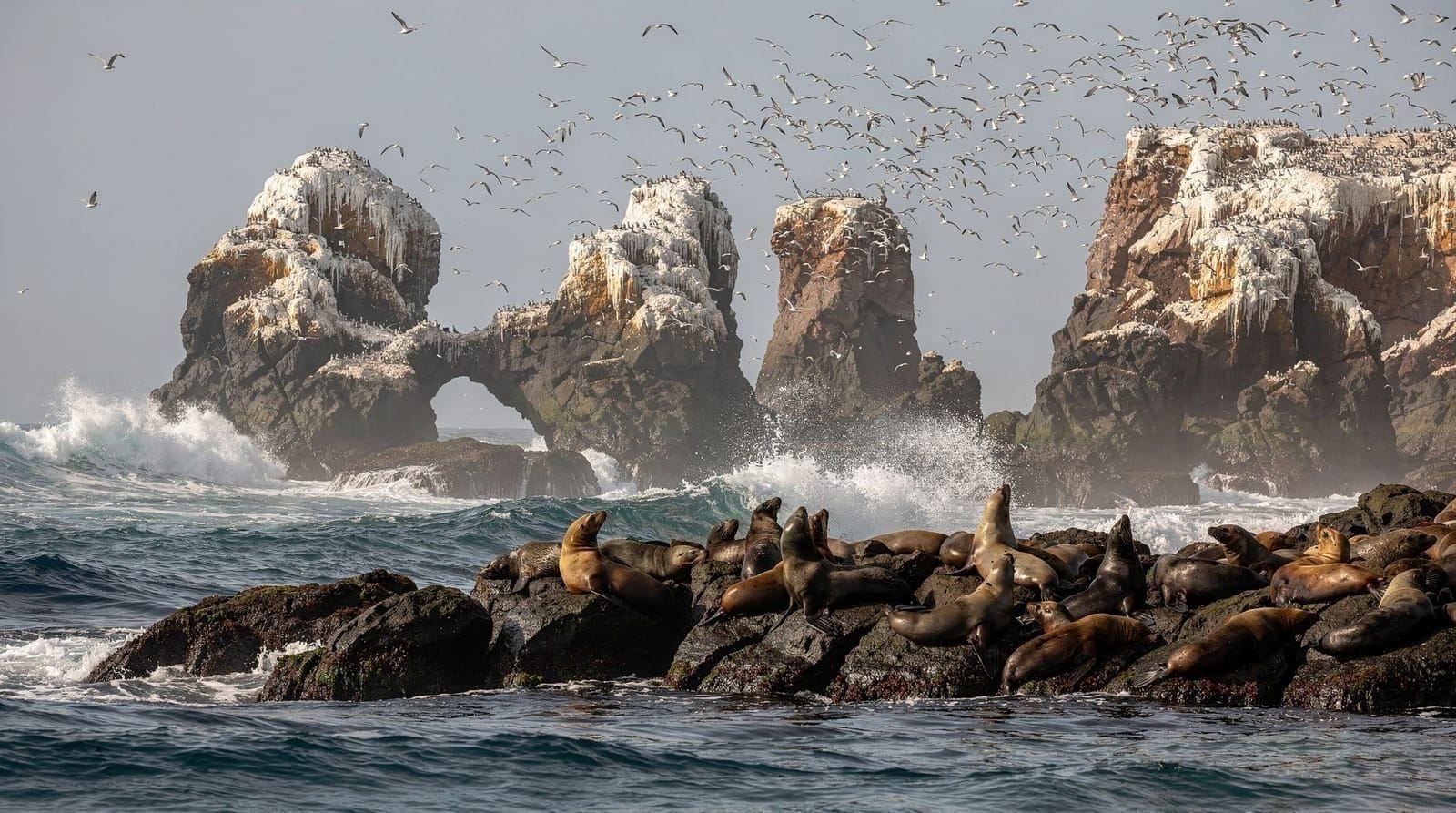
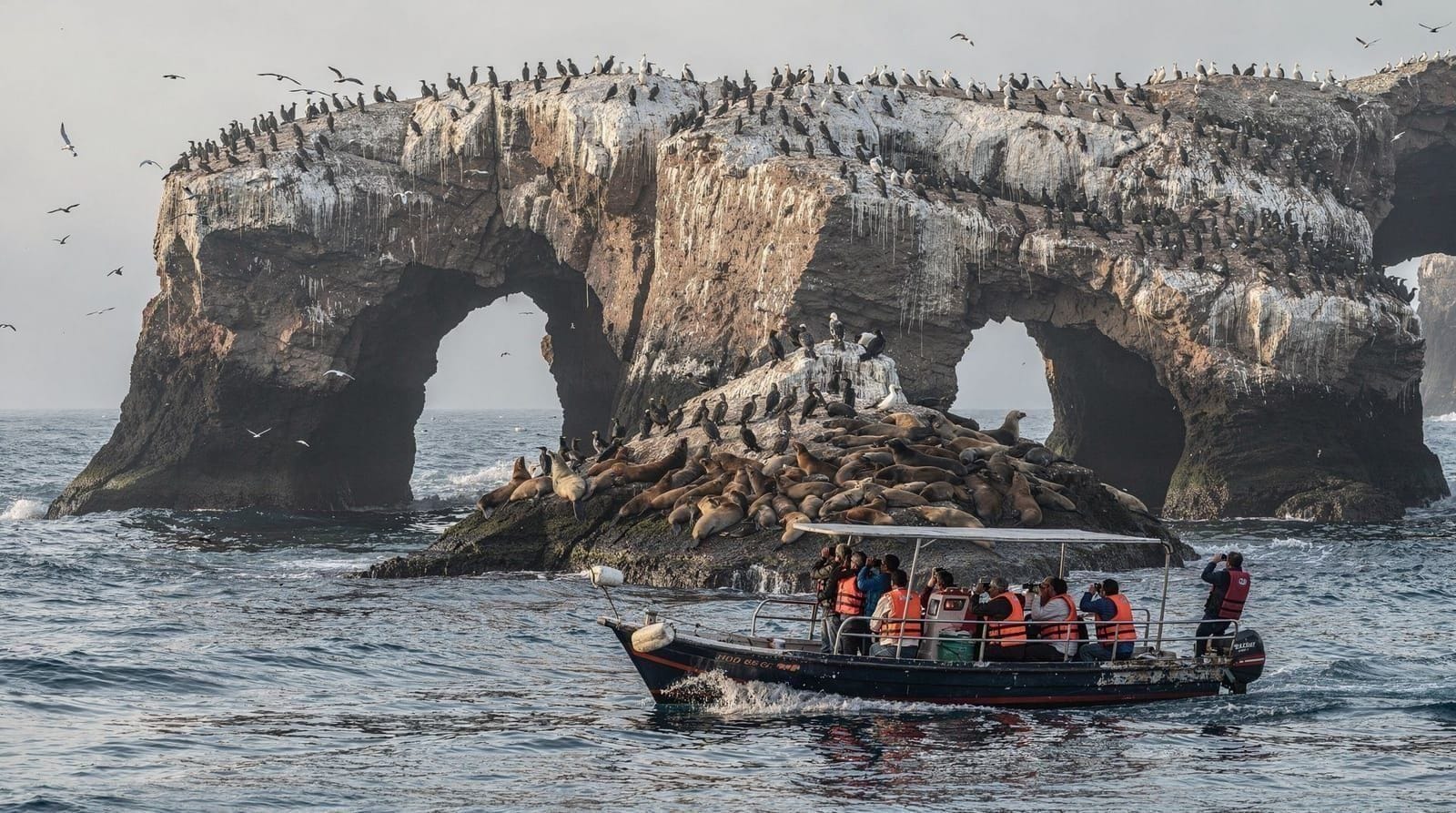
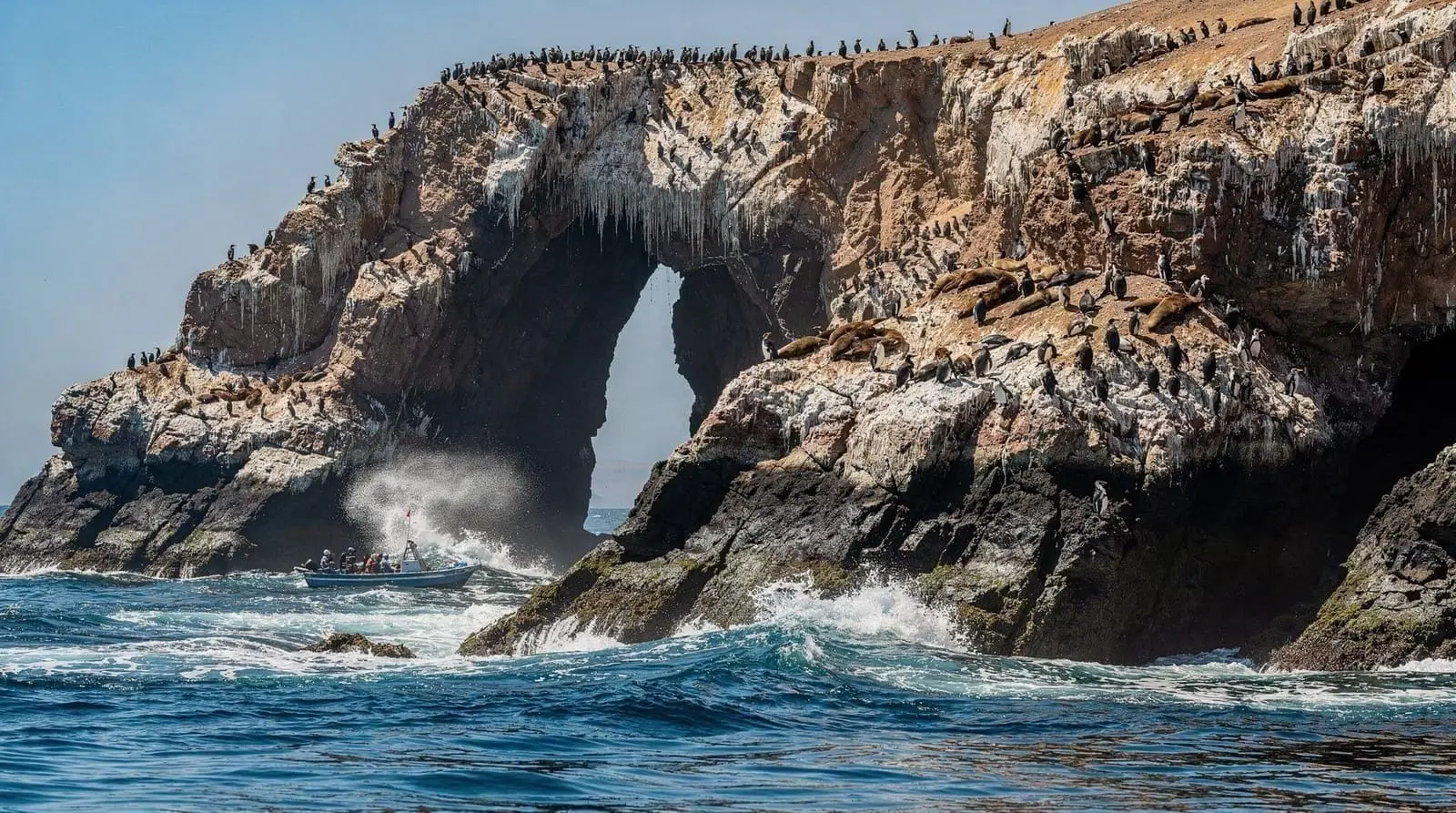
The day splits cleanly in two. The Ballestas portion is a boat tour of roughly two hours, leaving from the El Chaco pier in Paracas town. On the way out you pass the Candelabro, a 180-metre geoglyph etched into a coastal dune whose origin nobody has settled. Then the boat works the island cliffs: dense colonies of South American sea lions hauled out on the rocks, Humboldt penguins in the cooler months, Peruvian boobies, pelicans, Inca terns, and clouds of guanay cormorants whose droppings once made these islands the most valuable real estate in the country.
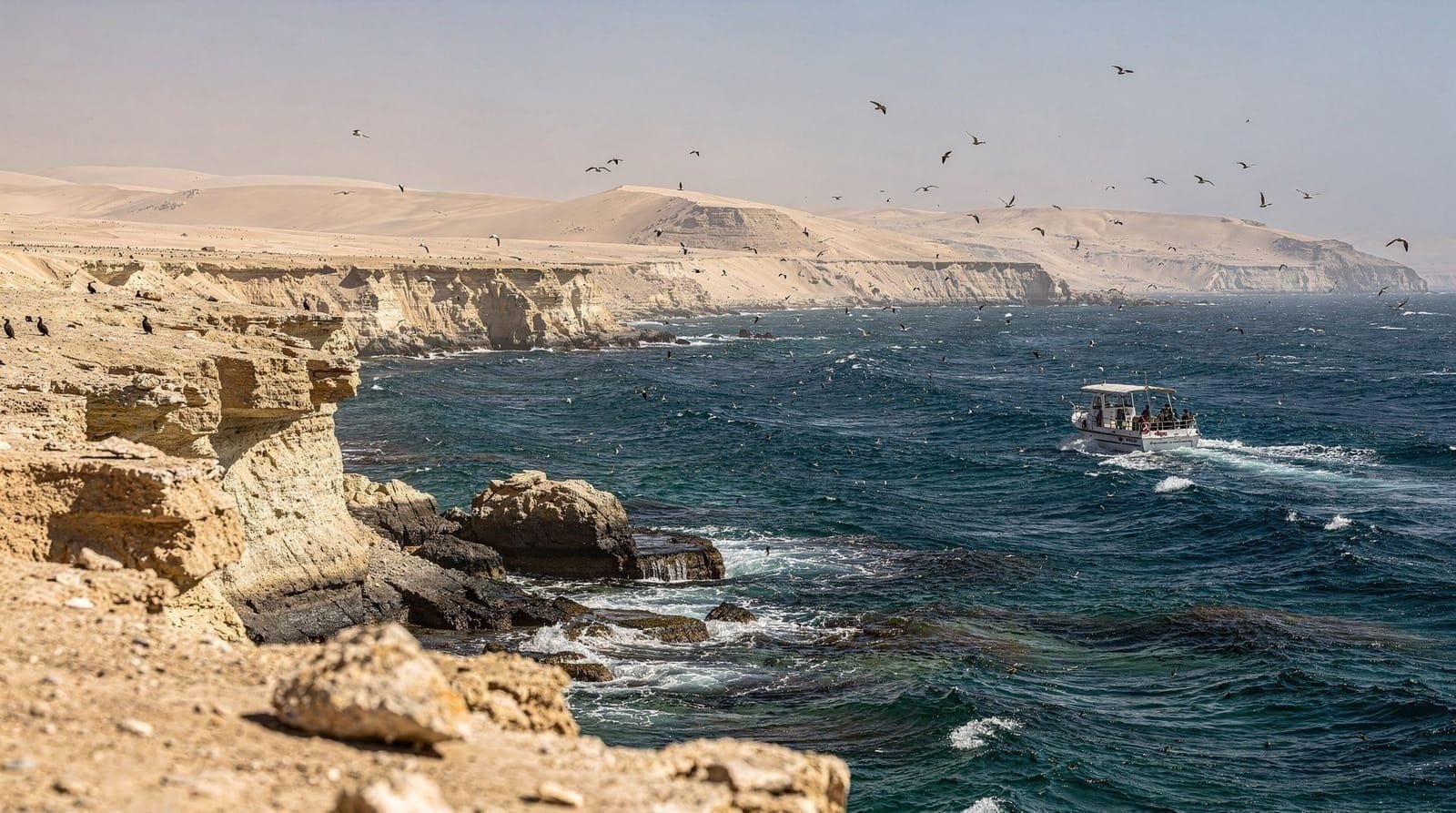
The reserve portion is a guided minibus circuit. Standard stops are the visitor centre, the Cathedral viewpoint area, Playa Roja (the red beach, its colour from eroded volcanic rock), and a lookout over the flamingo lagoon at Laguna Grande when conditions allow.
Included: the boat ride, the reserve transport and guiding. Not included and easy to miss: the boat dock tax of around S/10 to S/16, the reserve entrance fee of around S/11 (about USD 3), and lunch. Carry small soles for the fees.
Check prices and times for the Ballestas Islands and Reserve tourPrice reality: soles, dollars, and the fees
The combined tour typically costs between S/110 and S/190 (roughly USD 30 to USD 50) for the operator portion. On top of that sit the dock tax and the reserve entrance, so the all-in figure is closer to S/140 to S/220. That is still inexpensive for half a day of guided wildlife and desert scenery, and it is one of the better-value organised tours on the whole south coast.
The boat-only option is cheaper, often around S/60 to S/90, but it strips out the reserve, which is the half that gives you space to breathe after the crowded pier. We think the combined day earns the extra spend for most people.
What we liked
The sea lion colonies are the genuine highlight: hundreds of animals, the noise, the smell, the pups. It is closer to a working wildlife encounter than a sanitised attraction. The Candelabro is a strange, photogenic bonus on the way out. And the reserve, often treated as an afterthought, is the quieter pleasure of the day, with red cliffs dropping into a cobalt sea and almost no infrastructure to spoil the view.
Because the boat trip is short and the reserve self-paces, the whole thing rarely feels rushed, and a competent guide ties the guano history together in a way that makes the islands far more interesting than they first appear.
What we did not like
The pier at El Chaco is a scrum. Multiple operators load boats at once, and the boarding can feel chaotic, with touts and last-minute fee collection. The boats are open, so spray and wind are part of the deal; on a brisk afternoon you will arrive damp. And you cannot land on the islands, which disappoints people expecting to walk among the wildlife rather than view it from a moving boat.
The reserve half is heavily weather-dependent. On a grey, misty day the red beach loses its punch and the flamingo lagoon can be empty. If the forecast is poor, manage expectations or shift the booking.
If you are still deciding between the boat and the peninsula, our Paracas vs Ballestas comparison lays out which suits which kind of traveller.
The wildlife you can expect to see
The Ballestas are sometimes called the “poor man’s Galápagos,” which oversells the comparison but captures the density. The headline animal is the South American sea lion, present in colonies of hundreds; the males are huge, the pups noisy, and on a calm day the boat drifts within a few dozen metres of the haul-outs. The smell of guano hits before you see the birds, and that is the second draw: guanay cormorants in their thousands, Peruvian boobies, pelicans, and the elegant red-billed Inca tern wheeling off the cliffs.
Humboldt penguins are the prize sighting, smaller and shyer than the colonies suggest, and most reliably seen from about April to October when the cold Humboldt Current is strongest. You may also spot Peruvian fur seals tucked among the sea lions, and in season dolphins occasionally shadow the boat on the crossing. What you will not get is close interaction; this is observation from a moving boat, and a zoom lens earns its keep. For the deeper natural-history picture, our Ballestas Islands guide breaks down which species appear when.
Inside the reserve: what the afternoon adds
The reserve half changes register completely. After the noise and spray of the pier, you climb into a near-empty desert peninsula where the only sounds are wind and surf. The minibus circuit threads between the visitor centre, the Cathedral cliff area, and the red beach, with the guide explaining how the 2007 Pisco earthquake reshaped this coast and why the sand here glows red. The fossil beds in the surrounding hills hold whale and shark remains millions of years old, a reminder that this bone-dry desert was once seabed.
The contrast is the point. Few half-day tours anywhere swing from a wildlife-packed boat to a silent red-sand desert in the space of a few hours, and it is that range, rather than either half alone, that makes the combined day worth choosing over the boat-only ticket.
Who this tour is for
This is a strong pick for wildlife-minded travellers, families with school-age children (the boat is short and the animals reliable), and anyone breaking the Lima to Nazca or Lima to Arequipa drive who wants a half day that is more than a photo stop. It pairs naturally with a night in Paracas or a side trip to Huacachina and the Ica vineyards.
It is the wrong tour for people who get badly seasick and cannot face an open speedboat, and for anyone expecting to land or interact with the animals. Strict seabirders may also find the boat too fast and distant for serious photography.
How it compares to the other Paracas options
The boat-only tour is the cheapest and quickest, good if you are tight on time and just want the sea lions. The reserve-only guided tour skips the boat entirely and is the choice for travellers who dislike boats or have already done the islands. The full-day combined version adds a longer reserve circuit and sometimes lunch, at a higher price. The tour reviewed here sits in the sweet spot: both halves, half a day, modest cost.
Use the comparison table on this page to match departure, duration, and inclusions to your plans.
Book the Ballestas Islands and National Reserve tourPractical tips before you go
Take the morning boat: the sea is calmer, the light is better for photos, and the penguins are more active. Bring a windproof layer and a hat with a chin strap, because the spray and wind are constant. Keep small soles handy for the dock and reserve fees. Apply sunscreen before boarding; there is no shade on the boat. And if you are prone to motion sickness, sit toward the stern and take a tablet beforehand.
For the wider picture of timing, beaches, and where to stay, see our Paracas complete guide and the Ballestas Islands guide.
Getting to Paracas beforehand
Most travellers reach Paracas by bus from Lima, a comfortable 3.5 to 4 hour ride on the Panamericana Sur with several daily departures from the main bus terminals. If you are short on time or coming from further south, some visitors fly Lima to Pisco on a short domestic hop and transfer the remaining 45 minutes by car, though this is rarely worth it unless you are combining it with a Nazca Lines flight the same day. Whichever way you arrive, book your tour the evening before or first thing in the morning at your hotel or a local agency in El Chaco — same-day booking is normally easy outside peak holiday weekends (Fiestas Patrias in late July, and around New Year), when it pays to reserve a day or two ahead.
Health, seasickness, and photography
If you are prone to motion sickness, this is one of the milder boat tours in Peru — the crossing is short and the boats stay relatively close to shore — but a calm stomach still helps. Take any tablet you use about 30 to 45 minutes before boarding, sit low and toward the centre or stern where the pitching is least, and keep your eyes on the horizon rather than a phone screen. Ginger sweets are a mild backup many local guides recommend.
For photography, bring a telephoto lens or at minimum a phone with strong zoom; the boat does not get close enough for wide shots of individual animals, but a 200mm-equivalent lens captures excellent detail of the sea lion colonies and the penguins. Shoot early in the tour before the boat picks up speed and spray starts, and protect your gear with a dry bag or plastic sleeve regardless — even on a calm morning, spray finds its way to cameras.
Budget alternatives and how to save
Independent travellers can sometimes shave a little off the tour-operator price by walking down to the El Chaco pier and booking a boat-only ticket directly with one of the licensed operators, though the saving is modest (perhaps S/10 to S/20) and you lose the reserve transport and English-speaking guide that make the combined tour worthwhile for most visitors.
Group tours booked in advance through an agency are usually within a few soles of walk-up prices, so the main lever for saving money is skipping the reserve half rather than shopping operators against each other. If your onward plans already include a private Paracas Reserve visit by rental car, the boat-only ticket combined with your own reserve entry can work out cheaper — but only if you already have wheels.