Paracas National Reserve guided tour review: the desert-and-coast circuit
Paracas National Reserve Guided Tour
Most visitors to Paracas come for the Ballestas Islands boat trip and treat the National Reserve as an afterthought. That is a mistake. The reserve is a 335,000-hectare expanse of desert peninsula where the Atacama-dry coast collides with the cold Pacific, producing red beaches, sheer cliffs, fossil beds, and flamingo lagoons with almost no development to interrupt the emptiness. The guided tour reviewed here covers that landscape by minibus with a guide, separate from any boat trip. Here is what the circuit delivers, what it costs, and whether it is worth doing on its own or only as part of the combined Paracas day.
| Where | Paracas National Reserve, south coast Peru |
| Cost | around S/50-110 (USD 13-30) + S/11 entrance |
| Time needed | ~2-3 hours |
| Getting there | Minibus with guide, road-based circuit |
| Best time | Clear mornings; garúa mist common May-Oct |
What the tour actually includes
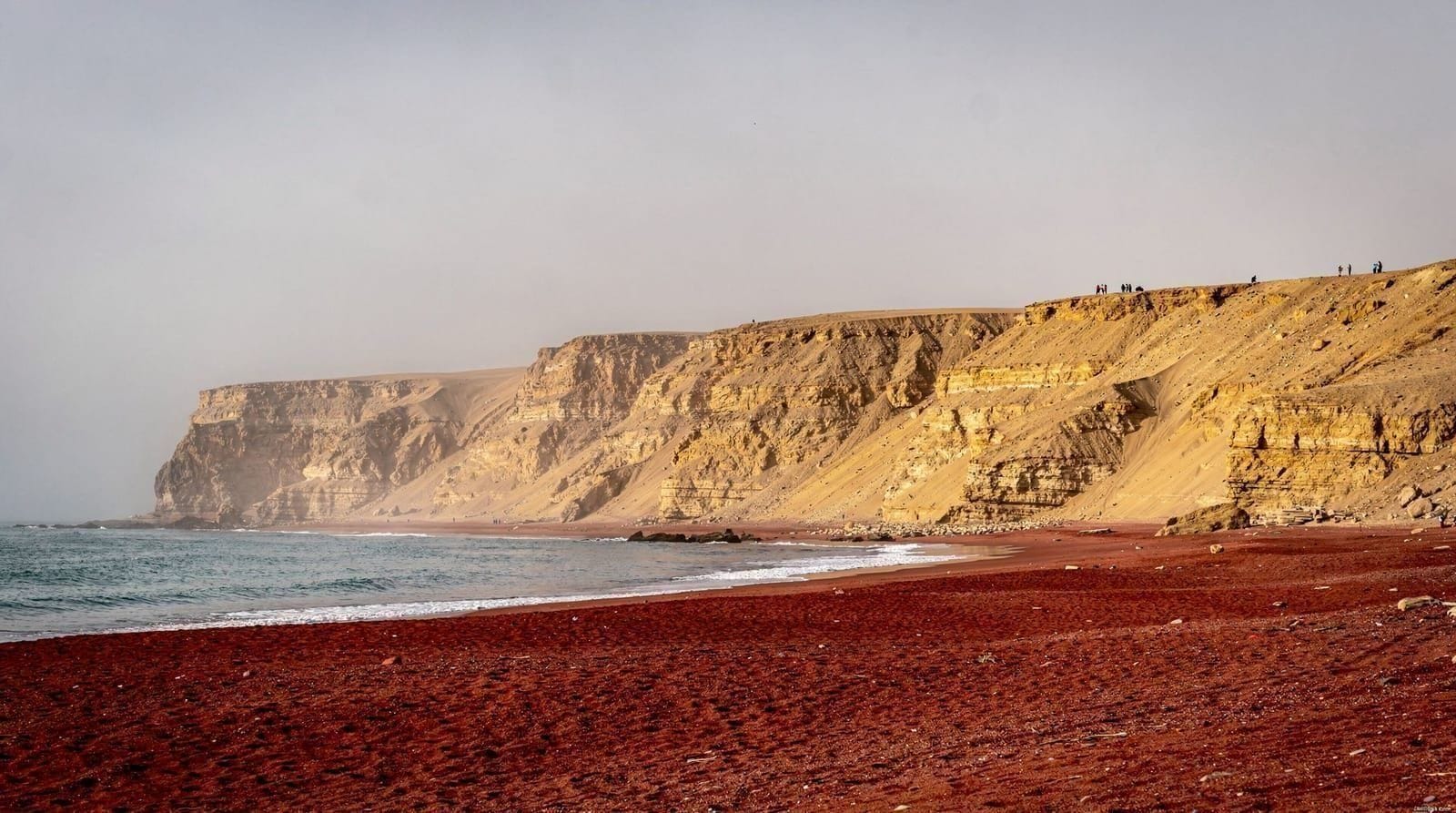
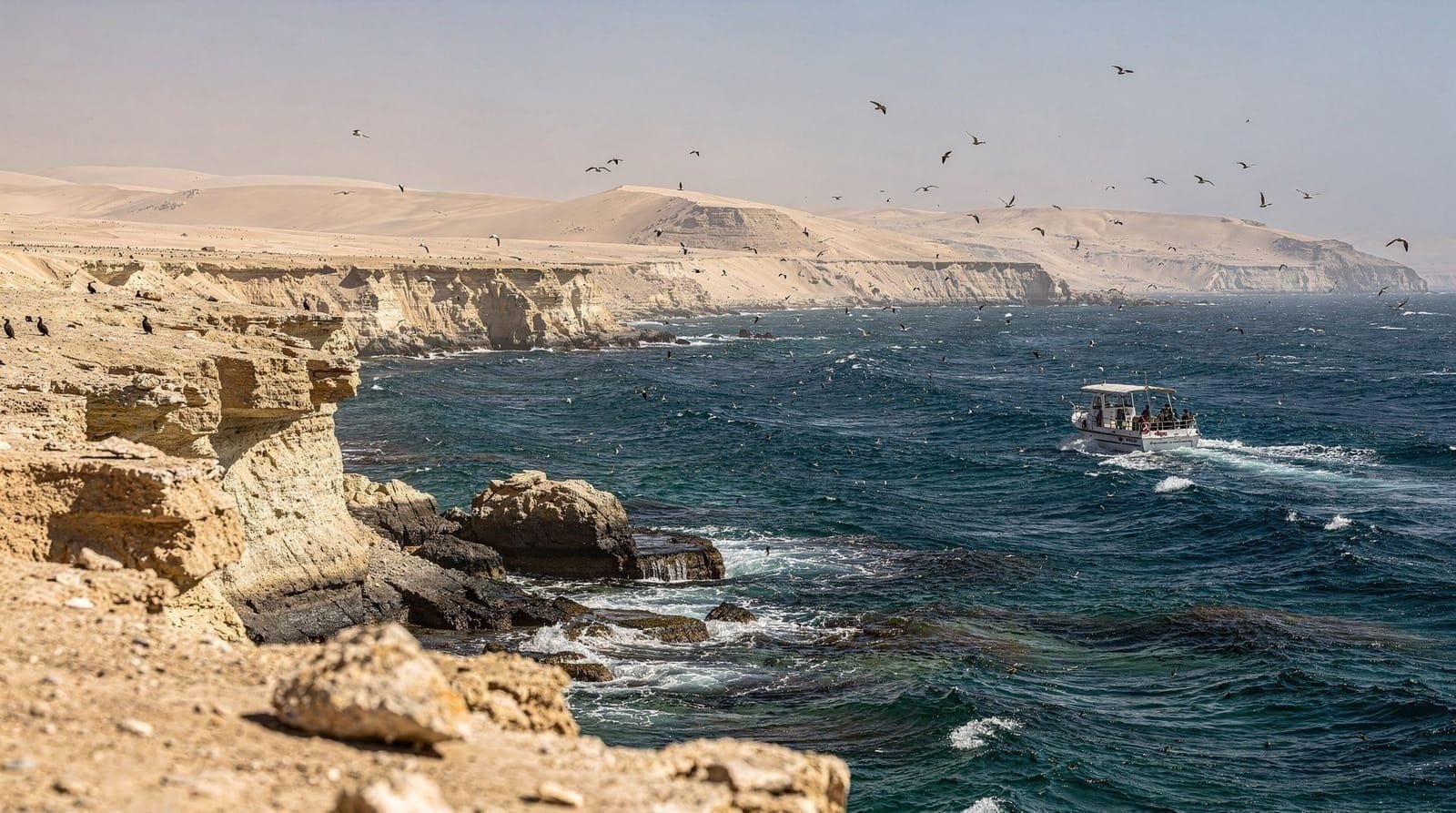
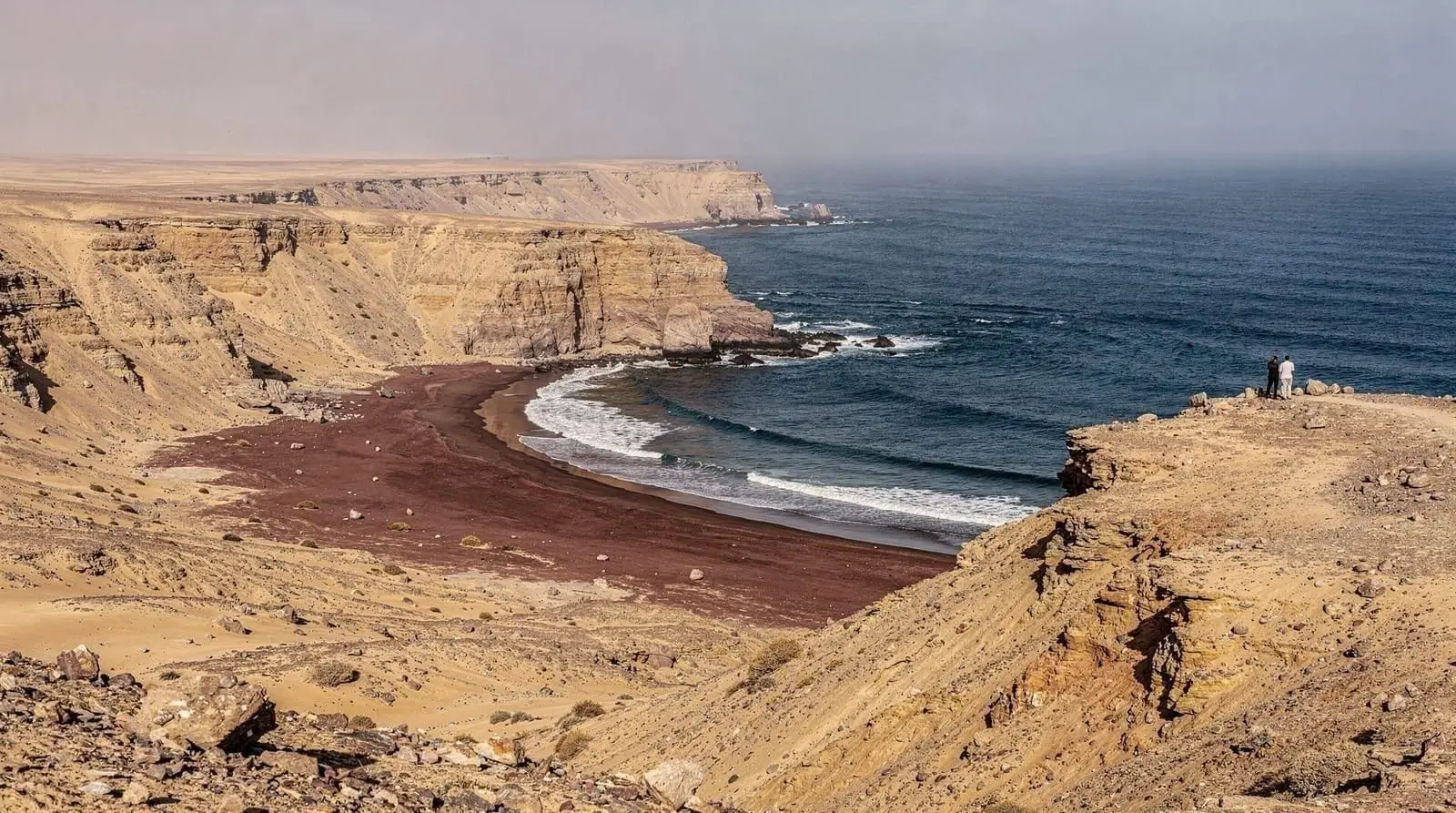
The reserve tour is a road-based circuit, usually two to three hours, in a minibus with a guide. The standard stops are the reserve visitor and interpretation centre, which sets up the geology and wildlife; the area around the Cathedral, a famous rock arch that partly collapsed in the 2007 earthquake but whose cliffs remain spectacular; Playa Roja, the red beach whose colour comes from eroded pink granodiorite in the surrounding hills; and a viewpoint over Laguna Grande or another lagoon where flamingos and shorebirds congregate. Between the anchors the guide stops for photos of the cliffs and the desert-meets-sea panoramas.
Included: the transport, the guide, and the route. Not included: the reserve entrance fee of around S/11 (about USD 3), payable at the gate, and food and water, which you must bring because there is little infrastructure inside. Carry small soles and more water than you think you need.
Check prices and times for the Paracas Reserve guided tourPrice reality: soles, dollars, and fees
The standalone reserve tour typically costs S/50 to S/110 (roughly USD 13 to USD 30) for the operator portion, plus the S/11 entrance fee. That makes it one of the cheapest guided half-day outings on the south coast, and the scenery-to-price ratio is excellent.
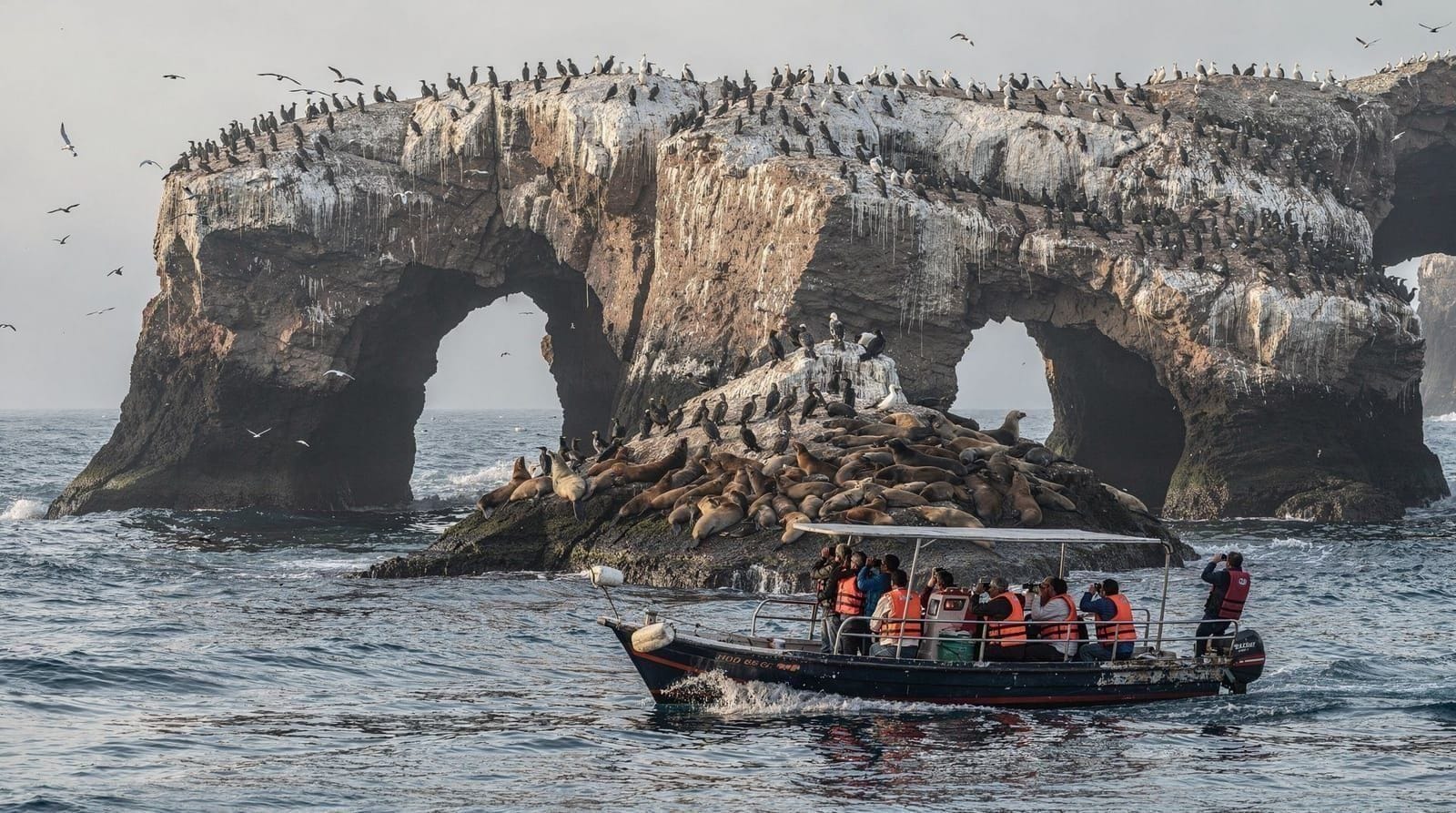
The trade-off is that the combined Ballestas-plus-reserve tour costs only a little more and adds the wildlife boat, which is why many travellers default to it. The standalone reserve tour earns its place when you have already done the boat, when boats make you seasick, or when you simply care more about landscape than marine wildlife. We compare the options in detail below.
What we liked
The landscape is the draw, and it delivers: red sand against turquoise water, cliffs dropping straight into the surf, and a vast, silent desert that feels genuinely remote despite being a short drive from town. A good guide makes the geology and the 2007 earthquake story vivid, and explains the fossil record that makes Paracas important to palaeontologists. The flamingo lagoon, when it cooperates, is a quiet highlight.
Because the circuit is road-based and self-pacing, it never feels rushed, and the lack of crowds inside the reserve, compared with the El Chaco pier, is a relief.
What we did not like
It is heavily weather-dependent. On a grey, misty day, common on this coast, the red beach loses its colour and the panoramas flatten into haze. The Cathedral arch itself collapsed in 2007, so anyone expecting the iconic intact formation from old photos will be disappointed; the cliffs remain, but the arch does not. The lagoons can be dry or empty of flamingos out of season, turning a marketed highlight into a brief stop at a brown shoreline.
There is also almost no infrastructure inside, so if you forget water or sun protection you will suffer. And for travellers whose main interest is wildlife rather than scenery, the reserve alone can feel thin without the Ballestas boat.
If you are torn between the two halves of Paracas, our Paracas vs Ballestas guide lays out which suits which traveller.
The landscape: geology, fossils, and the red beach
The Paracas peninsula is one of the strangest coastlines in Peru, where the Atacama desert runs straight off the cliffs into the cold Pacific with no transition. The red sand of Playa Roja is not artificial: it comes from the erosion of pink granodiorite in the surrounding hills, which weathers into the rust-coloured grains that streak the beach. On a clear day, with the red sand against turquoise water and the dark cliffs behind, it is one of the most photographed scenes on the south coast.
The reserve is also a palaeontological treasure. The hills hold marine fossils, whale vertebrae, shark teeth, and ancient shells, that record a time when this desert lay beneath the sea, and a good guide will point out the exposed beds. The visitor centre explains the wider story: the cold, nutrient-rich Humboldt Current that drives the whole food chain, the seabird and sea-lion populations it supports, and the pre-Columbian Paracas culture famous for its intricate woven textiles, some of the finest in the ancient Americas. The desert looks empty, but it is layered with deep time and human history.
Reading the weather and the seasons
More than almost any tour on the coast, this one lives or dies by the weather, so it is worth understanding the rhythm. The Peruvian winter, roughly May to October, brings the garúa, a low coastal mist that can blanket the peninsula and grey out the colours that make it worth visiting. When the garúa lifts, often by late morning, the light is superb; when it lingers, the red beach turns dull and the panoramas vanish into haze. The summer months, December to March, are warmer, brighter, and more reliable for clear skies, though hotter on the exposed viewpoints.
Flamingos follow their own calendar, gathering at the lagoons mainly from about June to November, so the season that risks the most mist is also the one most likely to deliver the birds, a genuine trade-off. If you have flexibility, watch the forecast and go on a clear morning. For a fuller breakdown of seasons, beaches, and how to combine the reserve with the rest of the area, see our Paracas complete guide and the Paracas National Reserve guide.
Who this tour is for
This is the right pick for landscape and photography lovers, for travellers who get seasick and want to skip the boat, for anyone who has already done the Ballestas and wants to see the other side of Paracas, and for those who prefer a calm, self-paced desert circuit over a crowded pier. It pairs well with a relaxed stay in Paracas or a southward push to Huacachina.
It is the wrong tour for travellers whose main goal is marine wildlife, who would be better served by the combined boat-and-reserve day, and for anyone visiting in thick coastal fog, when the reserve’s colours and views are at their weakest.
How it compares to the other Paracas options
The combined Ballestas Islands and reserve tour adds the wildlife boat for only a little more money and is the default for first-timers who want both halves of Paracas in one go. The full-day version extends the reserve circuit, sometimes adds lunch, and runs at a higher price for travellers who want a leisurely whole day. The Ballestas boat-only tour drops the reserve entirely and is for people tight on time who just want the sea lions.
Use the comparison table on this page to weigh whether the reserve alone, or one of the boat-inclusive options, fits your priorities and your tolerance for the open sea.
Book the Paracas National Reserve guided tourPractical tips before you go
Bring plenty of water and sun protection; there is no shade and little to buy inside the reserve. Carry small soles for the entrance fee. Go on a clear day if you can, because fog drains the colour from the red beach and the panoramas. Wear closed shoes for the sandy, uneven viewpoints. And if flamingos matter to you, aim for the June-to-November window and treat any sighting as a welcome bonus rather than a certainty.
For seasons, beaches, and where to stay, see our Paracas complete guide and the Paracas National Reserve guide.
Reserve-only versus combined tour: which to book
| Option | Includes | Best for |
|---|---|---|
| Reserve tour only (this review) | Desert circuit, red beach, lagoon, no boat | Repeat visitors, seasick travellers, landscape lovers |
| Combined Ballestas + reserve | Wildlife boat plus desert circuit | First-timers wanting both halves of Paracas |
| Full-day reserve | Extended circuit, sometimes lunch | Travellers with a full free day and no time pressure |
| Ballestas boat only | Sea lions and birds, no reserve | Time-tight visitors prioritising wildlife |
For most first-time visitors, the combined tour remains the sensible default since the marginal cost over the reserve alone is small. The standalone reserve tour earns its keep specifically for repeat visitors, anyone prone to seasickness, or travellers who simply value desert scenery over a boat full of sea lions.
Reading a hazy morning before you commit
Because the garúa mist is so common on this stretch of coast, it is worth checking the morning sky before locking in a departure time if your schedule allows any flexibility. A hazy 7am can clear to a bright, colour-saturated 10am, so operators offering a slightly later slot are sometimes the better bet in the shoulder months. If you are stuck with an early fixed departure during heavy garúa season (roughly June to September), temper your photo expectations at Playa Roja specifically, since that is the stop most dependent on direct light.