Maras, Moray and the Sacred Valley tour: an honest review
Sacred Valley: Pisac, Ollantaytambo, Chinchero with Lunch
The salt pans of Maras and the concentric agricultural terraces of Moray are two of the most distinctive sights near Cusco, and they are almost always sold together. The problem is how they are sold: bundled into rushed Sacred Valley loops where you get 40 minutes at each before being herded back to the van. This review covers what the standard tour delivers, the ticket traps that catch first-timers, real 2026 prices, and whether a half-day or full-day version makes more sense.
| Where | Sacred Valley, near Urubamba, ~50 min from Cusco |
| Cost | around S/60-130 (USD 16-35) + entrance fees |
| Time needed | Half day (~5-6 hrs) or full day (~9-10 hrs) |
| Getting there | Hotel pickup in Cusco, minivan or coach |
| Best time | Late afternoon for photography, dry season (May-Oct) |
What the standard tour covers
Most Cusco operators sell a Sacred Valley tour that pairs Maras and Moray with one or two other stops-typically Pisac, Ollantaytambo, or Chinchero-plus lunch. The version reviewed here is the fuller Sacred Valley circuit. You can book the combined Sacred Valley tour with Maras, Moray and lunch, which is the most common full-day product.
A typical full-day tour includes hotel pick-up, transport in a minivan or coach, a guide, and a buffet lunch in Urubamba or a similar valley town. Half-day Maras-Moray-only tours skip the lunch and the extra ruins, getting you back to Cusco by early afternoon.
What is usually not included, and this is the recurring complaint: the entrance fees. Moray requires the boleto turistico, and the Maras salt mines charge a separate S/15 (USD 4) community fee. Many travellers are blindsided when the guide asks for cash at the gate. The full breakdown of which ticket covers what is in the Maras and Moray day trip guide.
Prices and the ticket maths
In 2026, group Sacred Valley tours that include Maras and Moray run S/60-130 (USD 16-35) through street agencies, and USD 35-65 through reputable online platforms with better vehicles and English guides. The headline price almost never includes entrances.
Budget the full picture:
- Group tour (full day): S/90 (USD 24) typical
- Boleto turistico (partial, 1-day): S/70 (USD 19) — covers Moray
- Boleto turistico (full circuit, 10-day): S/130 (USD 35)
- Maras salt mines fee: S/15 (USD 4) cash
- Lunch (if not included): S/35-50 (USD 9-13)
The boleto turistico is the decision point. If Maras and Moray are your only ticketed sites, the 1-day partial ticket is cheaper. If you are also doing Pisac, Ollantaytambo, Chinchero, or Cusco museums on the same trip, the full 10-day ticket pays for itself. The maras salt mines guide explains how the harvesting cooperative works and why the separate fee exists.
Moray: more interesting than it photographs
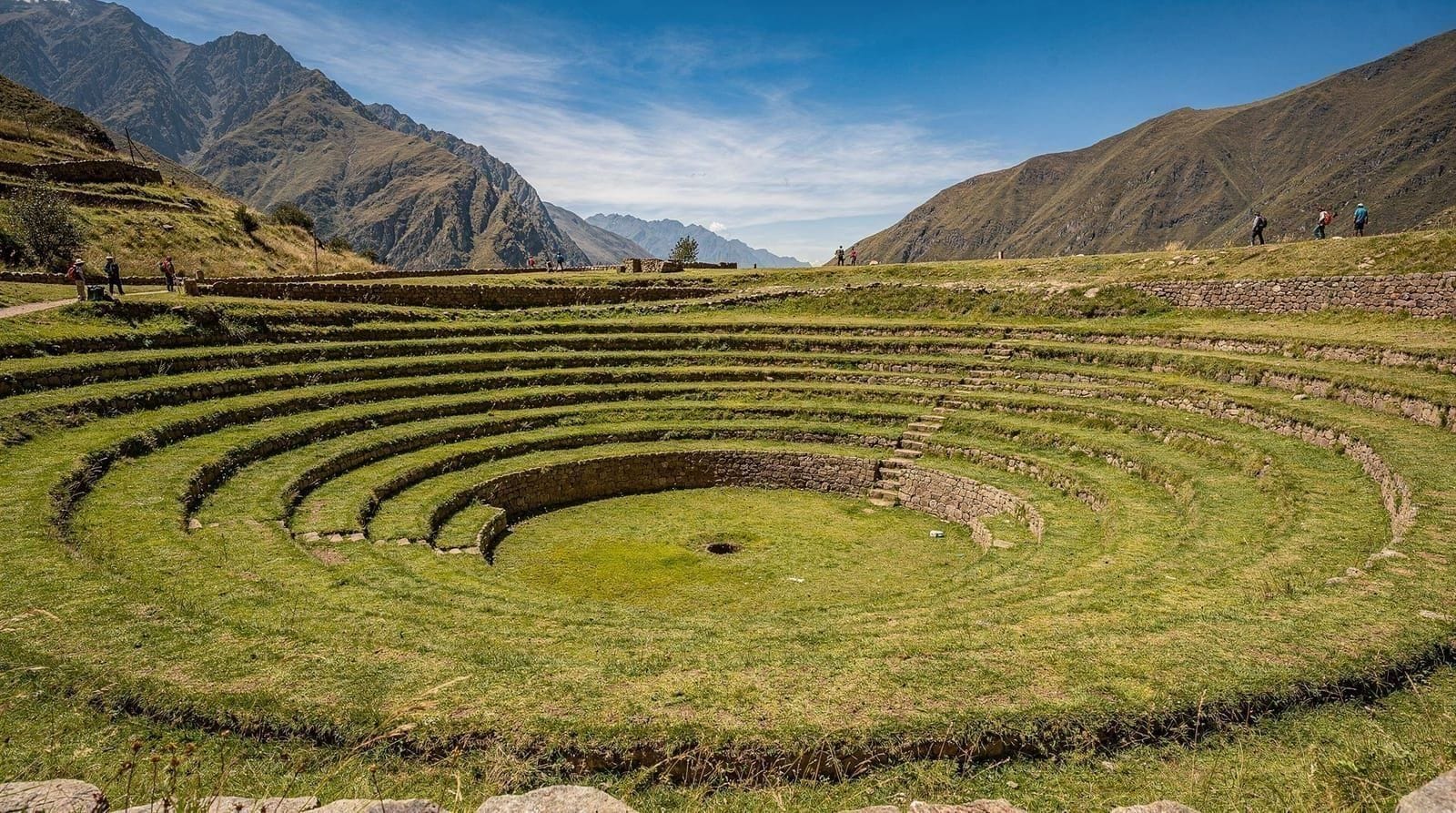
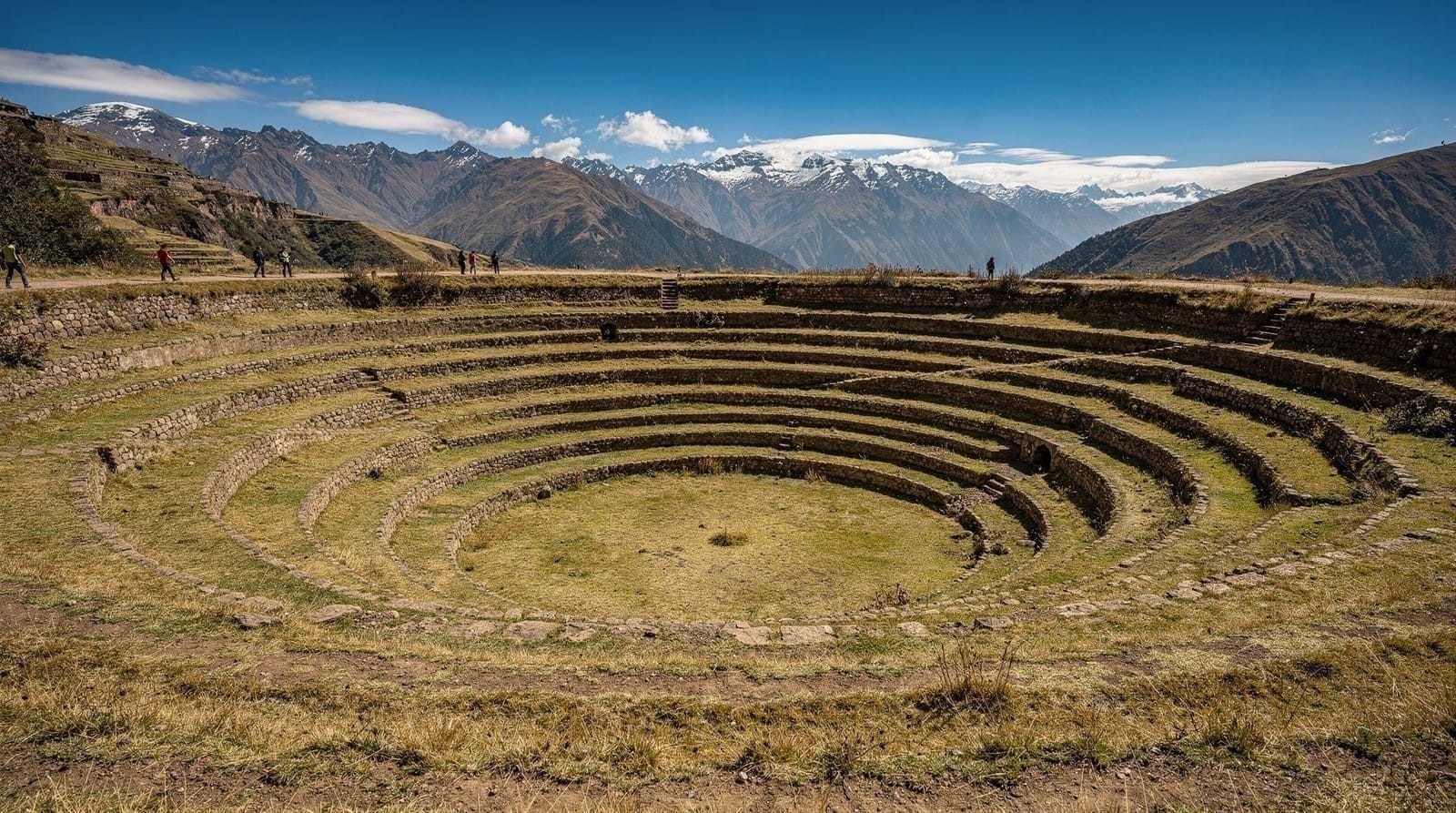
Moray is a set of concentric circular terraces the Inca cut into a natural depression. The popular theory is that it was an agricultural laboratory-each terrace level creates a distinct microclimate, with temperature differences of several degrees from top to bottom. Whether or not that interpretation is fully proven, it is a genuinely clever piece of landscape engineering, and a good guide makes it far more rewarding than wandering alone.
The catch on group tours is time. You will get 30-45 minutes, much of it spent walking to the viewpoint and back. You cannot descend onto the terraces themselves anymore-access was restricted to protect them-so the experience is largely about the view and the explanation.
Maras: the salt pans are the star
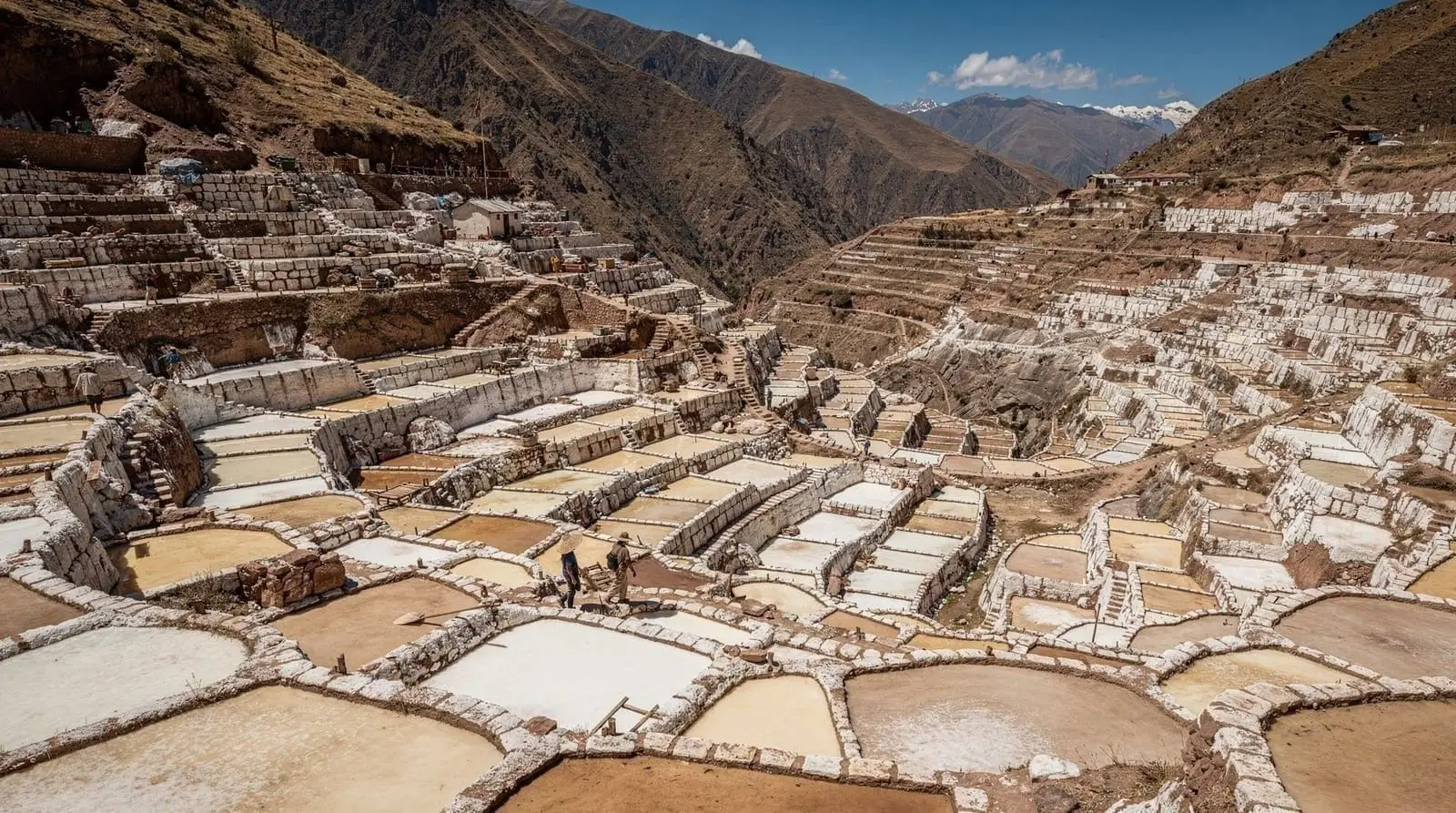
This is the visual highlight. Thousands of small salt pans cascade down a hillside, fed by a naturally saline spring that has been channelled the same way since pre-Inca times. Families still own and work individual pans, evaporating the water to harvest salt by hand. The terraced geometry, especially in late-afternoon light, is the photo everyone comes for.
You walk designated paths along the upper edge; entering the working pools is banned. Buy a bag of the pink salt directly from the on-site stalls if you want to support the families-it is cheap and better than the marked-up versions in Cusco shops. The broader context of the Sacred Valley, including where Maras sits in the wider region, is in the Sacred Valley destination guide and the Maras and Moray destination page.
A realistic timeline of the day
For the full-day Sacred Valley version, expect pick-up around 8:00-9:00 am, the drive into the valley with a first archaeological stop mid-morning, Moray late morning, Maras around midday or early afternoon, a buffet lunch in Urubamba or a similar town, and one or two more stops before returning to Cusco by 5:00-7:00 pm. Half-day Maras-Moray-only tours often run mornings, getting you back by early afternoon, which leaves the rest of the day free in Cusco-a real advantage if you are pacing your acclimatisation.
The full-day pace is the main complaint. Cramming Pisac, Ollantaytambo or Chinchero alongside Maras and Moray means none of them gets enough time, and the lunch stop alone eats over an hour. If your priority is genuinely Maras and Moray-not a valley sampler-the half day serves them better.
Photography and the best light
Both sites reward thinking about light. The white salt pans at Maras photograph harshly under midday sun and beautifully in the warmer, lower light of late afternoon, when the terraced geometry gains depth and the pans take on subtle pink and gold tones. Moray’s circular terraces also gain definition with side light rather than overhead glare. The problem is that group tours run to a fixed schedule built around lunch logistics, not photography, so you rarely arrive at the ideal hour.
This is the strongest argument for a private driver or a small-group tour if photos matter to you: you control the timing. The contrast between a rushed midday group stop and a quiet late-afternoon private visit is dramatic. For most travellers the group tour is fine; for serious photographers, the flexibility is worth paying for.
How Maras and Moray fit a wider Sacred Valley plan
Maras and Moray rarely stand alone-they are usually one piece of a Sacred Valley day or a multi-day Cusco plan. They pair naturally with the Inca ruins at Pisac and Ollantaytambo, the weaving village of Chinchero, and onward travel toward Machu Picchu. Because they sit slightly lower than Cusco, doing them early in your trip is a smart acclimatisation move before tackling higher day hikes like Humantay Lake or Rainbow Mountain Vinicunca. The wider valley context, including transport and where to stay, is in the Sacred Valley destination guide.
Who this tour is for, and who should skip it
Book it if you want a low-altitude, low-effort day that doubles as acclimatisation-both sites are gentle, with minimal walking. It suits photographers, anyone interested in Inca agriculture, and travellers easing into altitude before harder hikes.
Skip the full-day combo if you dislike rushed multi-stop tours; the half-day Maras-Moray-only version is calmer. Skip it entirely if you have very limited time and have to choose between this and Machu Picchu or a single marquee site-Maras and Moray are wonderful but not unmissable in the way Machu Picchu is.
For a different valley emphasis, the ruins-heavy Pisac, Maras, Moray and Ollantaytambo small-group tour leans into Inca archaeology, while the 7-day Cusco combo with Maras and Humantay folds it into a longer, better-paced trip.
Full day versus half day
| Option | Duration | Stops | Best for |
|---|---|---|---|
| Half day (Maras + Moray) | ~5-6 hrs | Two sites | Calm pace, acclimatisation |
| Full-day Sacred Valley | ~9-10 hrs | Plus Pisac/Ollantaytambo/Chinchero + lunch | Seeing more in one day |
| Small-group ruins focus | ~9-10 hrs | Archaeology emphasis | History-minded travellers |
The full day is better value per soles spent but more tiring and more rushed at each individual stop. The half day is the connoisseur’s choice for these two sites specifically.
Practical tips
Go in the afternoon for Maras if you can-the light on the white salt pans is harsh at midday and lovely later. Carry small soles notes for the salt-mine fee and salt purchases. Bring sun protection; the valley is sunny and exposed. And confirm with your operator, in writing, exactly which entrances are included before you pay, because this is the number one source of on-the-day friction.
If you are sequencing your Cusco days for altitude, doing Maras and Moray early-before high hikes like Humantay or Rainbow Mountain-is smart. The reasoning is laid out in the Cusco altitude versus Sacred Valley guide.
Best season: dry versus wet
| Season | Months | Light & paths | Crowds |
|---|---|---|---|
| Dry season | May-Oct | Clear light, dry paths, best photos | Busiest, especially Jul-Aug |
| Shoulder | Apr, Nov | Mostly dry, decent light | Moderate |
| Wet season | Dec-Mar | Rain risk, muddy salt-pan edges | Quietest |
If photography is your priority, target the dry season and a late-afternoon slot at Maras specifically. If you would rather trade a slightly higher rain risk for a quieter viewpoint and shorter queues at the parking area, the wet-season shoulder months work well since neither site involves serious hiking that rain would ruin.
Combining with Chinchero
Many full-day Sacred Valley circuits already fold in Chinchero, the high weaving village with a colonial church built over an Inca site, and it is worth requesting if your operator’s default route skips it. The detour is short because Chinchero sits along the same road back toward Cusco, and the natural-dye weaving demonstrations there are one of the more genuine cultural stops in the valley, distinct from the archaeology-and-scenery focus of Maras and Moray themselves.
Is the Maras and Moray tour worth it overall?
Yes, with the right expectations. These are two of the most visually distinctive sites near Cusco, the effort is minimal, and the day doubles as gentle acclimatisation. The honest caveats are the ticket maths-budget for the boleto turistico and the separate salt-mine fee-and the rushed pace of full-day combos. Choose the half day if these two sites are your focus, the full day if you want to see more of the valley, and a private option if photography or timing matters. Either way, confirm exactly which entrances are included before you hand over any money, because that single piece of due diligence prevents almost every complaint travellers have about this tour.
What past visitors keep saying
The recurring theme in traveller feedback is the ticket surprise: people arrive expecting the tour price to cover entrances, and it almost never does. The second most common note is about pacing-visitors who did the full-day combo often wish they had picked the half-day version instead, since 30-45 minutes at each site rarely feels like enough once you are standing in front of the salt pans in good light. Those who booked a private driver or the small-group ruins-focused option consistently report a calmer, more satisfying visit, even at a higher price.
A quick planning checklist
Before you book, confirm four things directly with the operator: whether the boleto turistico is included or separate, whether the Maras community fee is bundled, which specific stops are on the route (some full-day versions swap Chinchero for Pisac), and the pickup time, since an early departure gives you first light and a calmer Moray viewpoint before the tour buses arrive. Getting these four answers before you pay resolves nearly every complaint travellers have about this excursion.