Lima ultimate Peruvian food tour review: is the tasting crawl worth it?
Lima: Ultimate Peruvian Food Tour
Lima is routinely called the food capital of South America, and for once the hype is mostly earned. The problem for a short-stay visitor is knowing where to eat without either burning the budget on a tasting-menu restaurant or risking a forgettable tourist-trap ceviche. A guided food tour solves that, and the “ultimate Peruvian food tour” reviewed here is the most comprehensive of the standard options: a multi-stop crawl through markets and local eateries built around the dishes that actually define the cuisine. Here is what you eat, what it costs, and whether a guided crawl beats simply following our restaurant recommendations.
| Where | Markets and eateries across Miraflores/Barranco/San Isidro |
| Cost | around S/190-340 (USD 50-90) |
| Time needed | ~3-4 hours |
| Getting there | Meet at a central point (transfers not usually included) |
| Best time | Lunchtime start, on an empty stomach |
What the tour actually includes
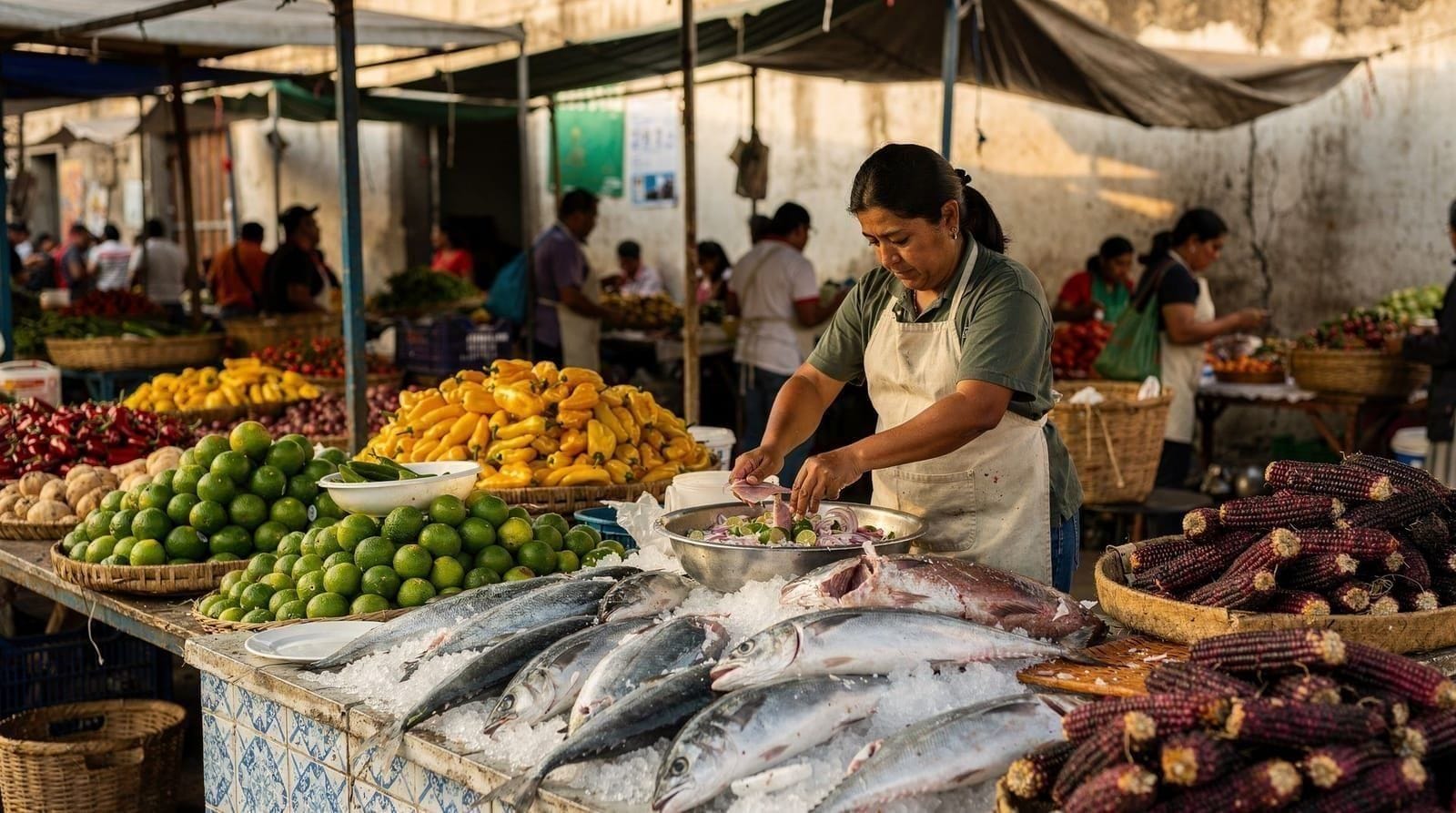
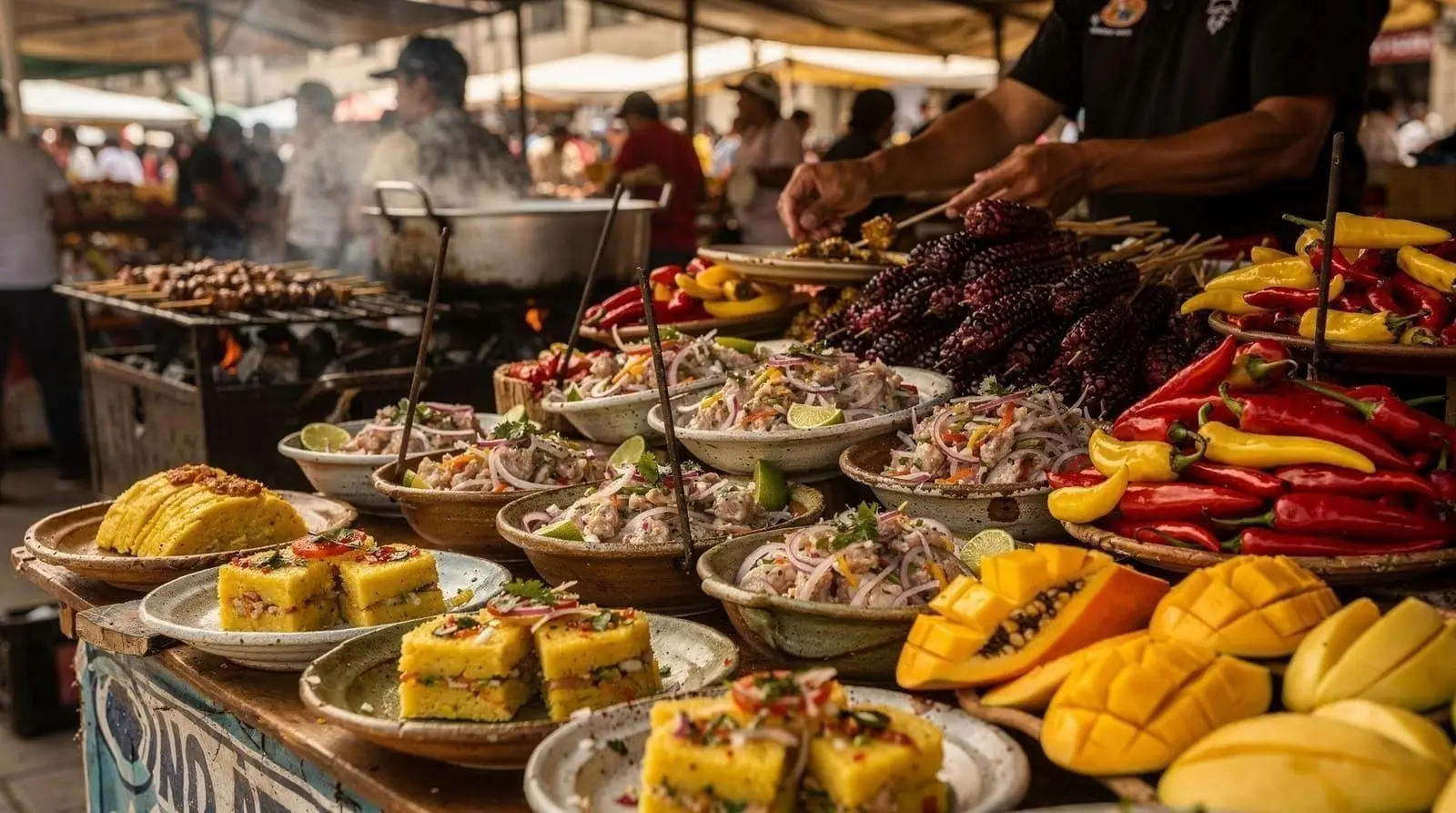
The format is a walking and tasting tour, usually three to four hours, moving through a market and a series of small eateries with a guide who orders, explains, and paces the food. A representative line-up includes a market visit to see Peruvian produce and exotic fruit, a ceviche tasting at a cevichería, anticuchos (grilled beef-heart skewers) from a street grill, causa or papa a la huancaína, a pisco sour with a quick demonstration of the build, and a dessert such as picarones or suspiro a la limeña.
Included: all the tastings, the drinks specified, and the guide. Not included typically: hotel transfers (most tours meet at a central point), extra alcoholic drinks beyond the included pisco sour, and tips. Tell the operator about allergies or dietary needs in advance so they can plan substitutions rather than leave you watching.
Check prices and times for the ultimate Peruvian food tourPrice reality: soles, dollars, and value
The ultimate food tour typically costs S/190 to S/340 (roughly USD 50 to USD 90) per person. That is more than the food would cost if you ordered it yourself, which is the honest trade-off: you are paying for the guide, the curation, and the access to places you would not find or order from confidently on your own.
For a first-timer who wants to understand the cuisine before exploring solo, that premium is defensible. For a confident, budget-minded eater, our best ceviche in Lima and Lima food scene guide point you to the same calibre of food for a fraction of the cost. Decide which kind of traveller you are.
What we liked
The breadth is the strength. In one afternoon you taste the full arc of Lima eating, from a market mango to a street anticucho to a proper ceviche to a pisco sour, with a guide who explains the why behind each dish. The ceviche stop is usually the highlight, eaten where locals eat it rather than in a Miraflores tourist restaurant, and the anticuchos surprise people who flinch at the words “beef heart.”
A good guide also de-risks the market, steering you to high-turnover stalls and explaining what is safe to try raw. That confidence is worth a lot on day one of a trip.
What we did not like
The value is debatable for experienced travellers. You can replicate most of these tastings independently for far less, and Lima is easy enough to navigate that the hand-holding is not strictly necessary. Portions can also be uneven; some stops are generous, others a single bite, and the pacing occasionally rushes the dishes you most want to linger over.
Quality depends heavily on the guide and the day’s group. A large group slows everything and turns intimate eateries into a scrum. And vegetarians and people with allergies can end up with a thinner experience unless the operator was warned well in advance.
For a fuller map of the cuisine itself, beyond any single tour, see our Peruvian food guide.
The dishes you will actually taste
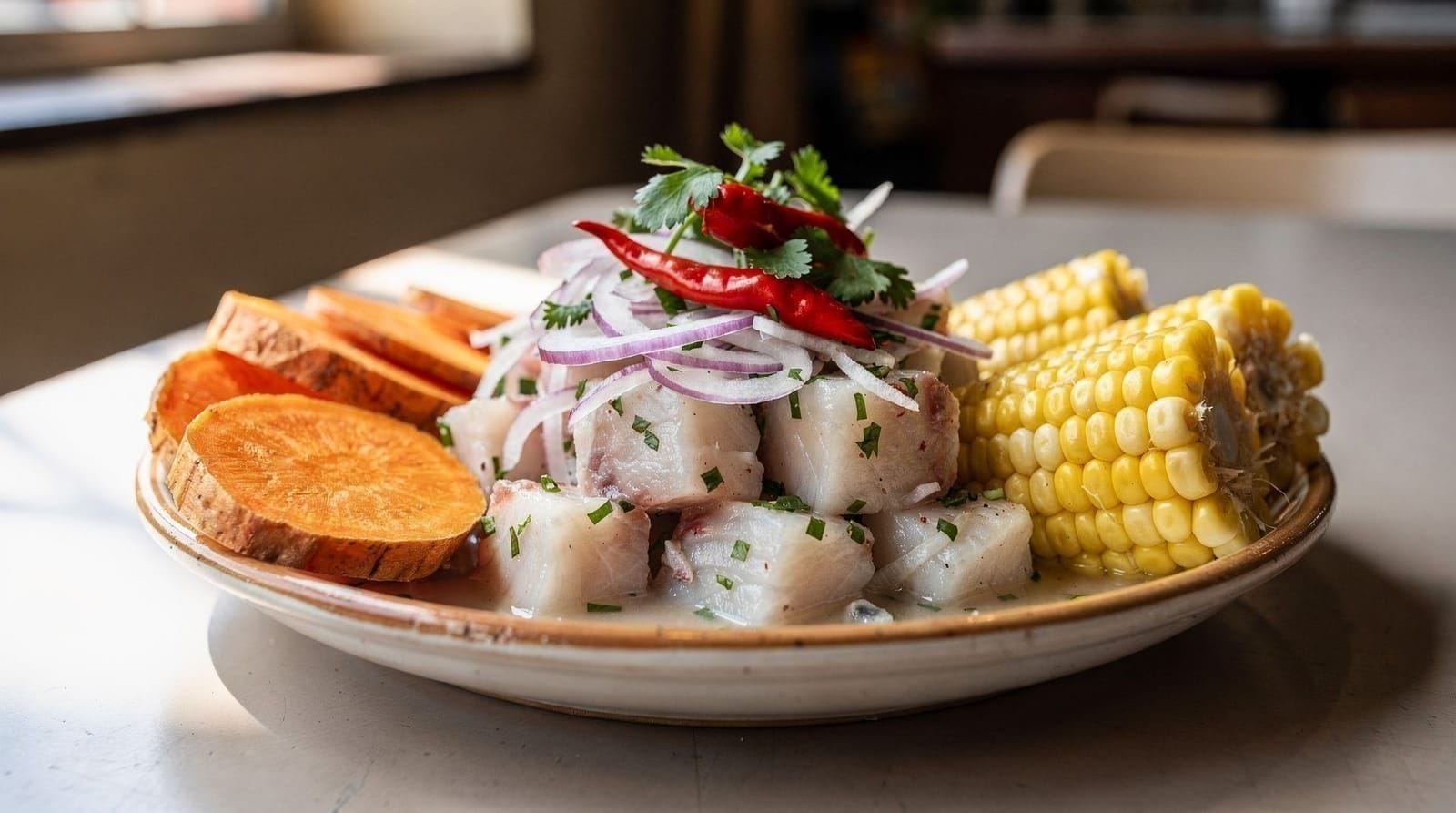
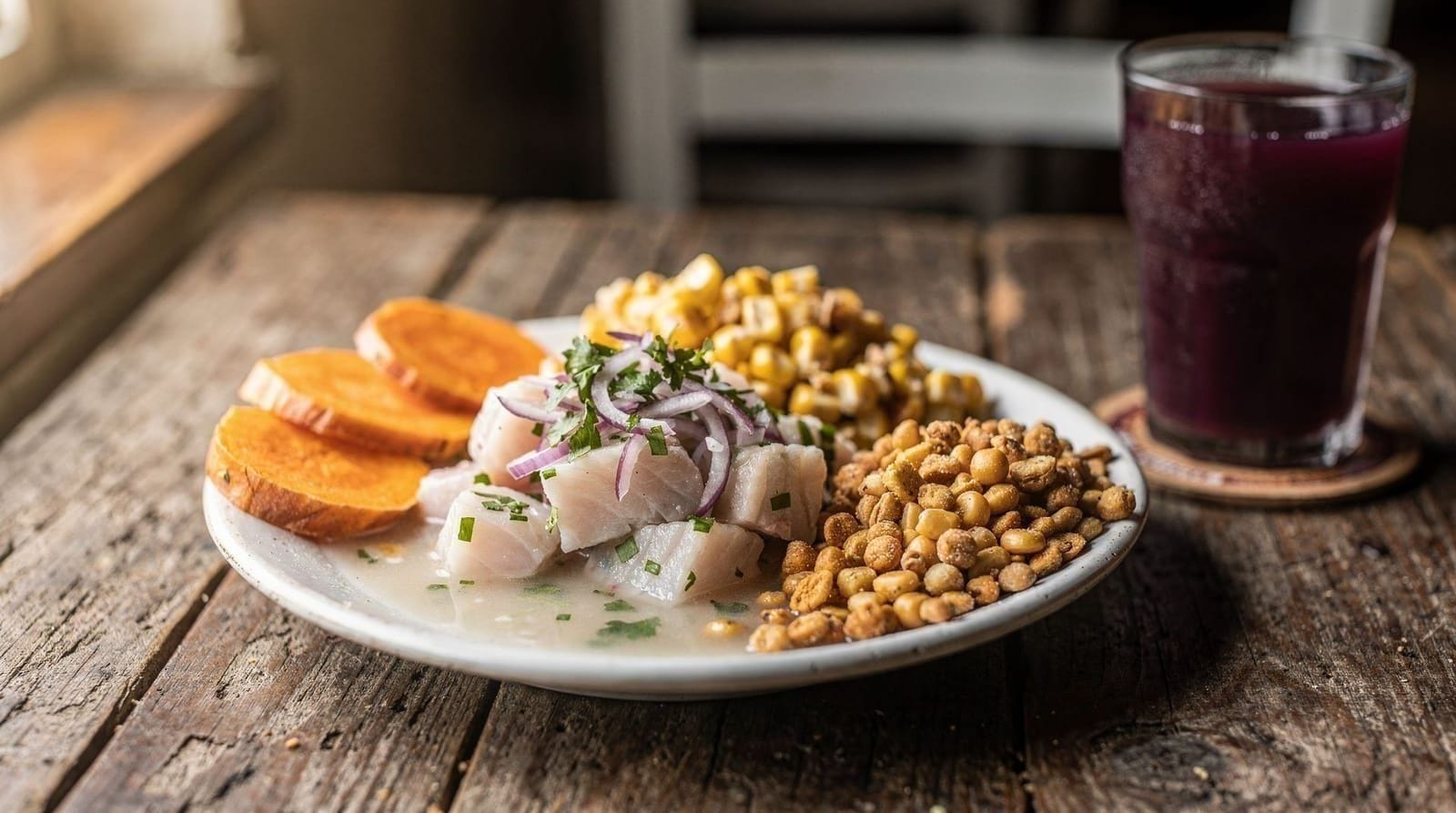
It helps to know the line-up. Ceviche is the obvious centrepiece: raw fish, usually corvina or another white fish, cured in fresh lime with chilli, red onion, and cilantro, served with sweet potato and toasted corn. A good cevichería serves it minutes after the fish lands, and the difference between that and a tourist-trap version is the whole reason to do this with a guide. Anticuchos, skewers of marinated beef heart grilled over charcoal at street stalls, are the dish people brace for and then order again; the texture is closer to a lean steak than offal.
Causa is a chilled, layered cake of mashed yellow potato tinted with ají amarillo and filled with chicken, tuna, or avocado, a cold dish that surprises first-timers. Papa a la huancaína pairs boiled potato with a creamy, mildly spicy cheese-and-chilli sauce. You will likely try a tamale or a humita, an exotic-fruit tasting at the market (lúcuma, chirimoya, granadilla, and the like), and a pisco sour built in front of you, pisco, lime, syrup, egg white, and bitters.
Dessert tends to be picarones, ring-shaped squash-and-sweet-potato fritters in chancaca syrup, or suspiro a la limeña, a caramel-and-meringue confection. For the dish that defines the city, our best ceviche in Lima ranks where to eat it after the tour.
Why Lima earns the “food capital” label
The praise is not just marketing. Lima sits at the meeting point of the cold, fish-rich Humboldt Current and a larder of native crops, more than 3,000 varieties of potato, hundreds of chillies, quinoa, and Andean fruits, layered with five centuries of immigration. Spanish, West African, Chinese (the chifa tradition), Japanese (nikkei cuisine), and Italian influences all fused into the modern Peruvian kitchen, which is why a single food tour can swing from a pre-Columbian potato dish to a soy-laced tiradito without contradiction.
That fusion is what a guided crawl is best placed to explain. Anyone can eat a good ceviche; understanding why Lima’s food tastes the way it does, and where the chifa stir-fry or the nikkei tiradito came from, is the context that turns a series of tastings into an education. If that history interests you more than the eating itself, our Lima food scene guide maps the neighbourhoods and traditions behind the plates.
Who this tour is for
This is a strong pick for first-time visitors who want a guided orientation to Peruvian food before they explore on their own, for nervous eaters who want a trusted hand at the market, and for travellers short on time who would rather pack the highlights into one afternoon than research restaurants. It works beautifully on the first or second day of a trip as a primer for the eating you will do later.
It is the wrong tour for confident, budget-focused foodies who are happy to order ceviche themselves, for travellers with strict dietary restrictions that the operator cannot easily accommodate, and for anyone who finds group eating tiresome and would prefer a private cooking class or a quiet restaurant meal instead.
How it compares to the other Lima food options
The gourmet food tour by night focuses on Barranco and Miraflores in the evening with a more upscale, restaurant-led format, better for a date-night feel than a market crawl. The cooking class with a local family is hands-on rather than tasting-led, ideal if you want to learn to make a dish rather than just eat it. The historic-centre walking tour with a pisco sour tasting is lighter on food and heavier on sightseeing, a good fit if your main goal is the colonial core with a drink attached.
Use the comparison table on this page to match format, time of day, and depth to what you want from the experience.
Book the ultimate Peruvian food tourPractical tips before you go
Come genuinely hungry and skip a big meal beforehand; the tastings add up to more than a full meal. Flag any allergies or dietary needs when you book, not on the day. Bring small soles for tips and any extra drinks. Wear comfortable shoes, because it is a walking tour across a market and several stops. If you do not drink, ask in advance to swap the pisco sour for chicha morada. And pace your own alcohol; the included pisco sour is strong and the heat compounds it.
For where to eat after the tour and how the food scene is laid out by neighbourhood, see our Lima food scene guide and the Lima complete guide.
Chifa and nikkei: the fusions worth seeking out beyond the tour
Most standard food tours focus on the classic Peruvian line-up, ceviche, anticuchos, causa, pisco sour, but two of Lima’s most distinctive traditions rarely make the cut: chifa, the Chinese-Peruvian fusion born from 19th-century immigration, and nikkei, the Japanese-Peruvian cuisine that gave the world tiradito. If your tour skips them, they are worth a separate meal. A good chifa restaurant serves arroz chaufa (Peruvian fried rice) and lomo saltado’s stir-fried cousin tallarín saltado; a nikkei spot serves tiradito, thin-sliced raw fish in a citrus-chilli sauce closely related to ceviche but plated Japanese-style.
Neither tradition is a gimmick-both are as central to how Lima actually eats day to day as the dishes any tour will show you. Our Lima food scene guide has specific neighbourhood recommendations for both.
Booking tips and timing
Book at least a day or two ahead in high season (June-August and around Fiestas Patrias in late July), since the best-rated tours run small groups and sell out. A midday start works best for most people’s appetite and avoids the worst afternoon heat in the markets; an evening version exists on some listings and shifts the format toward bars and anticucherías rather than a market crawl. Confirm which format you are booking, since “food tour” covers both.
Comparing the three main formats
| Format | Style | Best for |
|---|---|---|
| Ultimate food tour (this review) | Market + street food crawl, breadth | First-timers wanting the full arc of Peruvian cuisine |
| Gourmet night tour | Restaurant-led, evening, Barranco/Miraflores | Date-night feel, more polish, less market |
| Home cooking class | Hands-on, family-hosted | Learning to cook a dish, not just eat it |